What Is Guillermo Del Toro’s Pinocchio About?
The premise of Guillermo Del Toro’s Pinocchio in 297 words, with nothing given away. The full story and the ending follow below.
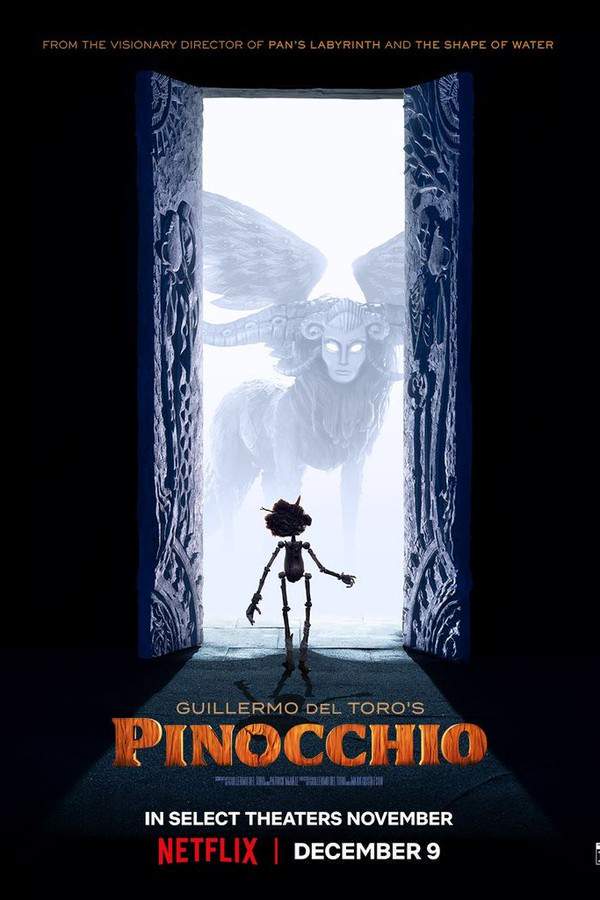
In a war‑torn Italian landscape rendered in exquisite stop‑motion, the film opens on a quiet village where the rhythm of daily life is softened by the gentle creak of wood and the glow of lanterns. The world feels both timeless and intimate, a place where grief hangs in the air like the scent of pine, and every handcrafted object seems to pulse with a secret life of its own. Against this delicate backdrop, the story finds its heart in a solitary carpenter whose sorrow has become his companion.
Geppetto, a master woodcarver haunted by loss, spends his days carving and caring for nothing but memories. His longing for a child grows so fierce that it beckons an ancient, unseen magic. When a stray pine cone sprouts from the earth, a whisper of enchantment awakens, and a luminous Wood Sprite breathes consciousness into the unfinished figure. Thus Pinocchio steps into the world, a wooden boy whose very existence is a blend of craftsmanship and wonder.
The tone balances melancholy with whimsy, inviting the audience to contemplate what it means to be alive, to belong, and to be brave. Pinocchio’s wide‑eyed curiosity clashes gently with the carpenter’s protective caution, setting up a tender dynamic that drives the emotional core of the film. The Sprite’s fleeting presence adds a layer of mystical folklore, hinting at deeper forces at work while never dominating the intimate human story.
As the puppet begins to navigate this richly textured world, the story promises a journey of self‑discovery marked by heartfelt lessons about family, obedience, and courage. The enchanting visual palette, muted by the shadows of a world on the brink, invites viewers to wonder how a simple wooden child might find his place among the living—and what the cost of that discovery could be.
What Happens in Guillermo Del Toro’s Pinocchio?
The complete story of Guillermo Del Toro’s Pinocchio, from the first scene to the last, in 563 words (about 2 minutes). Spoilers throughout. Names in the text link to 6 cast member pages.
Spoilers ahead
In Italy, set against the backdrop of the Great War, we follow Geppetto, a carpenter who is forever changed after losing his beloved son, Carlo, to a tragic bombing incident. In his grief, he plants a pine cone near Carlo’s grave and spends the next two decades engulfed in sorrow. Within the pine tree that grows from this cone resides an anthropomorphic cricket named Sebastian. In a moment of drunken rage, Geppetto decides to cut down the tree to carve a new son from its wood but passes out before he can finish the puppet. It is then that a mystical Wood Sprite, voiced by Tilda Swinton, breathes life into the unfinished puppet, naming him Pinocchio.
As fate would have it, the Wood Sprite meets Sebastian and makes him a promise; in exchange for guiding Pinocchio, she will help him achieve fame. When Geppetto discovers that Pinocchio is alive, he locks him in a closet, intending to keep him safe while attending church. However, Pinocchio disobeys, wandering into the village and startling the townsfolk. The next morning, Geppetto sends Pinocchio to school, but he is intercepted by the cunning former aristocrat-turned-showman, Count Volpe, and his mischievous performing monkey, Spazzatura. Volpe entices Pinocchio to join his circus, pushing him to sign a contract.
Chaos ensues when Geppetto comes to retrieve Pinocchio, leading to a tug-of-war with Volpe that results in Pinocchio getting hit by a passing car. In a bizarre twist, Pinocchio finds himself in the afterlife, where he meets Death, the sister of the Wood Sprite. She reveals that he is immortal and will return to the land of the living only when an hourglass has fully emptied, warning him that with each return, his time in the afterlife will grow longer.
Determined to support Geppetto and evade enlistment by the ruthless Podestà, Pinocchio once again joins Volpe’s circus. During one performance, he delivers a humorous parody aimed at Prime Minister Benito Mussolini, leading to his shooting and subsequent death. Revived again, Pinocchio is taken to a training camp where young boys, under the watchful eye of the Podestà, prepare for war. There he befriends the Podestà’s son, Candlewick, a boy burdened by the fear of failing his father. Advised by Pinocchio, Candlewick stands up to the Podestà, but tragedy strikes when the camp is bombed, resulting in the Podestà’s demise.
Fleeing from the chaos, Pinocchio is captured once more by Volpe, who seeks revenge for the earlier humiliation. However, Spazzatura intervenes during their confrontation, sending Volpe over a cliff where he meets his end. The adventure continues as Pinocchio and Spazzatura are swallowed by the feared Dogfish, reuniting with Geppetto and Sebastian. To escape, Pinocchio expands his nose by lying, using it to create a bridge out of the Dogfish’s blowhole. In a final act of bravery, he detonates a naval mine to save his friends.
Upon reuniting with Death, Pinocchio requests to be sent back to save Geppetto from drowning, fully aware that this choice will lead to his own demise. After heroically rescuing Geppetto, Pinocchio dies once more, prompting Sebastian to use his wish to bring him back. Yet, as foretold by Death, Pinocchio ultimately outlives all those dear to him, witnessing the deaths of Geppetto, Sebastian, and Spazzatura. With a heavy heart, Pinocchio embarks on a journey into the unknown, seeking new adventures until his own time runs out.
Guillermo Del Toro’s Pinocchio Timeline: Every Key Event in Order
15 key events in the order they happen, from “Geppetto's Loss” to “Sacrifice for Family”. 14 events name a place, across 11 locations.
- 1
Geppetto's Loss
Geppetto, a skilled carpenter, suffers a tragic loss when a bombing incident claims the life of his beloved son, Carlo. This heartbreaking event leaves him engulfed in sorrow, profoundly changing his life.
When:During the Great War Where:Italy
- 2
The Pine Cone
In his grief, Geppetto plants a pine cone near Carlo's grave, hoping to honor his son's memory. The pine cone eventually grows into a tree, containing a mystical being within it.
Where:Carlo's grave
- 3
The Birth of Pinocchio
In a moment of drunken despair, Geppetto decides to carve a puppet from the wood of the tree. After he passes out before completing it, the Wood Sprite breathes life into the unfinished puppet, naming him Pinocchio.
Where:Geppetto's workshop
- 4
Sebastian's Pact
The Wood Sprite enlists the help of Sebastian, a cricket residing in the tree. She promises him fame in exchange for guiding the newly animated Pinocchio on his adventures.
- 5
Geppetto's Attempts to Protect Pinocchio
When Geppetto discovers that Pinocchio is alive, he locks him in a closet to keep him safe while attending church. However, Pinocchio disobeys, leading to unexpected consequences.
Where:Geppetto's home
- 6
Ensnared by Count Volpe
While on his way to school, Pinocchio is intercepted by Count Volpe, an unscrupulous former aristocrat. Volpe lures Pinocchio to join his circus, convincing him to sign a contract.
Where:The village
- 7
The Tug-of-War
Geppetto rushes to retrieve Pinocchio from Volpe, leading to a chaotic tug-of-war. This confrontation ends tragically when Pinocchio gets hit by a passing car, marking a pivotal moment in his journey.
Where:The village
- 8
A Journey to the Afterlife
Following his accidental death, Pinocchio arrives in the afterlife and encounters Death. She informs him of his immortality, explaining that he will return to the living world until the hourglass empties.
Where:The afterlife
- 9
Return to the Circus
Determined to help Geppetto and avoid forceful enrollment by the Podestà, Pinocchio rejoins Volpe's circus. His antics continue to lead him into trouble, putting his life in peril once more.
Where:The circus
- 10
The Political Satire
During a circus performance, Pinocchio humorously parodies Prime Minister Benito Mussolini. This act earns him grave consequences, as he is shot and dies again because of Volpe's vengeful actions.
Where:The circus
Show the other 5 events of Guillermo Del Toro’s Pinocchio Hide the last 5 events
- 11
Training Camp Trials
Revived yet again, Pinocchio arrives at a training camp where boys prepare for war under the Podestà's supervision. There, he befriends Candlewick, the Podestà's anxious son, and tries to encourage him.
Where:Training camp
- 12
The Bombing Tragedy
During the camp, tragedy strikes as the boys face a bombing incident, leading to the demise of the Podestà. This loss further deepens the stakes of Pinocchio's journey and his friendships.
Where:Training camp
- 13
Confrontation with Volpe
Once again captured by Count Volpe seeking revenge, Pinocchio's plight seems dire. However, Spazzatura intervenes during their confrontation, ultimately leading to Volpe's downfall over a cliff.
Where:Near the cliff
- 14
The Dogfish Encounter
In a thrilling turn of events, Pinocchio and Spazzatura are swallowed by the ferocious Dogfish. In a bid to escape, they reunite with Geppetto and use clever tactics to navigate out of danger.
Where:Inside the Dogfish
- 15
Sacrifice for Family
When he reunites with Death, Pinocchio makes a selfless choice to save Geppetto from drowning. Aware it could lead to his own end, he courageously rescues Geppetto, succumbing to his fate yet again.
Where:On the water
Who Are the Main Characters in Guillermo Del Toro’s Pinocchio?
5 characters, among them Geppetto, Pinocchio and Count Volpe: who each one is and the part they play in the story. Every profile links to the actor’s page.
-

Geppetto
Played by David Bradley
Geppetto is a heartbroken carpenter whose life revolves around the memory of his lost son, Carlo. His despair leads him to create Pinocchio, seeking solace and a second chance at fatherhood. Throughout the story, Geppetto showcases resilience and unconditional love, embodying the profound impact of grief on a parent's heart.
- 🛠️ Carpenter
- 💔 Father
- 👨👦 Grief
-

Pinocchio
Played by Gregory Mann
Pinocchio is an anthropomorphic puppet brought to life, navigating a world filled with challenges and moral dilemmas. His innocence and curiosity lead him into various adventures, as he learns about love, loyalty, and the consequences of his actions. Despite being made of wood, he embodies the spirit of humanity.
- 🧸 Puppet
- 🌍 Adventure
- ⭐ Hero
-

Count Volpe
Played by Christoph Waltz
Count Volpe is a cunning former aristocrat who becomes a manipulative showman. He seeks to exploit Pinocchio's innocence for personal gain, showcasing the film's darker themes of exploitation and control. His character is charismatic yet villainous, posing challenges that test Pinocchio's morals.
- 🎩 Showman
- 🐒 Cunning
- ⚔️ Villain
-

Wood Sprite
Played by Tilda Swinton
The Wood Sprite is a magical being who breathes life into Pinocchio. A symbol of hope and transformation, she represents the bridge between the mortal world and the realm of possibilities. Her whimsical and nurturing nature emphasizes the importance of guidance and love in Pinocchio's journey.
- 🌿 Magical
- ✨ Nurturer
- 🌈 Hope
-

Sebastian (Cricket)
Played by Ewan McGregor
Sebastian is an anthropomorphic cricket who serves as Pinocchio’s guide and mentor. His experiences and humorous outlook on life complement Pinocchio’s journey of self-discovery, providing wisdom alongside comedic relief. Sebastian’s character emphasizes friendship and loyalty amidst adversity.
- 🦗 Guide
- 😂 Comedic
- 👥 Loyal
Where and When Is Guillermo Del Toro’s Pinocchio Set?
Guillermo Del Toro’s Pinocchio is set in Italy (Great War). Here is why the time and place matter to the story.
When
Great War
The film is set during the Great War, a time marked by significant turmoil and change across Europe. This period led to immense challenges, including loss and the struggle for survival, which deeply affect the characters' lives and decisions. It serves as a backdrop for themes of sacrifice and the quest for identity.
Where
Italy
Set against the backdrop of Italy during the Great War, the movie explores the realities of life and death through the eyes of its characters. The vibrant yet tumultuous atmosphere of a wartime Italy influences the destinies of Geppetto and Pinocchio. Various locations, including the village, a circus, and a war training camp, anchor the story.
- 🇮🇹 Italy
- 🎪 Circus
- ⚔️ War
What Are the Themes of Guillermo Del Toro’s Pinocchio?
4 ideas the story keeps returning to, among them Love & Loss, Transformation and Fate & Free Will.
-
01
Love & Loss
The themes of love and loss run deeply throughout the narrative, as Geppetto's profound grief over the death of his son Carlo drives him to create Pinocchio. This theme highlights the price of love, encapsulating the longing for connection and the pain of separation experienced by the characters.
-
02
Transformation
Transformation is a central theme, represented through Pinocchio's journey from a wooden puppet to a sentient being. His experiences lead him to confront concepts of life, mortality, and what it means to be truly alive. The transformation also extends to characters like Geppetto, who evolves through his grief and love.
-
03
Fate & Free Will
The interplay between fate and free will is explored as Pinocchio contemplates his choices and their consequences. Despite being a puppet initially, he learns to navigate his path, embodying the struggle for autonomy in a world dictated by others' desires and societal expectations.
-
04
Adventure
The narrative is punctuated by adventure, from Pinocchio's escapades in the circus to tumultuous encounters with characters like Count Volpe. Each venture not only adds excitement but also teaches lessons about courage, friendship, and the challenges that accompany seeking one's place in the world.
How Does Guillermo Del Toro’s Pinocchio End?
The last act of Guillermo Del Toro’s Pinocchio and what it means, in 356 words. The ending lands as bittersweet. Big spoilers: read the plot summary first if you have not seen it.
The final act, in full
In Guillermo del Toro’s “Pinocchio,” the ending reveals a powerful metaphor about conformity, sacrifice, and the destructive nature of fascist regimes. Throughout the story, Pinocchio is portrayed as a symbol of innocence and truth, often questioning the absurd and cruel rules imposed by the authorities. When Pinocchio’s friend Candlewick proposes a way for everyone to win by working together, it directly challenges the regime’s ideology that only victory through conflict and division is valid. This idea shakes the foundation of fascism, which thrives on promoting loyalty to the state at the expense of individual thought and morality.
As the story progresses, the regime’s manipulation becomes clearer—children are molded into uniform, obedient citizens through propaganda and a curriculum designed to suppress dissent. Pinocchio’s growth shows his increasing awareness of the lies fed to him, especially when he witnesses the media sensationalizing his mistakes to entertain the crowds. This is symbolized in the scene where Geppetto is angry at the audience for enjoying Pinocchio’s nose growing—highlighting how media distorts truth for entertainment and profit. The propaganda creates a false sense of patriotism, encouraging people to accept violence and war as the only paths to honor and glory. The regime’s obsession with medals, flags, and military drills aims to glorify conflict and suppress independent thinking, as shown when Candlewick’s father asks him to betray his friend to maintain loyalty to the state.
In the final moments, Pinocchio and Candlewick’s attempt to promote unity and peace confronts the regime’s oppressive mindset. When they try to share a message of cooperation, the regime feels threatened, leading to Candlewick being instructed to kill Pinocchio—a heartbreaking reflection of how totalitarian governments silence dissent through violence and fear. But Pinocchio’s innocence and desire for truth ultimately prove stronger than the destructive narrative imposed by the regime. The story ends with Pinocchio’s moral victory—his unwavering belief in honesty and peace—serving as a subtle rebuke to authoritarian control and a reminder of the importance of questioning and standing up against tyranny. The film’s conclusion echoes the timeless message that genuine humanity survives only through truth, compassion, and independent thought, even in the face of oppressive forces.
What Kind of Film Is Guillermo Del Toro’s Pinocchio?
Bittersweet in tone, with steady pacing and a moderate story, going by the plot summary.
- Tone
- Bittersweet
- Pacing
- Steady
- Story
- Moderate
- Intensity
- Medium
- Ending
- Bittersweet
A visually enchanting yet emotionally heavy stop-motion fable that navigates profound grief, the shadow of fascism, and the bittersweet journey of a magical puppet learning what it truly means to live and love.
- whimsical
- melancholic
- fantastical
- grieving
- hopeful
- magical
- grief and loss
- father son relationship
- immortality
- fascism
Content notes: child death, war violence, bombing, child endangerment, kidnapping.
Quiz
How well do you remember Guillermo Del Toro’s Pinocchio? Test yourself on the story.