
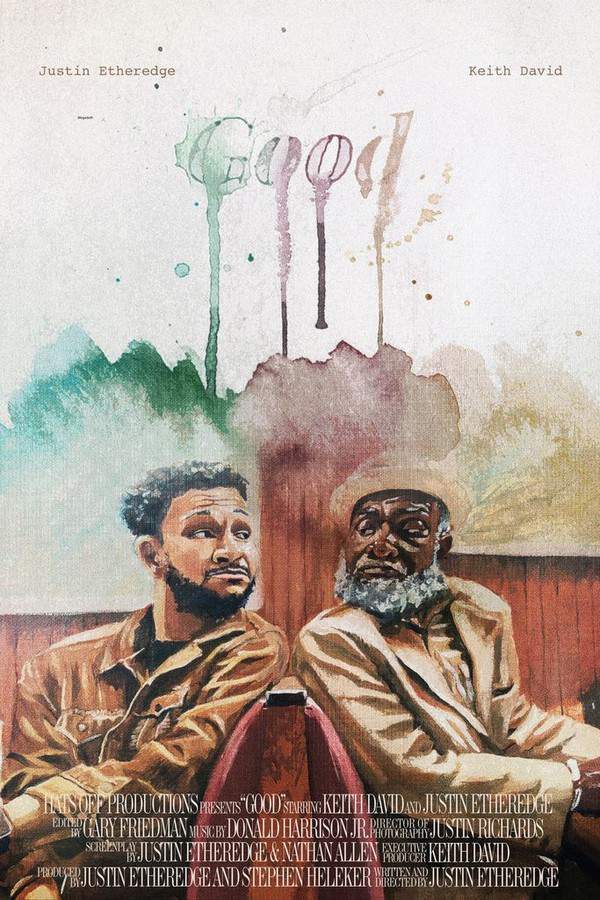
What Is Good About?
The premise of Good in 308 words, with nothing given away. The full story follows below.
In the tumultuous atmosphere of 1930s Germany, academia sits uneasily beside an authoritarian surge that reshapes every public and private sphere. Universities, once havens of debate, now hum with whispered caution as new doctrines seep into lecture halls and research rooms. The city streets echo with propaganda, while ordinary citizens wrestle with a growing sense of dread and of forced conformity, creating a backdrop that feels both intellectually charged and ominously oppressive.
John Halder is a literature professor whose daily life is anchored by an anxious wife, two restless children, and a mother slipping into senile forgetfulness. Burdened by personal hardship, he turns his scholarly curiosity toward a controversial question: whether compassion can justify a merciful end. His manuscript, a thoughtful exploration of euthanasia, begins as a private quest for moral clarity, yet its publication quickly catches the eye of authorities eager to co‑opt intellectual discourse for their own ends.
When a high‑ranking Nazi official, Philipp Bouhler, arrives with an offer that could elevate Halder’s career, the professor faces an alluring yet perilous crossroads. At the same time, a young woman named Anne—a fervent sympathizer of the emerging regime—circles his world, hinting at personal entanglements that could reshape his domestic life. Meanwhile, his long‑standing friendship with Maurice, a Jewish psychologist who once shared the trenches of World War I, draws a stark contrast between past camaraderie and present ideological fracture.
The film moves in a measured, contemplative tone, allowing the weight of each decision to linger in the air. It paints a portrait of a man torn between scholarly ambition, familial obligations, and an increasingly hostile society that seeks to weaponize his ideas. As Halder’s writing gains unexpected traction, the audience is invited to sense the quiet tension that builds when intellectual pursuit becomes entangled with the machinery of power, leaving his relationships and future shrouded in uncertainty.
What Happens in Good?
The complete story of Good, from the first scene to the last, in 383 words (about 2 minutes). Spoilers throughout.
Spoilers ahead
Against the backdrop of 1930s Germany and the rising grip of the Third Reich, the story centers on John Halder, a university professor living with his anxious wife, two children, and a mother suffering from senile dementia. As the political climate tightens, Halder writes a provocative paper titled “The Case for Mercy Death on the Grounds of Humanity,” using it to explore his own moral dilemma and the broader question of euthanasia. His controversial ideas catch the attention of the Nazi party, who send a high-ranking official, Reichsleiter Philipp Bouhler, to help steer the agenda and offer Halder a path into power.
As he publishes and climbs the social ladder, Halder enjoys greater career prestige and social standing, yet he remains blithely unaware of the deepening costs of his work. The narrative traces how his personal life begins to unravel: he divorces his wife and marries Anne, a young woman who sympathizes with the Nazi cause, and he even receives an honorary SS commission, marking a formal alignment with the regime he once merely studied from a distance.
Halder’s best friend Maurice, a Jewish psychologist who fought with him in World War I, voices growing alarm at the direction Halder’s choices are pushing him. When Jews become increasingly endangered, Maurice seeks Halder’s help to obtain exit papers, but Halder hesitates, fearing the loss of his own status and safety. By the time he is finally willing to assist, it is too late—Maurice has already been drawn into the SS by his own wife, a tragic turn fueled by coercion and fear.
The story reaches a grim turning point as Halder, now donning an SS uniform, visits a concentration camp and confronts the stark reality of how his actions have helped propel a brutal machine. The encounter forces him to confront the human cost of the ideas he championed and the personal footprint of complicity in a system built on oppression.
Throughout, the film maintains a sober, reflective tone, examining how a scholar’s intellectual arguments intertwine with political power and personal ambition, and how a man’s choices ripple outward, impacting family, friends, and the lives of countless others. The narrative presents a rigorous meditation on ethics, responsibility, and the fearsome ease with which humane arguments can be weaponized in a time of totalitarian fervor.
Good Timeline: Every Key Event in Order
12 key events in the order they happen, from “1930s Germany: a professor's world” to “The moral reckoning”. 12 events name a place, across 4 locations.
- 1
1930s Germany: a professor's world
Against the rising Third Reich, John Halder is a German university professor living with his anxious wife, two children, and a mother with dementia. The daily routine at home and in the university is increasingly shadowed by the political climate. The mood is tense as ideology begins to infiltrate ordinary life.
When:1930s Where:Germany
- 2
Halder writes The Case for Mercy Death
Halder writes a paper titled The Case for Mercy Death on the Grounds of Humanity to explore his personal dilemma and to justify euthanasia. The document becomes a provocative focal point that could shape his career and moral standing. The act of writing sets him on a path toward collaboration with the regime.
When:1930s Where:University/academic setting
- 3
Nazi attention and Bouhler intervention
The Nazi party takes notice of Halder's ideas, and Reichsleiter Philipp Bouhler is sent to help push their agenda and offer him a position. The encounter foreshadows the widening influence of politics over his professional life. Halder's ambitions begin to align with the regime's objectives.
When:1930s Where:Germany (Nazi offices)
- 4
Career and social ascent
Publishing the paper accelerates Halder's career and boosts his social status. He gains recognition within his academic and social circles, broadening his professional prospects. The perks of influence begin to overshadow his personal ethics.
When:Post-publication Where:Germany
- 5
Divorce from his wife
Halder divorces his wife, stepping away from the family life that once anchored him. The split marks a turning point as his ambitions pull him toward the Nazi circle. Personal ties fray as professional ambitions rise.
When:Late 1930s Where:Germany
- 6
Marries Anne, a Nazi sympathiser
Halder marries Anne, a young Nazi sympathiser who becomes part of his new social circle. The marriage cements his alignment with the regime's worldview and its supporters. His personal life mirrors the political realignment taking place around him.
When:Late 1930s Where:Germany
- 7
Honorary SS commission
Halder is granted an honorary SS commission, formalizing his connection to the Nazi hierarchy. The title improves his status and gives him a sense of legitimacy within the regime. The honor reinforces his complicity in the system he helps to enable.
When:Late 1930s Where:Germany
- 8
Maurice requests exit papers
Maurice, Halder's Jewish psychologist friend and WWI comrade, voices deep concerns about Halder's choices and asks for exit papers to escape persecution. He seeks a way out of the dangerous trajectory they are on. The moment introduces a moral tension that Halder must face.
When:Mid to late 1930s Where:Germany
- 9
Halder initially refuses to help Maurice
Facing the costs to his own career and status, Halder refuses to intervene to save Maurice. The decision shows the depth of his compromise as the regime's machine advances. His inaction foreshadows the tragedy to come.
When:Mid to late 1930s Where:Germany
- 10
Maurice is turned into the SS by his wife
By the time Halder might have acted, Maurice's fate has already been sealed when his wife turns him into the SS. The coercion reveals the regime's insidious methods and the personal costs of collaboration. Maurice's transformation underscores the stakes of Halder's choices.
When:Mid to late 1930s Where:Germany
- 11
Halder dons an SS uniform and visits a camp
Halder dons an SS uniform and visits a concentration camp to confront the reality of the system he has helped enable. The visit strips away the justifications he used to defend his actions. He is confronted by the human cost of his calculations.
When:Late 1930s Where:Concentration camp, Germany
- 12
The moral reckoning
The encounter at the camp forces Halder to confront the consequences of his complicity in euthanasia and Nazi policies. The film ends with him facing guilt and responsibility for the path he chose. It leaves him to grapple with the moral fallout and the future he has shaped.
When:Late 1930s Where:Germany
Who Are the Main Characters in Good?
5 characters, among them John Halder, Maurice and Philipp Bouhler: who each one is and the part they play in the story.
- JH
John Halder
A German university professor whose moral compass is twisted by ambition and the lure of power. He lives with his overly anxious wife, two children, and a mother who suffers from dementia. He writes a paper justifying euthanasia, which pulls him into the regime’s orbit and advances his career, while masking the growing human cost of his choices.
- 🧠 Intellect
- ⚖️ Morality
- 🏛️ Academia
- 💼 Career
- M
Maurice
Halder's best friend and WWI comrade, a Jewish psychologist who confronts the mounting persecution. He seeks exit papers as danger closes in, but Halder hesitates to risk his own status. By the time Halder is ready to help, Maurice has been coerced into the SS by his wife.
- 🧠 Psychology
- 🤝 Friendship
- ✡️ Jewish identity
- PB
Philipp Bouhler
A high-ranking Nazi officer who pushes Halder toward collaboration, offering advancement and signaling how state power can be used to push horrific policies.
- 💼 Power
- ⚖️ Authority
- 🪖 Propaganda
- A
Anne
Halder’s wife, a young Nazi sympathizer who becomes part of his ascent and a complicating force in his personal life as the regime strengthens its grip.
- 💞 Love
- 🧭 Influence
- 🗳️ Political alignment
- HM
Halder's mother
A dementia-stricken mother whose vulnerability mirrors the dehumanization occurring in society, underscoring the personal toll of the era's cruelty.
- 👵 Family
- 🧠 Dementia
- 🌀 Vulnerability
Where and When Is Good Set?
Good is set in Germany and Concentration camps (1930s). Here is why the time and place matter to the story.
When
1930s
The film takes place during the early years of the Nazi regime in Germany. It explores how power consolidates and dissent is crushed in a society becoming increasingly hostile to Jews and those who oppose the regime. The backdrop includes policies like euthanasia, shaping the characters’ choices and consequences.
Where
Germany, Concentration camps
Set in 1930s Germany under the Third Reich. The story centers on the academic world of a university professor as the political climate intrudes into private life. The era's rise in militarism and The regime’s cruelty foreshadow the existence of concentration camps.
- 🇩🇪 Nazi-era Germany
- 🏛️ Academic world
- 🗺️ Historical backdrop
What Are the Themes of Good?
4 ideas the story keeps returning to, among them Moral compromise, Power and complicity and Friendship and betrayal.
-
01
Moral compromise
The protagonist rationalizes cruel policies in the name of progress and social acceptance. The narrative shows how ambition can erode ethics, gradually blurring the line between right and wrong as personal gain is prioritized over humanity.
-
02
Power and complicity
Institutional power bends to ideology, rewarding conformity and punishing dissent. The pursuit of career and status within the regime reveals how individuals can justify harmful acts when backed by authority.
-
03
Friendship and betrayal
The bond between Halder and Maurice is tested as persecution intensifies. Henry’s hesitation to help his friend exposes the clash between loyalty and self-preservation under a hostile regime.
-
04
Moral compass under siege
The story challenges characters to maintain a sense of right as propaganda and dehumanization spread. The consequences of their decisions underscore how fragile moral judgment can become in times of cruelty.
What Kind of Film Is Good?
Dark in tone, with steady pacing and a moderate story, going by the plot summary.
- Tone
- Dark
- Pacing
- Steady
- Story
- Moderate
- Intensity
- High
- Ending
- Sad
A steadily paced, dark drama that immerses the viewer in a claustrophobic atmosphere of moral decay and mounting dread as a man's intellectual choices lead to profound personal and ethical ruin.
- somber
- tense
- melancholic
- anxious
- oppressive
- tragic
- moral compromise
- nazi germany
- euthanasia
- betrayal
Content notes: holocaust, concentration camps, euthanasia, antisemitism, betrayal.
Quiz
How well do you remember Good? Test yourself on the story.
