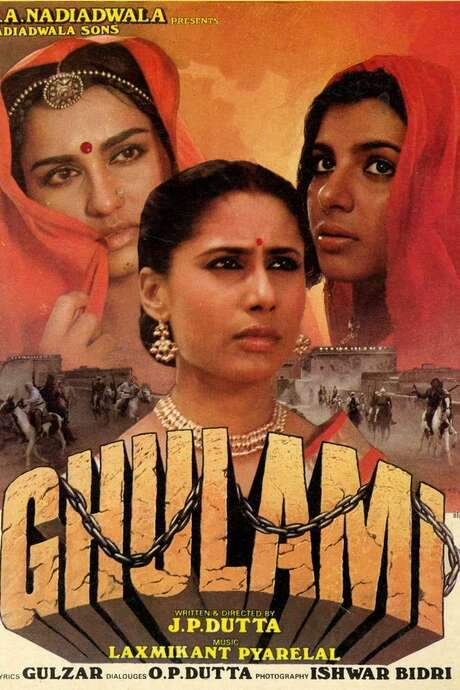
What Is Ghulami About?
The premise of Ghulami in 283 words, with nothing given away. The full story follows below.
In the dusty border town of Fatehpur, where the red earth of Rajasthan meets the uneasy line between India and Pakistan, daily life is governed by a rigid caste hierarchy and the weight of generations‑old land agreements. The villagers toil under the shadow of a powerful zamindar family, their futures bound to loans and loyalties that stretch back decades. Against this backdrop, the air carries a quiet tension—a mixture of sun‑baked heat and the muted murmur of a community yearning for change.
Ranjit Singh Choudhary arrives from a modest farming background, his spirit already marked by rebellion. Branded a troublemaker by his schoolmaster and dismissed by Bade Thakur, the wealthy landlord whose debts the peasants carry like invisible shackles, Ranjit feels the sting of a system that rewards birth over labor. His youthful defiance is tempered by a keen awareness of the injustices that coil around his family and neighbors, and a determination to confront the exploitation that has long kept his community in servitude.
The film’s tone is unflinching yet human, marrying stark social critique with intimate moments of hope. Through Ranjit’s eyes, the audience glimpses the fragile bonds between villagers—friendships forged in hardship, quietly supportive figures who share his longing for dignity. A narrator’s calm, resonant voice guides the story, lending an authoritative cadence that underscores the stakes without ever romanticising the struggle.
As the narrative unfolds, the border town becomes a character in its own right, its bustling markets, schoolrooms, and fields reflecting both the oppressive structures and the simmering desire for a different future. Within this world, Ranjit stands at the crossroads of tradition and revolt, embodying the fierce resolve of a generation ready to question the inherited order.
What Happens in Ghulami?
The complete story of Ghulami, from the first scene to the last, in 668 words (about 3 minutes). Spoilers throughout. Names in the text link to 3 cast member pages.
Spoilers ahead
Ranjit Singh Chaudhary, portrayed by [Dharmendra], grows up in a Rajasthan village where a powerful zamindar family and a rigid caste order shape every facet of life. The peasants toil hard on the land, while the landlord’s clan commands authority over land, education, and justice, perpetuating a cycle of exploitation. In school, Ranjit’s rebellious spirit clashes with deep-rooted caste prejudices, earning him trouble as the landlord’s two sons, who are roughly his own age, bully him. Two sympathetic girls—the daughter of the school-master and the sister of the bully—offer him a glimmer of hope, hinting at connections beyond the village’s rigid rules. Frustrated by the injustice around him, Ranjit ultimately runs away to the city, seeking a path that might break the cycle of oppression.
Years pass. Ranjit’s father dies, and a telegram summons him back to the village to perform the last rites. He returns to a landscape that has changed little, only to learn that his father had borrowed money from the landlord to pay for medicines and healthcare. Now the landlord demands repayment, threatening to seize Ranjit’s lands and home—the collateral for the loan. Ranjit voices a stark, unflinching logic: the peasants till the land for generations while the landowners do little work, so if the landlord lent money to a peasant, the loan should not automatically be repaid; this belief is laid bare in a long, emotional monologue that lays bare the fault lines of class and power.
This realization catalyzes a burgeoning class conflict. Ranjit storms into the landlord’s living room, denouncing him and his ancestors as blood-suckers and challenging the legitimacy of their accumulated wealth. The landlord’s daughter, listening behind a door, is deeply moved by the confrontation and the raw honesty of Ranjit’s stance. Ranjit returns home to bury his father and forges a bond with Moran, a fellow local who becomes an ally in the struggle that is about to intensify. The stage is set for a love triangle and a broader revolutionary vendetta, as personal passions intersect with political outrage.
The romantic tension is resolved swiftly in a sequence of brutal events: the landlord’s sons attempt to rape Moran, but Ranjit intervenes, saving her and marrying Moran, who has clearly needed a protector. Sumitra Sultan Singh, who has cherished an unrequited love for Ranjit, is eventually pressed into an arranged marriage with a police officer chosen by her father. This husband—Fatehpur’s Thanedar, a man tasked with maintaining order—discovers Sumitra’s past affections and, inflamed by jealousy, aligns with his two brothers-in-law in a bid to eliminate Ranjit. What follows is a violent arc of confrontations and retaliations, with Ranjit becoming a fugitive, chased by the law and by those who would preserve the old order.
Throughout the conflict, Ranjit is supported by Jabhar, a villager who has returned from military service, and by Havaldar Gopi Dada, the village police officer whose own son was murdered by the landlord’s henchmen on his wedding day, a personal wound that fuels his complicity in the revolt. Mithun Chakraborty brings Jabhar to life, while Kulbhushan Kharbanda embodies Havaldar Gopi Dada, lending grit and resolve to the insurgent effort. The plot darkens into a cascade of bloodletting, as both sides suffer losses.
The film’s climax is stark and uncompromising: most of the principal players fall in the violence that erupts when old hierarchies refuse to yield. Yet the final note is clear—the brutal cycle of oppression persists even as rebels die for their cause. Told with a steady, even-handed tone, the narrative underscores a harsh reality: changing a centuries-old system is brutal, costly, and rarely fully victorious, even as individual courage and solidarity shine through.
The storytelling is carried by a guiding voice, with Amitabh Bachchan serving as the narrator, lending a calm, authoritative cadence that anchors the emotional and political stakes of the tale. The film’s themes—the clash of caste, the ethics of land and labor, and the human cost of rebellion—unfold through a grounded, human lens, balancing intimate relationships with sweeping social critique.
Ghulami Timeline: Every Key Event in Order
14 key events in the order they happen, from “Ranjit's teenage rebellion in the village school” to “Ending note: rebels die, system endures”. 14 events name a place, across 8 locations.
- 1
Ranjit's teenage rebellion in the village school
As a teenager, Ranjit challenges the entrenched caste prejudices that govern village life. He is repeatedly bullied by the two sons of the local zamindar landlord, highlighting the vast power imbalance between peasants and landowners. His defiant streak sets the tone for the resistance that threads through the story.
When:teenage years Where:village school, Rajasthan
- 2
Sympathetic girls from the school
Two girls from the school—the schoolmaster's daughter and the landlord's daughter—watch his struggles and feel sympathy for him. Their quiet support underscores the social fault lines of the village and foreshadows shifting loyalties. The landlord's daughter, despite belonging to the powerful family, is portrayed as someone who connects with Ranjit's defiance.
When:during school days Where:village school
- 3
Ranjit runs away to the city
Feeling exploited and limited by caste norms, Ranjit leaves the village for the city to seek a freer life. The move marks his break with the existing social order and exposes him to new possibilities and dangers. This departure sets up the later return that drives the story's conflict.
When:shortly after teenage years Where:city
- 4
Father's death and summons back
Several years pass before a telegram summons Ranjit back to perform his father's last rites. He returns to a village unchanged in its oppression, discovering that the family remains trapped under the landlord's shadow. The news also reveals the burdens of debt and the looming threat to his ancestral land.
When:several years later Where:village
- 5
Loans, land, and the bargain
Ranjit learns that his father borrowed money from the landlord to pay for medicines and healthcare. The land is mortgaged as collateral, and repayment or forfeiture of the land looms over the family. The scene frames the central economic injustice that sparks his righteous fury.
When:upon return Where:village
- 6
Storming the landlord's living room
In a bold act of defiance, Ranjit storms into the landlord's living room and accuses the landlord and his ancestors of being blood-suckers who thrive on peasants' labor. His speech crystallizes his revolutionary resolve and directly challenges the landlord's authority. The landlord's daughter eavesdrops from behind a door and is deeply moved by his confrontation.
When:immediately upon his return Where:landlord's living room
- 7
Funeral rites and new bonds
Ranjit returns home to perform his father's funeral, and in that vulnerable moment he forges a growing bond with Moran, a villager who becomes his ally. The funeral rites anchor him back in his community and deepen the personal stakes of the struggle. These moments set the stage for a broader rebellion.
When:after the confrontation Where:Ranjit's house / village
- 8
Love triangle forms
A love triangle develops among Ranjit, Moran, and Sumitra, the landlord’s daughter who harbors unspoken feelings for Ranjit. The personal romance intertwines with political conflict, complicating loyalties and intensifying tensions within the feudal system. The triangle heightens the emotional stakes of the revolt.
When:late after reunion Where:village
- 9
Moran's rescue and marriage
When the landlord's sons attempt to rape Moran, Ranjit rescues her and eventually marries Moran, signaling his role as protector of the oppressed. The marriage makes him a direct target of the landlord and his allies. This act further polarizes the community and escalates the vendetta.
When:soon after the love triangle formation Where:village
- 10
Sumitra's marriage to the police officer
Sumitra agrees to marry the police officer chosen by her father, but her heart clearly still harbors love for Ranjit. Her husband later learns of this hidden love, fueling resentment and aligning him with the landlord's brothers in their bid to kill Ranjit.
When:after Moran's marriage Where:landlord's residence
Show the other 4 events of Ghulami Hide the last 4 events
- 11
Drive to violence and Ranjit's fugitive status
With the landlord's men seizing harvest and tightening control, Ranjit becomes a fugitive. He faces pursuit by authorities, is beaten in jail, and the conflict continues to escalate toward open battle. The law's reach tightens as the rebellion gains momentum.
When:after the marriage and escalation Where:village; jail
- 12
Allies join the revolt
Javar, a villager who has returned from military service, and Gopi Dada, the village havaldar whose son was murdered by the landlord's henchmen, join Ranjit's cause. Their involvement broadens the resistance and amplifies the forthcoming clashes. The coalition strengthens the revolt with new resolve.
When:during the escalating conflict Where:village
- 13
Climax: bloodletting and collapse
The story crescendos in a brutal clash that wipes out most of the main characters on both sides. The rebellion is crushed, and the harsh social order remains intact. The ending delivers a stark critique of cyclical violence and entrenched oppression.
When:final confrontation Where:village
- 14
Ending note: rebels die, system endures
The rebels' sacrifices highlight the cost of revolt and the persistence of oppression within the feudal-caste structure. The film closes on a somber note about injustice continuing despite the losses. It emphasizes the grim reality that social change is elusive in this society.
When:aftermath Where:village
Who Are the Main Characters in Ghulami?
8 characters, among them Ranjit Singh Chaudhary, Moran and Sumitra Sultan Singh: who each one is and the part they play in the story. Every profile links to the actor’s page.
- RS
Ranjit Singh Chaudhary
Played by Dharmendra
A rebellious peasant son who returns to his village to confront chronic exploitation by the powerful zamindar clan. He believes the peasant must not be forced to repay loans that supported the landlord’s lavish lifestyle, and he channels this logic into a violent, decisive bid to dismantle the feudal order. He becomes a catalyst for class conflict, courting danger as he fights for land and dignity.
- 🔥 Rebel
- 🪧 Leader
- 🥊 fighter
- M
Moran
Played by Reena Roy
A sympathetic peer who stands with Ranjit and is drawn into the growing rebellion. She embodies resilience amid hardship and becomes a symbol of loyalty and protection for the protagonist. Her presence anchors the personal stakes within the larger struggle.
- 💖 Female lead
- 🛡️ Protector
- SS
Sumitra Sultan Singh
Played by Smita Patil
Daughter of the landlord who loves Ranjit from a distance. Her unrequited passion complicates alliances and foreshadows the friction between love and duty. She ultimately aligns with her father's faction, highlighting the personal costs of the village conflict.
- 💔 Heartbreak
- 🗡️ Rivalry
- TJ
Thakur Jaswant Singh
Played by Mazhar Khan
A patriarchal landowner who embodies the corrupt feudal system. He wields power through fear and severs peasants from any chance of justice. The character's actions illuminate the cruelty and entitlement of the landlord class.
- 🕍 Landlord
- 🗡️ Villain
- GD
Gopi Dada
Played by Kulbhushan Kharbanda
Village havaldar whose son was killed by the landlord's henchmen, fueling his complicity in protecting the village and seeking justice. He stands between law and vengeance, reflecting the complexities of upholding order in a corrupt system.
- 👮 Police
- 🛡️ Ally
- J
Jabhar
Played by Mithun Chakraborty
A former soldier who returns to help Ranjit in his vendetta. His discipline and loyalty lend military momentum to the peasants' cause, turning personal revenge into organized resistance.
- 🪖 Veteran
- 🫂 Ally
- M
Makhan
Played by Rajan Haksar
A key landowner associate who shares the landlord's ruthlessness. He participates in the oppression and contributes to the brutal cycle of violence that culminates in the village's downfall.
- 🗡️ Enforcer
- 🏷️ Antagonist
- M
Masterji
Played by Rammohan Sharma
The village schoolmaster who sees the consequences of oppression reflected in the students he teaches. He represents education as a tool for awareness and a counterpoint to caste prejudice.
- 📚 Educator
- 🕊️ Moral compass
Where and When Is Ghulami Set?
Ghulami is set in Rajasthan and India. Here is why the place matters to the story.
Where
Rajasthan, India
Rajasthan's rural villages form the backdrop of the story, where mud-walled houses cluster around courtyards and arid plains stretch to the horizon. The area is governed by a powerful zamindar family and entrenched caste hierarchies that shape every interaction. The landscape and social order set the stage for peasants' struggle, vengeance, and moments of urgency that drive the plot.
- 🏜️ Rajasthan desert setting
- 🏰 Feudal oppression
What Are the Themes of Ghulami?
3 ideas the story keeps returning to, among them Class Struggle, Revolution and Love and Loyalty.
-
01
Class Struggle
The film centers on the exploitative feudal system and the debt bondage that binds peasants to landowners. Ranjit's awakening and the peasants' revolt expose the systemic injustice that rewards power over fairness. Through confrontations and mass tension, the story questions whether law and order can be reconciled with moral justice. The village's conflicts illustrate how caste and class dictate access to land, resources, and dignity.
-
02
Revolution
Ranjit's actions ignite a wider clash between peasants and the landlord's faction, turning personal grievances into collective upheaval. The narrative emphasizes the brutal costs of rebellion, showing how violence becomes a tool for seeking equality and revenge. It also critiques the cycle of oppression by depicting the collapse of both sides as the price of systemic injustice. The ending underscores that reform is elusive while oppression persists.
-
03
Love and Loyalty
Romance and loyalty braid with politics as Moran's and Sumitra's loves complicate loyalties. Moran becomes a pillar for Ranjit, while Sumitra's unrequited love adds personal tragedy to the struggle. The love triangle tests bonds and propels choices that have wide consequences for the village. Ultimately, relationships reflect larger themes of sacrifice and the human cost of societal conflict.
What Kind of Film Is Ghulami?
Dark in tone, with steady pacing and a moderate story, going by the plot summary.
- Tone
- Dark
- Pacing
- Steady
- Story
- Moderate
- Intensity
- High
- Ending
- Bleak
A grim and emotionally heavy drama depicting a man's passionate but ultimately tragic rebellion against a brutal feudal system, creating a tense and oppressive atmosphere of social conflict.
- oppressive
- grim
- rebellious
- tense
- melancholic
- passionate
- feudalism
- caste oppression
- rural rebellion
- debt and exploitation
Content notes: attempted rape, shootout violence, murder, suicide, systemic oppression.
Quiz
How well do you remember Ghulami? Test yourself on the story.
Where to Watch Ghulami
. US availability and prices from JustWatch.
Streaming availability in the US, powered by