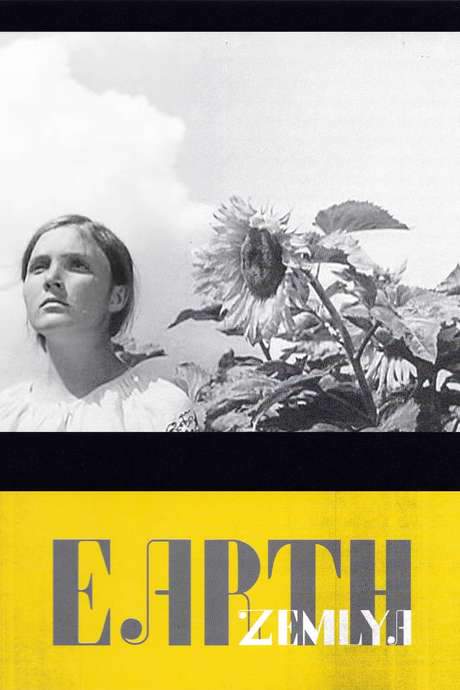


Where to Watch Earth
See current US streaming, rental, and purchase options for Earth (1930) via JustWatch.

Klassiki
HD
JustWatch TV
HD
Kanopy
SD
Plex
HD
Plex Channel
HD
Tubi TV
SD
Amazon Video
SD
Takflix
HD Streaming availability powered by 
Earth Plot Summary
Read the complete plot summary and ending explained for Earth (1930). From turning points to emotional moments, uncover what really happened and why it matters.
The film opens with a wind-swept field of wheat and sunflowers, setting a quiet, rural mood before the story shifts to a life-marking moment. An old peasant named Semyon dies beneath an apple tree, attended by his son Opanas [Stepan Shkurat] and grandson Vasyl [Semen Svashenko], anchoring the tale in family ties and generations watching the land change.
Elsewhere, the local kulaks, led by Arkhyp Bilokin [Ivan Franko], denounce collectivization and vow to resist its reach. At Opanas’s home, Vasyl and his friends gather to debate the future of agriculture, clashing with Opanas, who remains deeply skeptical of the mass farming program.
Soon Vasyl arrives with the community’s first tractor, a beacon of progress that stirs excitement among the villagers. A charged moment unfolds as the men, under the heat of the radiator, react with a crude rite that ends up as a reckless plow through the land and the destruction of the kulaks’ fences. A continuous montage follows, tracing the lifecycle of bread from the fields to the table, underscoring the transformation that the village undergoes under collectivization.
That night, Vasyl returns along a quiet path, dancing a hopak as he nears home, only to be struck down by a dark figure. When his death is discovered, Opanas searches for the killer and confronts Khoma [Petro Masokha], Bilokin’s son, who refuses to confess to the murder.
Vasyl’s father rejects the local priest’s plan to lead the funeral, expressing atheism and asking Vasyl’s friends for a secular farewell and to “sing new songs for a new life.” The villagers honor the request as Natalya [Yelena Maksimova], Vasyl’s fiancée, mourns beside them, while the priest curses the mourners from the shadows.
At the cemetery, Khoma arrives in a frenzy to declare that he killed Vasyl and to resist collectivization. The crowd largely ignores him, though one of Vasyl’s friends offers a moving eulogy that memorializes the fallen man.
The film closes with a montage of rain pouring over fruit and vegetables, a visual echo of the village’s hardship and renewal. In the aftermath, Natalya finds herself embraced by a new lover, signaling a complicated, unsettled future shaped by loss and the ongoing social upheaval.
Earth Timeline
Follow the complete movie timeline of Earth (1930) with every major event in chronological order. Great for understanding complex plots and story progression.
Opening montage of fields and weather
The film opens with a visual montage of wind sweeping through a field of wheat and sunflowers. The mood is calm but hints at the hard rural life to come. This opening establishes the natural setting and the seasonal rhythms that frame the story.
Semyon's death under the apple tree
Semyon dies beneath an apple tree, with his son Opanas and grandson Vasyl at his side. The moment marks the passing of an older generation and the start of a new era for the family. The scene sets up the family tensions that drive the narrative.
Kulaks denounce collectivization
Across the village, local kulaks including Arkhyp Bilokin denounce collectivization and declare their resistance. Their stance introduces the central opposition to reform and foreshadows conflict to come. The scene establishes the social fault lines that will fuel the story.
Debate at Opanas's home over reform
At Opanas's home, Vasyl and his friends gather to discuss collectivization, arguing with Opanas who remains skeptical. The debate reveals divisions within the community about how or whether to embrace reform. The exchange shows that support for collective farming is not universal.
Community welcomes the first tractor
Vasyl arrives with the community's first tractor to widespread excitement. The tractor becomes a tangible symbol of progress and shared effort among the peasants. The moment marks a turning point in their collective life.
Tractor work and upheaval begins
After the tractor arrives, the men urinate in the overheated radiator and then plow the land, harvesting the grain. Their actions also destroy the kulaks' fences, signaling upheaval and conflict with the old landowners. The sequence demonstrates the tangible force of collectivization in action.
Bread production montage
A montage presents the production of bread from beginning to end. The sequence emphasizes the transformation of grain into sustenance and the centrality of agricultural work in the community's life. It reinforces the connection between effort and reward.
Vasyl's death on the path
That night, Vasyl walks along a path on his way home, dancing a hopak, and is killed by a dark figure. The death is sudden and shatters the community's optimism about reform. The murder becomes a catalyst for further conflict.
Opanas confronts Khoma about the murder
Upon Vasyl's death, Opanas searches for the killer and confronts Khoma, Bilokin's son. Khoma does not confess to the murder, leaving questions about motive and accountability. The confrontation heightens tension between reform supporters and those tied to the old order.
Secular funeral request from Vasyl's father
Vasyl's father rejects the Russian Orthodox priest who expects to lead the funeral, declaring his atheism. He asks Vasyl's friends to give his son a secular funeral and to 'sing new songs for a new life.' The moment signals a break with tradition and a demand for a new social narrative.
Secular funeral and priest's curses
The villagers perform a secular funeral, while Vasyl's fiancée Natalya mourns and the priest curses them. The funeral scene shows the community embracing a new form of mourning amid religious tension. The emotional atmosphere is charged as people confront change.
Khoma claims responsibility at the cemetery
At the cemetery, Khoma arrives in a frenzy to declare that he will resist collectivization and that he killed Vasyl. The confession is bold but largely ignored by the crowd as a friend eulogizes Vasyl. The moment underlines the deep factional divisions surrounding reform.
Ending montage and Natalya's new love
The film ends with a montage of rain pouring over fruit and vegetables, after which Natalya finds herself embraced in the arms of a new lover. The rainfall imagery ties the land to renewal and the community's ongoing struggle. The final image suggests that life and change continue beyond Vasyl's death.
Earth Characters
Explore all characters from Earth (1930). Get detailed profiles with their roles, arcs, and key relationships explained.
Vasyl — Semen Svashenko
A young farmer who embodies hope for modernization. He helps drive the village forward with the tractor and dances a hopak on his way home, symbolizing vitality and ambition. His murder abruptly interrupts the progress he represents and exposes underlying tensions within the community.
Natalya — Yelena Maksimova
Vasyl's fiancée who mourns his death while navigating a changing world. Her grief is intensified by social expectations and the religious dominant culture. By the end, she is shown embracing a new lover, signaling resilience and personal renewal.
Opanas — Stepan Shkurat
Vasyl's father and a staunch voice of tradition who clashes with the push for collectivization. He calls for a secular funeral for his son and rejects religious rites, underscoring the family's turn toward secular memory.
Semyon
The elder peasant who dies under an apple tree, witnessed by his son Opanas and grandson Vasyl. His death marks the passing of an older generation and sets in motion the younger generation's response to the new order.
Arkhyp Bilokin — Ivan Franko
A local kulak who denounces collectivization and embodies resistance to reform. His stance and ties to the old order frame the village conflict and highlight the class tensions at the heart of the drama.
Khoma — Petro Masokha
Bilokin's son, a figure of fear and wrath who later arrives at the cemetery in frenzy to claim responsibility for Vasyl's death. His actions reveal the personal cost and volatile emotions surrounding political upheaval.
Village Priest — Vladimir Mikhaylov
The local priest who expects to lead Vasyl's funeral, symbolizing the religious establishment in a time of social change. His encounter with the secular funeral and the ensuing curses reflects the era's religious tensions.
Earth Settings
Learn where and when Earth (1930) takes place. Explore the film’s settings, era, and how they shape the narrative.
Time period
early 1930s
The events take place as the Soviet government imposes collectivization on Ukrainian villages. A tractor arrives as a symbol of modernization, transforming work and social relations while provoking resistance from kulaks. The period is marked by upheaval, shifting loyalties, and a clash between traditional life and new agrarian reforms.
Location
Ukrainian village
The story unfolds in a rural Ukrainian village framed by wheat fields and sunflowers. It centers on small farms, fences, and the daily rhythms of harvest, sowing, and community gathering. The setting shows a tight-knit agrarian community pushed toward modernization and state policy during the collectivization drive.
Earth Themes
Discover the main themes in Earth (1930). Analyze the deeper meanings, emotional layers, and social commentary behind the film.
🚜
Collectivization
Collectivization is depicted as a disruptive force reshaping the village's way of life. The local kulaks denounce the policy and resist surrendering their fences and grain, highlighting class tensions. The tractor's arrival symbolizes modern progress colliding with established power structures. The film traces how reform intensifies conflicts and tests communal cohesion.
🕯️
Secular Funeral
The death of Vasyl forces a break with tradition as his father turns away the Orthodox priest. Vasyl's friends are urged to perform a secular funeral and sing songs for a 'new life.' Natalya mourns publicly while religious authority curses the community, underscoring the era's questioning of faith. The ending emphasizes a move toward secular memory and new beginnings.
🏗️
Modernization
The arrival of a tractor and the drive to produce bread signal a sweeping modernization of rural life. The film juxtaposes technological progress with social upheaval, revealing how progress can destabilize long-established ways. The community's daily routines, from plowing to harvest, become a stage for political transformation and tragedy.

Coming soon on iOS and Android
The Plot Explained Mobile App
From blockbusters to hidden gems — dive into movie stories anytime, anywhere. Save your favorites, discover plots faster, and never miss a twist again.
Sign up to be the first to know when we launch. Your email stays private — always.
Explore the mobile appEarth Spoiler-Free Summary
Discover the spoiler-free summary of Earth (1930). Get a concise overview without any spoilers.
In the vast, wind-swept fields of a Ukrainian village, the land serves as both a cradle of tradition and a silent witness to the turning of eras. The story begins amidst golden wheat and sunflowers, establishing a mood of profound natural beauty that is soon interrupted by the winds of change. It is a world where life and death cycle quietly under the shade of apple trees, anchoring the narrative in the deep bond between a father, Opanas, and his spirited son, Vasyl. As the older generation passes, the surviving family members find themselves standing on the precipice of a new, uncertain reality.
At the heart of this transformation is Vasyl, a young Komsomol activist whose vision for the future clashes with the established order. Representing the wave of modernization, he secures a tractor through the local party committee—a machine that stands as a beacon of progress in a community long accustomed to the plow and the ox. His determination to use this new power to reshape the land and challenge the private plots of the local kulaks sets him on a collision course with those who view collectivization as a direct threat to their way of life.
The film captures the friction between these two worlds with a blend of visual poetry and stark realism, tracing the journey of bread from the field to the table while the social fabric begins to fray. While the arrival of technology sparks excitement and hope among the younger generation, it simultaneously stirs deep resentment and fear in others. As Vasyl pushes forward with his collectivist goals, the atmosphere shifts, suggesting that the price of progress may be measured in more than just labor, and that the road to a “new life” is fraught with unseen dangers.
Movies with Similar Twists and Themes
Uncover films that echo the narrative beats, emotional arcs, or dramatic twists of the one you're exploring. These recommendations are handpicked based on story depth, thematic resonance, and spoiler-worthy moments — perfect for fans who crave more of the same intrigue.




Featured on this page

What's After the Movie?
Not sure whether to stay after the credits? Find out!
Check out our other apps:

SAT Sphere
Build confidence for the Digital SAT.

Mori Atlas
Discover wild places worth protecting.

Luntero
Search smarter for a home in Amsterdam.

Plot Explained
Unravel movie endings and hidden clues.

Pokechamp
Dive into Pokémon data and battle logic.

Driving Theory
Get ready for your European theory test.

Movie Dust
Plan your next cinema trip with ease.

Musemap
Find art and culture as you travel.

Selkobase
Compare credentials before committing.

Local Manual
Turn an unfamiliar country into practical next steps.

Lernavi
Compare school systems before your next move.

GymRoam
Find a workout stop wherever your plans take you.
Explore Our Movie Platform
New Movie Releases (2026)
Famous Movie Actors
Top Film Production Studios
Movie Plot Summaries & Endings
Major Movie Awards & Winners
Best Concert Films & Music Documentaries
Movie Collections and Curated Lists
© 2026 What's After the Movie. All rights reserved.
Privacy Policy