
The Sacrifice 1986

Directed by
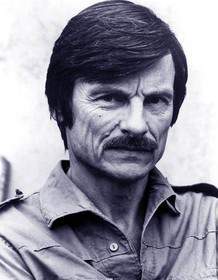
Andrei Tarkovsky
Made by

Faragó Film
The Sacrifice Plot Summary
Read the complete plot summary and ending explained for The Sacrifice (1986). From turning points to emotional moments, uncover what really happened and why it matters.
Alexander is a once-renowned actor who has stepped away from the stage to work as a journalist, critic, and lecturer on aesthetics. He lives in a beautiful seaside house with his actress wife Adelaide, his stepdaughter Marta, and his young son, the quiet Little Man, who is temporarily mute after a throat operation. The family’s calm routine is punctured when Alexander and Little Man plant a tree by the shore, a moment that seeds a growing unease about the world around them.
Their world shifts when Alexander’s friend Otto, a part‑time postman and amateur psychical investigator, brings a birthday card and a casual reminder of life’s fragile edges. Otto’s visit prompts an exchange about faith, as Alexander bluntly admits that his relationship with God feels “nonexistent.” Soon after, the arrival of Victor, a medical doctor and a close family friend who helped Little Man after the operation, brings a plan to drive the family home in Victor’s car. Yet Alexander, unsettled, chooses to stay behind to speak more with his son, resisting the urge to leave their tranquil refuge.
What follows is a lengthy, intimate monologue in which Alexander recalls how he and Adelaide discovered their house by the sea—how they fell in love with its setting and its surroundings—before turning that fond memory into a bitter meditation on the state of modern humanity. He speaks of the pressures of change, the discord within the family, and a creeping fear of how technology seems to erode authentic human connection. The scene is punctuated by a troubling, impulsive moment when Little Man hides away, leaps onto his father’s back as a surprise, and is accidentally nose‑bleeded by Alexander’s reflexive swat.
As the narrative voice turns toward reflection, Tarkovsky’s influence is evident: Alexander has “grown to hate the emptiness of human speech,” a weariness that shadows every interaction. The dinner-tide at the house among the family, Victor, and Otto is interrupted by the blare of jet fighters overhead, and a news broadcast proclaims the onset of what appears to be World War III—a nuclear‑tinged horror that unsettles every pulse in the room. Adelaide’s nerves fracture under the weight of fear, and Victor must comfort and sedate her, while Alexander drifts toward a stark vow: he will renounce all he loves, including Little Man, if such an act could undo the impending catastrophe.
Otto suggests a perilous route to escape: a liaison with Maria, described as a witch “in the best possible sense.” Following this advice, Alexander steals a pistol from Victor’s medical bag, leaves a note behind, and rides off on Otto’s bike toward Maria’s house. He confesses a haunting memory about tending his mother’s garden—how he once fixed it up to bring order, only to see it lose its beauty in his meddling. Maria receives his advance with bewilderment, yet when he places the gun to his temple and begs, “Don’t kill us, Maria,” the jet‑fighter noises surge again, and she calms him. They share a transformative, ethereal coupling as they float above her bed, a sequence whose meaning remains cloudy and ambiguous in his wake.
Morning light reveals a return to a fragile normalcy, yet Alexander is not cured. He sets a plan in motion to relinquish all that he loves again, luring the others outside for a walk and then setting the family’s house ablaze. When the flames spread, the group races back, and Alexander loudly confesses to the act, his fear and determination visible in every gesture. Maria emerges unseen before, and Alexander’s attempt to approach her is blocked by those around him. An ambulance arrives, two paramedics surge forward, and they drive away with him as if he has already slipped beyond control.
Maria departs on her bicycle, while Little Man remains at the foot of the tree, watering it in quiet ritual. The final image anchors the moment in a stark, almost devotional line: the mute child’s question, echoing the opening of a sacred text, lands with a final, haunting clarity.
“In the beginning was the Word. Why is that, Papa?”
The Sacrifice Timeline
Follow the complete movie timeline of The Sacrifice (1986) with every major event in chronological order. Great for understanding complex plots and story progression.
Sea-side home and the birthday card
Alexander and Adelaide live in a beautiful house by the sea with their son Little Man. They plant a tree by the seaside as a symbol of hope and stability. Otto arrives with a birthday card for Alexander, and Alexander remarks that his relationship with God is nonexistent.
Monologue and the nosebleed incident
Alexander gives a long monologue to Little Man about how he and Adelaide found the house, their love for its surroundings, and then launches into a bitter tirade against the state of modern man. Little Man hides from him and jumps onto his back; Alexander accidentally knocks him, causing a nosebleed.
Dinner gathering and Ottonian curiosities
Victor, Otto, Maria, and Julia join for dinner at the house. Otto reveals he studies paranormal phenomena and collects inexplicable but true incidents. Maid Maria departs early, while nursemaid Julia stays to help with the dinner; jet fighters are heard in the distance.
War news and Adelaide's breakdown
The rumbling of low-flying jet fighters interrupts dinner, and a news program announces the beginning of what may be World War III. Adelaide has a complete nervous breakdown and is comforted and sedated by Victor. In despair, Alexander vows to renounce all he loves, even Little Man, to undo the catastrophe.
Otto's counsel to slip away with Maria
Otto advises Alexander to slip away and lie with Maria, whom he calls a witch 'in the best possible sense'. The suggestion hints at an escape from the crisis through a radical, mystical intimacy.
Escape to Maria; the gun moment
Alexander steals a pistol from Victor's medical bag, leaves a note, and rides Otto's bike to Maria's house. He recounts the story of repairing his mother's garden only to see it lose its beauty when he imposed order. At Maria's place, he places the gun to his temple as jet fighters return; Maria soothes him and they make love while floating above the bed, leaving his reaction ambiguous.
Morning normality and renewed resolve
The next morning, Alexander wakes in his own bed and everything seems normal. Yet a renewed resolve takes hold as he decides to give up all he loves and possessions.
A plan to destroy the house
Alexander tricks the family and friends into going for a walk and then sets fire to their house while they are away. They return, alarmed by the blaze, and Alexander confesses that he started it, running around in a frenzy.
Ambulance and pursuit
Maria reappears, but Alexander is restrained by others. An ambulance arrives, and two paramedics chase him, ultimately taking him away with them.
Final scene and the Word
Maria bicycles away as Little Man waters the planted tree. The mute child speaks his only line, quoting the opening of the Gospel of John: 'In the beginning was the Word. Why is that, Papa?'
The Sacrifice Characters
Explore all characters from The Sacrifice (1986). Get detailed profiles with their roles, arcs, and key relationships explained.
Alexander (Erland Josephson)
An actor who gave up the stage to work as a journalist, critic and lecturer on aesthetics. He is weary of change and suspicious of modern life, troubled by what he perceives as the emptiness of human speech. His vow to renounce all he loves propels the narrative toward catastrophe, revealing a man torn between intellect, faith, and affection for his family.
Adelaide (Susan Fleetwood)
Alexander’s actress wife and the emotional center of the family. She is deeply affected by the rising tension, experiences a nervous breakdown, and requires comfort from Victor. Her presence anchors the domestic world even as it begins to fracture under external fears.
Victor (Sven Wollter)
A medical doctor and close family friend who helps care for the family during the crisis. He offers practical support, sedates Adelaide, and attempts to keep the situation anchored in reality. He embodies the rational, stabilizing force amid growing chaos.
Otto (Allan Edwall)
A part‑time postman and student of paranormal phenomena who acts as a catalyst for Alexander’s decisions. He speaks of inexplicable incidents and advises Alexander to seek solace with Maria. His eccentric perspective pushes the plot toward the film’s surreal turn.
Maria (Guðrún Gísladóttir)
A mysterious woman described by Otto as a witch in the best possible sense. She appears and influences Alexander at a crucial moment, becoming a symbol of temptation and the unknown. She remains a calm, enigmatic presence as events spiral outward.
Little Man (Tommy Kjellqvist)
Alexander’s young son, who is temporarily mute after a throat operation. He embodies innocence and the fragility of family life. He speaks only once at the end, quoting the Gospel, which reframes the story’s themes of language and meaning.
Marta (Filippa Franzén)
Alexander’s stepdaughter who is present during the family’s social interactions. She contributes to the domestic dynamic and the sense of a multi-layered family unit.
Julia (Valérie Mairesse)
The nurse-maid who stays to help with dinner and who remains a quiet, supportive presence within the household through the upheaval.
The Sacrifice Settings
Learn where and when The Sacrifice (1986) takes place. Explore the film’s settings, era, and how they shape the narrative.
Time period
The events occur in a contemporary setting, marked by the sudden news of World War III. The looming threat of nuclear catastrophe casts a pall over a quiet family gathering, turning routine moments into crises. The domestic world is placed in stark contrast with apocalyptic stakes.
Location
Seaside house, Maria's house
The principal location is a beautiful seaside house where Alexander and his family live. Its interiors blend refined living spaces with the open coast, underscoring the tension between safety and vulnerability. The action also shifts to Maria's house, which becomes a focal point as Alexander seeks solace away from the family.
The Sacrifice Themes
Discover the main themes in The Sacrifice (1986). Analyze the deeper meanings, emotional layers, and social commentary behind the film.
🤖
Technology and Modernity
The film critiques how rapid technological change and modern life erode intimate communication and human connection. Alexander's tirades against the state of modern man reflect a fear that progress fragments meaning. The jet fighters and a growing sense of global danger intensify this unease, turning the domestic sphere into a stage for examining whether technology serves or destroys humanity.
🙏
Sacrifice
Alexander's vow to renounce all he loves—Even Little Man—drives the central crisis. His attempt to undo the looming disaster hinges on a radical relinquishment of attachments. The act of sacrifice is morally ambiguous, oscillating between devotion and destruction. The ending underscores the paradox of seeking salvation through self-denial.
👪
Family Strife
A tense, intimate family drama unfolds beneath a veneer of civility. The arrival of friends, the mother’s breakdown, and the strain of secrets reveal fragility within the household. The fire and the subsequent pursuit heighten how protective bonds can collide with overwhelming fear. The story uses the domestic space to explore loyalty, blame, and the price of love.
🗣️
Word and Meaning
Language and communication are central motifs, from the father’s critique of speech to the Little Man’s final question: In the beginning was the Word. The film contrasts eloquent discourse with moments of silence and unspoken longing. The Word becomes a test of faith, relevance, and connection in a world on the brink.

Coming soon on iOS and Android
The Plot Explained Mobile App
From blockbusters to hidden gems — dive into movie stories anytime, anywhere. Save your favorites, discover plots faster, and never miss a twist again.
Sign up to be the first to know when we launch. Your email stays private — always.
Explore the mobile appThe Sacrifice Spoiler-Free Summary
Discover the spoiler-free summary of The Sacrifice (1986). Get a concise overview without any spoilers.
In a remote seaside house where wind and waves write their own rhythm, Alexander has retreated from the footlights of the stage to the quieter arenas of journalism, philosophy, and teaching. The home, shared with his actress wife Adelaide, their tender‑hearted stepdaughter Marta, and their young son—referred to simply as the Little Man—drips with a calm that feels both intimate and slightly fragile, a place where ordinary gestures—planting a tree, mending a wound—carry the weight of quiet contemplation.
The circle widens when old friends arrive: Otto, a part‑time postman who dabbles in the metaphysical, and Victor, a compassionate doctor whose presence steadies the household. Their conversations drift from the mundane to the profound, touching on faith, the erosion of authentic speech, and the uneasy undercurrent of a world that seems increasingly mediated by technology. A subtle, almost mystical thread is hinted at through the mention of Maria, a figure described as a witch in the most benevolent sense, whose presence adds a layer of enigmatic folklore to the otherwise realistic setting.
The gathering is ostensibly a birthday celebration, a moment of familial warmth set against the slow‑moving, lyrical visual style characteristic of Tarkovsky’s final masterpiece. Yet the ordinary ritual is pierced by a stark radio broadcast announcing the start of a nuclear war, a stark reminder that even the most secluded havens are not immune to global upheaval. The news casts an eerie pall over the gathering, turning conversation into a meditation on mortality, belief, and what it truly means to sacrifice—both personally and collectively.
Against this backdrop of serene landscape and looming catastrophe, Alexander stands at a crossroads, forced to weigh his philosophical musings against a reality that threatens to swallow them whole. The film lingers on the tension between the quiet beauty of the house and the terrifying uncertainty beyond, inviting the audience to sit with its meditative pace, its haunting images, and the unspoken question of how one finds meaning when the world hangs in the balance.
Movies with Similar Twists and Themes
Uncover films that echo the narrative beats, emotional arcs, or dramatic twists of the one you're exploring. These recommendations are handpicked based on story depth, thematic resonance, and spoiler-worthy moments — perfect for fans who crave more of the same intrigue.


Featured on this page

What's After the Movie?
Not sure whether to stay after the credits? Find out!
Check out our other apps:

SAT Sphere
Build confidence for the Digital SAT.

Mori Atlas
Discover wild places worth protecting.

Luntero
Search smarter for a home in Amsterdam.

Plot Explained
Unravel movie endings and hidden clues.

Pokechamp
Dive into Pokémon data and battle logic.

Driving Theory
Get ready for your European theory test.

Movie Dust
Plan your next cinema trip with ease.

Musemap
Find art and culture as you travel.

Selkobase
Compare credentials before committing.

Local Manual
Turn an unfamiliar country into practical next steps.

Lernavi
Compare school systems before your next move.

GymRoam
Find a workout stop wherever your plans take you.
Explore Our Movie Platform
New Movie Releases (2026)
Famous Movie Actors
Top Film Production Studios
Movie Plot Summaries & Endings
Major Movie Awards & Winners
Best Concert Films & Music Documentaries
Movie Collections and Curated Lists
© 2026 What's After the Movie. All rights reserved.
Privacy Policy