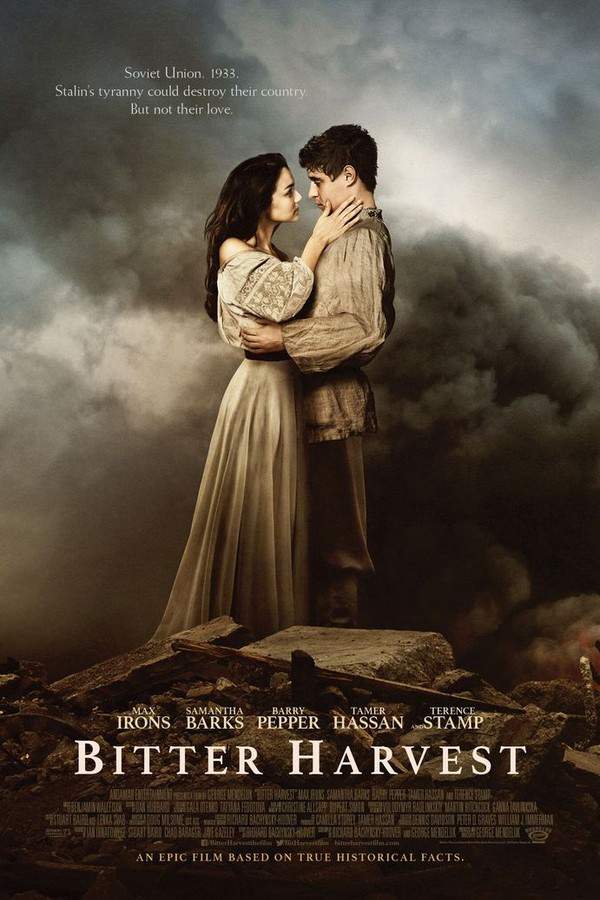
Bitter Harvest 2017

Directed by

George Mendeluk
Made by
Roadside Attractions
Where to Watch Bitter Harvest
See current US streaming, rental, and purchase options for Bitter Harvest (2017) via JustWatch.

Kanopy
HD
Amazon Prime Video Free with Ads
HD
Fandango at Home Free
HD
Tubi TV
SD
Amazon Video
HD
Apple TV Store
HD Fandango At Home
HD
Google Play Movies
SD
YouTube
SD Streaming availability powered by 
Bitter Harvest Plot Summary
Read the complete plot summary and ending explained for Bitter Harvest (2017). From turning points to emotional moments, uncover what really happened and why it matters.
Ivan Kachaniuk, Terence Stamp, a Ukrainian Cossack, defends his family in Central Ukraine’s wheat- and sunflower-farming outskirts of Smila.
Years later, in 1932, Yuriy, Max Irons, the artist grandson of Ivan, marries his childhood sweetheart, Natalka, Samantha Barks, and studies at the Kyiv Art Academy. His family are independent Cossack farmers, “kurkuli,” living off grain, sunflowers, and other crops until Joseph Stalin’s collectivization campaign orders the Bolshevik Red Army to requisition 90% of Ukraine’s harvest.
The State Art Institute is forced to replace art instructors with communist voices who censor Yuriy’s work, condemning its expression of Ukrainian cultural identity as anti-Soviet. Yuriy storms out in disgust.
During a memorial in a pub for a friend who took his own life, a half-drunk aggressive Soviet captain insults Ukrainian folklore, music, songs, and dance, sparking a fight in which Yuriy stabs the captain in self-defense. He is then imprisoned in a brutal Soviet jail that houses scores of Ukrainian kurkuli—alongside Ukrainian nationalists and others Stalin deems Enemies of the Soviet state. From his cell Yuriy witnesses daily mass executions.
A sadistic prison commissar, Director Medvedev, demands Yuriy paint his portrait in exchange for more food and for his life, with Yuriy sensing that execution will follow as soon as the portrait is complete. In their second sitting, Yuriy kills the director by stabbing him in the throat with a paintbrush, then changes into the commissar’s Russian uniform, seizes his pistol, and escapes during a blizzard while guards hunt him.
Back in Smila, Yuriy’s wife Natalka and their family endure the terror of farm director Commissar Sergei Koltsov, who tries to rape her and wields food as a weapon. Natalka poisons his borscht with wild mushrooms and joins other peasant women in a Babsi revolt. Sergei survives and orders his Bolshevik troops to crush the uprising. Yuriy’s family and the villagers are imprisoned in the church, now a torture chamber and prison cell.
In the northern Kyivan forests Yuriy meets Lubko, a desperately hungry boy, and the two help each other reach a cattle train stop toward Smila. That night they are joined by the Kholodnyi Yar (Cold Ravine) Ukrainian Cossack detachment. The next morning they wage a bloody battle as Bolshevik Gatling guns mow down the uprising, leaving heavy casualties on both sides.
Yuriy and Lubko slip aboard a cattle train filled with starving Ukrainian corpses and bear witness to mass starvation and death along roadsides and in pits. Nearing Smila they hijack a Soviet grain truck; a sympathetic Bolshevik soldier drives the truck and joins Yuriy’s rescue mission, delivering grain to the hungry villagers. Yuriy, Natalka, and Lubko escape, while others in the family starve or are murdered by Koltsov’s forces.
Chased onto another cattle train of Ukrainian corpses bound for fire pits, they race toward the Soviet border and the icy Zbruch River. They dive underwater to dodge bullets and cross into Polish-controlled West Ukraine, aiming for the city of Lviv and hoping for help from the priest Andrey Sheptytsky to trade Ukraine’s vast pastures for the prairies of Manitoba, Canada.
Bitter Harvest Timeline
Follow the complete movie timeline of Bitter Harvest (2017) with every major event in chronological order. Great for understanding complex plots and story progression.
Ivan Kachaniuk defends his family on Smila's outskirts
Ivan Kachaniuk defends his family in the Central Ukraine wheat and sunflower farming outskirts of Smila. The act establishes a resilient, frontier-minded life for his family and signals the constant pressure from outside threats. His protection sets the tone for the family’s struggle to endure future upheavals.
Yuriy marries Natalka and studies at Kyiv Art Academy
Years later, in 1932, Yuriy marries his childhood sweetheart Natalka and studies at the Kyiv Art Academy. Their family remains independent Cossack farmers, living off grain and sunflowers as the era’s upheavals loom. The looming collectivization hints at the impending loss of cultural and economic autonomy.
State Art Institute succumbs to communist censorship
The State Art Institute is forced to replace art instructors with communist officials who censor creative expression and condemn Ukrainian cultural identity as anti-Soviet. Yuriy responds with disgust and storms out, signaling a break between artistic freedom and political control. This shift foreshadows broader suppression of national culture.
Pub memorial erupts into violence and arrest
During a memorial in a pub for a friend who committed suicide, a half-drunk Soviet captain insults Ukrainian folklore, music, songs, and dance, sparking a street-ready brawl. Yuriy defends himself by stabbing the captain in self-defense, and the incident leads to his arrest. He is imprisoned in a brutal Soviet facility that targets Ukrainian dissidents.
Mass imprisonment and the Medvedev portrait bargain
In a brutal Soviet prison, Yuriy shares a cell with Ukrainian kurkuli and other Ukrainians deemed enemies by the state. He witnesses daily mass executions from his cell, underscoring the regime's severity. Commissar Medvedev dictates that Yuriy paint his portrait in exchange for food and survival, a grim bargain that tightens the noose around him.
Escape by killing the director and fleeing into a blizzard
During a second sitting, Yuriy kills the prison director by stabbing him in the throat with a paintbrush. He then dons the commissar’s Russian uniform, seizes a pistol, and escapes as Bolshevik guards pursue him through a raging blizzard. The dramatic breakout underscores the peril of resistance under the regime.
Natalka faces terror at home; a peasant revolt begins
Back in Smila, Natalka endures the terror of farm director Commissar Sergei Koltsov, who attempts to rape her and uses food as leverage. Natalka poisons his borscht with wild mushrooms and joins other peasant women in a Babsi revolt. Koltsov survives, and he orders Bolshevik troops to crush the uprising.
Church imprisonment as the revolt is crushed
Koltsov’s forces quell the revolt, and Yuriy’s family and the villagers are imprisoned in the church, which becomes their torture chamber. The church, once a sacred space, becomes a site of fear and control under the regime. The community’s resistance is met with brutal punishment.
Yuriy and Lubko meet in the northern Kyivan forests
In the northern Kyivan forests Yuriy meets Lubko, a desperate, hungry boy, and the two form a bond while helping each other toward Smila. They are soon joined by the Kholodnyi Yar Ukrainian Cossack detachment, creating a renewed surge of resistance. The forest journey marks a turning point in Yuriy's fight for his people.
A bloody battle with Bolsheviks and heavy casualties
The detachment engages in a brutal morning battle against Bolshevik forces, with Gatling guns cutting down combatants on both sides. The fighting demonstrates the severe cost of resistance and the ruthlessness of the campaign. Yuriy and his allies endure heavy losses as they press on.
Escape aboard a cattle train and witness famine
Yuriy and Lubko slip aboard a cattle train filled with starved Ukrainians, witnessing mass starvation along roadsides and in pits. The famine scene underscores the human toll of the regime's policies. Near Smila, they hijack a grain truck with a sympathetic Bolshevik driver to bring relief to villagers, continuing their struggle to survive.
Crossing to West Ukraine and seeking Canadian exile
Chased onto another cattle train of corpses bound for pits, Yuriy and his companions flee toward the Soviet border and the Zbruch River. They dive underwater to cross into Polish-controlled West Ukraine and push toward Lviv, hoping priest Andrey Sheptytsky might exchange Ukraine's vast pastures for the prairies of Manitoba, Canada.
Bitter Harvest Characters
Explore all characters from Bitter Harvest (2017). Get detailed profiles with their roles, arcs, and key relationships explained.
Yuriy Kachaniuk
A gifted artist and the grandson of Ivan, Yuriy studies at the Kyiv Art Academy before the crackdown forces him into a struggle for survival. He navigates censorship, self-defense, and a perilous escape from prison, driven by a dream of preserving Ukrainian identity. His resilience and artistic sensibility guide his decisions as danger closes in.
Natalka
Yuriy's partner and a fierce survivor, Natalka endures the terror of the koltsov regime. She shows fierce loyalty to her family, participates in resistance acts, and responds with careful strategy when faced with danger. Her actions, including poisoning the commissar to protect others, reveal a pragmatic, courageous spirit.
Sergei Koltsov
Farm director and emblem of cruel enforcement, Koltsov enforces grain requisition and brutal control. He uses fear and coercion, including attempts on Natalka, to suppress rebellion. His ruthless regime highlights the brutality of the occupation and the cost of dissent.
Lubko
A desperately hungry boy Yuriy meets in the forest; their bond symbolizes shared suffering and mutual aid. He survives through steady partnership with Yuriy and the resistance, reminding viewers of the vulnerability and resilience of children during famine.
Medvedev
The prison commissar whose sadistic demands for Yuriy's portrait symbolize the regime's dehumanization. His murder at Yuriy's hands marks a turning point, showing how targeted violence can become a final act of resistance. His role embodies the system's brutality inside the prison walls.
Andrey Sheptytsky
A priest who represents Ukrainian spiritual leadership and the possibility of aid from outside the regime. He embodies faith and a potential link to external help, such as aid from Canada. His presence highlights the role of the church and moral guidance amid hardship.
Bitter Harvest Settings
Learn where and when Bitter Harvest (2017) takes place. Explore the film’s settings, era, and how they shape the narrative.
Time period
1932
The primary action unfolds in 1932 during Stalin's collectivization, when grain requisitions and political purges disrupt everyday life. Communities are forced to surrender crops, and families face hunger, incarceration, and execution. The year anchors the arc of resistance, coercion, and survival.
Location
Smila, Kyiv, Kyivan forests, Lviv, Zbruch River
Set on the outskirts of Smila in central Ukraine, the film portrays a farming landscape of kurkuli families who rely on grain and sunflowers. The surroundings are marked by barns, fields and the quiet backdrop of Ukrainian countryside under mounting state pressure. The rural setting underscores the shift from peaceful farming life to violent political oppression.
Bitter Harvest Themes
Discover the main themes in Bitter Harvest (2017). Analyze the deeper meanings, emotional layers, and social commentary behind the film.
🛡️
Resistance
Individuals and communities push back against Soviet oppression. Yuriy's defiance, Natalka's resilience, and local uprisings show how art, family bonds, and collective action become acts of defiance. The story frames resistance as a moral and practical response to invasion and confiscation. Courage emerges in moments of self-defense and strategic risk.
🎭
Culture
Ukrainian folklore, music, and art become rallying points against censorship. Yuriy's studies and the banned creative expressions reveal the cost of preserving identity under propaganda. Cultural memory acts as a weapon and a beacon for the community's unity. The pursuit of art paves a path toward resilience and hope.
🍞
Survival
The film exposes hunger and resource scarcity as instruments of control. Starvation scenes, farm boy Lubko, and the fight for grain drive the plot and shape decisions. Communities share scarce resources while violence and fear threaten their lives. Survival means improvisation, escape, and occasional compassion.
⚖️
Oppression
The regime's power is exercised through fear, executions, and forced labor. Prison guards, commissars, and confiscations illustrate the machinery of suppression. The characters' suffering highlights the moral cost of totalitarian rule. Yet, the narrative also reveals vendettas and moral choices made under pressure.

Coming soon on iOS and Android
The Plot Explained Mobile App
From blockbusters to hidden gems — dive into movie stories anytime, anywhere. Save your favorites, discover plots faster, and never miss a twist again.
Sign up to be the first to know when we launch. Your email stays private — always.
Explore the mobile appBitter Harvest Spoiler-Free Summary
Discover the spoiler-free summary of Bitter Harvest (2017). Get a concise overview without any spoilers.
In the harsh winter of the early 1930s, the Ukrainian steppe is bruised by an unforgiving famine that has turned fields of wheat and sunflowers into silent witnesses of suffering. The land is caught in the grip of a sweeping collectivization that threatens to erase centuries of rural tradition and identity. Amidst this bleak backdrop, the film paints a world where daily life is a fragile act of endurance, and the wind carries whispers of both despair and defiant hope.
At the heart of the story is Yuri, a talented artist whose brush once captured the vibrant colors of his homeland. He returns to his ancestral village carrying the weight of his family’s legacy and a deep love for his childhood companion, Natalka. Their relationship is rooted in shared history and the simple joys of a life once lived in harmony with the earth. Together, they embody the yearning of a generation that refuses to let its spirit be extinguished by external forces.
The tone balances stark realism with lyrical beauty, reflecting the contrast between the brutal realities of famine and the resilient pulse of Ukrainian culture. The film’s visual language juxtaposes the stark, frost‑bitten landscapes with intimate moments of tenderness, suggesting that even in the darkest seasons, art and affection can become acts of resistance. As the oppressive policies tighten, Yuri and Natalka find themselves navigating a world where every decision carries the weight of survival, and their bond becomes a quiet, steadfast beacon against the looming tide of annihilation.
Movies with Similar Twists and Themes
Uncover films that echo the narrative beats, emotional arcs, or dramatic twists of the one you're exploring. These recommendations are handpicked based on story depth, thematic resonance, and spoiler-worthy moments — perfect for fans who crave more of the same intrigue.
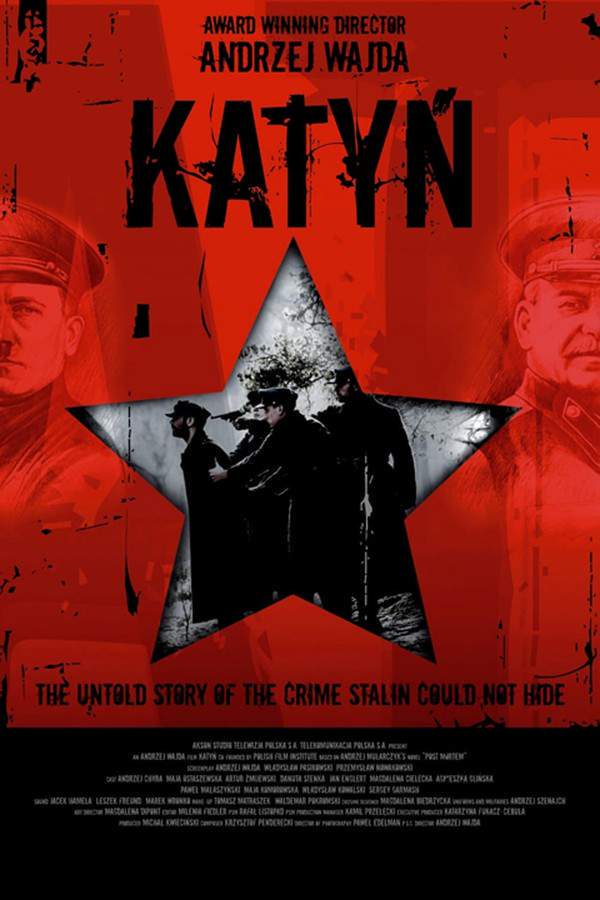
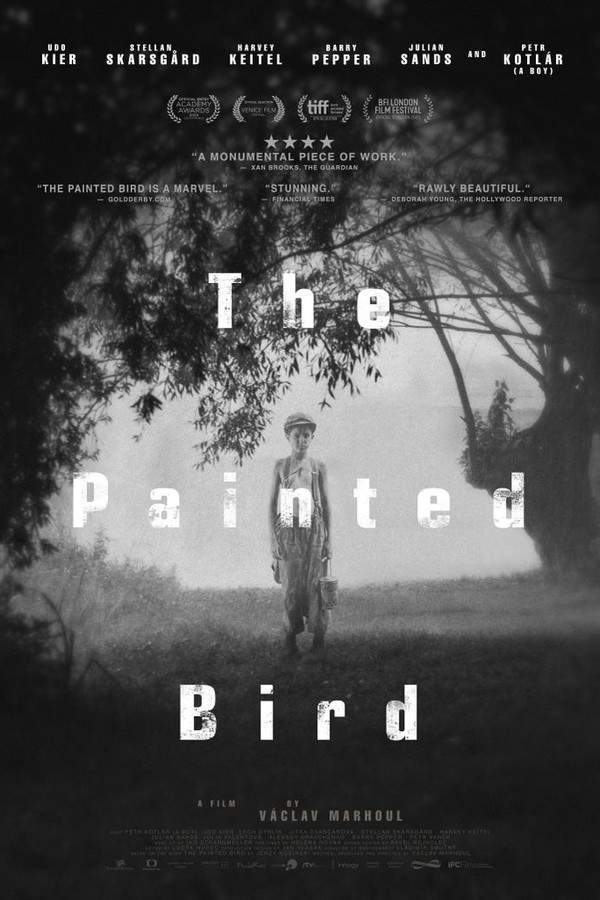
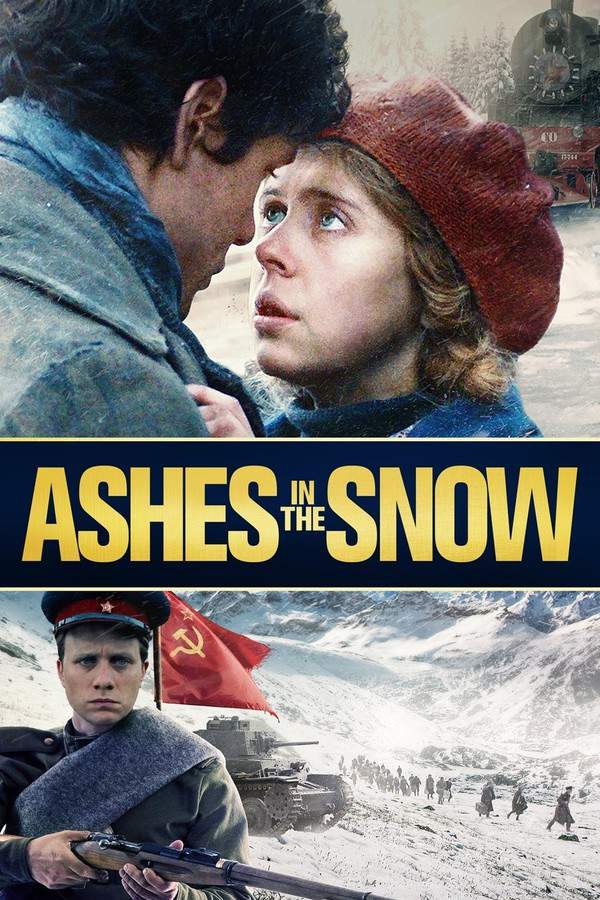


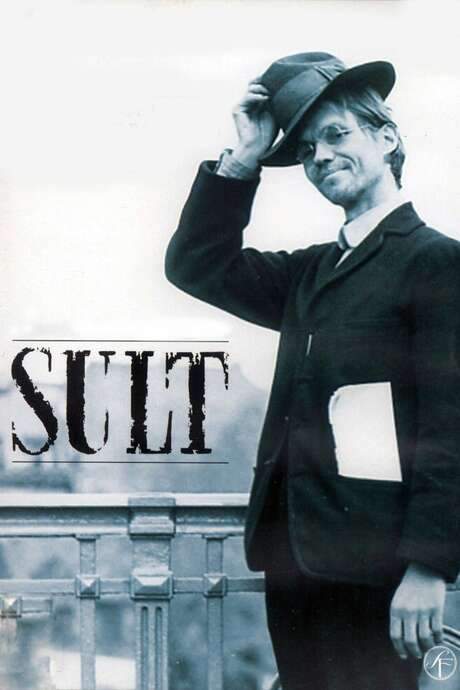
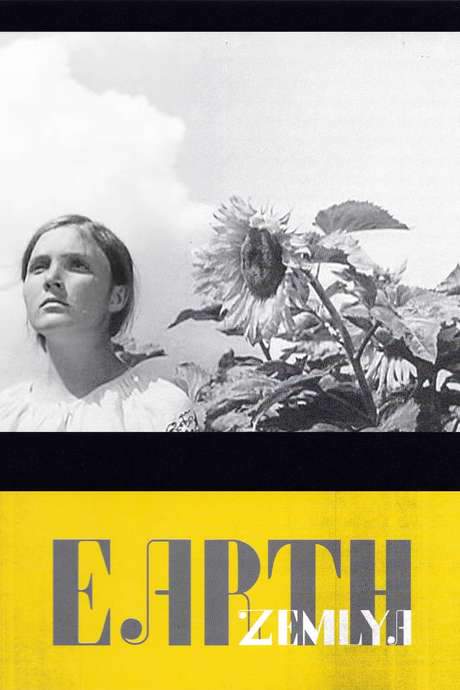


Featured on this page

What's After the Movie?
Not sure whether to stay after the credits? Find out!
Check out our other apps:

SAT Sphere
Build confidence for the Digital SAT.

Mori Atlas
Discover wild places worth protecting.

Luntero
Search smarter for a home in Amsterdam.

Plot Explained
Unravel movie endings and hidden clues.

Pokechamp
Dive into Pokémon data and battle logic.

Driving Theory
Get ready for your European theory test.

Movie Dust
Plan your next cinema trip with ease.

Musemap
Find art and culture as you travel.

Selkobase
Compare credentials before committing.

Local Manual
Turn an unfamiliar country into practical next steps.

Lernavi
Compare school systems before your next move.

GymRoam
Find a workout stop wherever your plans take you.
Explore Our Movie Platform
New Movie Releases (2026)
Famous Movie Actors
Top Film Production Studios
Movie Plot Summaries & Endings
Major Movie Awards & Winners
Best Concert Films & Music Documentaries
Movie Collections and Curated Lists
© 2026 What's After the Movie. All rights reserved.
Privacy Policy