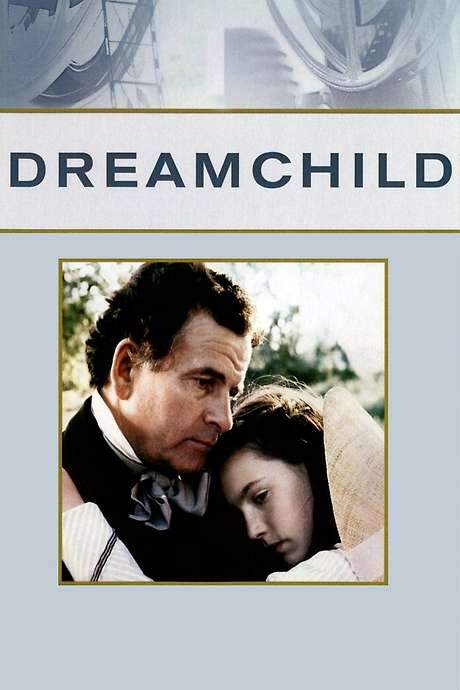
Dreamchild 1985


Directed by

Gavin Millar
Made by

Thorn EMI
Where to Watch Dreamchild
See current US streaming, rental, and purchase options for Dreamchild (1985) via JustWatch.









Dreamchild Plot Summary
Read the complete plot summary and ending explained for Dreamchild (1985). From turning points to emotional moments, uncover what really happened and why it matters.
On a voyage home, an elderly widow named Alice Hargreaves becomes the anchor of a small, fragile world. Coral Browne portrays the woman who inspired Lewis Carroll’s famous tales, and she travels with her devoted carer, Lucy, toward a future she’s not sure she wants to face. As the pair disembark, they are flooded by a whirlwind of questions from a phalanx of reporters seeking the truth about her relationship with Carroll, whom Alice once knew as “Mr. Dodgson.” In the midst of the chaos, a seasoned ex-reporter named Jack Dolan becomes a guardian and guide for the pair, and his presence soon turns into a practical partnership. Peter Gallagher gives us Jack’s steady, persuasive charm as he helps them navigate fame, money, and opportunity. A quiet romance begins to bloom between Jack and Lucy, a connection that grows amid the press’s glare and the uncertain terrain of Alice’s memories.
When the hotel doors close behind them, the line between memory and dream blurs. Alice finds herself confronted by an extraordinary guest list in their rooms: Dodgson himself appears as a ghostly presence, and so too do the iconic figures from Carroll’s world—the Mad Hatter, the March Hare, the Caterpillar, the Dormouse, the Mock Turtle, and the Gryphon. In the vivid tea party that follows, these imagined visitors tease Alice for her age and her forgetfulness, while simultaneously drawing out the layers of her past with Carroll. Dodgson’s ghostly figure is portrayed by Ian Holm, and alongside him, the other figures spring to life through the voices of their performers: the Mad Hatter Tony Haygarth, the March Hare Ken Campbell, the Caterpillar Frank Middlemass, the Dormouse Julie Walters, the Mock Turtle Alan Bennett, and the Gryphon Fulton Mackay. These reappearances are not simply pantomime; they illuminate Alice’s inner world and illuminate the distance between the world she inhabited with Carroll and the world she inhabits as an aging woman.
The film then reveals a troubling undercurrent: through deft flashbacks, it suggests that Dodgson’s fascination with Alice may have stretched into troubling territory. As Alice revisits the boating party of July 4, 1862—a memory that Carroll told as a playful story to entertain her and her sisters—she begins to see the past through a different lens. She suspects Dodgson’s jealousy when she later meets the man who would become her husband, and she recognizes a pattern of playful provocations that might have unsettled him, even provoking his nervous stutter. The story unfolds as a careful, memory-soaked examination of power, consent, and the ways affection can become entangled with control and desire.
Throughout these revelations, Alice wrestles with what she owes the man who shaped her childhood and what she owes to the life she built afterward. The tension between memory and truth sits at the center of her journey, and she uses the present to interpret the past with honesty. Jack Dolan serves as a practical counterpoint to the dreams and accusations, translating emotion into opportunity and providing a lifeline of support for Alice and Lucy against the relentless press and the weight of history. The romance between Jack and Lucy deepens, offering a hopeful thread amid the introspective storm.
As the film moves toward its quiet, dignified close, Alice reaches a hard-won understanding of the way she and Dodgson treated each other. In a final, dreamlike sequence with the Mock Turtle and the Gryphon, forgiveness makes room for peace. The result is not a simple yes or no, but a nuanced reconciliation where memory, aging, invention, and love converge in a testament to the complexity of a life lived in the glow of a legendary imagination. The film leaves us with a portrait of a woman who has learned to tell her own story with clarity, courage, and a measured kindness toward the past.
Dreamchild Timeline
Follow the complete movie timeline of Dreamchild (1985) with every major event in chronological order. Great for understanding complex plots and story progression.
Disembarkation chaos and new alliance
As Alice and Lucy step ashore, they are mobbed by journalists seeking a splashy quote about Mr. Dodgson. Jack Dolan intervenes, offering help and guiding their press coverage. The encounter begins a tense, purposeful negotiation with fame.
Dolan becomes agent and sparks romance
Dolan quickly becomes her agent, lining up endorsement opportunities and steering media narratives. He and Lucy grow closer amid the pressure, while Alice remains wary of the spotlight. A quiet romantic current forms between Jack and Lucy as the stories unfold.
Alice's hotel room hallucination begins
Alone in their hotel room, Alice hallucinates Dodgson and the Wonderland characters appearing in the room with her. They mock her aging and forgetfulness, mixing memory with fear and longing. The surreal visit deepens her internal struggle over their past relationship.
Tea party with Dodgson and Wonderland figures
During the fantasy, she joins the tea party where Dodgson and the Wonderland figures tease her for aging and memory lapses. The scene juxtaposes childish fantasy with the ache of aging and hints at buried tensions. It foreshadows the complexities of their history.
1862 boating party flashback
The film cuts to the lazy boating party of July 4, 1862, where Dodgson, then a mathematics professor at her father's college, entertains Alice and her sisters with a whimsical tale that grows into Alice's Adventures in Wonderland. This memory anchors the origins of their bond. It also lays the groundwork for possible, uneasy overtones in their relationship.
Insinuation of Dodgson's infatuation
Through further flashbacks, the film insinuates Dodgson harbored romantic feelings for Alice, suggesting an undercurrent beyond mentorship. The memory blends adoration with possessiveness, complicating the idea of him as a purely benevolent guide. These scenes blur the lines between guardian and admirer.
Dodgson's jealousy as Alice meets her future husband
Alice realizes Dodgson's jealousy when she meets the man who would become her husband, challenging his sense of possession. She recalls his uneasy reactions and the way he guarded his place in her life. The moment reframes the dynamic from mentorship to a power struggle.
Alice toys with Dodgson's affections
She recalls deliberately baiting his affections to provoke his nervous stutter, a revelation that complicates the late-19th-century dynamic of mentor and muse. The memory exposes a game-like tension beneath their interactions. It reframes Dodgson not just as a mentor, but as someone vulnerable to her tests.
Present-day self-reflection and understanding
Back in the present, Alice wrestles with her past, trying to understand what actually happened and what she wanted from Dodgson. She weighs memory against truth and questions how much of her story is shaped by nostalgia. The introspection lays the groundwork for choosing her path forward.
Columbia University acceptance speech
Delivering her acceptance speech at Columbia University, she begins to acknowledge Dodgson's role and the complexity of their relationship. The moment marks a turning point where she resolves to own her story rather than be defined by it. Emotions mix with resolve as she moves toward closure.
Final forgiveness fantasy
In a closing fantasy with the Mock Turtle and Gryphon, Alice and Dodgson forgive one another and find peace. The sequence reframes their history as something that can be reconciled in memory. It hints at healing rather than erasure and suggests resolution through imagination.
Resolution and moving forward
The film closes with Alice embracing her life with new clarity, supported by Lucy and Dolan, ready to move forward. Her past remains a mosaic rather than a verdict, shaping how she steps into the future. She carries the memory as insight, not guilt or shame.
Dreamchild Characters
Explore all characters from Dreamchild (1985). Get detailed profiles with their roles, arcs, and key relationships explained.
Alice Hargreaves (Coral Browne)
An elderly widow and former muse of Dodgson, Alice becomes the center of a media circus while confronting memories of her youth. Her reflections reveal a longing to understand the past and the uneasy power of memory to shape identity. She negotiates fame, aging, and the emotional resonance of a relationship that may have crossed boundaries.
Jack Dolan (Peter Gallagher)
A former reporter who becomes Alice’s agent, Jack uses his skills to secure endorsements and manage the media storm. His evolving relationship with Lucy adds a layer of romance and loyalty to the story. He navigates ethical gray areas in pursuit of opportunity while developing genuine care for Alice.
Mr. Dodgson / Lewis Carroll (Ian Holm)
A mathematician and author figure from Alice’s past, Dodgson is depicted as complex and perhaps possessive, with insinuations of jealousy and romantic feelings. The film revisits the enigmatic relationship between Dodgson and the Liddell sisters through fantasy sequences. He represents memory’s double-edged nature—fascination mixed with ethical ambiguity.
Dormouse (Julie Walters)
A whimsical fantasy figure who appears in the hallucinatory tea party, the Dormouse embodies the surreal and dreamlike quality of memory. As a voice, the character anchors the blend of fantasy and recollection. The Dormouse helps blur the line between childhood myth and adult memory.
Mad Hatter (Tony Haygarth)
A vivid fantasy presence at the tea party, the Mad Hatter embodies whimsy and irrationality within the remembered world. His interactions reflect the film’s interest in how stories are told and retold. He adds a layer of eccentricity that exposes memory’s playful distortions.
Gryphon (Fulton Mackay)
A creature from the dreamlike sequences, the Gryphon participates in the memory of Wonderland as experienced by Alice. He symbolizes the convergence of reality and imagination that drives the film’s exploration of memory. The character personifies the protective yet unsettling nature of recollection.
Caterpillar (Frank Middlemass)
Another surreal participant in the tea party, the Caterpillar embodies the reflective, sometimes cryptic guidance that appears in Alice’s memories. He contributes to the film’s tone of ambiguity and self-questioning. The character underscores how memory can be instructive yet enigmatic.
Dreamchild Settings
Learn where and when Dreamchild (1985) takes place. Explore the film’s settings, era, and how they shape the narrative.
Time period
1980s
The main action unfolds in the 1980s, with a contemporary Alice navigating fame and memory. Flashbacks transport the audience to 1862, the year of the famous boating party that sparked Dodgson’s relationship with the Liddell sisters. The juxtaposition of past and present highlights how memory reshapes history over time. The film uses these alternations to question what is remembered and what is forgotten.
Location
England, United Kingdom, Atlantic Ocean, New York City, United States
The story moves from an ocean crossing where elderly Alice Hargreaves and her carer Lucy disembark, to a hotel room crowded with journalists, and then into recollections that span England and America. Flashbacks bring viewers into scenes of Dodgson’s world—academia and storytelling—while present-day sequences unfold in media-frenzied spaces and urban contexts. The action shifts between intimate interiors and public spectacles, reflecting memory’s battlefield across continents and time.
Dreamchild Themes
Discover the main themes in Dreamchild (1985). Analyze the deeper meanings, emotional layers, and social commentary behind the film.
⏳
Memory
Dreamchild centers on aging and memory, showing an elderly Alice reflecting on her youth and the complex past with Dodgson. The narrative blurs lines between recollection and fiction, suggesting memory can embellish or reveal hidden truths. Through the tea-party fantasies, memory becomes a living dialogue with the past. Forgiveness and reconciliation emerge as memory is revisited and reinterpreted.
🗞️
Media
Journalists and publicity drive much of the plot, turning personal history into public spectacle. The press pressure creates a frenzied atmosphere around Alice, shaping how she is seen and remembered. The film critiques voyeuristic coverage and the way sensationalism can distort intimate relationships. Memory and truth clash under the glare of headlines.
💞
Romance & Ethics
A romance develops between Jack Dolan and Lucy, highlighting themes of trust, desire, and power dynamics in a constrained world. The story hints at Dodgson’s possible infatuation with Alice and the unsettling implications of that relationship. The romance complicates moral judgments and prompts questions about agency, exploitation, and forgiveness. Through these relationships, the film probes how love can both illuminate and distort memory.

Coming soon on iOS and Android
The Plot Explained Mobile App
From blockbusters to hidden gems — dive into movie stories anytime, anywhere. Save your favorites, discover plots faster, and never miss a twist again.
Sign up to be the first to know when we launch. Your email stays private — always.
Explore the mobile appDreamchild Spoiler-Free Summary
Discover the spoiler-free summary of Dreamchild (1985). Get a concise overview without any spoilers.
In the crisp halls of Columbia University, an eighty‑year‑old widow steps into the spotlight of a ceremony honoring a literary legend. Alice Hargreaves arrives with the quiet dignity of someone who once walked hand‑in‑hand with the man who would become Lewis Carroll, a friendship that sparked the fantasies that still echo through libraries and children’s imaginations. The film opens on her journey from a solitary voyage home to the bustling reception, inviting the audience to see the world through the eyes of a woman whose own story has been intertwined with myth for a lifetime.
Accompanying her is a devoted caretaker, Lucy, whose steady presence offers both practical support and a gentle counterbalance to the media frenzy that greets Alice. Among the throng of inquisitive reporters, a former journalist named Jack Dolan emerges as an unexpected ally, his seasoned charm and pragmatic outlook providing a bridge between Alice’s storied past and the present day. Their interactions hint at a quiet, budding connection that blooms amid the glare of cameras, suggesting that new affections can surface even as old memories linger, and that compassion can be found in the most unlikely of partnerships.
The tone remains wistful and lyrical, suffused with a dream‑like quality that blurs the line between reality and the fantastical realm that Carroll once conjured. As Alice reflects on the lingering emotional imprint of her childhood bond, the film teases the presence of familiar, almost spectral figures from those beloved tales, serving as metaphors for her inner dialogue. The result is a portrait of aging, imagination, and the delicate dance between reverence for a shared past and the quest to reclaim one’s own voice, all rendered in a gentle, contemplative style that invites curiosity without revealing the story’s deeper turns.
Movies with Similar Twists and Themes
Uncover films that echo the narrative beats, emotional arcs, or dramatic twists of the one you're exploring. These recommendations are handpicked based on story depth, thematic resonance, and spoiler-worthy moments — perfect for fans who crave more of the same intrigue.
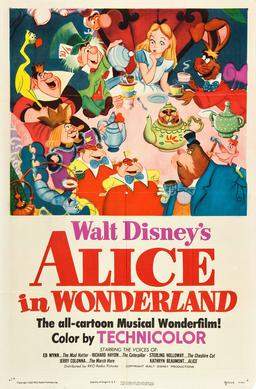
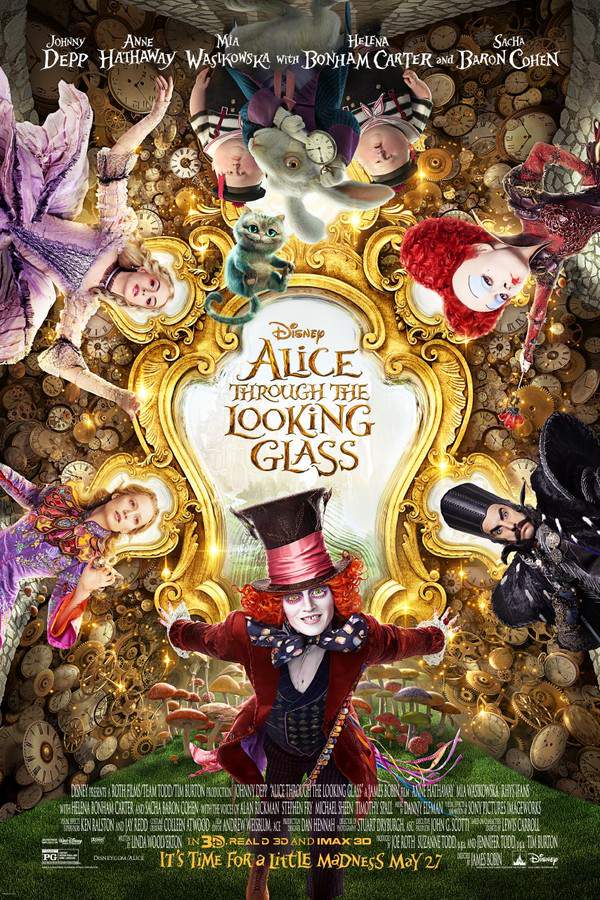
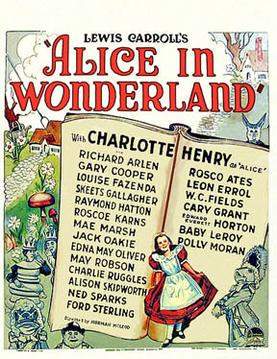



Featured on this page

What's After the Movie?
Not sure whether to stay after the credits? Find out!
Check out our other apps:

SAT Sphere
Build confidence for the Digital SAT.

Mori Atlas
Discover wild places worth protecting.

Luntero
Search smarter for a home in Amsterdam.

Plot Explained
Unravel movie endings and hidden clues.

Pokechamp
Dive into Pokémon data and battle logic.

Driving Theory
Get ready for your European theory test.

Movie Dust
Plan your next cinema trip with ease.

Musemap
Find art and culture as you travel.

Selkobase
Compare credentials before committing.

Local Manual
Turn an unfamiliar country into practical next steps.

Lernavi
Compare school systems before your next move.

GymRoam
Find a workout stop wherever your plans take you.
Explore Our Movie Platform
New Movie Releases (2026)
Famous Movie Actors
Top Film Production Studios
Movie Plot Summaries & Endings
Major Movie Awards & Winners
Best Concert Films & Music Documentaries
Movie Collections and Curated Lists
© 2026 What's After the Movie. All rights reserved.
Privacy Policy