What Is Alice About?
The premise of Alice in 280 words, with nothing given away. The full story follows below.
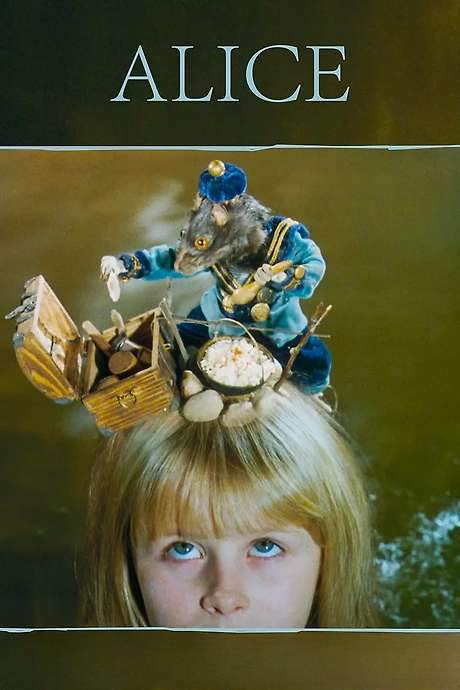
In a quiet English countryside, a gentle girl named Alice spends a tranquil afternoon by a brook with her sister, the world shimmering with simple, sun‑dappled calm. That serenity fractures the moment a curious white rabbit darts past, beckoning her into a slipstream that yawns open a distorted mirror of her own home. The ordinary walls melt away, and she finds herself amid an uncanny landscape where familiar household objects—teacups, clocks, and stuffed toys—move with a faint, animated breath, their surfaces humming with a strange, almost sentient life.
The film paints this surreal realm in vivid, painterly strokes, turning the mundane into a nightmarish carnival of oddities. Shadows stretch, corridors bend, and the very sense of scale becomes fluid, forcing Alice to confront a series of bewildering obstacles that feel both whimsical and unsettling. The tone balances feverish imagination with a quiet dread, as each new corner reveals a fresh tableau of animated curiosities that both enchant and confound. The atmosphere is deliberately dream‑like, inviting the viewer to linger between wonder and unease, never quite sure where reality ends and fantasy begins.
At the heart of the story is Alice’s instinctive curiosity and fragile resolve. Her quiet determination carries her deeper into this warped version of her world, where every ordinary object is a potential guide—or a silent trap. Alongside the enigmatic white rabbit, whose presence feels at once mischievous and oddly purposeful, she navigates the shifting scenery with a blend of childlike awe and growing awareness that the path ahead is anything but predictable. The film promises a visually arresting journey through a reimagined Wonderland, where the line between imagination and waking life blurs into a hauntingly beautiful tableau.
What Happens in Alice?
The complete story of Alice, from the first scene to the last, in 954 words (about 4 minutes). Spoilers throughout.
Spoilers ahead
Alice begins with a quiet, almost pastoral scene: she sits by a brook with her sister, tossing rocks into the water, a simple, childlike moment that soon gives way to something stranger. Back indoors, the mood shifts as she experiments with rocks in a cup of tea, a small domestic ritual that quickly spirals into a surreal confrontation with a taxidermic White Bunny kept in a glass case. The Bunny—alive, determined, and oddly precise—dresses himself and retrieves a pair of scissors from a hidden drawer, using them to smash the case and free himself. The moment is both whimsical and unsettling, a signal that the ordinary has begun to crack open.
From there, the story unfolds like a hinge snapping between rooms and realities. Alice chases the Bunny into a writing desk perched atop a hill, and when she crawls into the drawer behind him, she tumbles into a cellar of improbable architecture. An elevator carries her past shelves stacked with curious objects, finally depositing her onto a bed of leaves that seem to wake and rustle on their own. The leaves reveal yet another desk with a tiny key, which she uses to unlock a miniature door. Beyond it, the Bunny disappears into a painted garden, but Alice herself is too large to pass through. She discovers an unlabeled bottle filled with a dark inky liquid and, upon drinking it, shrinks into a little china doll that mirrors her own form. A second discovery—a butter tart—causes her to grow large again, trapping her in a cycle of shifting sizes that prevents her from reaching the door. Frustration tears at her, and the room fills with her own tears, a quiet flood that seems to animate the world around her. The Bunny arrives again, rolling by with a tray of tarts, and one bite from another tart returns Alice to doll size, allowing her to seize the key and pursue her pursuer.
Crossing back through the door, she returns to the brook’s banks and encounters the White Bunny once more. He mistakes her for his maid and orders her to fetch scissors from his house. Inside, another bottle of ink sends her back to her true size, and she finds herself momentarily trapped inside a house that has become too small for her. The Bunny, accompanied by his animal friends, attempts to force her out by sending a skull-headed lizard down the chimney. Alice defeats the creature by kicking it away, which causes it to burst and spill its sawdust innards. The resulting fury of the animals culminates in the imprisonment of Alice inside an Alice-shaped doll shell, locked away in a storage room filled with specimen jars.
Her resilience returns her to freedom: Alice breaks free from the doll shell and discovers a key inside a sardine can. With the key, she escapes into a hall lined with doors and must choose among many possibilities. Behind one door she encounters a stocking-ed Caterpillar who speaks in riddling terms while the room is swarmed with sock-worms that bore holes in the floor. The Caterpillar explains that eating one piece of his darning mushroom makes things grow, while the other piece causes everything to shrink. The sound of a screaming baby leads Alice to a tiny dollhouse, which she enlarges by consuming the growing piece of the mushroom. In this room, she finds the Bunny tending a piglet dressed in baby clothes. The Bunny escapes again, and Alice chases the piglet downstairs to a workshop where a mechanical tea party unfolds, hosted by a wind-up March Hare and a marionette Hatter.
The Bunny races to the attic, with Alice in pursuit, and she finally reaches the painted garden she has followed all along. There the King and Queen of Hearts enter with a retinue of playing cards. The Queen commands the White Bunny to behead two fencing Jacks, and he complies, cutting down the adversaries with his sharp scissors. The Queen then invites Alice to join a game of croquet, but things quickly turn ridiculous and dangerous as mallets and balls morph into living chickens and hedgehogs. A courtroom scene follows, where Alice is placed on trial for eating the Queen’s tarts. Her attempts to explain herself are brushed aside, and the King forces her to follow a script. In a moment of defiant certainty, Alice begins to eat the tarts herself, provoking the Queen’s demand for her head. The trial escalates as the Queen decrees that all heads must be severed, and the Bunny advances with his scissors, a climactic reminder that in this dreamlike world, rules shift with every turn.
Suddenly the world shifts again, and Alice wakes in her sitting room. The room now resembles a museum of dream-objects: playing cards, china dolls, marionettes, an inkwell, and socks in a sewing basket. The broken case that once housed the taxidermic Bunny remains empty, yet a hidden drawer within it reveals the Bunny’s own scissors. Holding them, Alice reflects on the strange lull between dream and wakefulness, a realization that the Bunny is “late, as usual,” and that the instrument of his fate might be within reach.
Which one?
The final image is both eerie and intimate: the variety of objects from the dream—cards, dolls, marionettes, and sewing tools—are now arrayed around her in the room as if the dream has bled into reality. The possibility of a final act lingers in her mind, signaled by the quiet, almost casual thought that she might cut his head off. The tale leaves Alice in a liminal space, with the scissors as a tangible symbol of control and consequence, and with the unsettling sense that the boundaries between imagination and waking life are deliberately blurred.
Alice Timeline: Every Key Event in Order
15 key events in the order they happen, from “Alice and her sister by the brook” to “The trial and waking in the sitting room”. 15 events name a place, across 15 locations.
- 1
Alice and her sister by the brook
Alice sits by a brook with her sister and throws rocks into the water. The peaceful moment hints at the imagination that will pull her into a strange world. The scene establishes a dreamy, childlike mood that underlines the adventure to come.
When:afternoon Where:Brook
- 2
Back home in the sitting room tossing rocks into tea
Back at home, Alice returns to her sitting room and begins tossing rocks into a cup of tea. The ordinary ritual contrasts with the peculiar tremor in the air around her. A sense that something uncanny is about to happen hangs over the scene.
When:afternoon Where:Alice's sitting room
- 3
The Bunny comes alive from the glass case
A creaking noise draws Alice's attention to a taxidermic White Bunny in a glass case. The Bunny moves, frees himself by grabbing a hidden pair of scissors, and smashes the case to escape. His sudden liberation marks the start of a surreal chase.
When:moments after Where:Sitting room by the glass case
- 4
Chase to the hilltop desk and fall into the cellar
The Bunny darts toward a writing desk perched on a hill, and Alice follows into the pursuit. She crawls into the drawer and tumbles into a dark cellar beneath the desk. The descent plunges her into a strange, new realm.
When:immediately after Where:Writing desk on a hill
- 5
Descent through the dustbin and elevator ride
Inside this other world, Alice slips into a dustbin and slides into an elevator that travels past shelves of odd objects. The elevator stops and deposits her atop a pile of leaves. The leaves stir, revealing another desk beyond.
When:shortly after Where:Dustbin / Elevator
- 6
Discovery of the tiny desk and key; miniature door and ink bottle
The leaves uncover a new desk where a tiny key hides nearby. Alice uses the key to open a miniature door and sees the Bunny vanish into a painted garden. She also spots an unlabeled bottle of dark ink nearby, hinting at future powers.
When:soon after Where:New desk world / miniature door area
- 7
Ink transforms Alice into a china doll
Alice drinks the dark ink and shrinks into a delicate china doll, unable to fit through the tiny door. The altered size makes the world feel both wondrous and perilous. The transformation foreshadows the changing scales of her journey.
When:shortly after Where:Miniature door area
- 8
Butter tart triggers size change; tears flood; Bunny drops tarts
A butter tart makes her grow again, blocking the path through the door. Frustration erupts into tears, flooding the room with water-like tears. The Bunny arrives with a tray of tarts; after eating one, Alice returns to doll size and retrieves the key to continue the chase.
When:later Where:Desk world
- 9
Back to the brook; maid misrecognition and ink return to size
Through the door, Alice returns to the banks of a brook and is mistaken for the Bunny’s maid, who orders her to fetch scissors from his house. Inside, she drinks from another ink bottle and becomes her true size again, only to be trapped inside the Bunny’s now-too-small house. The Bunny’s allies then send a skull-headed lizard down the chimney to eject her, but it bursts, spilling its sawdust innards.
When:after Where:Brook / Bunny's house
- 10
Imprisoned in a doll shell within a jars-filled storage room
The Bunny and his animal companions trap Alice inside an Alice-shaped doll shell, locking it in a storage room filled with specimen jars. Her confinement intensifies the sense of danger and claustrophobic magic. She strains to find a way out of this surreal prison.
When:after Where:Storage room with specimen jars
Show the other 5 events of Alice Hide the last 5 events
- 11
Escape with the sardine can key; hall of doors
Alice breaks free of the doll shell and discovers a key inside a sardine can. She uses the key to escape the storage room and steps into a hall of doors, each one leading to a different corner of the dreamlike world. The journey continues as she prepares to choose her next path.
When:after Where:Storage room to hall of doors
- 12
Caterpillar and mushroom advice
In a room filled with sock-worms, a stocking-Caterpillar explains that eating one piece of his darning mushroom causes things to grow, while the other piece makes things shrink. He warns that size can be a tool or a trap depending on how it’s used. Alice weighs this knowledge as she plans her next move.
When:after Where:Hall of doors
- 13
Dollhouse enlargement and Bunny piglet; attic pursuit
Following the sound of a screaming baby, Alice enters a tiny dollhouse and enlarges herself by eating a piece of the mushroom. She finds the Bunny tending a piglet in baby clothes, and the Bunny escapes, prompting her to chase him to the attic. There, a wind-up March Hare and a marionette Hatter host a mechanical tea party as she closes in.
When:after Where:Dollhouse / Attic
- 14
Painted garden, croquet, and court chaos
Behind a curtain of clothes, Alice reaches the painted garden where the King and Queen of Hearts arrive with a troop of playing cards. The Queen orders the Bunny to behead several Jacks, and he complies, turning the croquet lawn into a chaotic spectacle of living animals. The surreal court grows increasingly ominous as events unfold.
When:climax Where:Painted garden
- 15
The trial and waking in the sitting room
In a courtroom-like finale, Alice is put on trial for eating the Queen's tarts. The King pushes a scripted procedure and the Queen demands her head, while the Bunny advances with scissors. The dream ends as Alice wakes up in her sitting room, the room filled with familiar objects her adventure completed, and she considers her next move with the hidden drawer and its scissors nearby.
When:end Where:Sitting room
Who Are the Main Characters in Alice?
7 characters, among them Alice, White Bunny and Queen of Hearts: who each one is and the part they play in the story.
- A
Alice
A curious and resourceful girl who navigates a shifting dreamscape after encountering the living White Bunny. She demonstrates determination and quick thinking, using wit to outmaneuver threats. Her journey blends childhood wonder with a growing resolve to shape her own story.
- 🎀 Protagonist
- 🧠 Curious
- 🌀 Imaginative
- WB
White Bunny
A cunning figure who breaks free from a glass case and manipulates events with a mix of charm and menace. He drives the action by demanding tasks and pursuing his own mysterious goals. His presence destabilizes the dream, keeping Alice on edge.
- 🎭 Trickster
- 🗝️ Key-bearer
- QO
Queen of Hearts
A capricious ruler who commands the court with theatrical authority and issues beheadings as a display of power. Her demands set the stakes for the courtroom and threaten Alice's safety. She embodies tyranny exercised through spectacle and fear.
- 👑 Ruler
- ⚖️ Tyrannical
- KO
King of Hearts
A sovereign who enforces the script and participates in issuing orders. His presence reinforces the formal structure of the dream court and the ritualistic nature of authority within the realm. He contributes to the sense of a rigid, rule-bound world.
- 👑 Authority
- 🎭 Ritual
- S
Stocking-Caterpillar
A stockings-clad caterpillar who offers guidance about growth and shrinking through a mushroom. He acts as a cryptic mentor within the dream logic, shaping Alice's abilities to alter size and perspective. His advice is pivotal to navigating the dreamscape's rules.
- 🪲 Mentor
- 🌱 Transformative
- MH
March Hare
A wind-up host of a mechanical tea party, adding a whimsical but unsettling energy to the scene. He participates in the dream's ornate rituals and contributes to the clockwork feel of the world. His presence emphasizes the fusion of playfulness with unease.
- 🎩 Eccentric
- 🫖 Host
- H
Hatter
A wind-up marionette who moves with a precise, timekeeping cadence, part of the dream's mechanical tea party. He embodies the era's blend of whimsy and control, complicating the boundaries between performer and prey. His actions propel the story through the party's surreal progression.
- 🧰 Mechanized
- ⏳ Timeless
Where and When Is Alice Set?
Alice is set in Alice's sitting room, brook by the house, writing desk on a hill, cellar…. Here is why the place matters to the story.
When
Time is presented as timeless and fluid, not tied to a specific year. The story moves through a sequence of shifting spaces that feel like a fairytale rather than a historical period. Monarch imagery and playing-card symbolism hint at a fairy-tale past, yet the era remains deliberately undefined to preserve the dreamlike mood.
Where
Alice's sitting room, brook by the house, writing desk on a hill, cellar, elevator past shelves, painted garden, storage room with specimen jars
The setting starts in a familiar home and quickly spills into a dreamlike landscape where rooms twist and doors lead to new realms. From a quiet brook to a glass-case world and a hall of doors, the film moves through a series of surreal locations. The environment blends domestic comfort with fantastical danger, creating a dreamscape where objects come alive and geography is fluid.
- 🌟 Dreamy
- 🧭 Surreal
- 🗺️ Shifting spaces
What Are the Themes of Alice?
3 ideas the story keeps returning to, among them Fantasy, Identity and Authority.
-
01
Fantasy
The movie embraces magical logic where objects awaken and doors transport characters to impossible places. Alice navigates a world governed by whimsy and risk, where imagination dictates action more than rules. The whimsy and danger are intertwined, driving her journey through curiosity and courage.
-
02
Identity
Alice undergoes transformations in size and form, challenging perceptions of who she is. The doll-like moment and changing shapes blur the line between self and role, prompting reflection on agency. The dream world forces a reconsideration of identity as flexible and evolving.
-
03
Authority
Power is exercised through spectacle and ritual by a Queen and King who enforce a scripted order. The White Bunny's actions highlight how control can be both charming and dangerous. The clash between obedience and rebellion fuels the tension and drives the narrative toward confrontation.
What Kind of Film Is Alice?
Whimsical in tone, with variable pacing and a moderate story, going by the plot summary.
- Tone
- Whimsical
- Pacing
- Variable
- Story
- Moderate
- Intensity
- Medium
- Ending
- Ambiguous
A visually striking and unsettlingly whimsical journey that feels like a lucid dream, where a young girl navigates a fluid, unpredictable world of animated objects and shifting logic, leaving lasting questions about reality.
- dreamlike
- surreal
- unsettling
- quirky
- nightmarish
- confining
- surrealism
- female protagonist
- subconscious journey
- distorted reality
Content notes: confinement, decapitation threat, psychological disorientation.
Quiz
How well do you remember Alice? Test yourself on the story.