Alice 1988

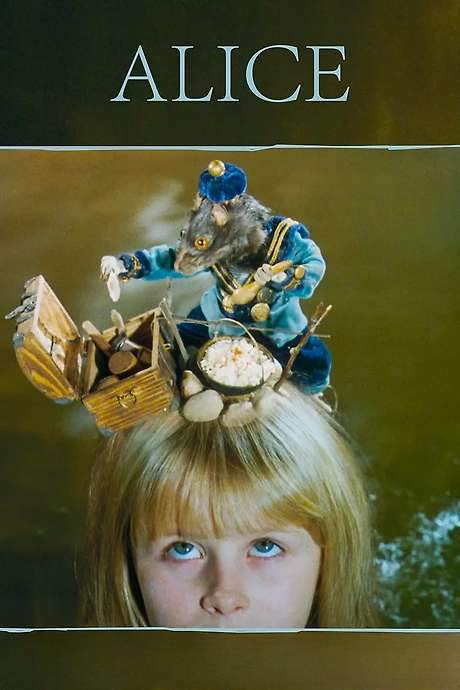
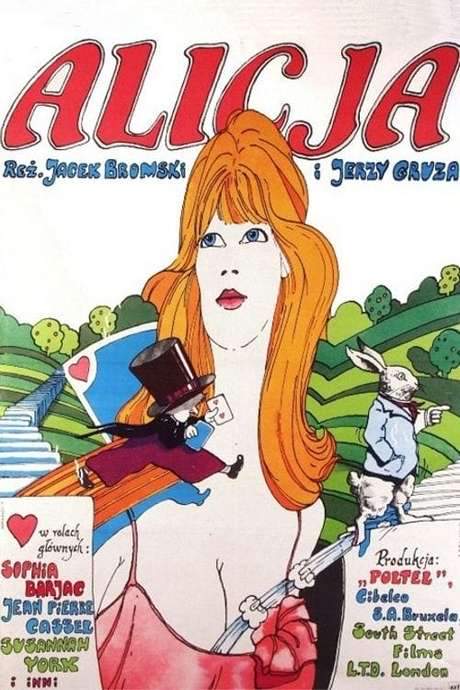
A quiet English girl named Alice chases a white rabbit and slips into a distorted version of her own world. She is surrounded by animated household objects and stuffed animals, confronting a surreal nightmare that forces her to navigate twisted, odd obstacles to escape. The film offers a bizarre, visually striking reinterpretation of Lewis Carroll’s ‘Alice’s Adventures in Wonderland’.



Does Alice have end credit scenes?
No!
Alice does not have end credit scenes. You can leave when the credits roll.
Meet the Full Cast and Actors of Alice
Explore the complete cast of Alice, including both lead and supporting actors. Learn who plays each character, discover their past roles and achievements, and find out what makes this ensemble cast stand out in the world of film and television.


External Links and Streaming Options
Discover where to watch Alice online, including streaming platforms, rental options, and official sources. Compare reviews, ratings, and in-depth movie information across sites like IMDb, TMDb, Wikipedia or Letterboxd.




Take the Ultimate Alice Movie Quiz
Challenge your knowledge of Alice with this fun and interactive movie quiz. Test yourself on key plot points, iconic characters, hidden details, and memorable moments to see how well you really know the film.
Alice from 1988 Quiz: Test your knowledge of the surreal adventure of Alice in the 1988 film, covering characters, objects, and key moments.
What type of creature is the White Bunny in the film?
Full Plot Summary and Ending Explained for Alice
Read the complete plot summary of Alice, including all major events, twists, and the full ending explained in detail. Explore key characters, themes, hidden meanings, and everything you need to understand the story from beginning to end.
Alice begins with a quiet, almost pastoral scene: she sits by a brook with her sister, tossing rocks into the water, a simple, childlike moment that soon gives way to something stranger. Back indoors, the mood shifts as she experiments with rocks in a cup of tea, a small domestic ritual that quickly spirals into a surreal confrontation with a taxidermic White Bunny kept in a glass case. The Bunny—alive, determined, and oddly precise—dresses himself and retrieves a pair of scissors from a hidden drawer, using them to smash the case and free himself. The moment is both whimsical and unsettling, a signal that the ordinary has begun to crack open.
From there, the story unfolds like a hinge snapping between rooms and realities. Alice chases the Bunny into a writing desk perched atop a hill, and when she crawls into the drawer behind him, she tumbles into a cellar of improbable architecture. An elevator carries her past shelves stacked with curious objects, finally depositing her onto a bed of leaves that seem to wake and rustle on their own. The leaves reveal yet another desk with a tiny key, which she uses to unlock a miniature door. Beyond it, the Bunny disappears into a painted garden, but Alice herself is too large to pass through. She discovers an unlabeled bottle filled with a dark inky liquid and, upon drinking it, shrinks into a little china doll that mirrors her own form. A second discovery—a butter tart—causes her to grow large again, trapping her in a cycle of shifting sizes that prevents her from reaching the door. Frustration tears at her, and the room fills with her own tears, a quiet flood that seems to animate the world around her. The Bunny arrives again, rolling by with a tray of tarts, and one bite from another tart returns Alice to doll size, allowing her to seize the key and pursue her pursuer.
Crossing back through the door, she returns to the brook’s banks and encounters the White Bunny once more. He mistakes her for his maid and orders her to fetch scissors from his house. Inside, another bottle of ink sends her back to her true size, and she finds herself momentarily trapped inside a house that has become too small for her. The Bunny, accompanied by his animal friends, attempts to force her out by sending a skull-headed lizard down the chimney. Alice defeats the creature by kicking it away, which causes it to burst and spill its sawdust innards. The resulting fury of the animals culminates in the imprisonment of Alice inside an Alice-shaped doll shell, locked away in a storage room filled with specimen jars.
Her resilience returns her to freedom: Alice breaks free from the doll shell and discovers a key inside a sardine can. With the key, she escapes into a hall lined with doors and must choose among many possibilities. Behind one door she encounters a stocking-ed Caterpillar who speaks in riddling terms while the room is swarmed with sock-worms that bore holes in the floor. The Caterpillar explains that eating one piece of his darning mushroom makes things grow, while the other piece causes everything to shrink. The sound of a screaming baby leads Alice to a tiny dollhouse, which she enlarges by consuming the growing piece of the mushroom. In this room, she finds the Bunny tending a piglet dressed in baby clothes. The Bunny escapes again, and Alice chases the piglet downstairs to a workshop where a mechanical tea party unfolds, hosted by a wind-up March Hare and a marionette Hatter.
The Bunny races to the attic, with Alice in pursuit, and she finally reaches the painted garden she has followed all along. There the King and Queen of Hearts enter with a retinue of playing cards. The Queen commands the White Bunny to behead two fencing Jacks, and he complies, cutting down the adversaries with his sharp scissors. The Queen then invites Alice to join a game of croquet, but things quickly turn ridiculous and dangerous as mallets and balls morph into living chickens and hedgehogs. A courtroom scene follows, where Alice is placed on trial for eating the Queen’s tarts. Her attempts to explain herself are brushed aside, and the King forces her to follow a script. In a moment of defiant certainty, Alice begins to eat the tarts herself, provoking the Queen’s demand for her head. The trial escalates as the Queen decrees that all heads must be severed, and the Bunny advances with his scissors, a climactic reminder that in this dreamlike world, rules shift with every turn.
Suddenly the world shifts again, and Alice wakes in her sitting room. The room now resembles a museum of dream-objects: playing cards, china dolls, marionettes, an inkwell, and socks in a sewing basket. The broken case that once housed the taxidermic Bunny remains empty, yet a hidden drawer within it reveals the Bunny’s own scissors. Holding them, Alice reflects on the strange lull between dream and wakefulness, a realization that the Bunny is “late, as usual,” and that the instrument of his fate might be within reach.
Which one?
The final image is both eerie and intimate: the variety of objects from the dream—cards, dolls, marionettes, and sewing tools—are now arrayed around her in the room as if the dream has bled into reality. The possibility of a final act lingers in her mind, signaled by the quiet, almost casual thought that she might cut his head off. The tale leaves Alice in a liminal space, with the scissors as a tangible symbol of control and consequence, and with the unsettling sense that the boundaries between imagination and waking life are deliberately blurred.

Coming soon on iOS and Android
The Plot Explained Mobile App
From blockbusters to hidden gems — dive into movie stories anytime, anywhere. Save your favorites, discover plots faster, and never miss a twist again.
Sign up to be the first to know when we launch. Your email stays private — always.
Explore the mobile appDiscover Film Music Concerts Near You – Live Orchestras Performing Iconic Movie Soundtracks
Immerse yourself in the magic of cinema with live orchestral performances of your favorite film scores. From sweeping Hollywood blockbusters and animated classics to epic fantasy soundtracks, our curated listings connect you to upcoming film music events worldwide.
Explore concert film screenings paired with full orchestra concerts, read detailed event information, and secure your tickets for unforgettable evenings celebrating legendary composers like John Williams, Hans Zimmer, and more.


Alice Themes and Keywords
Discover the central themes, ideas, and keywords that define the movie’s story, tone, and message. Analyze the film’s deeper meanings, genre influences, and recurring concepts.
Alice Other Names and Titles
Explore the various alternative titles, translations, and other names used for Alice across different regions and languages. Understand how the film is marketed and recognized worldwide.
Similar Movies To Alice You Should Know About
Browse a curated list of movies similar in genre, tone, characters, or story structure. Discover new titles like the one you're watching, perfect for fans of related plots, vibes, or cinematic styles.




Quick Links: Summary, Cast, Ratings, More

What's After the Movie?
Not sure whether to stay after the credits? Find out!
Check out our other apps:

SAT Sphere
Build confidence for the Digital SAT.

Mori Atlas
Discover wild places worth protecting.

Luntero
Search smarter for a home in Amsterdam.

Plot Explained
Unravel movie endings and hidden clues.

Pokechamp
Dive into Pokémon data and battle logic.

Driving Theory
Get ready for your European theory test.

Movie Dust
Plan your next cinema trip with ease.

Musemap
Find art and culture as you travel.

Selkobase
Compare credentials before committing.

Local Manual
Turn an unfamiliar country into practical next steps.

Lernavi
Compare school systems before your next move.

GymRoam
Find a workout stop wherever your plans take you.
Explore Our Movie Platform
New Movie Releases (2026)
Famous Movie Actors
Top Film Production Studios
Movie Plot Summaries & Endings
Major Movie Awards & Winners
Best Concert Films & Music Documentaries
Movie Collections and Curated Lists
© 2026 What's After the Movie. All rights reserved.
Privacy Policy