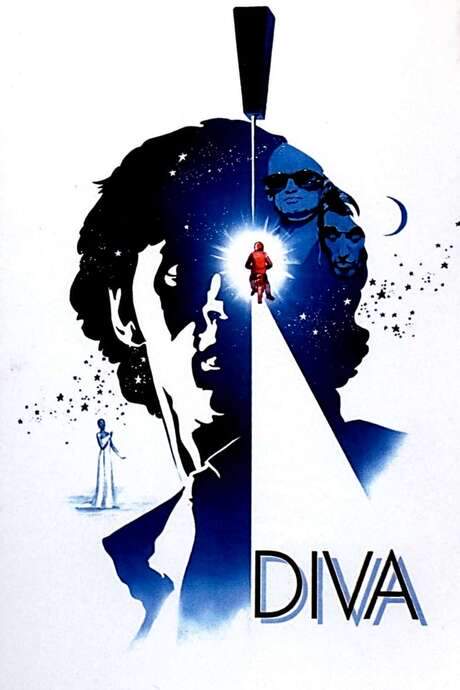
Diva 1981

Directed by

Isabelle Mergault
Made by

France 2
Where to Watch Diva
See current US streaming, rental, and purchase options for Diva (1981) via JustWatch.







Diva Plot Summary
Read the complete plot summary and ending explained for Diva (1981). From turning points to emotional moments, uncover what really happened and why it matters.
Jules, Frédéric Andréi, a young Parisian postman, is obsessed with opera, especially with Cynthia Hawkins, Wilhelmenia Fernandez, a celebrated American soprano whose voice has never been committed to tape. He attends a recital where Hawkins performs the aria Ebben? Ne andrò lontana from La Wally, and, with a mix of audacity and tenderness, he records a pristine bootleg of her performance using a Nagra tape-recorder. In a dangerous spin of luck and nerve, he also seizes the gown she wore from her dressing room, an object that will become a flashpoint for everything that follows. The thrill of capturing such a rare voice on tape pulls Jules deeper into a world where art and crime intertwine, and his single-minded devotion to Hawkins begins to blur the line between admiration and obsession.
Soon after, Jules accidentally comes into possession of an audio cassette containing Nadia’s testimony, which exposes Commissaire divisionnaire Jean Saporta, the man in charge of a tangled drug trafficking and prostitution racket. Nadia, Chantal Deruaz, slips the cassette into the bag of Jules’s moped just before she is killed by Saporta’s two relentless enforcers, L’Antillais and Le Curé. The moment is chaotic and cold, and the consequences ripple outward in every direction. Two police officers, Paula Anny Romand and Zatopek Patrick Floersheim, begin pursuing Jules, convinced he holds the key to a larger crime, even as they themselves become targets in a shifting game of power. Saporta’s leverage grows as his henchmen hunt Jules through the city, while two Taiwanese men race to obtain Jules’s irreplaceable recording of Hawkins, hoping to leverage the sensational material into a lucrative contract or a fatal secret. The chase tightens around Jules, who finds himself drawn into a widening conspiracy that seems to involve everyone around him.
Seeking refuge, Jules finds shelter with the bohemian Serge Gorodish, a charismatic figure who becomes his guardian in a storm he never asked for. Gorodish, Richard Bohringer, and his companion Alba, Thuy An Luu, offer Jules a temporary safe haven and a chance to breathe amid the danger. With their help, Jules plans a risky move: he intends to return Hawkins’s dress to the star at her luxury hotel, hoping to mollify the chaos around him and perhaps win a measure of Hawkins’s trust. The encounter with Hawkins becomes a delicate dance of boundaries and longing. Initially furious at the intrusion, Hawkins softens as she senses the sincerity behind Jules’s obsessive devotion, and a tentative bond begins to form between the two of them. Their morning walk through the Jardin des Tuileries, underscored by a piano backdrop, hints at something gentler blooming within the turbulent storm surrounding them.
Meanwhile, the pressure from the two Taiwanese figures intensifies as they threaten Hawkins with a coercive recording contract, pressing her to surrender to their terms. She refuses, standing firm against the idea of exploiting the moment for a manipulative deal. Jules, meanwhile, is hunted through the labyrinth of Paris’s streets and tunnels, and after a perilous chase he hides in the apartment of a prostitute friend, only to realize too late that she is entangled with Saporta’s criminal network. He escapes just before L’Antillais and Le Curé close in, but the danger follows him like a shadow. The enforcers catch up with him, and Jules is shot, though Gorodish arrives in time to pull him to safety. The two of them speed away to a remote lighthouse outside Paris in Gorodish’s vintage Citroën Traction Avant, a moving sanctuary where the recording’s power can be wielded without immediate consequence.
With Jules safe for the moment, Gorodish uses the incriminating recording to press Saporta for leverage. Saporta agrees to pay off Gorodish, yet the meeting is a ruse, built on the fear that Gorodish could expose him to the world. Before they can settle the score, two Taiwanese operatives interrupt and grab the cassette, thinking it contains Jules’s reel of Hawkins. Saporta, determined to crush any threat to his empire, detonates a remote control bomb under Gorodish’s car, killing the foreign intruders and sending Gorodish and his car careening away in an identical Citroën that he had secretly stored in advance. The chase continues to twist, and the true stakes begin to reveal themselves: not merely a confrontation over a single recording, but a battle over control, loyalty, and the very future of everyone involved.
Back in Paris, Jules returns to Hawkins’s orbit, hoping to hand her the bootleg as a sign of trust and perhaps to set things right. But outside her hotel, L’Antillais and Le Curé lie in wait, abducting Jules and dragging him back to his loft for a staged suicide that will silence him once and for all. Yet Paula remains vigilant, keeping a close eye on Jules’s apartment. She intervenes at the last moment, killing Le Curé and wounding L’Antillais, a strike that tilts the balance away from Saporta’s lethal plan. Saporta himself reappears, eliminating his remaining henchman and aiming to pour suspicion onto Jules and Paula by staging their demise as if carried out by his workers. Gorodish returns to the fray, outsmarting Saporta by luring him into an empty elevator shaft where the sinister official meets his end, tumbling to his death.
In the film’s final act, Jules makes his way back to Hawkins for one last, intimate moment. They meet in an empty theater, and Jules lovingly plays the La Wally bootleg for her, a private performance that forces Hawkins to confront her own vulnerability. She admits she has never heard herself sing in this way before, a confession that exposes both the awe and the fear she holds about her own legend. The moment crystallizes a bond built on shared longing and danger, a fragile solace carved out of a world that demanded more than art, more than fame, and more than either could safely give. The finale lingers on this fragile connection, offering a quiet, human beat amid the tumult of pursuit, power, and the indiscriminate pull of music.
Diva Timeline
Follow the complete movie timeline of Diva (1981) with every major event in chronological order. Great for understanding complex plots and story progression.
Jules records Hawkins and steals her gown
Jules, a young Parisian postman obsessed with opera, attends a Cynthia Hawkins recital and secretly records her performance with a Nagra tape-recorder. He also steals the gown she wore backstage, taking a provocative memento from the event. This act marks the beginning of his dangerous fixation and sets the plot in motion.
Nadia's cassette is found; Nadia is killed
Jules comes into possession of an audio cassette containing Nadia's testimony about Saporta's drug and prostitution racket. Nadia drops the cassette into the bag of Jules' moped moments before Saporta's henchmen kill her. The incriminating recording becomes a dangerous catalyst that pulls Jules into a web of crime and surveillance.
Paula and Zatopek begin pursuit
Police officers Paula and Zatopek begin chasing Jules, convinced he holds crucial evidence but unaware that Saporta is their own boss' ally. They pursue him through Paris streets, adding pressure from the law to the criminals' pursuit. The manhunt broadens the danger surrounding Jules.
Jules seeks refuge with Gorodish and Alba
To escape, Jules seeks refuge with Serge Gorodish, a mysterious bohemian, and his companion Alba. They shelter him in Gorodish's Paris hideout, offering protection from Saporta and the pursuit. A fragile bond forms as they navigate a shared peril.
Hawkins' dress returned; romance begins
Jules returns Hawkins' dress at the singer's luxury hotel, and she initially reacts with anger. Hawkins eventually forgives him, and a romantic mood develops as they walk together through the Jardin des Tuileries in the early morning, accompanied by a piano-like backdrop.
Taiwanese pressure Hawkins on a recording contract
The Taiwanese agents threaten to release Jules' bootleg recording unless Hawkins signs a recording contract. She indignantly refuses, resisting the coercion and the exploitative pressure surrounding her art. The threat adds another layer of risk for Jules and those around him.
Moped chase through the Paris Métro
Jules is spotted and chased by the police, but escapes by riding his moped through the Paris Métro system. He uses the labyrinth of stations to evade capture and keep ahead of his pursuers. The chase intensifies the film's mounting peril.
Refuge with a prostitute friend; betrayal discovered
He seeks refuge in the apartment of a prostitute friend, only to realize she is part of Saporta's criminal network. He flees just before L' Antillais and Le Curé arrive, narrowly avoiding another trap. The deception underscores the danger in every corner of his world.
Gorodish rescues Jules
The enforcers close in, and Jules is shot, but Gorodish arrives to rescue him just in time before Le Curé can kill him. The rescue cements their alliance and pushes them toward a safer, powered plan. The bond between Jules and Gorodish strengthens under pressure.
Safe house: lighthouse outside Paris
Gorodish and Jules drive to a safe house outside Paris, a remote lighthouse, in Gorodish's antique Citroën Traction Avant. The move buys time and places Jules under guard while the recording's leverage is prepared for use. The journey deepens the film's noir mood.
Factory meeting, cassette theft, and Saporta's trap
In a confrontation at an abandoned factory, Gorodish uses the incriminating recording to pressure Saporta. Taiwanese criminals interrupt, stealing the cassette thinking it contains Hawkins' bootleg, and Saporta detonates a bomb to kill Gorodish and the intruders, while the Taiwanese are killed in the chaos. Gorodish escapes in a hidden second Citroën.
Jules abducted outside Hawkins' hotel; taken to loft
Jules returns to Paris to deliver the bootleg to Hawkins, but L'Antillais and Le Curé ambush him outside her hotel. They take him back to his loft for a staged suicide, with Saporta's network pulling the strings behind the scenes. Paula has kept Jules' apartment under surveillance, waiting for an opening.
Paula intervenes; Le Curé killed
Paula intervenes, killing Le Curé and wounding L'Antillais, saving Jules from immediate execution. The rescue marks a decisive turn against Saporta's men and buys Jules a narrow window for escape. Saporta's reach still looms large.
Saporta's fall and final confrontation
Saporta appears, tries to kill Jules and Paula, and tries to stage their deaths as a police execution. Gorodish lures Saporta into an empty elevator shaft, where Saporta falls to his death. The criminal threat is finally neutralized, at least for the moment.
Final scene: Hawkins recording shown to Hawkins
In the final scene, Jules meets Cynthia Hawkins at an empty theatre and plays her bootleg recording for her. She admits nervousness about hearing herself sing, having never listened to the recording before. The moment closes Jules' arc with a mix of romance, obsession, and revelation.
Diva Characters
Explore all characters from Diva (1981). Get detailed profiles with their roles, arcs, and key relationships explained.
Jules (Frédéric Andréi)
A young Parisian postman whose quiet life is upended by his obsession with opera and Cynthia Hawkins. He covertly records a live performance and becomes ensnared in a deadly pursuit by Saporta’s criminal circle, relying on wit, nerve, and a few trusted allies to survive.
Cynthia Hawkins
A celebrated American soprano who has never allowed her singing to be recorded. Her celebrity makes her both a prize and a target, and she responds with a mix of irritation, curiosity, and vulnerability when Jules returns her gown and the coveted recording. Her presence anchors the tension between art and commerce.
Gorodish
A mysterious bohemian who shelters Jules and Alba. He wields the crucial bootleg as leverage and uses it to blackmail Saporta, becoming a protective mentor-like figure and a shrewd negotiator in a corrupt city.
Le Curé (Dominique Pinon)
One of Saporta’s ruthless henchmen, known for violence and relentless pursuit. He personifies the brutal underworld that chases Jules across Paris and into dangerous confrontations.
L'Antillais
One of Saporta’s henchmen, known as 'The West Indian', an imposing enforcer who adds menace to the pursuit of Jules.
Nadia
A prostitute whose cassette provides a crucial lead implicating Saporta. She is killed by Saporta’s henchmen, catalyzing the ensuing chase and revelations.
Commissaire Jean Saporta
A senior police official who runs a drug trafficking and prostitution racket. He uses manipulation and violence, attempting to kill Jules and Paula while plotting to cover up the crimes with a veneer of propriety.
Paula
A police officer pursuing Jules alongside Zatopek. She ultimately joins the effort to protect Jules, contributing with vigilance and decisive action to thwart Saporta’s schemes.
Zatopek
Paula’s fellow officer, a tough presence in the pursuit of Jules who adds to the film’s sense of danger and urgency.
Alba
A young Vietnamese-French thief who becomes Gorodish’s companion. She is resourceful and bold, aiding Jules in navigating the city’s dangers.
Diva Settings
Learn where and when Diva (1981) takes place. Explore the film’s settings, era, and how they shape the narrative.
Time period
1980s
Diva unfolds in a contemporary Paris that evokes the early 1980s, with a bustling urban atmosphere and a growing culture around media and celebrity. The plot hinges on the era’s technology and style, notably the use of a high-quality bootleg recording to capture a live performance. The social backdrop features crime and corruption intertwined with city life, matching the film’s tempo and mood.
Location
Paris, France
The film is set primarily in Paris, weaving through iconic streets and venues. It follows Jules through theaters, luxury hotels, and gritty urban quarters, capturing the mood of late 20th-century Paris. Key locations include the Jardin des Tuileries, the Paris Métro, a lavish hotel, a lighthouse outside the city, and an abandoned factory where confrontations unfold.
Diva Themes
Discover the main themes in Diva (1981). Analyze the deeper meanings, emotional layers, and social commentary behind the film.
🎼
Obsession
Jules’s fixation on Cynthia Hawkins drives the narrative, turning art into a consuming desire. The bootleg recording makes the performance both coveted and dangerous, linking fame to peril. The theme explores how obsession blurs ethical lines and draws ordinary people into high-stakes pursuit.
🕵️
Power and Corruption
Saporta’s criminal network exposes how authority can be manipulated to protect illicit interests. The quest for the cassette reveals a web of crime that crosses police lines, creating moral ambiguity and relentless scheming. Characters maneuver through betrayals, blackmail, and staged deaths as the city becomes a chessboard.
💞
Romance
A fragile romance grows between Jules and Cynthia amid danger and surveillance. Music acts as a bridge between them, providing a shared language that transcends peril. Their bond offers a moments-of-lightness within the cinematic tension and violence.

Coming soon on iOS and Android
The Plot Explained Mobile App
From blockbusters to hidden gems — dive into movie stories anytime, anywhere. Save your favorites, discover plots faster, and never miss a twist again.
Sign up to be the first to know when we launch. Your email stays private — always.
Explore the mobile appDiva Spoiler-Free Summary
Discover the spoiler-free summary of Diva (1981). Get a concise overview without any spoilers.
In the heart of Paris, a city that hums with the echo of cobblestones and distant car horns, Jules makes his humble rounds as a postman. Beneath his ordinary routine lies an intense devotion to opera, and none of its stars captivate him more than the enigmatic American soprano Cynthia Hawkins. Her voice, rarely heard beyond the theater, has become the unreachable summit of his quiet obsession, a mystery he feels compelled to touch.
One night, driven by a mix of audacity and reverence, Jules records Hawkins’s performance in secret, capturing a fragment of a voice that has never before been preserved. The resulting bootleg, fragile and priceless in his eyes, becomes a talisman of his longing. The next day, amidst the bustle of the city, he is handed an unassuming audio cassette—an unexpected gift that promises something far more valuable than his own recording. The cassette’s contents hint at hidden truths, and its presence drags the postman into a realm where the allure of music meets a shadowy undercurrent of intrigue.
The film paints Paris as a living, breathing character, its elegant boulevards and dimly lit alleys reflecting the duality of beauty and danger. A moody, atmospheric tone pervades, blending the soaring romance of opera with the pulse‑quickening tension of a mystery waiting to unfold. Jules finds himself poised between his reverent admiration for Hawkins and the beguiling pull of a secret that could upend his world.
As the story unfolds, the relationship between the devoted postman and the elusive diva deepens, hinting at a bond forged through shared longing and the trembling edge of danger. The world of Diva invites viewers to wander through a Paris where art and intrigue intertwine, leaving Jules—and the audience—wondering what will happen when a simple love for music collides with something far more perilous.
Movies with Similar Twists and Themes
Uncover films that echo the narrative beats, emotional arcs, or dramatic twists of the one you're exploring. These recommendations are handpicked based on story depth, thematic resonance, and spoiler-worthy moments — perfect for fans who crave more of the same intrigue.




Featured on this page

What's After the Movie?
Not sure whether to stay after the credits? Find out!
Check out our other apps:

SAT Sphere
Build confidence for the Digital SAT.

Mori Atlas
Discover wild places worth protecting.

Luntero
Search smarter for a home in Amsterdam.

Plot Explained
Unravel movie endings and hidden clues.

Pokechamp
Dive into Pokémon data and battle logic.

Driving Theory
Get ready for your European theory test.

Movie Dust
Plan your next cinema trip with ease.

Musemap
Find art and culture as you travel.

Selkobase
Compare credentials before committing.

Local Manual
Turn an unfamiliar country into practical next steps.

Lernavi
Compare school systems before your next move.

GymRoam
Find a workout stop wherever your plans take you.
Explore Our Movie Platform
New Movie Releases (2026)
Famous Movie Actors
Top Film Production Studios
Movie Plot Summaries & Endings
Major Movie Awards & Winners
Best Concert Films & Music Documentaries
Movie Collections and Curated Lists
© 2026 What's After the Movie. All rights reserved.
Privacy Policy