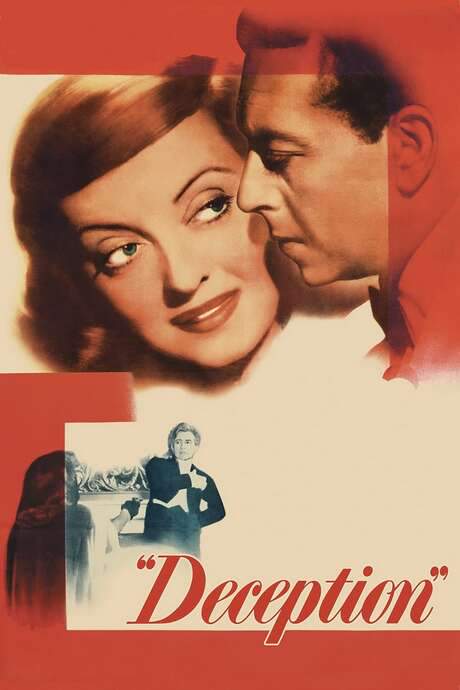
Deception 1946

Directed by

Irving Rapper
Made by

Warner Bros. Pictures
Where to Watch Deception
See current US streaming, rental, and purchase options for Deception (1946) via JustWatch.






Deception Plot Summary
Read the complete plot summary and ending explained for Deception (1946). From turning points to emotional moments, uncover what really happened and why it matters.
Christine Radcliffe runs through the rain toward the grand stairway of a large symphony hall, where a concert in progress fills the air with Haydn’s cello concerto in D. Tears sting her eyes as she spots the cellist on stage: Karel Novak, a man who survived the war in neutral Sweden. When the solo piece ends, Novak is swarmed by well-wishers before retreating to his dressing room, and the hall quiets again for Schubert’s unfinished symphony. Christine slips inside the backstage mirror and their eyes meet; their reunion is tender and urgent, and they embrace as she whispers, “I thought you were dead. I saw them kill you.”
They go back to Christine’s apartment, where she paints a sobering picture of a pianist struggling to stay afloat. Yet the room speaks of a different truth—fur, rare art, and signs of a life that looks more affluent than the confession she offers. Novak presses her on this discrepancy, and fear and pride flare in equal measure. He challenges her about the luxuries she keeps, and in a moment of honesty, she reveals that she has lowered herself to teaching “rich, untalented pupils” who nonetheless reward her with gifts. The admission changes the mood between them, and an unspoken vow forms: they have found love, but the world around them is full of judgments and shadows.
Their marriage soon becomes a collision of passion and ambition, and soon after, a dramatic arrival punctuates their union. Alexander Hollenius, a renowned composer, makes his powerful entrance at the wedding reception. The air between him and Novak crackles with tension and underlying jealousy. Hollenius’s presence unsettles Christine as well, and the situation escalates to a fever pitch when Hollenius squeezes a wine glass until it shatters in his hand—a signal that the personal is inextricable from the professional in this orchestra of rivals. In quick succession, Hollenius presents Novak with a manuscript for a new cello concerto, which Novak agrees to premiere. Yet a troubling pattern emerges: a cellist in the orchestra, Bertram Gribble, is being tutored in the solo parts by Hollenius, a setup that hints at sabotage rather than collaboration.
As rehearsals proceed, the friction between Novak and Hollenius intensifies. Hollenius is stern, exacting, and controlling, while Novak channels his own tempest into performances that pace the mounting pressure. A dress rehearsal collapses under the strain of Novak’s temper, yet Hollenius stays resolute in his plan to have the concerto heard in the premiere. The threat looms: if Novak succeeds, Hollenius fears losing his own influence and control, and he refuses to yield the solo part to anyone else. Christine, who witnesses every maneuver, tries one last time to bargain with Gribble, hoping to deter the perceived sabotage, but the damage has already been done in the minds of those who watch.
On the night of the premiere, the emotional scale tips decisively. Christine visits Hollenius with a desperate mix of fear and resolve. Hollenius reveals that he might let Novak revel in a triumphant performance, but he also hints at a more intimate reckoning—one that would ruin Novak by exposing the truth of their shared past. The threat hangs in the air, and in a moment of cold resolve, Christine shoots Hollenius dead. The room falls silent, and the orchestra continues, led by another conductor, Neilsen, who steps in to fill the void left by Hollenius. The premiere becomes a great success, and the applause feels hollow to Christine, who knows the price of Novak’s victory.
In the aftermath, the sheet music of truth is opened. Christine confesses everything to Novak, and the two of them walk out of the concert hall into the waiting night. The world still sees them as a pair bound by love and talent, but the final image lingers on a small, cautious smile that refuses to pretend everything is perfectly resolved. As they step into the crowd, a well-wisher’s simple remark—“Oh, Christine, you must be the happiest woman in the world”—lands with a quiet, almost haunted irony. The film closes on that restrained note, suggesting that happiness here is a delicate balance between triumph and the unspoken costs of desire.
Deception Timeline
Follow the complete movie timeline of Deception (1946) with every major event in chronological order. Great for understanding complex plots and story progression.
Christine arrives at the concert hall and recognizes Karel Novak
Christine, soaked by the rain, rushes into the grand symphony hall as the Haydn cello concerto opens. She recognizes the cellist on stage, Karel Novak, the man who spent the war trapped in neutral Sweden. The moment confirms he is alive, setting off a mix of relief and longing.
Novak returns to dressing room and is mobbed by well-wishers
After his performance, Novak is surrounded by fans and admirers as he makes his way to the dressing room. The mob scene underscores the public revival of a man thought dead. He glances toward the stage where the concert resumes later.
Backstage reunion and a tense recognition
During intermission, Christine enters and their eyes meet in his mirror, a private moment amid the public aftermath. They embrace, and Christine whispers that she thought him dead and that she saw them kill him. The reunion reawakens a dangerous emotional undercurrent.
Karel and Christine return to her apartment
Back in Christine's apartment, they confront visible signs of a precarious life. Novak questions the luxury items around him as he probes Christine's finances, mistaking her pretenses. She confesses that she had lowered herself to take wealthy but untalented pupils who gifted her the items.
They marry amid unresolved tensions
Christine and Karel marry, but the wedding is shadowed by jealousy and pressure. The composer Alexander Hollenius crashes the reception, his presence hinting at a fraught dynamic. The tension culminates when Hollenius squeezes a wine glass until it shatters.
Hollenius offers a new cello concerto to Novak
At the reception, Hollenius presents Novak with a manuscript of his new cello concerto and makes clear his intention for Novak to premiere it. Novak agrees to the commission, sensing the potential for further professional success. The alliance foreshadows growing friction with Hollenius' artistic control.
Gribble tutored by Hollenius; Christine suspects sabotage
It becomes apparent that Bertram Gribble is being trained in the solo part by Hollenius, raising Christine's suspicions of sabotage against Novak. She suspects manipulation designed to undermine Novak's performance. Her distrust plants seeds for desperate countermeasures.
Christine attempts to bribe Gribble
Christine tries to bribe Gribble into not cooperating with Hollenius, hoping to protect Novak's career. The attempt fails, underscoring the bleak reality of the conspiracy. The tension between art, loyalty, and love deepens.
Rehearsal ends in a volatile temper
Friction grows between Novak and Hollenius, and a dress rehearsal is halted as Novak's temper flares. Hollenius makes it clear that he still intends Novak to perform the concerto, heightening the stakes. The hold on the piece indicates that the premiere will be a crucible for both men.
Christine confronts Hollenius and shoots him
On the eve of the premiere, Christine visits Hollenius, who threatens to reveal the affair to Novak. Distraught, she shoots Hollenius dead, ending the menace but sealing her own fate. The murder shifts the plot from backstage intrigue to a moral crisis.
Neilsen substitutes and the premiere succeeds
With Hollenius absent, Neilsen conducts the premiere, and the performance is a great success despite the turmoil. The orchestra executes the difficult concerto with intensity, earning praise from the audience. The victory masks the personal damage behind the scenes.
Post-performance confession
Well-wishers wait as Novak and Christine find quiet space to reveal everything to each other. Christine confesses the full truth about the arrangements and the affair, while Novak processes the revelation. They decide to leave the concert hall together, seeking respite from the scandal.
A bystander remark and a wan smile
As they depart, a passerby remarks that Christine must be the happiest woman in the world, a cruel irony given the recent events. Christine's response is a wan smile, hinting at the emotional cost and the uncertain future. The closing moment leaves the couple walking away under the weight of secrets.
Deception Characters
Explore all characters from Deception (1946). Get detailed profiles with their roles, arcs, and key relationships explained.
Christine Radcliffe (Bette Davis)
A talented pianist whose precarious finances fuel her decisions. She navigates public glamour and private deceit, eventually compromising her morals by killing Hollenius to protect her marriage and ambitions. Her emotional depth drives the plot, oscillating between vulnerability and calculated action.
Karel Novak (Paul Henreid)
A renowned cellist returning from war who marries Christine under strained circumstances. His temperament is passionate and temperamental, making him susceptible to professional sabotage. As the object of the central love story, his career becomes a focal point of the conflict.
Alexander Hollenius (Claude Rains)
A composer whose jealousy and manipulation threaten Novak's career. He wields influence in the musical world, and his actions precipitate the climactic confrontation. His presence amplifies the drama of ambition and obsession.
Nilson (Einar Nilson) - Orchestra Conductor
Conductor of the orchestra, a figure of authority who becomes a witness to the escalating tension and the performance's outcome. His role anchors the musical aspect of the plot and the concert's prestige.
Deception Settings
Learn where and when Deception (1946) takes place. Explore the film’s settings, era, and how they shape the narrative.
Time period
1940s
Set in the postwar era, the narrative centers on high-society musicians and conductors in a cultural capital. The plot hinges on a premiere and the tensions of artistic fame in the immediate aftermath of World War II. Personal ambitions, jealousy, and the pressure to maintain appearances drive crucial choices. The atmosphere blends glamour with moral ambiguity characteristic of mid-century drama.
Location
Symphony Hall, Christine's apartment
The story largely unfolds within a grand symphony hall where a Haydn cello concerto opens the drama and draws a crowd of patrons. It also shifts to Christine's upscale apartment, a setting that hints at her outward wealth and hidden financial precarity. The contrast between opulent public spaces and intimate private rooms forms the backdrop for love, deceit, and ambition.
Deception Themes
Discover the main themes in Deception (1946). Analyze the deeper meanings, emotional layers, and social commentary behind the film.
❤️
Love and Betrayal
Christine's romance with Karel blossoms into a marriage shadowed by secrets and the lure of social climbing. Christine confesses how wealth and generosity from patrons mask her precarious finances, fueling mistrust. Hollenius's jealousy and manipulation push the couple toward a fateful confrontation, culminating in a murder that tests loyalties and exposes hidden motives.
🎼
Art and Ambition
Novak's career becomes inseparable from Hollenius's plans for the new cello concerto, turning the premiere into a battlefield of ego and power. Hollenius uses his influence to shape outcomes, blurring lines between mentorship and sabotage. The public performance shines, yet behind the scenes artistic integrity is compromised by personal vendettas and ambition.
🕊️
Guilt and Consequences
Christine's confession and the subsequent fallout probe the weight of deception on a relationship and a career. The aftermath—marked by a successful concert but a morally ambiguous exit—reveals that triumph can coexist with personal ruin. The film underscores how secrets and choices ripple outward, affecting everyone involved.

Coming soon on iOS and Android
The Plot Explained Mobile App
From blockbusters to hidden gems — dive into movie stories anytime, anywhere. Save your favorites, discover plots faster, and never miss a twist again.
Sign up to be the first to know when we launch. Your email stays private — always.
Explore the mobile appDeception Spoiler-Free Summary
Discover the spoiler-free summary of Deception (1946). Get a concise overview without any spoilers.
In the polished yet echoing corridors of a grand European concert hall, the world of classical music feels both timeless and fraught with hidden currents. Against this backdrop, Christine Radcliffe — a talented pianist whose life is a careful balance of performance and survival — reunites with her wartime love, the enigmatic cellist Karel Novak. Their connection is instantly charged, a mixture of relief and lingering shadows, as they navigate a post‑war society that still whispers about the past.
Their marriage quickly becomes a crucible where personal devotion and artistic ambition collide. Christine sustains herself by teaching affluent, though musically indifferent, patrons, a compromise that layers her life with both comfort and quiet resentment. Karel, whose career is built on the raw power of his instrument, wrestles with the expectations of a public that demands brilliance while his own inner doubts surface. The couple’s private world is painted with the rich tones of their music, yet the undercurrent of financial strain and the desire for recognition keep the harmony delicate.
The arrival of Alexander Hollenius, a celebrated and wealthy composer, at their wedding introduces a new, intoxicating tension. His admiration for Christine and his commanding presence in the musical community hint at both opportunity and rivalry, threatening to pull the pair in different directions. As the trio moves through rehearsals and social gatherings, the film explores how love, ambition, and the relentless pursuit of artistic legacy can intertwine, creating an atmosphere that is as seductive as it is precarious. The cinematography drapes the story in shadows and golden light, echoing the melodies that drive each character, while the score weaves a subtle undercurrent of yearning that underscores every glance and conversation.
Movies with Similar Twists and Themes
Uncover films that echo the narrative beats, emotional arcs, or dramatic twists of the one you're exploring. These recommendations are handpicked based on story depth, thematic resonance, and spoiler-worthy moments — perfect for fans who crave more of the same intrigue.
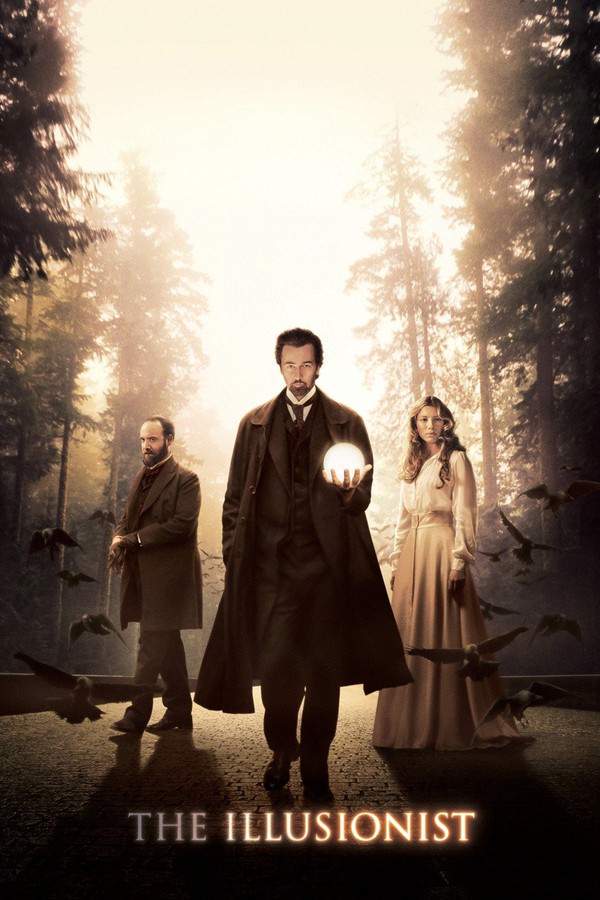

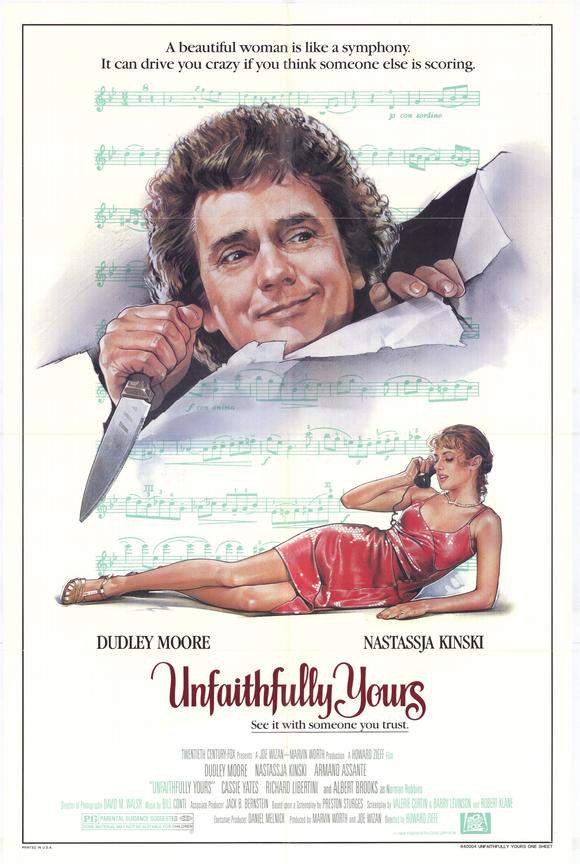




Featured on this page

What's After the Movie?
Not sure whether to stay after the credits? Find out!
Check out our other apps:

SAT Sphere
Build confidence for the Digital SAT.

Mori Atlas
Discover wild places worth protecting.

Luntero
Search smarter for a home in Amsterdam.

Plot Explained
Unravel movie endings and hidden clues.

Pokechamp
Dive into Pokémon data and battle logic.

Driving Theory
Get ready for your European theory test.

Movie Dust
Plan your next cinema trip with ease.

Musemap
Find art and culture as you travel.

Selkobase
Compare credentials before committing.

Local Manual
Turn an unfamiliar country into practical next steps.

Lernavi
Compare school systems before your next move.

GymRoam
Find a workout stop wherever your plans take you.
Explore Our Movie Platform
New Movie Releases (2026)
Famous Movie Actors
Top Film Production Studios
Movie Plot Summaries & Endings
Major Movie Awards & Winners
Best Concert Films & Music Documentaries
Movie Collections and Curated Lists
© 2026 What's After the Movie. All rights reserved.
Privacy Policy