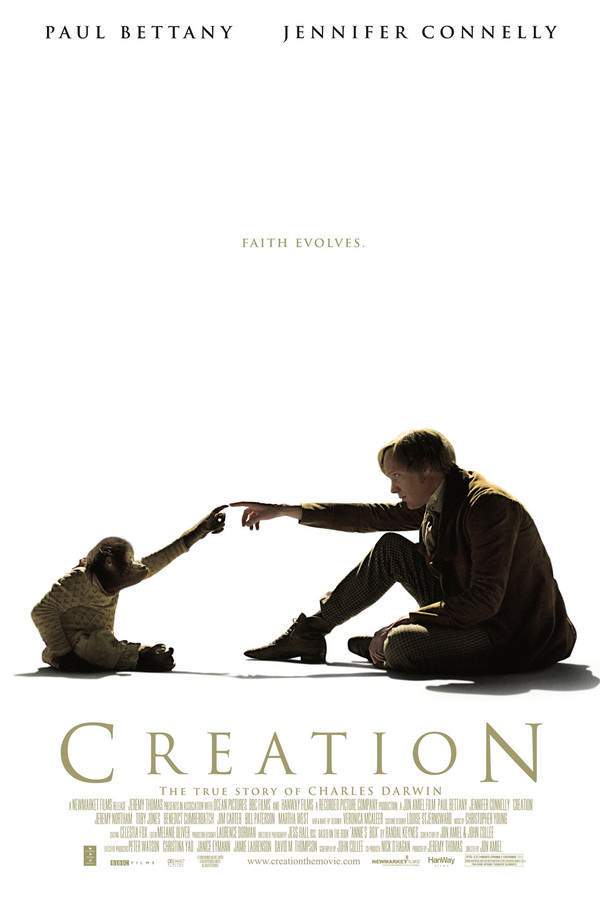
Creation 2010


Directed by

Jon Amiel
Made by

Newmarket Films
Where to Watch Creation
See current US streaming, rental, and purchase options for Creation (2010) via JustWatch.

Amazon Prime Video
HD
Amazon Prime Video with Ads
HD
The Surf Network Amazon Channel
HD
Hoopla
SD
Kanopy
HD
The CW
SD
Plex
HD
Plex Channel
HD
Pluto TV
SD
The Roku Channel
HD
Tubi TV
SD
YouTube Free
HD
Amazon Video
SD
Apple TV Store
HD
Fandango At Home
SD
Google Play Movies
SD
YouTube
SD Streaming availability powered by 
Creation Plot Summary
Read the complete plot summary and ending explained for Creation (2010). From turning points to emotional moments, uncover what really happened and why it matters.
Charles Darwin is a British naturalist living a quiet, almost pastoral life in an idyllic village, a man who is as brilliant as he is deeply emotional. He is devoted to his wife, Emma, and to their children, especially his eldest daughter Annie, a bright and inquisitive ten-year-old who loves learning about nature and the world. He shares with her stories from his travels and, most of all, his evolving ideas about life, including his theory of evolution. Annie’s favorite tale—though it ends sadly—centers on Jenny, a young orangutan brought from Borneo to the London Zoo, a story that hints at the fragility of life and the mysteries of science. Yet a moment of anger reveals a rift: when the family clergyman makes Annie kneel on rock salt for challenging the church’s view that life is unchanging, Darwin’s faith in a fixed order of creation is shaken.
[Darwin] is not just a man of science but a husband who carries the tension of a looming conflict with Emma, whose devout beliefs set a high bar for where their ideas can live in the world. Fifteen years have passed since his expedition to the Galapagos Islands, and he remains haunted by the unfinished manuscript that would articulate his most controversial conclusions about natural selection. The delay is not just academic; it strains his marriage, as Emma fears for their souls and their future, worrying that his theories could jeopardize their own place in Heaven and the peace of their family.
The film follows Annie—seen through flashbacks and Darwin’s own visions—as a luminous presence who spurs her father to confront his fears and finish his work. It becomes clear that Annie’s death casts a long shadow over the couple, and the grief is a force that both estranges and binds them. The pair’s relationship becomes cooler, and their sexual intimacy fades, even as Darwin struggles with a mysterious, draining illness that seems to mirror his inner turmoil.
Darwin’s journey takes him to Malvern for James Manby Gully’s water cure, a treatment Emma initially resists, as Annie’s illness deepens. Annie’s condition worsens, and, at her request, Darwin shares Jenny’s story once more before she dies. Her death leaves him devastated but also sharpens his conviction that natural laws operate without divine intervention. To observers of his time, such a view appears to threaten belief in God, even though many who support him are faithful. In a quiet box in Darwin’s study, the notes and observations that will form On the Origin of Species begin to take shape, marking the emergence of a work that could alter mankind’s understanding of life.
Darwin’s scientific circle—friends like Joseph Dalton Hooker and Thomas Henry Huxley—encourage him to proceed. Huxley’s admiring line, that with his theory Darwin has “killed God,” injects both awe and dread into his conscience, and the visions of Annie continue to challenge him as he weighs the consequences of his path. A pivotal moment arrives with a letter from Alfred Russel Wallace in 1858, which outlines similar findings in a condensed form. Darwin experiences a mix of relief and anxiety: perhaps his own labor could be viable without repeating the same work, yet he also fears that his efforts might be in vain if others publish first. Still, his friends urge him to persevere, recognizing that his manuscript will be far more comprehensive.
After Darwin has his own treatment, he makes a pilgrimage to the hotel where Annie died, a journey that becomes a turning point. Upon his return home, he reconnects with Emma, and the couple finally speaks openly about their fears and the grief that has bound them for so long. They discuss the possibility that Annie’s death might reflect genetic weakness, given that they are first cousins, a realization that tests their beliefs but also brings them closer. Emma finds the strength to support his controversial work, and the two come to an understanding: Darwin will publish, but Emma must decide how to align herself with the project. Reading the manuscript, she returns it to him, addressing it to a publisher in London and accepting a shared responsibility in what lies ahead. She chooses to be an accomplice, hoping for forgiveness from God.
As Darwin carries the package home, the postman approaches, and the moment of decision feels almost suspended—Darwin hesitates, almost letting the postman leave with an empty hand. The postal rider rides away, unaware of the revolutionary idea about to enter the world. In the end, Darwin walks back to his home with the weight of Annie beside him, a silent companion whose presence remains a guiding force as the story moves toward its historic culmination.
Creation Timeline
Follow the complete movie timeline of Creation (2010) with every major event in chronological order. Great for understanding complex plots and story progression.
Darwin's quiet family life
Charles Darwin is a brilliant and deeply emotional man who lives in a tranquil English village with his wife Emma and their children. He is devoted to his family, especially his eldest daughter Annie, and teaches her about nature, sharing stories of his travels and his evolving ideas. The home life feels intimate but tense, simmering beneath the surface of their differences over science and faith.
Annie's Jenny tale captivates her
Annie, a bright ten-year-old, is entranced by Darwin's stories of Jenny, the young orangutan brought to the London Zoo. Her favourite tale ends sadly, yet it fuels her curiosity about life, death, and the natural world. The stories foreshadow Darwin's later ideas about evolution and natural laws operating beyond divine intervention.
Rock salt punishment in church
A local clergyman punishes Annie by forcing her to kneel on rock salt for contradicting him about dinosaurs. Darwin is furious at the clash between science and dogmatic authority. The incident exposes the growing rift between his scientific beliefs and the community’s rigid beliefs.
Returning from the Galapagos and unfinished manuscript
Having returned from his Galapagos voyage 15 years earlier, Darwin is still trying to finish a manuscript about his findings. His anxiety about Emma's devout opposition to his ideas slows progress, fueling procrastination and self-doubt. The manuscript represents the life-changing work he hopes to complete.
Emma's opposition strains the marriage
Emma's devout faith and fear that Darwin's ideas threaten their marriage create emotional distance between them. She worries about heaven and the fate of their souls, and this tension makes their relationship feel fragile. Their distance heightens Darwin's sense of isolation in his scientific quest.
Annie falls ill and Malvern treatment begins
In 1851 Annie becomes seriously ill, and Darwin takes her to Malvern for James Manby Gully's water cure therapy, despite Emma's objections. The journey marks a turning point in their family saga, with illness becoming a catalyst for new emotional and philosophical upheaval. Hope for recovery clashes with the harsh reality of Annie's condition.
Annie's death and grief
Annie's condition worsens and she dies after Darwin tells her Jenny's story once more, reinforcing his belief in natural laws without divine intervention. Darwin is devastated, and Emma is overwhelmed with grief and guilt. Annie's death becomes a focal point for the couple's conflict and their sense of purpose.
Notes for the Origin of Species begin
Back at home, a box in Darwin's study holds the notes and observations that will become On the Origin of Species. The death of Annie intensifies his resolve to complete work that challenges established beliefs. The manuscript work begins to take shape as a tangible project.
Hooker and Huxley urge him forward
Darwin's friends Joseph Hooker and Thomas Huxley encourage him to persevere, recognizing the significance of his ideas. Huxley bluntly tells him that with his theory he has 'killed God,' a provocative remark that fills Darwin with dread and self-doubt. The conversation underscores the dangerous social impact of his work.
Wallace's letter mirrors Darwin's findings
Darwin receives a letter from Alfred Russel Wallace detailing a nearly identical set of findings. He experiences a mix of relief and anxiety: relief that someone has independently reached similar conclusions, and worry that his own life’s work might be duplicated. The moment strengthens the case to publish a comprehensive treatment.
Malvern treatment and a turning pilgrimage
Having undergone treatment himself, Darwin makes a pilgrimage to the hotel where Annie died. The journey becomes a symbolic turning point as he reconnects with Emma and faces their shared grief. The experience fortifies his resolve to finish and publish his theory.
Emma becomes a reluctant ally
Emma reads Darwin's manuscript and quietly returns it to him, addressing it to John Murray and acknowledging herself as an accomplice. She hopes for divine forgiveness, yet accepts that she must support the controversial work. Their renewed partnership allows the project to advance toward publication.
The manuscript nears publication
Darwin walks down the lane with the manuscript, almost handing it to the postman for mailing. The postman departs unaware of the earth-shaking idea he carries to the world. The moment signals the imminent publication of a theory that would redefine science.
Annie's presence guides the final steps
As Darwin returns home, a small figure of Annie appears beside him, guiding his steps toward finishing the work. The film closes on a note that Annie's influence helped propel him toward a discovery that would alter humanity's view of life on Earth. The culmination is both personal and monumental.
Creation Characters
Explore all characters from Creation (2010). Get detailed profiles with their roles, arcs, and key relationships explained.
Charles Darwin (Paul Bettany)
Brilliant and deeply emotional, he is devoted to his wife and children and fascinated by nature. The film shows his inner conflict as his revolutionary ideas clash with religious orthodoxy, fueling anxiety and self-doubt. His grief over Annie's death drives mysterious fatigue, yet his intellectual resolve to finish his manuscript remains strong.
Emma Darwin (Jennifer Connelly)
A devoutly religious wife who opposes Charles's theories, fearing the theological and eternal implications. She worries about salvation and their marriage, contributing to a strain that diminishes their intimacy. Over time she confronts her fears and becomes an ally in his work, ultimately supporting the decision to publish.
Annie Darwin
Charles's beloved eldest daughter, curious and vibrant, whose illness illuminates the fragility of life and the toll of grief on a family. The character appears in flashbacks and in Darwin's hallucinations as a guiding presence that spurs him toward finishing his work.
Creation Settings
Learn where and when Creation (2010) takes place. Explore the film’s settings, era, and how they shape the narrative.
Time period
1830s–1859
The story unfolds in mid-19th-century Britain, a period of growing scientific inquiry and religious contention. It spans Darwin's Beagle voyage era, his return, and the 1859 moment when his ideas emotionally and intellectually collide with Anglican orthodoxy. The era culminates in the publication of On the Origin of Species, reshaping science and belief.
Location
England village, Malvern (Worcestershire)
Set in a quiet English village whose countryside frames the narrative, the film blends pastoral life with fierce scientific debate. The Malvern countryside and the family home provide an intimate stage for Darwin’s struggle between love, duty, and ideas that challenge faith. The Malvern water cure episodes add a historical touch, illustrating 19th-century treatments and beliefs shaping the era.
Creation Themes
Discover the main themes in Creation (2010). Analyze the deeper meanings, emotional layers, and social commentary behind the film.
🧬
Evolution Conflict
Darwin's scientific ideas push against a literal interpretation of creation, creating internal and external conflict. The film portrays the tension between natural law and divine intervention, as colleagues question his theories and Emma fears their implications for faith. The idea of 'killing God' by advancing natural selection sits at the heart of the crisis.
💔
Loss Healing
Annie's illness and death casts a long shadow over Charles and Emma, unraveling their marriage and causing emotional withdrawal. The couple's grief refracts through their relationship, leading to estrangement yet ultimately renewing commitment. The memory of Annie acts as a catalyst for Charles to push forward with his work.
🖋️
Manuscript Journey
The story follows Darwin’s struggle to complete a manuscript that would articulate evolution. His notes and observations begin as scattered insights, gathering in a box that later becomes the foundation for On the Origin of Species. Annie's presence influences his persistence to finish, even amid self-doubt and fatigue. Letters from contemporaries and a looming publication date propel the climactic decision to publish.

Coming soon on iOS and Android
The Plot Explained Mobile App
From blockbusters to hidden gems — dive into movie stories anytime, anywhere. Save your favorites, discover plots faster, and never miss a twist again.
Sign up to be the first to know when we launch. Your email stays private — always.
Explore the mobile appCreation Spoiler-Free Summary
Discover the spoiler-free summary of Creation (2010). Get a concise overview without any spoilers.
In the quiet, mist‑shrouded countryside of Victorian England, a renowned naturalist wrestles with a turmoil that feels as vast as the seas he once traversed. Charles Darwin lives a seemingly gentle life with his devoted wife and their children, yet beneath the pastoral façade a storm of doubt brews. The death of his bright, inquisitive daughter leaves a lingering ache that forces him to confront the fragile line between love, loss, and the relentless march of scientific discovery.
The film paints a world where church and science sit uneasily side by side, their conversations echoing through candle‑lit parlors and the hushed expanse of a study crowded with specimens and handwritten notes. Emma, a woman of deep religious conviction, stands as both anchor and counterpoint to her husband’s emerging theories, embodying the tension between faith and reason that defined an era. Their marriage is rendered with a tender yet strained intimacy, each shared glance hinting at unspoken fears about the future of their souls and family.
Through lingering flashbacks and quiet reveries, the presence of Annie continues to illuminate the household, her curiosity and love for nature serving as a gentle catalyst for her father’s inner quest. The narrative rests on mood as much as on intellect, blending the soft rustle of English gardens with the weighty silence of a man whose mind is both expanding and breaking. A subtle, melancholic score underscores the perpetual balancing act between personal grief and the drive to articulate a truth that could reshape humanity’s understanding of life itself.
The story unfolds as a meditation on belief, memory, and the courage required to let ideas out into a world that may not be ready for them, inviting viewers to feel the quiet desperation and hopeful wonder that accompany the birth of a revolutionary thought.
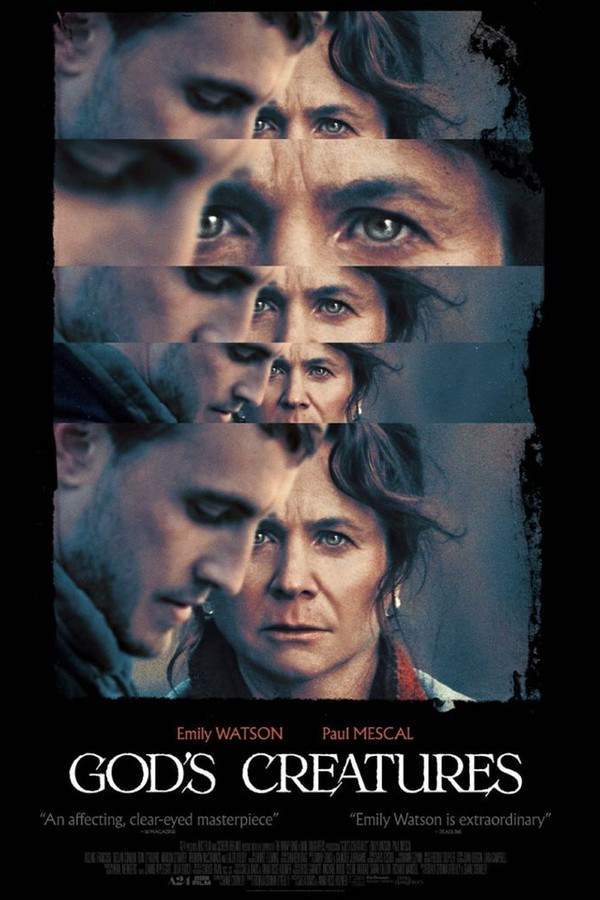
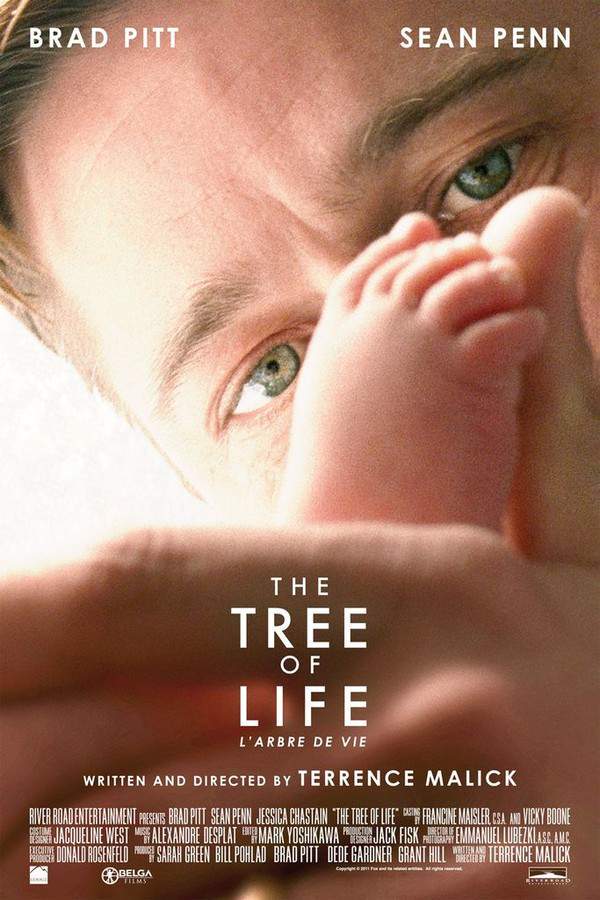
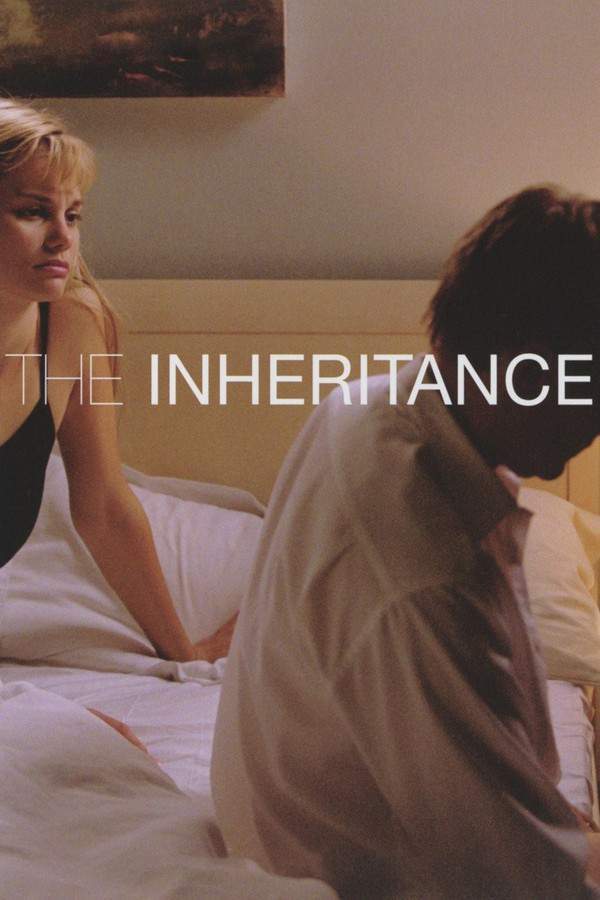
Movies with Similar Twists and Themes
Uncover films that echo the narrative beats, emotional arcs, or dramatic twists of the one you're exploring. These recommendations are handpicked based on story depth, thematic resonance, and spoiler-worthy moments — perfect for fans who crave more of the same intrigue.

Featured on this page

What's After the Movie?
Not sure whether to stay after the credits? Find out!
Check out our other apps:

SAT Sphere
Build confidence for the Digital SAT.

Mori Atlas
Discover wild places worth protecting.

Luntero
Search smarter for a home in Amsterdam.

Plot Explained
Unravel movie endings and hidden clues.

Pokechamp
Dive into Pokémon data and battle logic.

Driving Theory
Get ready for your European theory test.

Movie Dust
Plan your next cinema trip with ease.

Musemap
Find art and culture as you travel.

Selkobase
Compare credentials before committing.

Local Manual
Turn an unfamiliar country into practical next steps.

Lernavi
Compare school systems before your next move.

GymRoam
Find a workout stop wherever your plans take you.
Explore Our Movie Platform
New Movie Releases (2026)
Famous Movie Actors
Top Film Production Studios
Movie Plot Summaries & Endings
Major Movie Awards & Winners
Best Concert Films & Music Documentaries
Movie Collections and Curated Lists
© 2026 What's After the Movie. All rights reserved.
Privacy Policy