What Is Crane World About?
The premise of Crane World in 341 words, with nothing given away. The full story follows below.
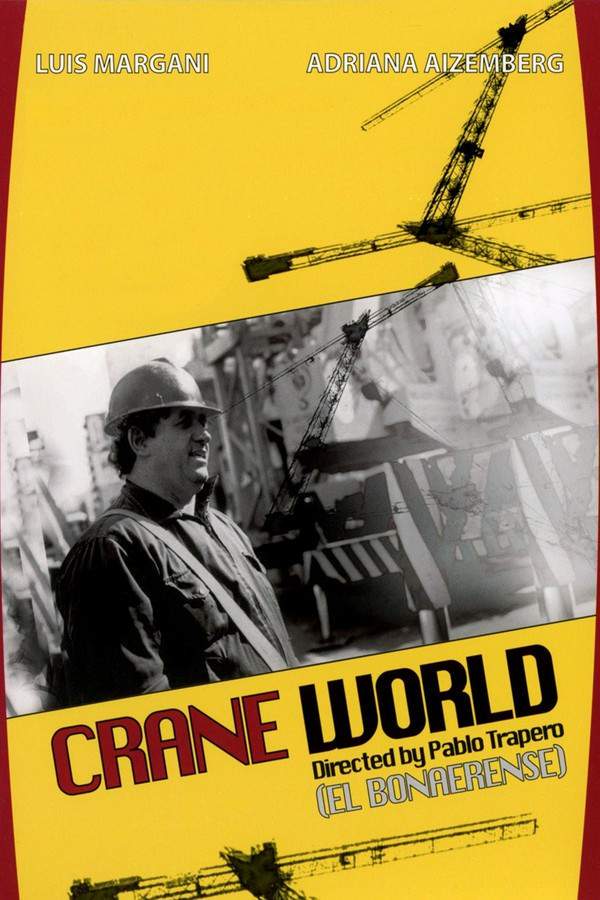
In the lingering haze of Buenos Aires, a city still echoing the tremors of a harsh economic past, a former rock‑band bassist finds himself perched above the streets, guiding a massive crane through the sky. The hum of machinery and the distant bustle below create a stark contrast to the loud, chaotic concerts of his former life, offering a surprisingly meditative rhythm that invites him to reassess what purpose looks like when the spotlight has dimmed. This quiet, elevated world becomes a bridge between the roaring energy of his youth and the restrained, uncertain present he now inhabits.
Rulo (the name the locals use for him) navigates this new terrain with a mix of tentative curiosity and seasoned resilience. Along the steel‑clad platforms he forges a bond with his trainer, a steady presence who teaches him the unspoken language of the lift, while a tender romance blooms with a warm‑hearted sandwich shop owner who offers a steady anchor amid the shifting currents of his days. Their connection hints at the possibility of normalcy and belonging, even as memories of past glory linger like distant chords.
At home, Claudio, his son, drums up his own musical dreams, pulling the younger generation into a world of late‑night gigs and restless ambition. Their relationship crackles with the tension of differing priorities, a generational tug‑of‑war that mirrors the broader struggle of a country balancing survival with hope. As father and son grapple with expectations, responsibilities, and the weight of unfulfilled aspirations, the film paints an intimate portrait of how love, regret, and the search for redemption intertwine in the most ordinary of settings.
The tone is quiet yet resonant, blending the gritty realism of a working‑class backdrop with the lingering lyrical melancholy of a life once lived under bright stage lights. Through the lens of everyday labor and fragile human connections, the story invites viewers to contemplate how one can find meaning and renewal when the world shifts beneath them, offering a bittersweet meditation on perseverance and the quiet strength that emerges from unexpected places.
What Happens in Crane World?
The complete story of Crane World, from the first scene to the last, in 684 words (about 3 minutes). Spoilers throughout. Names in the text link to 2 cast member pages.
Spoilers ahead
Rulo Federico Esquerro is a middle-aged ex-bass player from the rock band Seventh Regiment who, during Argentina’s harsh Great Depression, scrapes by by taking a crane operator job near his home in Buenos Aires. He quickly grows fond of the quiet, almost meditative calm up high, where the city’s bustle feels distant and the work feels oddly peaceful despite the danger of tall heights. This new blue-collar reality forms a bridge between two halves of his life: the loud, chaotic energy of his former rock-star days and a more restrained, uncertain present that still hums with memory.
As he settles into the routine, Rulo builds unusual social ties that color his days. He befriends his trainer, Torres, and begins a tender romance with Adriana Adriana Aizemberg, a warm-hearted sandwich shop owner who becomes a steady anchor amid shifting circumstances. The connection offers him a glimpse of normalcy and a renewed sense of belonging, even as he keeps thinking back to the glory days shared with his old bandmates and the friends who once filled his life with energy and noise. Throughout the hands-on work and quiet evenings, Rulo channels that history into conversations, cravings, and a stubborn hope that he can still find purpose in this new chapter.
Rulo’s closest personal strain comes from his relationship with his son, Claudio, who is trying to carve out his own path in a rock band of his own. The two clash over lifestyle and discipline. Rulo demonstrates patience—he lends money, allows Claudio to borrow his cherished bass guitar for a show, and even tolerates the late-night arrivals that echo the boy’s nocturnal gigs—but the friction grows as Claudio’s casual approach to responsibility becomes harder to overlook. The tension in their apartment mirrors the larger tension of a country negotiating survival, youth’s impulse, and the weight of lived dreams.
When the moment of professional shift arrives, Rulo faces a cruel setback on what should have been his first day back in the field. A coworker is at the crane, and after a tense discussion with his supervisor, Rulo learns that his dismissal came at the insurance company’s recommendation. The news is twofold: not only does it strike him at a moment of precarious financial footing, but his health and weight complicate the possibility of obtaining coverage if he were to start work officially. This blow reverberates through every part of his life, from his ability to provide for his family to his sense of self-worth.
In the wake of the firing, Rulo tells Claudio that the boy’s lifestyle must change, a truth that lands hard on both of them. His mother steps in to help, taking Claudio in, though she soon tires of the younger man’s unstructured habits. As a counterpoint to Buenos Aires, Torres suggests a new opportunity farther south in Argentina, where Rulo would work as an excavator. Despite his lingering worries about health and stability, he accepts, promising Adriana that he’ll visit and keep in touch every couple of months, little rituals that become lifelines in a period of turbulence.
Rulo’s journey south unfolds by train and hitchhike, and he forms a quick, supportive bond with Sartori, the firm’s new supervisor. The work becomes a test of adaptability: Rulo’s crane-training skills translate well to excavation, and he begins to make real progress on a pipeline project. Yet the company’s financial struggles compound, and the project stalls as bankruptcy looms, leaving everyone uncertain about the future. With heavy news weighing on him, Rulo makes the difficult decision to return to Buenos Aires. He lies to his mother, masking the depth of his setback, while confessing to Claudio that the situation has cratered and that the path ahead remains full of unknowns. Parting ways with Sartori, he boards a truck back toward the city, carrying the anxious hope that better days—or at least a better sense of purpose—lie somewhere ahead.
The film is a quiet, character-driven portrait of a man navigating between past triumphs and present compromises, trying to hold onto dignity, connection, and the possibility of renewal in the face of economic and personal upheaval.
Crane World Timeline: Every Key Event in Order
12 key events in the order they happen, from “Rulo's life in Buenos Aires during the Great Depression” to “Hope persists: a plan for the future”. 12 events name a place, across 6 locations.
- 1
Rulo's life in Buenos Aires during the Great Depression
Rulo, a middle-aged ex-bass player, struggles to make ends meet in Buenos Aires during the Great Depression. He applies for a crane operator job at a nearby construction firm and greets the quiet routine as a rare source of calm after years in the spotlight. He forg es new bonds with Torres, begins a romance with Adriana, and often reminisces about his glory days with former bandmates, even as he worries about his future and Claudio’s path.
When:Great Depression era (mid-1930s) Where:Buenos Aires
- 2
First day on the job ends in dismissal
On what is supposed to be his first day of work, Rulo discovers another coworker operating the crane. He takes the matter up with his supervisor, who reveals that he was dismissed on the insurer's recommendation due to his health risks. The setback leaves him unemployed again and raises the stakes of his future in construction.
When:First day Where:Buenos Aires (construction firm near his home)
- 3
Adriana deepens in his life
Rulo's romance with Adriana, the sandwich shop owner, begins to deepen, giving him emotional support amid hardship. The relationship offers a glimpse of stability and warmth as his job prospects falter. It becomes a personal lifeline that ties him to Buenos Aires life.
When:early in the story Where:Buenos Aires
- 4
Claudio's lifestyle strains their relationship
Rulo confronts Claudio about his reckless, meandering lifestyle and late-night arrivals. He lends money and even lets Claudio borrow his old bass for a show, but Claudio's habits continue to frustrate him. Meanwhile Rulo's mother grows weary of the clutter and chaos at home.
When:pre-departure Where:Buenos Aires
- 5
Torres sends him to southern Argentina
As consolation for being fired, Torres suggests a new job in southern Argentina as an excavator. Rulo weighs his health and the risks, but accepts the offer, promising Adriana he will visit and call regularly. The move marks a shift from city life to a grittier rural-industrial environment.
When:shortly after dismissal Where:Buenos Aires to southern Argentina
- 6
Journey south and meeting Sartori
Rulo travels by train and hitchhiking to the south and quickly befriends his new superior, Sartori. The firm itself is financially marginal, with workers missing meals and Sartori's house lacking basic running water. The shared hardship forges a bond between Rulo and Sartori.
When:upon arrival Where:Southern Argentina
- 7
Skill transfer fuels early progress
Rulo's crane training proves transferable to excavation, and he begins making progress on a pipeline project. His practical know-how earns him respect despite the tough conditions and sparse resources. He experiences a renewed sense of purpose amid the hardship.
When:during the project Where:Sartori's project site
- 8
Bankruptcy halts the project
Financial trouble overtakes the firm, and food becomes scarce for the workers. The pipeline project remains unfinished when the company declares bankruptcy, leaving Rulo and his colleagues uncertain about their futures. The collapse underscores how fragile opportunities can be in despairing times.
When:end of project Where:Southern Argentina
- 9
Return to Buenos Aires and confession
Facing an uncertain future, Rulo decides to return to Buenos Aires. He calls his mother to ease Claudio's worries, lying that everything is going well, while privately confessing the downturn to Claudio. The confrontation tests their relationship and his resolve to rebuild.
When:after bankruptcy Where:Buenos Aires
- 10
Farewell with Sartori and the long road home
Rulo parts ways with Sartori and boards a truck back toward Buenos Aires, carrying both scars and new experience. He feels anxious about what lies ahead but is determined to start anew and keep connections alive, especially with Adriana. The journey marks a personal turning point as he leaves the south behind.
When:after return decision Where:From southern Argentina to Buenos Aires
- 11
Family dynamics at a crossroads
Back in Buenos Aires, his mother and Claudio become focal points of his efforts to rebuild. Claudio's ambitions and quirks challenge Rulo’s patience, but his generosity has also shaped their expectations. The family dynamic reflects the broader struggle to adapt after the fall from fame.
When:present Where:Buenos Aires
- 12
Hope persists: a plan for the future
Despite the setback, Rulo holds onto Adriana’s support and the skills he has gained, hoping for a new opportunity to rebuild a stable life. He vows to visit Adriana and stay connected as he searches for a chance to rise again. The film closes on a note of cautious resilience.
When:future Where:Buenos Aires
Who Are the Main Characters in Crane World?
6 characters, among them Rulo, Adriana (Adriana Aizemberg) and Claudio: who each one is and the part they play in the story. 1 of them link to the actor’s page.
- R
Rulo
A middle-aged ex-bass player who has fallen from rock stardom into a blue-collar life as a crane operator. He remains optimistic about his environment but must reconcile his past with present realities, showing patience with his son and loyalty to his partner. His health and weight create barriers, yet he searches for dignity in work and family.
- 🎸 Ex-rocker
- 💪 Resilient
- 🤝 Loyal
- A(
Adriana (Adriana Aizemberg)
Played by Adriana Aizemberg
A sandwich shop owner who becomes Rulo’s love interest. She embodies the emotional pull between his nostalgic past and his current responsibilities. Adriana balances affection with pragmatism, supporting Rulo while wary of the instability around him.
- ❤️ Love interest
- 🥪 Small business owner
- 🏙️ Urban romance
- C
Claudio
Rulo’s son, a guitarist who lives a bohemian, food-for-music lifestyle. His carefree approach irritates his father, yet Rulo remains patient and generous, loaning him money and props for performances while hoping for responsibility to grow.
- 🎤 Prospective musician
- 🕶️ Rebellious
- 🛣️ Struggling
- T
Torres
Rulo’s trainer at the crane operator program. A practical mentor who helps Rulo navigate the new job, while sharing an understanding of the challenges of urban labor and personal change.
- 🏋️♂️ Trainer
- 🧭 Mentor
- 🤝 Supportive
- S
Sartori
Rulo’s skeptical superior in southern Argentina’s bankrupt construction firm. He embodies the precariousness of a company on the edge, where communication with workers and hope for future projects becomes a shared concern.
- 💼 Employer
- ⚠️ Struggling business
- 🧭 Authority
- RM
Rulo's mother
A supportive matriarch who represents family duty amid the upheaval. She helps manage Claudio’s life while wrestling with her own concerns about her son’s path and the family’s ailing finances.
- 👵 Family matriarch
- 🧶 Caring
- 🧳 Practical
Where and When Is Crane World Set?
Crane World is set in Buenos Aires, Argentina and Southern Argentina (1930s). Here is why the time and place matter to the story.
When
1930s
The narrative unfolds during the Argentine Great Depression, a period marked by widespread unemployment and economic hardship. Rulo’s world is shaped by scarcity and shifting opportunities, moving between urban centers and remote work sites. The era’s hardships drive the characters’ decisions and tensions throughout the story.
Where
Buenos Aires, Argentina, Southern Argentina
Buenos Aires is the main setting, presenting dense neighborhoods and industrial districts where daily work and social life unfold. The film centers on crane sites, trains, and modest homes that illustrate a blue-collar rhythm. The story also shifts to a distant firm in southern Argentina, highlighting regional differences in labor and community.
- 🏙️ Urban
- 🛠️ Blue-collar
- 🇦🇷 Argentina
What Are the Themes of Crane World?
3 ideas the story keeps returning to, among them Class Identity, Family Bonds and Hope & Resilience.
-
01
Class Identity
The film contrasts a former rock star’s glamour with a blue-collar routine, highlighting how social status and labor define worth. Rulo’s move from the stage to a crane’s cab exposes the fragile boundaries between fame and survival. Bonds formed with coworkers and family members reveal that loyalty and dignity can persist beyond status changes.
-
02
Family Bonds
The relationship with his son Claudio exposes generational clashes and different priorities, testing patience and trust. Rulo oscillates between support and disappointment as Claudio pursues a restless music path. Family becomes both a source of strength and a point of conflict within the precarious economic landscape.
-
03
Hope & Resilience
Despite dismissal and bankruptcy looming over the firms, the narrative threads in perseverance and adaptation. Rulo seeks new opportunities, accepting a southern job and aiming to stay connected with Adriana. The film leans into small, incremental progress and the stubborn belief that better days can arrive through hard work.
What Kind of Film Is Crane World?
Melancholic in tone, with slow pacing and a straightforward story, going by the plot summary.
- Tone
- Melancholic
- Pacing
- Slow
- Story
- Straightforward
- Intensity
- Low
- Ending
- Bittersweet
A quiet, meditative character study that follows a down-on-his-luck musician as he seeks purpose and connection amid the quiet solitude of blue-collar work and personal regret.
- contemplative
- melancholic
- hopeful
- nostalgic
- quiet
- introspective
- midlife crisis
- economic hardship
- blue-collar work
- father-son relationship
Content notes: economic hardship.
Quiz
How well do you remember Crane World? Test yourself on the story.