What Is Carmen About?
The premise of Carmen in 298 words, with nothing given away. The full story follows below.
In the heart of a vibrant Spanish studio, a visionary choreographer sets out to remake Bizet’s legendary opera as a flamenco ballet, infusing the classic tale with the fierce rhythm of guitars and toe‑tap drums. The production gathers a talented ensemble, from a celebrated guitarist who reshapes the familiar score to a troupe of dancers eager to bring the story’s heat to life. The rehearsal space pulses with the scent of leather, the crackle of castanets, and a simmering anticipation that the old tragedy can be reborn on a modern stage.
Antonio leads the creative charge, his reputation built on daring interpretations and an uncompromising drive for authenticity. As he pushes his company toward a raw, elemental performance, he encounters Carmen, a strikingly independent dancer whose magnetic presence commands attention the moment she steps onto the floor. Her fierce artistry and unapologetic spirit captivate the director, setting the stage for a relationship that mirrors the opera’s own passionate conflict.
Meanwhile, the seasoned star of the company, Cristina, is asked to guide the newcomer, offering her depth of experience while grappling with the realities of age and relevance in a demanding art form. Paco, the virtuoso guitarist, weaves new textures into Bizet’s melodies, his music echoing the tension that builds between the creative minds. The rehearsals become a crucible where personal ambitions, artistic ideals, and hidden desires intersect, blurring the line between performance and reality.
The film luxuriates in a world where the clatter of castanets and the roar of the crowd feed the characters’ inner storms. As the production inches toward opening night, the intensity of the choreography and the unresolved currents among the artists create a palpable, electric atmosphere, inviting the audience to wonder just how far the choreography of life can echo the choreography of art.
What Happens in Carmen?
The complete story of Carmen, from the first scene to the last, in 409 words (about 2 minutes). Spoilers throughout. Names in the text link to 4 cast member pages.
Spoilers ahead
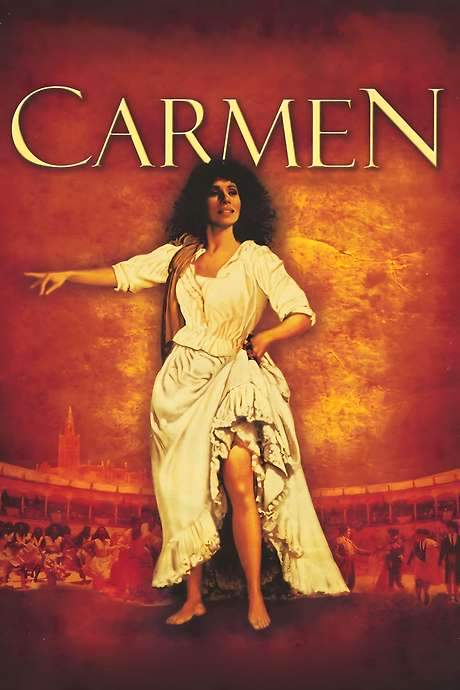
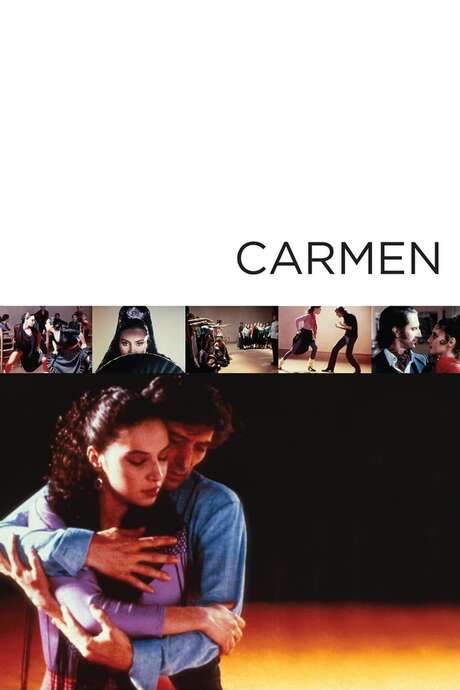
A choreographer, Antonio Antonio Gades, sets out to stage a bold reimagining of George Bizet’s opera Carmen, blending the classic tragedy with Spanish music and the fiery rhythms of flamenco. The project teams up with Paco, Paco de Lucía, a guitarist who reshapes the original score for his instrument, giving the familiar melodies a new, shadowed flair that can breathe on a modern stage.
In the search for the perfect Carmen, the team digs through a flamenco school, hoping to find a performer who can embody both the passion and danger the story demands. Yet Antonio’s best dancer, Cristina Cristina Hoyos, is deemed too old for the role, and the difficulty of matching age, aura, and drive grows clear. Amid this tension, Carmen Laura del Sol herself captures Antonio’s eye during a rehearsal, her ferocious dance and magnetic presence drawing him in with an intensity that threatens to upend the entire production.
After a rousing flamenco show, Antonio presents Carmen with a book by Prosper Mérimée, urging her to read and see in it the depth of what the role could require. He then asks Cristina to mentor Carmen, launching an intensive training process that stretches the boundaries of the cast and the flow of the choreography. During rehearsals, Antonio asks the performers to imagine the world they are creating—the heat, the dust, and the tension—so that the duel between Carmen and Cristina plays out with an almost tangible electricity.
As the director’s feelings deepen into desire, Antonio and Carmen share a charged, forbidden encounter. But the romance is fragile, and Carmen slips away in the night, confessing that she is married. Despite this, Antonio offers money when she says her husband wants to start over, a decision that spirals into a dangerous confrontation when Carmen’s husband reveals his own criminal aims. The conflict culminates in violence, as Antonio reacts to the threat and the betrayal with lethal finality using a switchblade.
The boundary between stage and life begins to blur as the company performs: the fragile romance between Antonio and Carmen begins to feel as if it is playing out in real time, while the audience watches a performance that seems to reflect the truth behind the characters’ choices. In the end, Antonio’s desperation pushes the story toward tragedy, leaving viewers to wonder what is real and what is part of the show, and to consider how art and life can become inseparable on a single, dangerous night.
Carmen Timeline: Every Key Event in Order
15 key events in the order they happen, from “Antonio conceives Carmen-inspired production” to “Tragic finale: Antonio kills Carmen”. 15 events name a place, across 12 locations.
- 1
Antonio conceives Carmen-inspired production
Antonio, a choreographer, conceives a Carmen-inspired production blending Spanish music and flamenco. He outlines a bold reinterpretation of Bizet's opera and sets the creative direction. The plan hinges on merging traditional dance with contemporary staging.
Where:rehearsal studio
- 2
Paco adapts the score for guitar
Paco, a guitarist, joins to adapt the original score for guitar. He experiments with flamenco-flavored arrangements to fit the new concept. The collaboration marks the musical foundation of Antonio's project.
Where:music studio
- 3
Search for Carmen; Cristina considered too old
Antonio searches his flamenco school for the perfect Carmen and struggles to find the right fit. Cristina, his best dancer, is deemed too old for the lead. The search sets up a key casting dilemma for the production.
Where:flamenco school
- 4
Carmen captivates Antonio during rehearsal
During a rehearsal, Carmen catches Antonio's eye with a fiery dance and magnetic presence. He becomes intrigued by her potential to embody the role. The spark foreshadows the developing tension between art and emotion.
Where:rehearsal room
- 5
Antonio gifts Mérimée book to Carmen
After a flamenco show, Antonio gifts Carmen Prosper Mérimée's novel, urging her to read it and imagine the lead. He believes the book will help her understand the character. The gesture marks the beginning of a personal connection.
When:after show Where:the theater
- 6
Cristina enlisted to train Carmen intensively
Antonio enlists Cristina to train Carmen intensively, pushing both women toward the demanding lead. The training sessions are rigorous and competitive. The pressure begins to shape rivalries behind the scenes.
Where:rehearsal studio
- 7
Rehearsals set the stage for atmosphere and rivalry
In rehearsals, Antonio guides the cast to imagine the setting and atmosphere, laying the groundwork for a tense rivalry between Carmen and Cristina. The collaborative process blends acting and dance to create a cohesive vision. The lines between performance and emotion start to blur.
Where:studio rehearsal space
- 8
Rivalry grows on stage
Onstage, tension between Carmen and Cristina grows as the two dancers spar through choreography and gaze. The competition expands beyond technique into personal stakes. The audience senses the escalating conflict embedded in the performance.
Where:stage
- 9
Antonio falls for Carmen; they connect intimately
Antonio falls for Carmen and their relationship deepens with a passionate, forbidden encounter behind the scenes. The boundary between professional duty and personal desire becomes increasingly blurred. This liaison reshapes his creative and emotional states.
Where:behind the scenes
- 10
Carmen leaves at night; reveals marriage
Carmen departs in the night, revealing that she is married. The revelation shocks Antonio and complicates his growing feelings. The emotional stakes shift as personal loyalties collide with professional ambitions.
When:night Where:theater corridor
Show the other 5 events of Carmen Hide the last 5 events
- 11
Antonio offers money after husband’s claim
Carmen tells Antonio that her husband wants to start afresh, and he responds by giving her money. The gesture reflects Antonio's attempt to support her while navigating their complicated bond. The act deepens the tension between duty, desire, and temptation.
Where:theater dressing room
- 12
Husband's criminal plan leads to a fight
Carmen's husband reveals his intent to continue his criminal activities, sparking a physical confrontation between him and Antonio. The violence marks a turning point where personal danger enters the artistic project. The boundary between art and danger becomes perilously thin.
Where:theater stage/backstage
- 13
Antonio discovers Carmen with another man
Antonio's trust shatters when he discovers Carmen with another man, a clear betrayal that punctures his illusion of their relationship. The discovery compounds his emotional turmoil and fuels the escalating tragedy. The revelation reverberates through both their lives and the production.
Where:theater corridor
- 14
Carmen ends the relationship; jealousy rises
Carmen tells Antonio that their relationship is finished, fueling his jealousy and sense of loss. The emotional rupture intensifies the conflict between authenticity and performance. The audience begins to sense that the line between real life and the staged romance is dissolving.
Where:rehearsal room
- 15
Tragic finale: Antonio kills Carmen
Driven by jealousy, Antonio kills Carmen with a switchblade, a culmination of passion and rage. The act collapses the boundary between art and life, leaving tragedy in its wake. The performance itself becomes a mirror of the catastrophe unfolding offstage.
Where:theater stage
Who Are the Main Characters in Carmen?
4 characters, among them Antonio Gades as Antonio, Carmen - Laura del Sol and Cristina Hoyos as Cristina: who each one is and the part they play in the story. Every profile links to the actor’s page.
- AG
Antonio Gades as Antonio
Played by Antonio Gades
Antonio is the choreographer directing the Carmen adaptation. He is ambitious and becomes obsessed with finding the right Carmen for the piece. His attraction to Carmen grows into controlling behavior, blending professional ambition with personal desire. His jealousy and volatile passion propel a tragedy that blurs the line between rehearsal and reality.
- 🎭 Drama
- ❤️ Romance
- 💔 Jealousy
- 🔪 Violence
- C-
Carmen - Laura del Sol
Played by Laura del Sol
Carmen is a free-spirited, seductive performer who captivates Antonio. She is married, independent, and leaves him abruptly, fueling the love-triangle at the heart of the story. Her choices drive the tension between art and desire, leading toward betrayal and tragedy.
- 💃 Flamenco
- 🎭 Drama
- 💋 Seduction
- CH
Cristina Hoyos as Cristina
Played by Cristina Hoyos
Cristina is the lead dancer initially deemed too old for the role, but she trains Carmen intensively. Her discipline and talent create a rival dynamic with Carmen, intensifying the competition. She embodies the professional stakes of the production and remains a steady force amid personal tensions.
- 💃 Dance
- 🎭 Drama
- 🏆 Talent
- PD
Paco de Lucía as Paco
Played by Paco de Lucía
Paco is the guitarist who adapts the original score for his instrument, shaping the musical language of the production. He collaborates with Antonio to fuse Bizet's Carmen with flamenco, influencing the tone and mood of the performances. His guitar work sustains the emotional tempo of both rehearsal and stage.
- 🎸 Music
- 🎭 Drama
- 🎶 Innovation
Where and When Is Carmen Set?
Carmen is set in Flamenco theatre and rehearsal studio. Here is why the place matters to the story.
Where
Flamenco theatre and rehearsal studio
The story unfolds in a flamenco theatre and its surrounding rehearsal spaces, where Antonio stages the Carmen-inspired production. Dancers, guitarists, and actors fill the room as they search for the right mix of traditional flamenco and Operatic drama. The backstage atmosphere hints at the drama that will spill onto the stage, blending professional effort with personal rivalries.
- 🎭 Flamenco Theatre
- 🎶 Rehearsal Space
What Are the Themes of Carmen?
4 ideas the story keeps returning to, among them Obsession, Art vs Reality and Tragedy.
-
01
Obsession
Antonio's fixation on Carmen drives the narrative, blurring ethical lines. His desire merges with professional ambition, leading him to manipulate Carmen and the cast. The obsession spirals into jealousy and reckless decisions that push the story toward tragedy.
-
02
Art vs Reality
Rehearsal romance intersects with onstage drama, making it hard to tell where performance ends and real life begins. Antonio encourages actors to imagine the setting vividly, blurring the line between art and life. The audience witnesses a tragedy that mirrors the artists' private passions.
-
03
Tragedy
Carmen's departure and her relationships heighten Antonio's desperation. His jealousy culminates in murder, revealing the dark costs of consuming passion. The ending leaves the audience to grapple with responsibility and the collapse of art and life.
-
04
Music & Dance
Paco's guitar adaptations push the score into flamenco-infused territory, reshaping the original Carmen music for the stage. The music and choreography become a language that communicates desire, betrayal, and power. The fusion of traditional forms with contemporary staging drives the film's emotional tempo.
What Kind of Film Is Carmen?
Tense in tone, with steady pacing and a moderate story, going by the plot summary.
- Tone
- Tense
- Pacing
- Steady
- Story
- Moderate
- Intensity
- High
- Ending
- Sad
A tense and passionate drama that explores the dangerous blurring of art and reality, fueled by obsessive love and culminating in a tragic, violence-driven conclusion.
- passionate
- jealous
- obsessive
- tragic
- tense
- melodramatic
- obsessive love
- artistic creation
- reality versus fiction
- betrayal
Content notes: murder, domestic violence, obsessive behavior, infidelity.