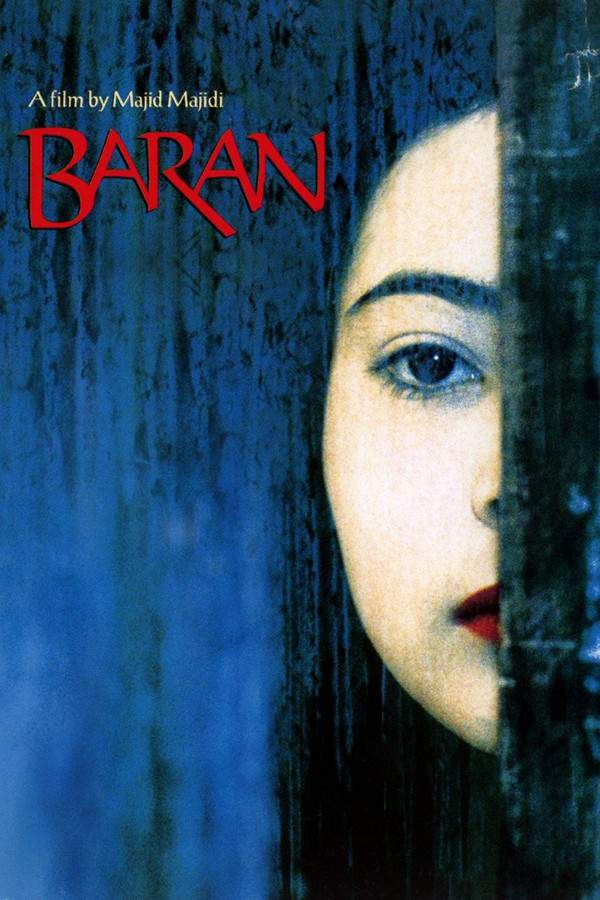
What Is Baran About?
The premise of Baran in 257 words, with nothing given away. The full story follows below.
In the cold gray of a Tehran winter, a modest construction site becomes a quiet stage where ordinary lives intersect. The film follows Lateef, a seventeen‑year‑old who earns his keep by serving tea and food to the laborers, his youthful curiosity tinged with the routine of daily work. The city’s chill mirrors the stillness of his world, a place where simple gestures carry the weight of unspoken longing.
Around him, a diverse crew of workers builds more than walls; they embody a patchwork of regional identities, most notably a group of Afghan refugees seeking survival far from their war‑torn homeland. Their presence is precarious, hidden from authorities and marked by an undercurrent of uncertainty. Overseeing the site is Memar, the foreman whose practical authority frames the fragile balance between legality and compassion.
Amid the bustle, Lateef first notices a new, silent presence—a young Afghan who moves with a quiet dignity that both unsettles and fascinates him. Their brief encounters, filled with glances and tentative gestures, awaken in him a gentle affection that feels both foreign and inevitable. This connection hints at a tenderness that transcends cultural barriers, suggesting that even in a setting of hardship, hope can blossom through simple human contact.
Majid Majidi’s direction renders the story with a lyrical, almost poetic sensibility, letting winter light and muted city sounds shape the mood. The film dwells on the intimacy of first love, the quiet resilience of displaced people, and the transformative power of kindness, inviting the audience to linger in the subtle beauty of everyday moments.
What Happens in Baran?
The complete story of Baran, from the first scene to the last, in 733 words (about 3 minutes). Spoilers throughout.
Spoilers ahead
It’s winter in Tehran, where Lateef, a 17-year-old boy, finds himself employed at a construction site overseen by MEMAR, the foreman. His responsibilities include serving tea and preparing food for the laborers, with whom he often clashes. The crew consists of workers from various regions of Iran, including Afghan refugees who are escaping the ravages of their war-torn homeland. These Afghans lack proper identification, making their employment both illegal and precarious. Whenever labor inspectors arrive, the Afghan workers must quickly conceal themselves to avoid capture.
The narrative kicks off when Najaf, an Afghan worker, suffers a fall from the building, resulting in a broken leg that requires hospitalization. On the following day, Soltan, another Afghan laborer, brings Rahmat, Najaf’s 14-year-old son, to take over his father’s position. However, Memar soon identifies that Rahmat is not suited for the physically demanding work and opts to swap his role with Lateef’s. This decision infuriates Lateef, as he resorts to threatening Rahmat, attempting to undermine his efforts while secretly observing him at work.
In a surprising turn of events, Lateef peers through a doorway and is astonished to discover that Rahmat is, in fact, a girl. As he watches her comb her hair and gets enveloped by a mix of emotions and unfamiliar sounds, Lateef’s demeanor transforms entirely. He becomes protective of Rahmat, offering assistance, and gradually finds himself hopelessly in love with her. Although Rahmat rarely speaks, her growing connection to Lateef becomes evident over time.
The situation escalates dramatically during an unexpected visit from labor inspectors, leading to a frantic chase through the city streets. Rahmat panics and attempts to escape while Lateef confronts the inspectors, ultimately suffering injuries and being taken to the police station. Following this turmoil, Memar faces the repercussions of the law, resulting in the mandatory dismissal of all Afghan workers from the site.
Unable to cope with Rahmat’s absence, Lateef embarks on a quest to find Soltan and learn about her fate. His journey takes him to the village where the Afghan families live, where he encounters an enigmatic cobbler and eventually arrives at a courtyard near a graveyard, bustling with families celebrating a local milk ceremony. Amidst the crowd, he spots Rahmat, dressed as a girl, momentarily locking eyes with her before she slips away unnoticed.
Determined to help, Lateef learns from Soltan that Rahmat is laboring in a nearby village, carrying heavy stones from the river. His heart breaks at the sight of her grueling condition, igniting a fierce desire to alleviate her struggles. Lateef decides to hand over his accumulated wages to Soltan, urging him to deliver the money to Najaf. They agree to meet the following day at the shrine.
When Lateef returns to the shrine, he is greeted not by Soltan, but by Najaf, who informs him of Soltan’s urgent departure back to Afghanistan due to a family crisis. This unexpected news sends Lateef into a spiral of concern. His fears deepen when he overhears that Najaf’s brother has been killed in the ongoing war, and that Rahmat’s true name is Baran.
Desperate to find Baran, Lateef ventures back to the river, only to find her overburdened with logs, an image painfully reminiscent of the battlefield. Feeling utterly powerless, he returns to the construction site shrouded in despair. As the days pass, Najaf returns on crutches, pleading with Memar for financial assistance. In a moment of desperation, Lateef decides to sell his last valuable possession—his identity card—to gather enough funds.
When he finally can hand over the money to Najaf, he learns that Najaf and his family will be using it to return to Afghanistan. This news further devastates him. Seeking solace, Lateef visits the shrine, where he hears the familiar sounds that replayed in his mind during his first encounter with Baran.
In a surreal atmosphere, as he assists Najaf in loading their belongings onto a truck, Lateef, now calm and composed, meets Baran once more. In a quiet exchange filled with unspoken affection, their eyes connect, conveying their feelings without words. As Baran prepares to leave, her shoe becomes stuck in the mud. Lateef kneels down, extricates the shoe, and hands it to her with a gentle touch. As the truck pulls away, he remains behind, gazing at the imprint left in the mud by Baran’s shoe, a bittersweet smile playing on his lips as the rain begins to wash it away.
Baran Timeline: Every Key Event in Order
14 key events in the order they happen, from “Lateef Starts Work” to “Baran Leaves”. 11 events name a place, across 6 locations.
- 1
Lateef Starts Work
Lateef, a 17-year-old boy, begins his employment at a construction site in Tehran under the supervision of Memar, the foreman. His duties include serving tea and preparing food for the laborers, who come from various backgrounds, including Afghan refugees fleeing their war-torn homeland.
When:Winter Where:Tehran
- 2
Najaf's Accident
The situation at the site takes a turn when Najaf, an Afghan worker, suffers a severe fall, injuring his leg and requiring hospitalization. This incident highlights the dangerous conditions under which the workers operate, emphasizing the precariousness of their employment.
Where:Construction Site
- 3
Rahmat Takes Over
Following Najaf's injury, Soltan brings Najaf's 14-year-old son, Rahmat, to the site to fill in for his father. Memar quickly realizes that Rahmat is not capable of handling the strenuous demands of the job, leading to Lateef's resentment as their roles are swapped.
Where:Construction Site
- 4
Lateef Discovers Rahmat's Secret
While observing Rahmat, Lateef shocks himself when he discovers that Rahmat is not a boy, but a girl. This revelation ignites a mix of emotions in him, shifting his view of her from a rival to a person he feels compelled to protect.
- 5
Connection Grows
As time passes, Lateef finds himself increasingly enchanted with Rahmat, who remains mostly silent. Despite her quiet demeanor, a distinct bond begins to form between them, hinting at deeper emotions and a profound connection.
- 6
Visit from Inspectors
An unexpected arrival of labor inspectors sends the construction site into chaos. Rahmat panics and attempts to flee, leading to Lateef confronting the inspectors, resulting in his injuries and subsequent detainment at the police station.
Where:Tehran
- 7
Afghan Workers Dismissed
In the wake of the inspector's visit, Memar faces severe legal repercussions, leading to the mandatory dismissal of all Afghan workers. This event creates a wave of uncertainty and despair as Lateef realizes the impact on his budding relationship with Rahmat.
Where:Construction Site
- 8
Lateef Seeks Rahmat
Unable to cope with Rahmat's sudden absence, Lateef sets out to find Soltan to learn her fate. His quest leads him to the village where Afghan families reside, showcasing his determination and growing concern for her well-being.
Where:Afghan Village
- 9
Celebration and Reunion
During his search, Lateef unexpectedly spots Rahmat amidst a local celebration. The fleeting moment of eye contact between them is filled with unexpressed emotions, yet she disappears back into the crowd, leaving him yearning.
Where:Village Courtyard
- 10
Lateef Learns of Rahmat's Hardship
Lateef learns from Soltan that Rahmat, now known as Baran, is laboring under grueling conditions in a nearby village. Full of sorrow, Lateef vows to alleviate her suffering by offering up his wages to help her family.
Where:Village
Show the other 4 events of Baran Hide the last 4 events
- 11
Najaf's Departure
Upon returning to the shrine to hand over the money to Najaf, Lateef receives devastating news: Najaf and his family are leaving Afghanistan due to a personal crisis. This news heightens Lateef's anxiety about losing Rahmat for good.
Where:Shrine
- 12
Desperation and Sacrifice
In a moment of desperation to help, Lateef sells his identity card to gather funds necessary for Najaf's family. This act reflects his deep commitment to assisting Rahmat and highlights the sacrifices he is willing to make.
- 13
Final Encounter
At the shrine, Lateef encounters Baran once more in a poignant moment filled with unspoken affection. As she prepares to leave, her shoe becomes stuck in the mud, prompting Lateef to gently assist her, symbolizing his unwavering support.
Where:Shrine
- 14
Baran Leaves
As the truck departs with Najaf's family, Lateef watches Baran leave, feeling a sense of loss and longing. The imprint of her shoe in the mud serves as a bittersweet reminder of their connection and the fleeting nature of their time together.
Where:Shrine
Who Are the Main Characters in Baran?
3 characters, among them Lateef, Baran and Memar: who each one is and the part they play in the story. 2 of them link to the actor’s page.
- L
Lateef
Played by Hossein Abedini
Lateef is a 17-year-old boy caught between the expectations of his job and his blossoming feelings for Baran. Initially resentful and confrontational, his encounters with her transform his character, marking a journey toward empathy and love. His protective instincts reveal his deeper emotional capacity, which ultimately leads him to make profound sacrifices.
- 👶 Young
- ❤️ In Love
- 💪 Determined
- B
Baran
Played by Zahra Bahrami
Baran, initially introduced as Rahmat, is a resilient 14-year-old girl embodying the struggles faced by Afghan refugees. Despite her quiet demeanor, her strength emerges through her labor and the silent bond she shares with Lateef. Her character symbolizes hope and the pain of separation, as she and Lateef face societal challenges that keep them apart.
- 👧 Afghan
- 💔 Resilient
- 🌸 Hopeful
- M
Memar
Memar serves as the foreman at the construction site, balancing the demands of his job with the complexities of employing Afghan workers. His character navigates the precarious line between authority and compassion, representing the broader systems that oppress marginalized communities. Memar’s decisions significantly impact the lives of his workers.
- 👷 Authority
- ⚖️ Fairness
- 📉 Resigned
Where and When Is Baran Set?
Baran is set in Tehran (Modern Day). Here is why the time and place matter to the story.
When
Modern Day
The events of the movie are set in contemporary times, reflecting the ongoing struggles of Afghan refugees in Iran. The political and economic climate showcases the challenges faced by those without proper identification, shedding light on larger sociopolitical issues affecting the region.
Where
Tehran
Tehran, the bustling capital of Iran, serves as the backdrop for this poignant story. Known for its stark contrasts between tradition and modernity, the city is alive with the sounds and sights of daily life, especially in the cold winter months. The construction sites highlight the labor struggles faced by many, particularly the marginalized Afghan workers seeking a better life.
- 🏙️ City
- 🌨️ Winter
- 🏗️ Construction Site
What Are the Themes of Baran?
3 ideas the story keeps returning to, among them Love, Compassion and Struggle.
-
01
Love
The theme of love is central to Lateef’s character development, as he becomes infatuated with Baran, whose true identity he initially misinterprets. Their silent bond transcends words, showcasing a deep emotional connection forged in hardship. Lateef’s love motivates his actions, demonstrating how feelings can drive individuals to make sacrifices, even amid societal constraints.
-
02
Compassion
Compassion emerges as a crucial theme, illustrated through Lateef’s protective instincts towards Baran. As he witnesses her struggles, his empathy leads him to sacrifice his own well-being for her sake. The film emphasizes the importance of human connections in times of turmoil, highlighting the innate kindness that can flourish in dire circumstances.
-
03
Struggle
The characters face immense struggle both physically and emotionally as they navigate their harsh realities. Lateef's and Baran's journeys are filled with obstacles that reflect the broader plight of Afghan refugees. This theme accentuates resilience, as the characters fight against societal norms and personal hardships in their quest for a better life.
What Kind of Film Is Baran?
Bittersweet in tone, with slow pacing and a straightforward story, going by the plot summary.
- Tone
- Bittersweet
- Pacing
- Slow
- Story
- Straightforward
- Intensity
- Medium
- Ending
- Bittersweet
A quietly melancholic and poignant romance that unfolds gently against the harsh backdrop of refugee life, leaving the viewer with a bittersweet feeling of unspoken connection and profound sacrifice.
- melancholic
- contemplative
- poignant
- quiet
- yearning
- sobering
- unrequited love
- refugee experience
- class disparity
- first love
Content notes: child labor, refugee persecution, workplace accident.
Quiz
How well do you remember Baran? Test yourself on the story.