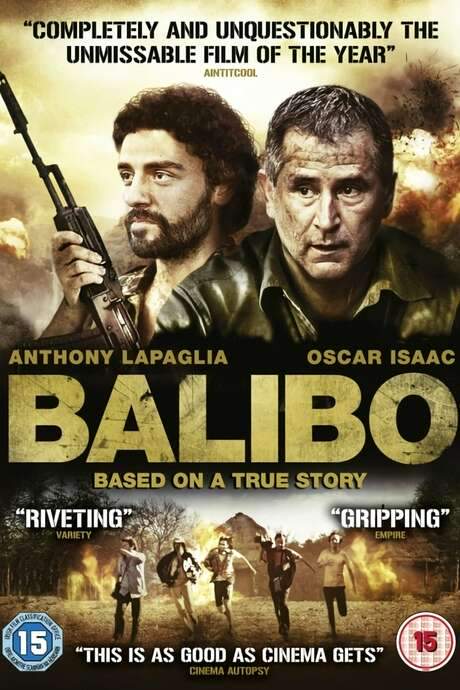
Balibo 2009


Directed by

Robert Connolly
Made by

Arenafilm
Where to Watch Balibo
See current US streaming, rental, and purchase options for Balibo (2009) via JustWatch.

Streaming availability powered by 
Balibo Plot Summary
Read the complete plot summary and ending explained for Balibo (2009). From turning points to emotional moments, uncover what really happened and why it matters.
The film opens in the present day with Juliana Bea Viegas, an Australian woman who recalls the harrowing moment she witnessed as a young girl: the capture and execution of Roger East by the Indonesian invasion force. Her testimony frames a broader investigation that threads through the narrative, grounding the events in a personal memory that lingers long after the killings.
We then follow Roger East Anthony LaPaglia as he pursues answers about an impending Indonesian invasion of East Timor and the fate of the Balibo Five, five Australian journalists who vanished in the chaos that followed. East’s pursuit of the truth drives the film forward, casting a wary eye on the choices that defined the journalists’ final days and the dangerous terrain they walked.
The focus shifts to the Balibo Five’s experience on the ground in East Timor. The film traces their journey from Australia to the border town, where they become embedded with a Revolutionary Front for an Independent East Timor, or FRETILIN, unit near the frontier. The tension of being in a war zone is palpable as they attempt to document a story that might change the course of history, even as danger closes in around them.
As the story interweaves, East’s investigations intersect with the Five’s on-the-ground reality, and Juliana’s memories wade in and out of the narrative. East travels alongside Jose Ramos-Horta Oscar Isaac, evading Indonesian patrols and bearing witness to villages scarred by massacres. The friendship and collaboration between East and Ramos-Horta add a human dimension to the geopolitical upheaval, highlighting the human cost behind the headlines.
The Balibo Five attempt to safeguard themselves by painting an Australian flag on a building and declining the retreat urged by their FRETILIN bodyguards. They persevere to cover the invasion, but the danger intensifies as Indonesian forces press in, driving them to a perilous corner. The tension culminates in a stark moment when one cameraman pleads for mercy, only to be shot by officer Yunus Yosfiah, after which the soldiers breach the building and kill the remaining journalists.
The narrative arc closes its circle as East’s point of view reaches its own stark conclusion when Indonesian troops invade Dili, using paratroopers and ground forces. East is captured along with East Timorese men, while a young Juliana watches the ensuing violence—men executed before her eyes, and women subjected to horrific abuses. Roger East himself is executed by the Indonesian soldiers, sealing a chapter of unresolved accountability.
The film ends with stark inscriptions noting that the murderers of the Balibo Five and Roger East were never brought to justice. The screen then shifts to scenes of José Ramos-Horta rallying support, underscoring the ongoing struggle for East Timor’s freedom, before returning to the image of a liberated people enjoying the beaches of their country. In the end, the story leaves a quiet, haunting reminder of the cost of conflict and the resilience that follows in its wake.
Balibo Timeline
Follow the complete movie timeline of Balibo (2009) with every major event in chronological order. Great for understanding complex plots and story progression.
Present-day interview with Juliana about the Balibo Five and Roger East
The film opens in the present day with an Australian journalist interviewing Juliana, a survivor of East Timor's trauma. She recalls the earlier events and hints at the fates of the Balibo Five and Roger East. The interview frames the history the rest of the story will uncover.
Roger East's investigation into an impending invasion
From his perspective, Roger East pursues evidence of an imminent Indonesian invasion and searches for what happened to the Balibo Five. He travels with others, including Jose Ramos-Horta, evading patrols and witnessing villages scarred by violence. His investigation drives the narrative between past and present.
Balibo Five depart Australia to cover Timor
Five Australian journalists depart Australia to cover Timor as tensions mount. They carry camera gear and a determination to document the unfolding crisis. Their voyage marks the start of a dangerous assignment that will end in tragedy.
Balibo Five arrive in East Timor and embed with FRETILIN near the border
Arriving in East Timor, the Balibo Five embed with a FRETILIN unit near the border to film life under the threat of invasion. They document local conditions and hope to stay safe while reporting the truth. The proximity of Indonesian forces heightens the stakes as the situation deteriorates.
Switching viewpoints shows Roger East and Balibo Five working in parallel
The film alternates between Roger East's investigation and the Five's on-ground reporting, weaving two halves of the same crisis. Both narratives confront danger as the invasion looms. Viewers see parallel pressures and shared stakes across their different perspectives.
Balibo Five paint the Australian flag on a building
To signal safety and national identity, the Balibo Five paint an Australian flag on a building. They hope it helps locals recognize them and offers protection against threats. The moment underscores how fragile their safety becomes as the conflict closes in.
Balibo Five decline to join retreat with FRETILIN guards
Despite urging from their FRETILIN guards to retreat, the journalists choose to stay and press on. They weigh the risks of continuing coverage against the danger closing in around them. Their decision seals their fate as Indonesian forces tighten their grip.
Indonesian invasion begins; the Five cover the assault
Indonesian troops advance into Balibo, and the Five continue filming as danger closes in. They are chased and cornered, trying to capture the events as the invasion erupts. The peril of being a foreign journalist in a war zone becomes brutally real.
Cameraman shot; building breached as journalists are killed
One cameraman pleads with the soldiers to spare them, but is shot by officer Yunus Yosfiah. The soldiers breach the building, killing the other journalists. The Balibo incident becomes a symbol of the cost of reporting under fire.
Indonesian invasion of Dili; Roger East captured and Juliana witnesses
As Indonesian forces flood into Dili with paratroopers and ground troops, Roger East is captured along with East Timorese men. Juliana, then a child, watches as the men are executed, and women are subjected to segregation and rape. The invasion marks the collapse of the journalists last chances to report freely.
Roger East is executed; justice remains elusive
Roger East is executed by Indonesian soldiers, joining the fates of those who vanished in Timor. The film notes that the murderers have never been brought to justice. The grim sequence reinforces the film's insistence on accountability long denied.
Ramos-Horta rallies and East Timor's ongoing resistance
Scenes shift to Jose Ramos-Horta rallying support for East Timor's independence, highlighting ongoing resistance after the invasion. The footage contrasts past violence with a resilient struggle for self-determination. It frames the future arc of East Timor toward freedom.
Closing image: a free East Timor and a hopeful future
The final images show a free East Timor and people enjoying the beach, providing a note of hope after years of oppression. The documentary memorializes those who died and underscores the enduring pursuit of justice. It ends on a vision of peaceful, liberated life for the country.
Balibo Characters
Explore all characters from Balibo (2009). Get detailed profiles with their roles, arcs, and key relationships explained.
Roger East
An Australian journalist who pursues the fate of the Balibo Five and reports on the Indonesian invasion. He travels with Jose Ramos-Horta and faces capture and execution, embodying courage under peril. His investigation ties the present to the past, underscoring the costs of telling the truth.
Greg Shackleton
Balibo Five member, a bold photojournalist documenting the early invasion. He and his colleagues stay with their FRETILIN guards to report the events, risking safety for the sake of truth. His actions reflect a steadfast commitment to frontline reporting.
Shirley Shackleton
Greg Shackleton's wife, a witness to the conflict's toll and a link to the Balibo Five's personal lives. She embodies resilience amid years of waiting and memory, illustrating the human costs behind the headlines. Her perspective anchors the emotional core of the story.
Gary Cunningham
Balibo Five member, an experienced journalist contributing to frontline coverage. He shows quick thinking under pressure and a readiness to push boundaries for truth. His presence emphasizes camaraderie and risk among reporters in hostile terrain.
Ken White
Balibo Five member who balances skepticism with determination to tell the story. He helps navigate dangerous encounters with Indonesian forces and local allies. His practicality keeps the group focused on documenting events as they unfold.
Tony Stewart
Balibo Five member known for resolve and quick decision-making in volatile situations. He contributes to frontline coverage and faces ethical challenges regarding safety and publication. His actions reflect the collective risk borne by journalists in conflict zones.
Malcolm Rennie
Balibo Five member whose calm, analytical approach helps frame the invasion coverage. He balances urgency with reporting accuracy. His experience anchors the group's mission to document truth under pressure.
Jose Ramos-Horta
East Timorese leader who accompanies journalists and participates in scenes depicting resistance and political leadership. He helps contextualize the invasion and the struggle for independence, offering a vision for Timor's future. His rallies symbolize the ongoing fight for sovereignty.
Juliana
As a young girl, Juliana witnesses the massacre and is interviewed in present-day scenes. Her memory anchors the film’s emotional core, linking past violence to calls for justice. She embodies resilience and the enduring impact of trauma on a generation.
Evan Shackleton
Evan Shackleton appears in the Shackleton family narrative, illustrating how the conflict echoes through generations. His scenes connect present-day reflections to the family’s history in the invasion. He represents continuity and the lasting impact of war on families.
Balibo Settings
Learn where and when Balibo (2009) takes place. Explore the film’s settings, era, and how they shape the narrative.
Time period
1975 and present day
The film shifts between present-day interviews and events in 1975, when Indonesian forces invaded East Timor. It juxtaposes contemporary recollections with the historical invasion, mass violence, and the fates of the Balibo Five. The 1975 period is depicted as chaotic and dangerous for journalists and civilians alike.
Location
Balibo, East Timor; Dili, East Timor; Australia
Balibo sits on East Timor's border and is the focal point for the Balibo Five's coverage. Dili, the capital, becomes ground zero during the Indonesian invasion, where journalists and locals face violence. The story also tracks the journalists' origins in Australia, highlighting the cross-continental ties of the conflict.
Balibo Themes
Discover the main themes in Balibo (2009). Analyze the deeper meanings, emotional layers, and social commentary behind the film.
🕊️
Memory & Justice
The narrative treats memory as a path to justice, honoring journalists who disappeared and Roger East who was killed. It questions accountability across decades and emphasizes the need for truth in even the darkest histories. Remembrance is shown as essential to healing families and nations affected by violence.
📰
Truth & Danger
Journalists confront peril and moral choices as they document a violent invasion. The Balibo Five risk their lives to report from the frontlines, illustrating the fragile line between witness and target. The present-day investigation frames truth as an ongoing struggle against silence and impunity.
🌍
Independence & Identity
East Timor's fight for self-determination courses through the narrative, with Jose Ramos-Horta and local resistance figures shaping events. The film connects a traumatic historical episode to the nation's eventual emergence and memory. It suggests that national identity is forged through sacrifice, memory, and the ongoing pursuit of justice.

Coming soon on iOS and Android
The Plot Explained Mobile App
From blockbusters to hidden gems — dive into movie stories anytime, anywhere. Save your favorites, discover plots faster, and never miss a twist again.
Sign up to be the first to know when we launch. Your email stays private — always.
Explore the mobile appBalibo Spoiler-Free Summary
Discover the spoiler-free summary of Balibo (2009). Get a concise overview without any spoilers.
In the uneasy calm before a storm, the film follows veteran Australian correspondent Roger East as he is drawn to East Timor, a tiny nation perched on the edge of a looming Indonesian invasion. Intrigued and unsettled by the recent disappearance of five Australian journalists, East arrives at the invitation of the charismatic Timorese activist José Ramos‑Horta, who urges him to bear witness to his country’s struggle and to seek answers about the vanished reporters. Their partnership promises a clash of experience and idealism, anchored by a shared conviction that truth must be recorded even as danger gathers.
The world of the story unfolds in the remote border towns and jungle‑shrouded villages of East Timor, where the rhythms of daily life are underscored by the tense anticipation of conflict. The region’s lush landscapes contrast sharply with the political uncertainty that hangs over its people, creating a palpable sense of being caught between beauty and impending turmoil. Through the eyes of East and Ramos‑Horta, the audience catches whispers of a nation on the brink, where community bonds are tested and the weight of history feels imminently present.
Tone-wise, the film balances journalistic grit with lyrical observation, allowing moments of quiet reflection to sit beside an undercurrent of urgency. The cinematography captures the stark, humid heat and the quiet resolve of ordinary citizens, while the score weaves a subtle, haunting thread that underscores the stakes without dictating them. The dynamic between East’s seasoned, methodical approach and Ramos‑Horta’s passionate, sometimes impulsive drive creates a compelling rhythm, inviting viewers to wonder how far a reporter will go to uncover a story that could reshape a country’s destiny.
At its heart, the narrative is a meditation on the power of witness, the moral weight of asking difficult questions, and the fragile line between curiosity and peril. As the impending invasion looms, the film leaves audiences with an unsettling curiosity about what truths lie beneath the surface of a world on the verge of transformation.
Movies with Similar Twists and Themes
Uncover films that echo the narrative beats, emotional arcs, or dramatic twists of the one you're exploring. These recommendations are handpicked based on story depth, thematic resonance, and spoiler-worthy moments — perfect for fans who crave more of the same intrigue.



Featured on this page

What's After the Movie?
Not sure whether to stay after the credits? Find out!
Check out our other apps:

SAT Sphere
Build confidence for the Digital SAT.

Mori Atlas
Discover wild places worth protecting.

Luntero
Search smarter for a home in Amsterdam.

Plot Explained
Unravel movie endings and hidden clues.

Pokechamp
Dive into Pokémon data and battle logic.

Driving Theory
Get ready for your European theory test.

Movie Dust
Plan your next cinema trip with ease.

Musemap
Find art and culture as you travel.

Selkobase
Compare credentials before committing.

Local Manual
Turn an unfamiliar country into practical next steps.

Lernavi
Compare school systems before your next move.

GymRoam
Find a workout stop wherever your plans take you.
Explore Our Movie Platform
New Movie Releases (2026)
Famous Movie Actors
Top Film Production Studios
Movie Plot Summaries & Endings
Major Movie Awards & Winners
Best Concert Films & Music Documentaries
Movie Collections and Curated Lists
© 2026 What's After the Movie. All rights reserved.
Privacy Policy