Zift 2008


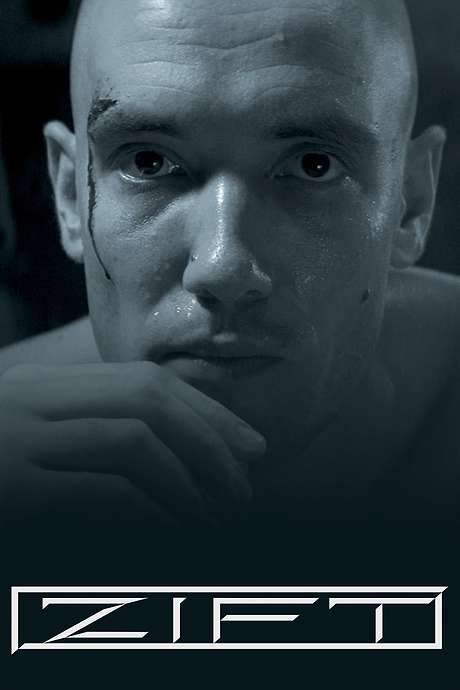
After decades behind bars for a murder he didn’t commit, Moth is released on parole just as Bulgaria shifts into communist rule. He steps into a foreign, oppressive Sofia of the 1960s, where his first night of freedom becomes a tour through crumbling districts, shadowed alleys and a surreal cast of inhabitants, mapping the city’s dark underbelly.


Does Zift have end credit scenes?
No!
Zift does not have end credit scenes. You can leave when the credits roll.
Where to Watch Zift
See current US streaming, rental, and purchase options for Zift (2008) via JustWatch.








Meet the Full Cast and Actors of Zift
Explore the complete cast of Zift, including both lead and supporting actors. Learn who plays each character, discover their past roles and achievements, and find out what makes this ensemble cast stand out in the world of film and television.

Ivan Barnev
Tin
Dimo Alexiev
Private
Hristo Petkov
Deputy Chief Gravedigger
Yavor Vesselinov
Valentine
Velislav Pavlov
Barman
Ivaylo Dragiev
Waiter - at Tavern
Zahari Baharov
Moth
Snezhina Petrova
Doctor
Svetlana Yancheva
Swarthy Gypsy
Veselin Mezekliev
Warden 3
Stoyan Radev
Nail
Boyka Velkova
Lady at the Bar
Yordan Bikov
Truck Driver
Mihail Mutafov
Van Wurst
Vladimir Penev
Slug
Djoko Rosic
Priest
Tsvetan Dimitrov
Sergeant Major
Tanya Ilieva
Ada
Jordan Mutafov
Bijou
Hristo Peev
Warden 1
Vasil Ryahov
Warden 2
Ivo Krastev
Superintendent
External Links and Streaming Options
Discover where to watch Zift online, including streaming platforms, rental options, and official sources. Compare reviews, ratings, and in-depth movie information across sites like IMDb, TMDb, Wikipedia or Rotten Tomatoes.








Take the Ultimate Zift Movie Quiz
Challenge your knowledge of Zift with this fun and interactive movie quiz. Test yourself on key plot points, iconic characters, hidden details, and memorable moments to see how well you really know the film.
Zift (2008) Quiz: Test your knowledge of the Bulgarian neo-noir film Zift, covering plot details, characters, and themes.
What is the nickname of Moth's first love, Ada?
Full Plot Summary and Ending Explained for Zift
Read the complete plot summary of Zift, including all major events, twists, and the full ending explained in detail. Explore key characters, themes, hidden meanings, and everything you need to understand the story from beginning to end.
Zift unfolds in a non-linear, atmospheric tapestry: after Moth’s release from prison, the central timeline unfolds in a straightforward, chronological thread, yet the layers leading to that moment are peeled back through a string of long,lier-than-typical flashbacks. The structure invites you to piece together a city’s past from the vantage point of a man trying to make sense of who he was and who he has become. The story is presented chronologically here.
Moth [Zahari Baharov] is an ordinary man from Sofia, the capital of Bulgaria, who carries a quiet longing for something more than daily drift. In his youth, he falls for the radiant Ada [Tanya Ilieva], a woman whose beauty becomes a bright thread in his life, and who later earns the nickname “Mantis” as their bond deepens. Caught between yearning and risk, Moth is drawn into a doomed plan with a shady neighbor known as Slug [Vladimir Penev], a man who embodies the shady underbelly of a changing city. They scheme to steal a black diamond from Vlad the Bijou’s house, a jewel the crime world has whispered about for years. The caper already tastes like trouble from the start: the theft goes wrong, Vlad catches them, and Moth sustains injuries while Slug escapes. The diamond vanishes into thin air, and Vlad is killed during the upheaval of the break-in, leaving investigators with nothing but silence and a haunting sense that something valuable vanished into the shadows.
Inside the Sofia prison, Moth befriends a roomate with a dangerous past and an sharp mind, Van Wurst the Eye [Mihail Mutafov], a seasoned boxer and arm wrestler who has paid a heavy price for his years and his choices. Van Wurst is a man of theory as much as of fist and grit, offering crystalline yet unsettling insights into life and love—his world-weary philosophy is a counterpoint to Moth’s stubborn hope. The two men share more than space; they share a fragile, unspoken pact. Van Wurst’s voice carries a warning about the power of women and the fragility of a man’s dreams, a warning that foreshadows the choices Moth will have to confront after release. Moments before the end of his time behind bars, Van Wurst’s sorrowful confession lands with a jolt: he hangs himself, claiming that “there is no hope outside.”
Ada reveals a painful truth during Moth’s sentence: his son, Leonid, was born and died of lockjaw while still very young. The weight of that absence lingers as Moth walks out of prison into a city that looks different yet feels the same. He sheds his prison clothes, retrieves his year-old ball of chewing bitumen from the cloakroom, and confronts a gaunt reality with a familiar bitterness. In the damp basement of the Baths, a familiar interrogation awaits: Slug has risen to local influence within the communist nomenklatura, and he believes Moth knows where the black diamond is hidden. Moth refuses to reveal anything and even doubts the diamond’s existence; when he finally escapes, he drinks iridium-poisoned wine from Slug’s hand, a poisoned welcome back to a world that has changed on the surface but not at heart.
Drunk and searching for Ada, Moth wanders through a Sofia that bears new imprints—the Largo, the Georgi Dimitrov Mausoleum, a skyline that has shifted but human behavior that remains stubbornly familiar. Along the way, he encounters a gallery of oddball characters: drug-using medics, peculiar patients, and hard-bitten drunks who populate the city’s margins. His path finally leads him to Saint Nicholas Church, where the priest [Djoko Rosic]—the man who baptized him long ago—offers a clue about Ada’s whereabouts, hinting that she now performs under the stage name Gilda in a nightclub.
Ada’s life has shifted as well. She is no longer the girl from his past but a performer entangled with Slug, living in a new light that glitters with danger and desire. The two reconnect, and Moth reveals to her that he knows where the diamond lies: within Vlad the Bijou’s coffin. The quest for the diamond becomes a ritual of memory and reckoning. The lovers return to the graveyard, a place where truth and illusion mingle, and where Moth first checks the wrong graves before realizing the real story—his own past has come to a head. He discovers Slug behind Ada as she lingers close, and the future seems poised on the edge of a blade.
In a final, brutal turn, Moth and Slug dig for the diamond at the Bijou’s grave, and a fight erupts beneath the earth’s surface. Moth defeats Slug in a struggle that ends with Slug’s death at his own hand, but Ada strikes next, and Moth is left mortally wounded. He awakens in the gravediggers’ shed, the air thick with earth and memory, and the breath of the end pressing in. To escape a final act of decay, he begs for his bitumen to avoid dying with a foul breath, tearing the bitumen open to reveal the black diamond hidden inside all these years. In a last, almost ceremonial gesture, he swallows the diamond and dies, the weight of the city and its secrets finally closing around him.
Throughout this tragic odyssey, the city itself becomes a character—its mood, its shadows, and its shifting face reflecting the tension between old loyalties and a future built on new power structures. The non-linear flashbacks layer the narrative with echoes of a life that tried to be more than it could be, while the present-day scenes in Sofia’s reimagined, almost mythic landscape underline the film’s bleak humor and its stubborn sense of fate. The dialogue crackles with raw, noir-inflected texture, the score hums with Soviet-era cadences, and the city breathes in every frame as a living archive of desire, betrayal, and the expensive price of truth.
there is no hope outside
Moth’s journey is a stark reminder that some truths travel across time in the ashes of the past, waiting for someone to lift the lid. The cast threads through this tale like a chorus of the city’s own ghosts, with each performer bringing a sharper edge to the story’s dark humor and its unflinching look at longing, loyalty, and loss.

Coming soon on iOS and Android
The Plot Explained Mobile App
From blockbusters to hidden gems — dive into movie stories anytime, anywhere. Save your favorites, discover plots faster, and never miss a twist again.
Sign up to be the first to know when we launch. Your email stays private — always.
Explore the mobile appWatch Trailers, Clips & Behind-the-Scenes for Zift
Watch official trailers, exclusive clips, cast interviews, and behind-the-scenes footage from Zift. Dive deeper into the making of the film, its standout moments, and key production insights.
Cars Featured in Zift
Explore all cars featured in Zift, including their makes, models, scenes they appear in, and their significance to the plot. A must-read for car enthusiasts and movie buffs alike.
Zift Themes and Keywords
Discover the central themes, ideas, and keywords that define the movie’s story, tone, and message. Analyze the film’s deeper meanings, genre influences, and recurring concepts.
Zift Other Names and Titles
Explore the various alternative titles, translations, and other names used for Zift across different regions and languages. Understand how the film is marketed and recognized worldwide.
Similar Movies To Zift You Should Know About
Browse a curated list of movies similar in genre, tone, characters, or story structure. Discover new titles like the one you're watching, perfect for fans of related plots, vibes, or cinematic styles.






Quick Links: Summary, Cast, Ratings, More

What's After the Movie?
Not sure whether to stay after the credits? Find out!
Check out our other apps:

SAT Sphere
Build confidence for the Digital SAT.

Mori Atlas
Discover wild places worth protecting.

Luntero
Search smarter for a home in Amsterdam.

Plot Explained
Unravel movie endings and hidden clues.

Pokechamp
Dive into Pokémon data and battle logic.

Driving Theory
Get ready for your European theory test.

Movie Dust
Plan your next cinema trip with ease.

Musemap
Find art and culture as you travel.

Selkobase
Compare credentials before committing.

Local Manual
Turn an unfamiliar country into practical next steps.

Lernavi
Compare school systems before your next move.

GymRoam
Find a workout stop wherever your plans take you.
Explore Our Movie Platform
New Movie Releases (2026)
Famous Movie Actors
Top Film Production Studios
Movie Plot Summaries & Endings
Major Movie Awards & Winners
Best Concert Films & Music Documentaries
Movie Collections and Curated Lists
© 2026 What's After the Movie. All rights reserved.
Privacy Policy