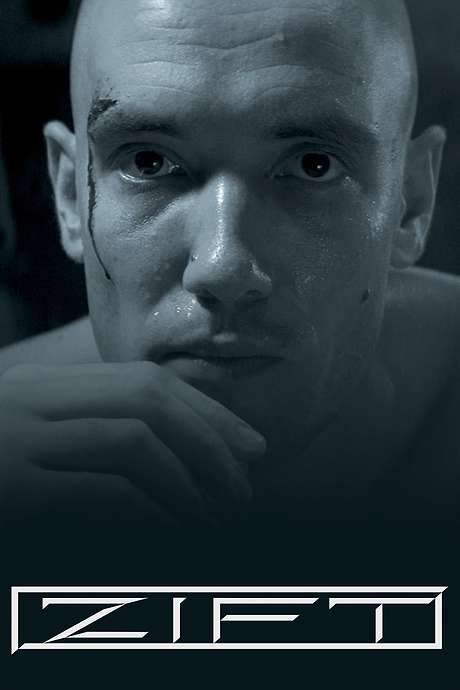
Zift 2008


Directed by

Javor Gardev
Made by

Miramar Film
Where to Watch Zift
See current US streaming, rental, and purchase options for Zift (2008) via JustWatch.








Zift Plot Summary
Read the complete plot summary and ending explained for Zift (2008). From turning points to emotional moments, uncover what really happened and why it matters.
Zift unfolds in a non-linear, atmospheric tapestry: after Moth’s release from prison, the central timeline unfolds in a straightforward, chronological thread, yet the layers leading to that moment are peeled back through a string of long,lier-than-typical flashbacks. The structure invites you to piece together a city’s past from the vantage point of a man trying to make sense of who he was and who he has become. The story is presented chronologically here.
Moth [Zahari Baharov] is an ordinary man from Sofia, the capital of Bulgaria, who carries a quiet longing for something more than daily drift. In his youth, he falls for the radiant Ada [Tanya Ilieva], a woman whose beauty becomes a bright thread in his life, and who later earns the nickname “Mantis” as their bond deepens. Caught between yearning and risk, Moth is drawn into a doomed plan with a shady neighbor known as Slug [Vladimir Penev], a man who embodies the shady underbelly of a changing city. They scheme to steal a black diamond from Vlad the Bijou’s house, a jewel the crime world has whispered about for years. The caper already tastes like trouble from the start: the theft goes wrong, Vlad catches them, and Moth sustains injuries while Slug escapes. The diamond vanishes into thin air, and Vlad is killed during the upheaval of the break-in, leaving investigators with nothing but silence and a haunting sense that something valuable vanished into the shadows.
Inside the Sofia prison, Moth befriends a roomate with a dangerous past and an sharp mind, Van Wurst the Eye [Mihail Mutafov], a seasoned boxer and arm wrestler who has paid a heavy price for his years and his choices. Van Wurst is a man of theory as much as of fist and grit, offering crystalline yet unsettling insights into life and love—his world-weary philosophy is a counterpoint to Moth’s stubborn hope. The two men share more than space; they share a fragile, unspoken pact. Van Wurst’s voice carries a warning about the power of women and the fragility of a man’s dreams, a warning that foreshadows the choices Moth will have to confront after release. Moments before the end of his time behind bars, Van Wurst’s sorrowful confession lands with a jolt: he hangs himself, claiming that “there is no hope outside.”
Ada reveals a painful truth during Moth’s sentence: his son, Leonid, was born and died of lockjaw while still very young. The weight of that absence lingers as Moth walks out of prison into a city that looks different yet feels the same. He sheds his prison clothes, retrieves his year-old ball of chewing bitumen from the cloakroom, and confronts a gaunt reality with a familiar bitterness. In the damp basement of the Baths, a familiar interrogation awaits: Slug has risen to local influence within the communist nomenklatura, and he believes Moth knows where the black diamond is hidden. Moth refuses to reveal anything and even doubts the diamond’s existence; when he finally escapes, he drinks iridium-poisoned wine from Slug’s hand, a poisoned welcome back to a world that has changed on the surface but not at heart.
Drunk and searching for Ada, Moth wanders through a Sofia that bears new imprints—the Largo, the Georgi Dimitrov Mausoleum, a skyline that has shifted but human behavior that remains stubbornly familiar. Along the way, he encounters a gallery of oddball characters: drug-using medics, peculiar patients, and hard-bitten drunks who populate the city’s margins. His path finally leads him to Saint Nicholas Church, where the priest [Djoko Rosic]—the man who baptized him long ago—offers a clue about Ada’s whereabouts, hinting that she now performs under the stage name Gilda in a nightclub.
Ada’s life has shifted as well. She is no longer the girl from his past but a performer entangled with Slug, living in a new light that glitters with danger and desire. The two reconnect, and Moth reveals to her that he knows where the diamond lies: within Vlad the Bijou’s coffin. The quest for the diamond becomes a ritual of memory and reckoning. The lovers return to the graveyard, a place where truth and illusion mingle, and where Moth first checks the wrong graves before realizing the real story—his own past has come to a head. He discovers Slug behind Ada as she lingers close, and the future seems poised on the edge of a blade.
In a final, brutal turn, Moth and Slug dig for the diamond at the Bijou’s grave, and a fight erupts beneath the earth’s surface. Moth defeats Slug in a struggle that ends with Slug’s death at his own hand, but Ada strikes next, and Moth is left mortally wounded. He awakens in the gravediggers’ shed, the air thick with earth and memory, and the breath of the end pressing in. To escape a final act of decay, he begs for his bitumen to avoid dying with a foul breath, tearing the bitumen open to reveal the black diamond hidden inside all these years. In a last, almost ceremonial gesture, he swallows the diamond and dies, the weight of the city and its secrets finally closing around him.
Throughout this tragic odyssey, the city itself becomes a character—its mood, its shadows, and its shifting face reflecting the tension between old loyalties and a future built on new power structures. The non-linear flashbacks layer the narrative with echoes of a life that tried to be more than it could be, while the present-day scenes in Sofia’s reimagined, almost mythic landscape underline the film’s bleak humor and its stubborn sense of fate. The dialogue crackles with raw, noir-inflected texture, the score hums with Soviet-era cadences, and the city breathes in every frame as a living archive of desire, betrayal, and the expensive price of truth.
there is no hope outside
Moth’s journey is a stark reminder that some truths travel across time in the ashes of the past, waiting for someone to lift the lid. The cast threads through this tale like a chorus of the city’s own ghosts, with each performer bringing a sharper edge to the story’s dark humor and its unflinching look at longing, loyalty, and loss.
Zift Timeline
Follow the complete movie timeline of Zift (2008) with every major event in chronological order. Great for understanding complex plots and story progression.
Love at school
Moth falls in love with Ada during his school days in Sofia, laying the emotional groundwork for his later decisions. Ada, nicknamed 'Mantis', becomes a central figure in his life. This romance foreshadows the trouble and choices he will face as the plot unfolds.
The diamond plot begins
Out of a desire for money, Moth agrees to work with his shady neighbor Slug to steal the black diamond from Vlad the Bijou's house. They hatch a carefully planned burglary that kicks off the central conflict of the story. The scheme misfires, setting Moth on a collision course with the crime's consequences.
The robbery and capture
The robbery ends in failure: Moth is wounded by Vlad and captured by the police while Slug escapes. Vlad the Bijou is killed by Slug, and the diamond's existence remains unknown. The case effectively collapses around Moth, sending him to prison.
Prison life and Van Wurst
In Sofia prison, Moth befriends Van Wurst the Eye, an older, boxing-minded inmate. Van Wurst shares his hard-edged philosophy of life and even his belief in the destructive power of women. Shortly before Moth's release, Van Wurst hangs himself, leaving Moth shaken.
Ada reveals Leonid
Ada visits Moth in prison and reveals that his son Leonid was born and died of lockjaw, a tragedy that weighs on him during his confinement.
Release and basement interrogation
After release, Moth is escorted by guards to the Baths where Slug, now a powerful figure, interrogates him in a damp basement about the diamond. Moth denies knowledge of any diamond and resists the pressure.
Escape and poisoning
Moth escapes but drinks iridium-poisoned wine handed to him by Slug, a cruel trick that weakens him and deepens the pursuit.
Wandering through Sofia
Drunk and wandering through Sofia, Moth witnesses the city's changing socialist veneer—the Largo and the Dimitrov Mausoleum—and encounters a string of bizarre locals. He ends up at Saint Nicholas Church, where a priest who baptized him earlier points him toward Ada's whereabouts.
Ada as Gilda
Moth locates Ada performing in a nightclub under the stage name Gilda, and learns she is living with Slug. They rekindle their relationship, even as distrust lingers.
The diamond's location
Moth and Ada realize the diamond is hidden inside Vlad the Bijou's coffin, and they head to the graveyard to retrieve it.
Graveyard revelations
At the graveyard, Moth first visits what he believes is his son's grave, only to realize it isn't; Ada and Slug linger behind him, hinting at betrayal.
Climax: confrontation at the grave
They proceed to Vlad the Bijou's grave and begin digging for the coffin's contents. In the confrontation, Moth fatally wounds Slug with a pickaxe, but Ada stuns him, leaving him momentarily helpless.
Final death and the diamond
In the gravediggers' shed, Moth, knowing death is near, tears the bitumen that has carried the diamond, swallows the hidden gem, and dies with the diamond inside him.
Zift Characters
Explore all characters from Zift (2008). Get detailed profiles with their roles, arcs, and key relationships explained.
Moth - Zahari Baharov
An ordinary man from Sofia drawn into crime for money, Moth’s fate is sealed by a botched heist and a brutal social order. His arc covers prison life, shifting loyalties, and a desperate search for meaning in a city under surveillance. Though resilient, he is gradually worn down by betrayal, violence, and the truth about the diamond’s location. He dies after swallowing the hidden diamond to keep it from falling into the wrong hands.
Ada - Tanya Ilieva
Moth’s love interest who later becomes a performer under the stage name Gilda. She moves through the story with a mix of affection and self-preservation, ultimately playing a pivotal role in the climax. Ada’s choices reflect the brutal compromises people make to survive in a society undergoing rapid political change. Her actions intersect closely with both Moth and Slug, altering the fate of everyone involved.
Slug - Vladimir Penev
A shady neighbor who rises to local power and becomes a torturer and interrogator under the new regime. He suspects Moth knows the diamond’s whereabouts and clamps down with coercion and violence. Slug’s ascent mirrors the corrupting influence of politics on ordinary people, culminating in a deadly confrontation tied to loyalty and greed.
Bijou - Jordan Mutafov
Vlad the Bijou, a jeweler whose house is the target of the diamond robbery. His murder during the robbery triggers the central mystery and drives the plot’s pursuit of the missing gem. Bijou’s fate underscores the fragility of wealth and the way crime robs individuals of safety and peace.
Van Wurst - Mihail Mutafov
Moth’s older roommate in prison, a boxer with a sharp mind and philosophical quips. He offers a bleak worldview, including a prophecy-like line about hope, and forms a key emotional connection with Moth. His eventual suicide foreshadows the crushing weight of the system and the characters’ inability to escape it.
Priest - Djoko Rosic
The priest who baptized Moth and later points him toward Ada’s whereabouts. He represents a remnants of spiritual guidance in a landscape consumed by political and personal upheaval. His presence offers a moment of reflection amid the city’s corruption and the protagonists’ moral struggles.
Zift Settings
Learn where and when Zift (2008) takes place. Explore the film’s settings, era, and how they shape the narrative.
Time period
Late 1940s – early 1950s
The film sits in the early years of Bulgaria's socialist era, a time of rapid political transformation and state reorganization after World War II. Public spaces are redesigned to showcase the regime’s power, while ordinary people carry on with everyday life amid surveillance and shifting loyalties. The era blends old urban myths with new political realities, creating a tense atmosphere for crime, punishment, and personal fate.
Location
Sofia, Bulgaria
The story unfolds in Sofia, the capital city of Bulgaria, against a backdrop of post-war urban change. Key locations include the Baths, the gravediggers’ shed, and the Gothic-era church where a priest offers guidance, all reflecting a city transitioning under a new socialist order. The Largo and the Georgi Dimitrov Mausoleum appear as symbols of the era, contrasting with the gritty, street-level drama of crime, poverty, and survival.
Zift Themes
Discover the main themes in Zift (2008). Analyze the deeper meanings, emotional layers, and social commentary behind the film.
🏛️
Power and Corruption
The narrative tracks how authority, money, and influence corrupt ordinary lives. Slug leverages his position to extract loyalty and information, while the state apparatus looms as a distant, coercive force. The clash between personal need and political control drives characters to betray, manipulate, or submit to a system that treats individuals as instruments. This theme is embodied in the gradual shift from criminal secrecy to civic surveillance and intimidation.
🧭
Memory and Truth
Flashbacks reveal past choices and misdirections, shaping the characters’ present-day actions. The search for the missing diamond becomes a question of what really happened and who is telling the truth. The story uses non-linear memory to blur lines between guilt and innocence, past grievances and current motives. What is remembered often exploits what is forgotten, influencing trust and betrayal.
💀
Fate and Death
Death is a constant companion, underscoring the fragility of a life caught between crime and politics. Characters meet violent ends or near misses as the plot spirals toward a fatal reckoning. The sense of inevitability is intensified by the harsh environment, where choices lead inexorably to ruin. The final act makes death a form of cleansing or release from a corrupt world.
💔
Love and Betrayal
Romantic bonds become a battleground for survival as affection collides with utility and fear. Ada’s relationship with Moth oscillates between tenderness and opportunism, culminating in a betrayal that alters the course of the entire story. The film uses intimate connections to expose how personal loyalty is weaponized in a time of upheaval. Love, in this context, is both solace and vulnerability.

Coming soon on iOS and Android
The Plot Explained Mobile App
From blockbusters to hidden gems — dive into movie stories anytime, anywhere. Save your favorites, discover plots faster, and never miss a twist again.
Sign up to be the first to know when we launch. Your email stays private — always.
Explore the mobile appZift Spoiler-Free Summary
Discover the spoiler-free summary of Zift (2008). Get a concise overview without any spoilers.
In the shadowed streets of a Sofia reshaped by communist rule, a man steps out of a prison cell after decades of confinement for a crime he never committed. The night of his release becomes a wandering pilgrimage through crumbling districts, dim alleys and the echo‑filled public spaces of a city that feels both foreign and familiar. The oppression of political change hangs in the air like a low fog, while the city itself seems to pulse with memories, each corner hinting at stories that have long been buried beneath its concrete and propaganda‑lined facades.
Moth carries a quiet yearning that has survived his years behind bars, an ache that pulls him toward a life he can barely recall. In flashbacks and lingering thoughts he is drawn to Ada, the radiant woman who once illuminated his youth and now moves through the capital’s undercurrents with a haunting, almost theatrical presence. Within the stark walls of the prison, he forged an unlikely bond with Van Wurst the Eye, a hardened yet philosophically inclined fellow inmate whose cryptic musings about hope, love and the fragility of dreams linger long after the shackles are removed. Their interactions plant the seeds of a restless curiosity that fuels Moth’s tentative steps back into a world that has moved on without him.
The film breathes a noir‑inflected mood, blending bleak humor with a palpable sense of fate. Sofia itself becomes a character—its looming monuments, its dimly lit nightclubs, its haggard medics and drunkard passersby forming a surreal chorus that reflects the city’s fractured soul. Through atmospheric cinematography and a score tinged with Soviet‑era cadences, the story invites the viewer to feel the weight of history pressing against personal longing, leaving a lingering question of whether freedom in such a landscape can ever truly be claimed.
Movies with Similar Twists and Themes
Uncover films that echo the narrative beats, emotional arcs, or dramatic twists of the one you're exploring. These recommendations are handpicked based on story depth, thematic resonance, and spoiler-worthy moments — perfect for fans who crave more of the same intrigue.


Featured on this page

What's After the Movie?
Not sure whether to stay after the credits? Find out!
Check out our other apps:

SAT Sphere
Build confidence for the Digital SAT.

Mori Atlas
Discover wild places worth protecting.

Luntero
Search smarter for a home in Amsterdam.

Plot Explained
Unravel movie endings and hidden clues.

Pokechamp
Dive into Pokémon data and battle logic.

Driving Theory
Get ready for your European theory test.

Movie Dust
Plan your next cinema trip with ease.

Musemap
Find art and culture as you travel.

Selkobase
Compare credentials before committing.

Local Manual
Turn an unfamiliar country into practical next steps.

Lernavi
Compare school systems before your next move.

GymRoam
Find a workout stop wherever your plans take you.
Explore Our Movie Platform
New Movie Releases (2026)
Famous Movie Actors
Top Film Production Studios
Movie Plot Summaries & Endings
Major Movie Awards & Winners
Best Concert Films & Music Documentaries
Movie Collections and Curated Lists
© 2026 What's After the Movie. All rights reserved.
Privacy Policy