This Sporting Life 1963



Frank Machin lives by brute strength, unable to say the word love, in early‑1960s northern England. Rough, ambitious, he quickly becomes a star on Weaver’s rugby league team, embodying the era’s hard‑nosed drive. His ruthless pursuit of glory clashes with the softer world around him in the town’s industrial backdrop.


Does This Sporting Life have end credit scenes?
No!
This Sporting Life does not have end credit scenes. You can leave when the credits roll.
Where to Watch This Sporting Life
See current US streaming, rental, and purchase options for This Sporting Life (1963) via JustWatch.










Meet the Full Cast and Actors of This Sporting Life
Explore the complete cast of This Sporting Life, including both lead and supporting actors. Learn who plays each character, discover their past roles and achievements, and find out what makes this ensemble cast stand out in the world of film and television.
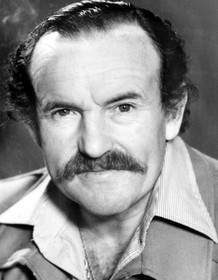
Colin Blakely
Maurice Braithwaite
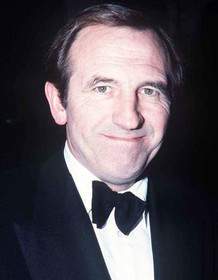
Leonard Rossiter
Phillips, Sports Writer
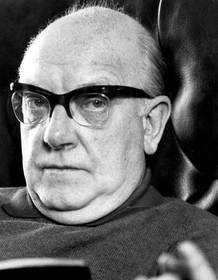
Arthur Lowe
Charles Slomer

William Hartnell
'Dad' Johnson
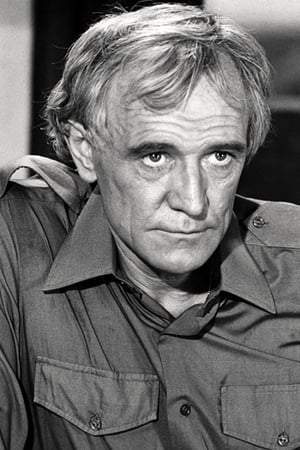
Richard Harris
Frank Machin

Rachel Roberts
Mrs. Margaret Hammond

Edward Fox
Restaurant Barman (uncredited)
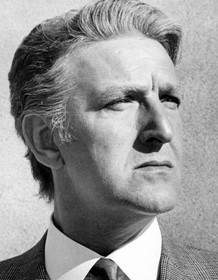
Alan Badel
Gerald Weaver

Jack Watson
Len Miller
Lindsay Anderson
Glenda Jackson
Singer at Party (uncredited)
Vanda Godsell
Mrs Anne Weaver
George Sewell
Jeff
Tom Clegg
Gower
Anton Rodgers
Restaurant Customer (uncredited)
Michael Logan
Riley
Anne Cunningham
Judith
Frank Windsor
Dentist
Roy Lansford
Man in Pub (Uncredited)
Wallas Eaton
Waiter
John Gill
Cameron
Harry Markham
Wade
Bryan Mosley
Man in Bar (uncredited)
Katherine Parr
Mrs Farrer
Anthony Woodruff
Tom, Head Waiter
Bernadette Benson
Lynda Hammond
Andrew Nolan
Ian Hammond
Murray Evans
Hooker
Ken Traill
Trainer
External Links and Streaming Options
Discover where to watch This Sporting Life online, including streaming platforms, rental options, and official sources. Compare reviews, ratings, and in-depth movie information across sites like IMDb, TMDb, Wikipedia or JustWatch.







Take the Ultimate This Sporting Life Movie Quiz
Challenge your knowledge of This Sporting Life with this fun and interactive movie quiz. Test yourself on key plot points, iconic characters, hidden details, and memorable moments to see how well you really know the film.
This Sporting Life Quiz: Test your knowledge of the 1963 film This Sporting Life, covering characters, plot events, and themes.
What is the profession of Frank Machin before he becomes a professional rugby player?
Full Plot Summary and Ending Explained for This Sporting Life
Read the complete plot summary of This Sporting Life, including all major events, twists, and the full ending explained in detail. Explore key characters, themes, hidden meanings, and everything you need to understand the story from beginning to end.
Frank Machin, Richard Harris, is a bitter young coal miner from the West Riding of Yorkshire, living in the fictional city of City. Set up in a two-part structure, the film opens with a series of flashbacks shown while he’s anaesthetised in a dentist’s chair after a rugby league match leaves him with broken front teeth, then shifts to a present-day narrative that moves forward without further flashbacks. The contrast between the rawness of his day-to-day grind and the vulnerable vulnerability beneath his rough exterior becomes a throughline that threads the entire story.
After a nightclub altercation where Frank takes on the captain of the local rugby league club and fights a couple of other players, he latches onto a chance to prove himself by approaching a scout, a man he nicknames “Dad.” In the trial game, Gerald Weaver, Alan Badel, one of the team’s owners, is struck by the unpolished intensity and brutal honesty of Frank’s playing. The trial performance leaves little doubt about his potential, and he earns a significant signing bonus to join the top team as a loose forward (number 13). On the field, Frank’s style is a relentless blend of power and aggression—piercing tackles, hard punches, and elbows that leave opponents reeling, and sometimes he even lashes out at teammates when frustration overflows.
Off the field, Frank’s life is far more precarious. He becomes entangled with Mrs. Margaret Hammond, a recently widowed mother of two who lives in the same building and resents the intrusions of a man she’s not sure she can trust. Margaret, played by Rachel Roberts, had lost her husband in an accident at Weaver’s engraving firm, a death clouded by whispers of suicide rather than a clear accident, and she guards her heart against Frank’s advances with sharpness and distance. The two eventually share a moment of kinship when Frank takes Margaret and the children to play by the River Wharfe near Bolton Priory, a scene that hints at a desire for stability in a man who has known little of it. Frank’s desire for a deeper connection grows, even as his drinking and volatile mood threaten to pull them apart.
At Weaver’s Christmas party, tensions flare as Frank clashes with Gerald Weaver and with Weaver’s predatory wife, whose advances Frank previously rejected. The conflict marks a turning point, and Slomer, the other owner, remains steadfast in his support of Frank—Charles Slomer, Arthur Lowe—even as the rest of the club seems wary of him. When Frank returns home after the party, Margaret agrees to share his bed to keep him warm, though the warmth is more about comfort than genuine affection. She appears worn by grief and guarded about giving her heart again, revealing a wary, protective stance toward both him and her children. The couple’s dinners and outings become charged with a mix of tenderness, embarrassment, and friction, culminating in moments where Frank’s bluntness and social awkwardness clash with Margaret’s sense of propriety and pride.
Maurice Braithwaite, Frank’s teammate and friend, Colin Blakely, starts a life of his own with marriage, an event that Frank and Margaret attend. The ceremony is a quiet counterpoint to Frank’s volatile world, and afterward, Margaret struggles with the idea of her life being tethered to a man who cannot quite escape his own primal instincts. She confides in moments of doubt, questioning whether she and her children can ever be “proper people” in a society that already judges them harshly because of Frank’s unpredictable nature. Frank, for his part, longs for something permanent, something that will anchor him beyond the roar of the crowd.
As time goes by, Frank’s longing for belonging grows louder, and so does his need for a place where his strength is valued rather than exploited. He considers a more stable career, even imagining a future away from the rough edges of coal mining and stadium lights. The tension between his desire for affection and his compulsion toward blunt, sometimes brutal behavior threads through his interactions with Margaret, Maurice, and the other people in his orbit. He eventually leaves for a period, moving to Dad’s cheap boarding house in a bombed-out district, leaving his Jaguar parked outside as a stark symbol of a life that cannot quite fit the man who inhabits it.
When Frank returns, forgiveness and reconciliation become his new aim, and he tries to rebuild with Margaret. But tragedy strikes when Margaret falls ill with a brain hemorrhage, and the doctors warn that she may not have the strength—or the will—to survive. Frank sits by her bedside, softly speaking to her as she lies unconscious, and in a moment of sudden distraction—a large spider on the wall—the quiet becomes a catalyst for his unraveling. Blood appears at the corner of Margaret’s mouth, and she dies. Overwhelmed with grief, Frank slams his fist into the spider, a primal release that leaves him shaken. He does not speak to the children or their minder on leaving the hospital; instead, he returns to Margaret’s house, enters through the back door, and collapses in tears, wandering through the empty spaces of a home that will never feel like his again.
In the closing scene, Frank is glimpsed once more on the rugby field, but he is no longer the irrepressible force he once was. Time has taken its toll, and the game, his body, and the choices he made have reshaped him into a worn, exhausted figure who faces the ravages of injury and age. The film ends on a note of quiet, unsettled vulnerability—the cost of a life lived with a fierce, unyielding energy that could never quite be contained.

Coming soon on iOS and Android
The Plot Explained Mobile App
From blockbusters to hidden gems — dive into movie stories anytime, anywhere. Save your favorites, discover plots faster, and never miss a twist again.
Sign up to be the first to know when we launch. Your email stays private — always.
Explore the mobile appWatch Trailers, Clips & Behind-the-Scenes for This Sporting Life
Watch official trailers, exclusive clips, cast interviews, and behind-the-scenes footage from This Sporting Life. Dive deeper into the making of the film, its standout moments, and key production insights.
Cars Featured in This Sporting Life
Explore all cars featured in This Sporting Life, including their makes, models, scenes they appear in, and their significance to the plot. A must-read for car enthusiasts and movie buffs alike.
This Sporting Life Themes and Keywords
Discover the central themes, ideas, and keywords that define the movie’s story, tone, and message. Analyze the film’s deeper meanings, genre influences, and recurring concepts.
This Sporting Life Other Names and Titles
Explore the various alternative titles, translations, and other names used for This Sporting Life across different regions and languages. Understand how the film is marketed and recognized worldwide.
Similar Movies To This Sporting Life You Should Know About
Browse a curated list of movies similar in genre, tone, characters, or story structure. Discover new titles like the one you're watching, perfect for fans of related plots, vibes, or cinematic styles.






Quick Links: Summary, Cast, Ratings, More

What's After the Movie?
Not sure whether to stay after the credits? Find out!
Check out our other apps:

SAT Sphere
Build confidence for the Digital SAT.

Mori Atlas
Discover wild places worth protecting.

Luntero
Search smarter for a home in Amsterdam.

Plot Explained
Unravel movie endings and hidden clues.

Pokechamp
Dive into Pokémon data and battle logic.

Driving Theory
Get ready for your European theory test.

Movie Dust
Plan your next cinema trip with ease.

Musemap
Find art and culture as you travel.

Selkobase
Compare credentials before committing.

Local Manual
Turn an unfamiliar country into practical next steps.

Lernavi
Compare school systems before your next move.

GymRoam
Find a workout stop wherever your plans take you.
Explore Our Movie Platform
New Movie Releases (2026)
Famous Movie Actors
Top Film Production Studios
Movie Plot Summaries & Endings
Major Movie Awards & Winners
Best Concert Films & Music Documentaries
Movie Collections and Curated Lists
© 2026 What's After the Movie. All rights reserved.
Privacy Policy