The Duke 2021

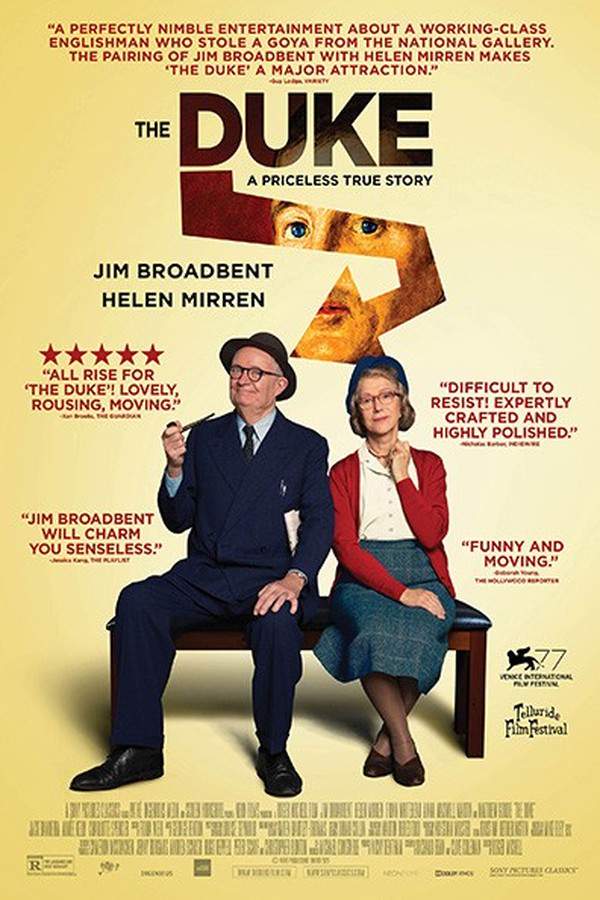
In 1961, charismatic taxi driver Kempton Bunton makes headlines by stealing Goya’s portrait from the National Gallery in London. He proposes a daring deal: the painting will be returned only if the government provides free television for the elderly. This audacious act sets off a series of surprising events, revealing a story about family, personal relationships, and the ability of everyday individuals to challenge the status quo and fight for what they believe in.
Does The Duke have end credit scenes?
No!
The Duke does not have end credit scenes. You can leave when the credits roll.
Where to Watch The Duke
See current US streaming, rental, and purchase options for The Duke (2021) via JustWatch.

fuboTV
HD
FXNow
HD
Hulu
HD
YouTube TV
HD
Amazon Video
HD
Apple TV Store
HD
Fandango At Home
HD
Google Play Movies
SD
Spectrum On Demand
HD
YouTube
SD Streaming availability powered by 
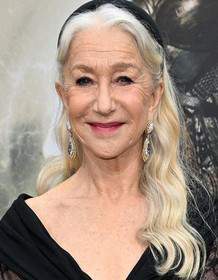
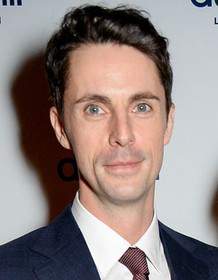
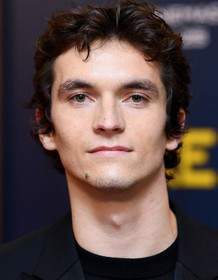
Meet the Full Cast and Actors of The Duke
Explore the complete cast of The Duke, including both lead and supporting actors. Learn who plays each character, discover their past roles and achievements, and find out what makes this ensemble cast stand out in the world of film and television.




External Links and Streaming Options
Discover where to watch The Duke online, including streaming platforms, rental options, and official sources. Compare reviews, ratings, and in-depth movie information across sites like IMDb, TMDb, Wikipedia or Rotten Tomatoes.











Ratings and Reviews for The Duke
See how The Duke is rated across major platforms like IMDb, Metacritic, and TMDb. Compare audience scores and critic reviews to understand where The Duke stands among top-rated movies in its genre.

The Movie Echo Score
The Duke delivers a warm, character‑driven portrait that leans more toward heartfelt entertainment than cinematic innovation. Critics consistently highlight the film's affectionate tone and strong performances, while several users note a gentle pacing and occasional over‑sentimentality that temper enthusiasm. Visuals of 1960s England are praised as well‑reproduced, though the material is described as modest rather than ambitious. Overall, the film succeeds as an agreeable, feel‑good drama that resonates with many viewers despite limited depth for repeated viewings.
The Movie Echo Score Breakdown for The Duke

Art & Craft
In terms of art and craft, the film presents a polished visual representation of early‑sixties England. Critics commend the beautiful cinematography and well‑reproduced period design, noting a comfortable but competent directorial style. While some observe that the production does not aim for grandeur, the overall execution is solid and visually appealing. The craftsmanship therefore supports the narrative without aspiring to visual innovation.

Character & Emotion
When evaluating character and emotion, the performances emerge as the film's strongest asset. Both Jim Broadbent and Helen Mirren receive consistent praise for delivering nuanced, emotionally resonant portrayals, and critics describe the acting as exceptional throughout. A few user comments mention occasional emotional blur, yet the majority view the character work as heartfelt and engaging. Consequently, the acting elevates the material and drives the film's emotional core.

Story & Flow
The story and flow offer a pleasant, if modest, narrative experience. Reviewers appreciate the true‑story premise and the film's gentle humor, describing it as charming and enjoyable. However, several users point to slow pacing, over‑sentimentality, and a lack of dramatic tension that limit narrative depth. The plot is coherent and heartfelt but does not sustain high tension, resulting in a mixed assessment of its storytelling effectiveness.

Sensory Experience
Sensory experience in The Duke is anchored by a cohesive visual style that captures the era convincingly. Critics highlight the beautifully shot composition and period‑accurate production design, while soundtrack considerations receive limited comment. The overall sensory palette is pleasant and supportive of the film's tone, though it lacks standout auditory elements. The sensory execution thus reinforces the film’s warm atmosphere without exceptional distinction.

Rewatch Factor
Rewatch factor for the film is moderate, reflecting its status as a pleasant, one‑time viewing choice. Many reviewers find the story heartwarming and recommend it for casual watches, yet multiple users caution that the sentimentality and limited narrative complexity may reduce repeat appeal. While the strong performances add value, the overall modest ambition suggests the film is more likely to be enjoyed once rather than repeatedly revisited.

74
Metascore
7.3
User Score


97%
TOMATOMETER

88%
User Score

6.9 /10
IMDb Rating
70
%
User Score

3.4
From 21 fan ratings

4.38/5
From 24 fan ratings
Take the Ultimate The Duke Movie Quiz
Challenge your knowledge of The Duke with this fun and interactive movie quiz. Test yourself on key plot points, iconic characters, hidden details, and memorable moments to see how well you really know the film.
The Duke Quiz: Test your knowledge of 'The Duke', a film about self-taught zeal, theft, and family struggles set against the backdrop of 1960s England.
Who is the main character accused of stealing the painting?
Full Plot Summary and Ending Explained for The Duke
Read the complete plot summary of The Duke, including all major events, twists, and the full ending explained in detail. Explore key characters, themes, hidden meanings, and everything you need to understand the story from beginning to end.
Sixty-year-old Kempton Bunton, portrayed by Jim Broadbent, finds himself in Court Number 1 at the Old Bailey, where he pleads not guilty to accusations of stealing Goya’s Portrait of the Duke of Wellington and its frame from the esteemed National Gallery in London. The story unfolds back in the spring of 1961 when Kempton, a self-taught working-class man from Newcastle upon Tyne, had sent a script to the BBC. Shortly after, he is incarcerated for 13 days at Durham for the audacious act of watching television without a license. Despite being able to afford one, he stands firm against the idea of paying, driven by his campaign advocating for pensioners and his steadfast beliefs in supporting the common man.
Upon his release, Kempton’s son Jackie (played by Fionn Whitehead) meets him, and together they visit the grave of Marion, Jackie’s sister, who tragically lost her life at just 18 in a biking accident. Meanwhile, Kempton’s wife Dorothy, depicted by Helen Mirren, works diligently as a housekeeper and babysitter for a local councillor. Jackie has aspirations to become a boat-builder and move away, contrasted by the elder brother Kenny (not portrayed by an actor provided in the cast list), whose life in Leeds is characterized by low-level criminal activity.
Kempton’s stint as a taxi driver comes to an end when he is fired for being overly talkative with passengers and giving a free ride to a destitute disabled veteran of the First World War. Determined, he persuades Dorothy to permit him a brief trip to London to garner media and parliamentary interest in his campaign, promising that if he fails, he will abandon writing and find a traditional job. Following his return, a thief with a distinct northeast English accent steals the painting, prompting Kempton and Jackie to craft a hidden compartment in their wardrobe for the artwork.
To stir intrigue and support for his cause, Kempton sends ransom notes to the government, specifying the return of the painting under the condition that the elderly are exempt from paying for a TV license. Complications arise when Kenny visits his parents with his estranged lover Pammy (not portrayed by an actor provided in the cast list), who uncovers the secret of the painting’s hiding place, seeking half the £5,000 reward. In a state of panic, Kempton abandons plans of raising money through a painting exhibition, choosing instead to walk into the National Gallery to return the artwork and confess to the theft.
Despite seemingly dire circumstances, his barrister Jeremy Hutchinson QC, played by Matthew Goode, argues that Kempton had no intention to deprive the gallery of the painting permanently, framing it as a temporary “borrowing” to support his cause. Kempton’s enthusiasm and verbose testimony during the questioning only bolster this argument.
As the trial progresses back in Newcastle, Jackie confesses to his mother Dorothy that he was the actual thief, with his father heroically taking the fall. Ultimately, the jury finds Kempton not guilty of all charges except for the theft of the £80 picture frame, which Jackie had mistakenly lost. Their three-month separation leads Kempton and Dorothy towards reconciliation as they reflect on their grief over Marion’s death. This moment of healing culminates in them watching Dr. No, where they laugh together at a scene that features the ‘stolen’ Goya painting.
Four years later, Jackie comes clean to the police about his role in the theft, but the authorities, led by the Director of Public Prosecutions, choose not to pursue charges out of concern for Kempton becoming embroiled in another public spectacle. They strike a deal; if Jackie remains silent, he will not be prosecuted. The film closes with text indicating that the frame was never recovered, Bunton’s plays were never produced, yet in 2000, a significant milestone was achieved when TV licenses were made free for those over 75. Ironically, by August 2020, shortly before the film’s premiere, this policy had been rescinded.

Coming soon on iOS and Android
The Plot Explained Mobile App
From blockbusters to hidden gems — dive into movie stories anytime, anywhere. Save your favorites, discover plots faster, and never miss a twist again.
Sign up to be the first to know when we launch. Your email stays private — always.
Explore the mobile appWatch Trailers, Clips & Behind-the-Scenes for The Duke
Watch official trailers, exclusive clips, cast interviews, and behind-the-scenes footage from The Duke. Dive deeper into the making of the film, its standout moments, and key production insights.
The Duke Themes and Keywords
Discover the central themes, ideas, and keywords that define the movie’s story, tone, and message. Analyze the film’s deeper meanings, genre influences, and recurring concepts.
The Duke Other Names and Titles
Explore the various alternative titles, translations, and other names used for The Duke across different regions and languages. Understand how the film is marketed and recognized worldwide.
Similar Movies To The Duke You Should Know About
Browse a curated list of movies similar in genre, tone, characters, or story structure. Discover new titles like the one you're watching, perfect for fans of related plots, vibes, or cinematic styles.




Quick Links: Summary, Cast, Ratings, More

What's After the Movie?
Not sure whether to stay after the credits? Find out!
Check out our other apps:

SAT Sphere
Build confidence for the Digital SAT.

Mori Atlas
Discover wild places worth protecting.

Luntero
Search smarter for a home in Amsterdam.

Plot Explained
Unravel movie endings and hidden clues.

Pokechamp
Dive into Pokémon data and battle logic.

Driving Theory
Get ready for your European theory test.

Movie Dust
Plan your next cinema trip with ease.

Musemap
Find art and culture as you travel.

Selkobase
Compare credentials before committing.

Local Manual
Turn an unfamiliar country into practical next steps.

Lernavi
Compare school systems before your next move.

GymRoam
Find a workout stop wherever your plans take you.
Explore Our Movie Platform
New Movie Releases (2026)
Famous Movie Actors
Top Film Production Studios
Movie Plot Summaries & Endings
Major Movie Awards & Winners
Best Concert Films & Music Documentaries
Movie Collections and Curated Lists
© 2026 What's After the Movie. All rights reserved.
Privacy Policy