The Coldest Game 2019


Warsaw, Poland, in 1962 during the Cuban Missile Crisis, becomes the stage for a tense confrontation. Josh Mansky, a former US chess champion with a troubled past, is unexpectedly recruited for a high-stakes public chess match against the Soviet champion. Beyond the game itself, Mansky finds himself embroiled in a dangerous espionage mission, navigating the shadows of a hostile territory where the stakes are far higher than victory or defeat.


Does The Coldest Game have end credit scenes?
No!
The Coldest Game does not have end credit scenes. You can leave when the credits roll.
Meet the Full Cast and Actors of The Coldest Game
Explore the complete cast of The Coldest Game, including both lead and supporting actors. Learn who plays each character, discover their past roles and achievements, and find out what makes this ensemble cast stand out in the world of film and television.
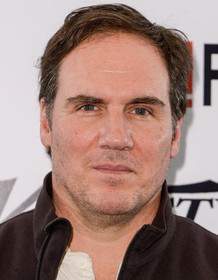
Corey Johnson
Donald Novak

James Bloor
Agent White

Bill Pullman
Joshua Mansky
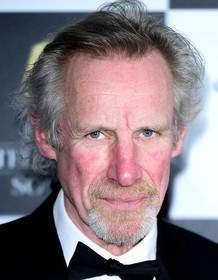
Nicholas Farrell
G. Moran

Magdalena Boczarska
Bartender Gienia

Ksawery Szlenkier
Wojciech Mecwaldowski
Lotte Verbeek
Agent Stone
Aleksey Serebryakov
Gienadij Krutow
John Benfield
Andy Beckwith
Taxi in New York
Evgeniy Sidikhin
Jurij Gawryłow
Robert Więckiewicz
Alfred
Cezary Kosiński
'John Gift'
Marcin Juchniewicz
Policjant przy blokadzie drogi
Aleksandr Lobanov
Adiutant Krutowa
Małgorzata Klara
Maurycy Łyczko
Ludwik Borkowski
Jonathan L. Ramsey
journalist at the airport
External Links and Streaming Options
Discover where to watch The Coldest Game online, including streaming platforms, rental options, and official sources. Compare reviews, ratings, and in-depth movie information across sites like IMDb, TMDb, Wikipedia or Rotten Tomatoes.






Ratings and Reviews for The Coldest Game
See how The Coldest Game is rated across major platforms like IMDb, Metacritic, and TMDb. Compare audience scores and critic reviews to understand where The Coldest Game stands among top-rated movies in its genre.

The Movie Echo Score
The Coldest Game presents a divided reception, with critics highlighting structural flaws while several viewers note moments of intrigue. Direction and editing are frequently described as uneven, leading to a fragmented narrative, yet the film’s historical backdrop and occasional tension receive modest praise. Audience reactions range from boredom to appreciation of spy elements. Consequently, the movie offers limited appeal, resonating only with viewers tolerant of its inconsistencies.
The Movie Echo Score Breakdown for The Coldest Game

Art & Craft
In terms of art and craft, reviewers criticize the film’s direction as disjointed and the editing as erratic, resulting in a loss of narrative tension. Cinematography is described as flat with limited visual risk, and production design receives no notable commendation. While a few users acknowledge a competent, if old‑fashioned, visual approach, the prevailing view is that the technical execution feels average at best.

Character & Emotion
Regarding character and emotion, performances receive mixed assessments. Critics denounce Bill Pullman’s portrayal as over‑the‑top and the ensemble as forgettable, noting a lack of depth and chemistry. Conversely, several viewers praise Pullman’s presence and highlight occasional compelling interactions among the spy cast. Overall, the acting is viewed as uneven, with moments of competence overshadowed by broadly criticized characterization.

Story & Flow
In the domain of story and flow, the plot is frequently labeled incoherent and sluggish, with critics emphasizing a disjointed pacing that hampers engagement. Some audience members, however, acknowledge intriguing twists and a compelling Cold War premise that adds originality. The consensus remains that narrative cohesion is weak, resulting in a mixed overall impression of the film’s storytelling effectiveness.

Sensory Experience
Sensory experience reviews note a subdued soundtrack and quiet sound design, with critics describing the score as generic and the mix as too low. Visual style is characterized as flat, offering limited atmospheric depth. While a few users find the overall look acceptable and reference competent production values, the dominant feedback points to an unremarkable auditory and visual presentation.

Rewatch Factor
The rewatch factor is viewed as limited; many reviewers report boredom and difficulty staying engaged, suggesting low repeat appeal. Nonetheless, certain viewers appreciate the espionage twists and historical setting, indicating potential for occasional repeat viewings among enthusiasts. Overall, the film’s uneven pacing and narrative flaws diminish its lasting attractiveness, resulting in a modest rewatch value.
Full Plot Summary and Ending Explained for The Coldest Game
Read the complete plot summary of The Coldest Game, including all major events, twists, and the full ending explained in detail. Explore key characters, themes, hidden meanings, and everything you need to understand the story from beginning to end.
In 1962, against the backdrop of the Cuban Missile Crisis and the escalating Cold War, the film threads together chess, espionage, and high-stakes diplomacy. The opening image sets the mood with a Grand Master chess match—the American contender exits bloodied but resolute, while the Soviet opponent sits patient and unmoved, hinting at a game far larger than the board.
Seven days earlier, the American chess prodigy is drawn into a perilous plot. The man at the center of the intrigue is Joshua Mansky, a brilliant radiating mind haunted by his past victories. In a poker room, he outplays a string of opponents and brushes off the televised buzz about an upcoming clash between the Soviet champion [Alexander Gavrylov] and the American challenger Konigsberg. His win grants him a modest cut, a reminder that every move carries consequence.
The tension thickens when a poised figure arrives—Agent White—claiming to recognize Mansky as a man who could tip the balance in a clandestine chess war. Mansky brushes her off, but the claim proves true: he is quickly abducted and drugged, pulled into a carefully staged arc of deception. The intelligence hierarchy centers on Donald Novak, the head of the operation, who interrogates Mansky in a secure room, probing the mind that once outplayed a legendary rival years ago.
To influence the Cold War narrative, Mansky is slated to compete in a Warsaw tournament against Gavrylov, since the American Konigsberg has fallen to a Soviet poisoning. The rules of the contest declare Mansky the sole eligible substitute, the last person to beat Gavrylov—an unlikely hero with a tendency toward self-destruction. Mansky, an extreme alcoholic, agrees to the assignment but staggers into a fog of drink. Amphetamines are used to present him as the legitimate replacement, and in the Palace of Culture and Science, he encounters the hotel director and fellow drinker Alfred Slega.
General Krutov, the Soviet counterintelligence chief, offers a hard edge to the mission, insisting that someone must watch over Mansky. The early rounds reveal that Mansky’s brilliance is inextricably linked to his alcoholism: the very substance that could doom him also sharpens certain patterns of thinking when the brain is slowed to a certain rhythm.
The film maps a chessboard of alliances and betrayals. In a tense second game, a hypnotist is employed to blunt Mansky’s thoughts, leading to a concession that unsettles the American camp. Agent White pursues him into the night, but the Soviets press their advantage, threatening his family. In the audience sits John Gift, a Soviet officer who partners with the Americans, adding a dangerous layer of ambiguity to who can be trusted.
Alfred Slega befriends Mansky, working with him through a hidden passage from his wardrobe to the lobby toilets, where alcohol is stashed for the competitor. The red thread of trust extends to Slega’s circle, whose members are sympathetic to American values and disenchanted with Soviet control of Poland.
The following day, Mansky’s room—the Soviet bugged sanctuary—falls under White’s scrutiny. White hints that Gift will approach Mansky, a reliable man in a Soviet uniform with a scar on the back of his hand. The tension escalates when Gift, a high-ranking Soviet officer embedded with the Americans, dies in Mansky’s arms after an apparent poisoning.
Back in the embassy, Agent Stone escorts Mansky for medical reasons and updates him on Cuba, while a third game unfolds as a draw thanks to Mansky’s feigned illness. Gift’s tangled loyalties become a central thread: Stone informs Mansky that an alleged blueprints’ microfilm could be hidden inside a champagne cork, a device meant to slip American intelligence a crucial advantage.
In the fourth game, Mansky’s gaze keeps drifting toward the audience, as if deciphering a hidden pattern. A quiet moment in the lobby toilets unfolds: a cork is slipped into his stall, then Stone appears and urges him to preserve it. The two exit the stall, only to be killed by Gift, who dons a Soviet uniform and reveals his vigilance. From beneath the stall door, Mansky witnesses Gift retrieve a syringe from Stone’s handbag, underscoring the peril that pervades every corner of the hotel.
The dramatic turn reveals the cork as a badge of life and death: Stone’s blood on the cork becomes the opening image that ignites Mansky’s cognitive switch. With alcohol dulling the world, his mind suddenly accelerates, and he calls for a draw. Gavrylov, frustrated by the quick sequences, accepts, and the series stands at 2–2.
As the hotel becomes a battleground of secrets, the US delegation is quarantined, and Mansky retreats to his private room, avoiding the customary social gathering after the match. Slega has smuggled in alcohol through a secret route and, recognizing the fragility of the situation, entrusts Mansky with the red book—a symbol of immunity in Krutov’s eyes and a lifeline in the improvisational chess of espionage.
With a day to spare before the decisive game, Mansky recounts the tale to Novak in a safe room, revealing that Gift killed Stone before she could kill him. Gift’s cork trick—giving Mansky a second cork soaked in Stone’s blood—becomes a cryptic talisman, and Rakirovka, the code word for castling, is whispered as the clock ticks toward catastrophe. The question of trust lingers: does Gift serve American interests or Soviet ones?
Novak weighs the possibilities against a looming blockade and Kennedy’s decision. The scar on Gift’s hand and White’s veil of silence complicate the picture, and Rakirovka becomes a symbol of imminent danger. When Krutov ultimately learns that Kennedy has declared a blockade, he orders a purge for any spy within the ranks and calls for Slega to be brought to him, a scene that ends in coercion and interrogation.
In the fifth and final game, Mansky spots Gift outside the hotel, but the real drama unfolds as a man in a Soviet uniform exits the sewers and leaves the hotel in Mansky’s clothes. Novak intervenes to protect Mansky from Krutov’s punitive reach, invoking diplomatic immunity, and Mansky forfeits the final game, allowing Gavrylov to claim victory.
As Novak escorts Mansky back to the United States, the world’s gaze shifts to the delicate balance between pride and responsibility. Mansky is hailed as a citizen hero, a figure whose actions averted nuclear catastrophe, and he receives a measure of protection and a hip flask as a token of gratitude. Yet Gift arrives with Slega’s red book, and Mansky realizes that the web of secrets remains uncomfortably tangled.
The diplomatic tension eases into a tentative peace: the United States and the Soviet Union steer toward de-escalation, laying groundwork for arms-control dialogues that echo into later decades, such as the INF Treaty and Eastern Bloc disarmament in the aftermath of broader upheavals. The epilogue leaps forward to 2019, where a new generation contends with the shadows of the old chessboard as [Donald Trump] and Vladimir Putin announce the suspension of the INF treaty and the pursuit of new missile programs, a reminder that the game of power endures beyond any single era.

Coming soon on iOS and Android
The Plot Explained Mobile App
From blockbusters to hidden gems — dive into movie stories anytime, anywhere. Save your favorites, discover plots faster, and never miss a twist again.
Sign up to be the first to know when we launch. Your email stays private — always.
Explore the mobile appWatch Trailers, Clips & Behind-the-Scenes for The Coldest Game
Watch official trailers, exclusive clips, cast interviews, and behind-the-scenes footage from The Coldest Game. Dive deeper into the making of the film, its standout moments, and key production insights.
Cars Featured in The Coldest Game
Explore all cars featured in The Coldest Game, including their makes, models, scenes they appear in, and their significance to the plot. A must-read for car enthusiasts and movie buffs alike.
The Coldest Game Themes and Keywords
Discover the central themes, ideas, and keywords that define the movie’s story, tone, and message. Analyze the film’s deeper meanings, genre influences, and recurring concepts.
The Coldest Game Other Names and Titles
Explore the various alternative titles, translations, and other names used for The Coldest Game across different regions and languages. Understand how the film is marketed and recognized worldwide.
Similar Movies To The Coldest Game You Should Know About
Browse a curated list of movies similar in genre, tone, characters, or story structure. Discover new titles like the one you're watching, perfect for fans of related plots, vibes, or cinematic styles.




Quick Links: Summary, Cast, Ratings, More

What's After the Movie?
Not sure whether to stay after the credits? Find out!
Check out our other apps:

SAT Sphere
Build confidence for the Digital SAT.

Mori Atlas
Discover wild places worth protecting.

Luntero
Search smarter for a home in Amsterdam.

Plot Explained
Unravel movie endings and hidden clues.

Pokechamp
Dive into Pokémon data and battle logic.

Driving Theory
Get ready for your European theory test.

Movie Dust
Plan your next cinema trip with ease.

Musemap
Find art and culture as you travel.

Selkobase
Compare credentials before committing.

Local Manual
Turn an unfamiliar country into practical next steps.

Lernavi
Compare school systems before your next move.

GymRoam
Find a workout stop wherever your plans take you.
Explore Our Movie Platform
New Movie Releases (2026)
Famous Movie Actors
Top Film Production Studios
Movie Plot Summaries & Endings
Major Movie Awards & Winners
Best Concert Films & Music Documentaries
Movie Collections and Curated Lists
© 2026 What's After the Movie. All rights reserved.
Privacy Policy