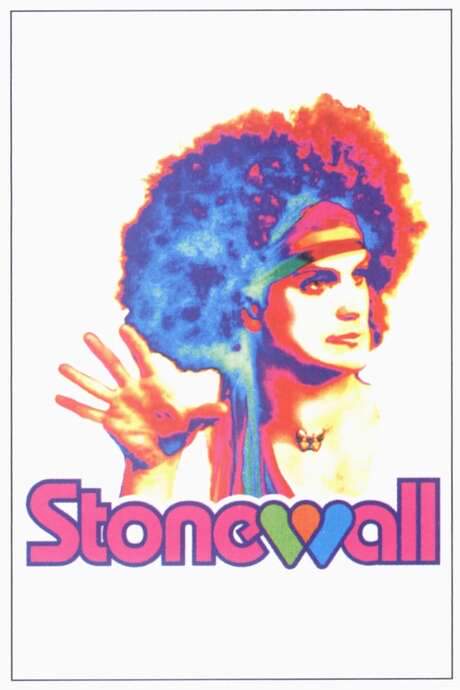
Stonewall 2015


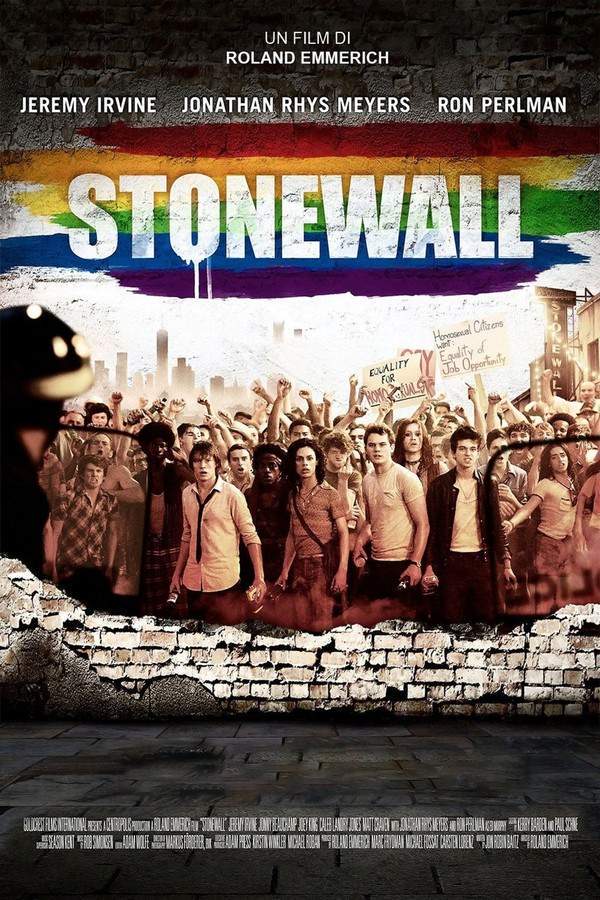
In 1969, Danny Winters is forced to leave his home and finds himself seeking shelter in New York City's Greenwich Village. He discovers a sense of belonging within the city's marginalized youth and finds refuge at The Stonewall Inn, a safe space for outcasts. As tensions rise and discrimination intensifies, a spark of rebellion ignites within Danny and his community, leading to a pivotal uprising. This event becomes a catalyst for a movement advocating for equality and freedom for LGBTQ+ individuals.


Does Stonewall have end credit scenes?
No!
Stonewall does not have end credit scenes. You can leave when the credits roll.
Where to Watch Stonewall
See current US streaming, rental, and purchase options for Stonewall (2015) via JustWatch.









Meet the Full Cast and Actors of Stonewall
Explore the complete cast of Stonewall, including both lead and supporting actors. Learn who plays each character, discover their past roles and achievements, and find out what makes this ensemble cast stand out in the world of film and television.






External Links and Streaming Options
Discover where to watch Stonewall online, including streaming platforms, rental options, and official sources. Compare reviews, ratings, and in-depth movie information across sites like IMDb, TMDb, Wikipedia or Rotten Tomatoes.










Ratings and Reviews for Stonewall
See how Stonewall is rated across major platforms like IMDb, Metacritic, and TMDb. Compare audience scores and critic reviews to understand where Stonewall stands among top-rated movies in its genre.

30
Metascore
4.8
User Score


9%
TOMATOMETER

84%
User Score

5.4 /10
IMDb Rating

61
%
User Score

2.3
From 9 fan ratings

1.67/5
From 3 fan ratings
Take the Ultimate Stonewall Movie Quiz
Challenge your knowledge of Stonewall with this fun and interactive movie quiz. Test yourself on key plot points, iconic characters, hidden details, and memorable moments to see how well you really know the film.
Stonewall (2015) Quiz: Test your knowledge of the 2015 film Stonewall with these 10 mixed‑difficulty questions.
What is the name of the protagonist who leaves Indiana for New York City?
Full Plot Summary and Ending Explained for Stonewall
Read the complete plot summary of Stonewall, including all major events, twists, and the full ending explained in detail. Explore key characters, themes, hidden meanings, and everything you need to understand the story from beginning to end.
Danny Winters, a gay boy from Indiana, flees the conservative countryside in the late 1960s and heads to New York City to seek a new life. His father is upset, and while his mother loves her son, she does not stand up to her husband. The family dynamic is tense, and the looming tension of parental disapproval complicates Danny’s aspirations. Before leaving, he says goodbye to his supportive little sister, Phoebe, who offers a quiet encouragement that contrasts with the louder objections he faces at home. The departure marks the start of a difficult, hopeful journey as Danny aims to carve out space for himself in a city that promises possibility but also exposes him to danger and prejudice.
In Greenwich Village, Danny is drawn into a loose, multiracial circle of young, gay, and gender-fluid street people and drag queens who navigate love, survival, and identity in a period of social upheaval. He witnesses police violence directed at his new friends, a stark reminder that right and safety remain contested for people like him even as the city becomes a hub of subculture and resistance. The Village’s energy is electric and watchful, a place where community can feel like both refuge and risk.
When Danny and his new friends visit the Stonewall Inn, a famous gay bar, he meets a man who asks him to dance, a member of the Mattachine Society known for trying to advance gay rights by working within mainstream institutions. The encounter places Danny in the orbit of a broader movement, one that believes in gradual, organized change even as it clashes with the gritty realities of city life. That same night, a police raid shakes the bar and leads to the arrest of several customers, including Danny’s friend Ray. The event crystallizes the precariousness of safety for people who live on the margins and foreshadows how communities will respond to oppression.
After the raid, Danny, who narrowly avoids arrest because he isn’t cross-dressing, reconnects with Ray at the police station the next day. With few practical prospects and a hunger for independence, Danny makes difficult choices about survival. He tries prostitution as a means to support himself, an experience that exposes him to exploitation and vulnerability, yet also underscores his determination to stay afloat in a world that often denies him dignity.
Danny’s involvement with the Mattachine Society deepens; at a meeting, he reconnects with Trevor, a figure within the movement whose politics differ from Danny’s but whose presence awakens something meaningful in him. The two spend a night together, sharing a moment of closeness that stands in contrast to the harsh realities he faces outside the meeting room. The budding romance is complicated by Trevor’s entanglements, and Danny’s own sense of belonging is tested as he negotiates love, longing, and the political stakes of queer life in the city.
Heartbreak follows quickly when Danny discovers Trevor with another man. Feeling betrayed, he decides to leave the Village, seeking distance from the emotional turbulence that accompanies his search for connection and safety. But his departure is interrupted in a brutal way: he is abducted and forced into a high-class prostitution operation managed by Ed Murphy, a man who runs the Stonewall Inn and who has colluded with corrupt policemen to exploit homeless gay youth for profit and power. Ed Murphy is depicted as a shadowy figure whose influence corrupts institutions meant to protect or assist marginalized people, illustrating the intertwining of crime and policing in the era.
Danny escapes with the help of Ray, and the two return to the bar to confront Murphy. A police raid ensues again, and this time Danny is thrown back into the street, along with the other customers who have already suffered at the hands of those who presume to control their lives. In the heat of the moment, Danny—driven by a blend of anger, fear, and the desperate need to resist—hurls a brick through one of the bar’s windows and shouts, > Gay power! The cry is more than a reaction; it is a rallying statement that resonates with the emerging mood of resistance and solidarity among the patrons and their allies. The crowd’s anger spills into a confrontation with the police, who retreat and lock themselves inside the bar as tensions flare.
A year passes, and Danny returns home after completing his first year at the university he had hoped to attend when his father initially blocked that path. He shares with his sister that he plans to participate in the gay liberation march on Christopher Street, signaling his resolve to join a broader, more visible movement for equality. The film’s final images follow Danny as he marches alongside friends, a procession bound by memory, risk, and hope. In the crowd, he looks to the sidewalk and sees that his mother and sister have come to support him, offering a quiet, powerful moment of familial witness to a life of courage, persistence, and the gradual gains of a community fighting for its rights.
Throughout this journey, the film threads together personal longing, family dynamics, the thrill and danger of urban life, and a historical moment when a community began to demand visibility and justice. The narrative’s careful balance between intimate moments and collective struggle presents a portrait of resilience, the costs of seeking authenticity, and the slow, persistent march toward greater freedom for queer people. The arc—from discovery and uprooting to exploitation, resistance, and a turning point toward public advocacy—offers a sobering yet hopeful view of a pivotal era in civil rights history, anchored by the everyday bravery of those who chose to live openly in the face of risk.

Coming soon on iOS and Android
The Plot Explained Mobile App
From blockbusters to hidden gems — dive into movie stories anytime, anywhere. Save your favorites, discover plots faster, and never miss a twist again.
Sign up to be the first to know when we launch. Your email stays private — always.
Explore the mobile appWatch Trailers, Clips & Behind-the-Scenes for Stonewall
Watch official trailers, exclusive clips, cast interviews, and behind-the-scenes footage from Stonewall. Dive deeper into the making of the film, its standout moments, and key production insights.
Stonewall Themes and Keywords
Discover the central themes, ideas, and keywords that define the movie’s story, tone, and message. Analyze the film’s deeper meanings, genre influences, and recurring concepts.
Stonewall Other Names and Titles
Explore the various alternative titles, translations, and other names used for Stonewall across different regions and languages. Understand how the film is marketed and recognized worldwide.
Similar Movies To Stonewall You Should Know About
Browse a curated list of movies similar in genre, tone, characters, or story structure. Discover new titles like the one you're watching, perfect for fans of related plots, vibes, or cinematic styles.






Quick Links: Summary, Cast, Ratings, More

What's After the Movie?
Not sure whether to stay after the credits? Find out!
Check out our other apps:

SAT Sphere
Build confidence for the Digital SAT.

Mori Atlas
Discover wild places worth protecting.

Luntero
Search smarter for a home in Amsterdam.

Plot Explained
Unravel movie endings and hidden clues.

Pokechamp
Dive into Pokémon data and battle logic.

Driving Theory
Get ready for your European theory test.

Movie Dust
Plan your next cinema trip with ease.

Musemap
Find art and culture as you travel.

Selkobase
Compare credentials before committing.

Local Manual
Turn an unfamiliar country into practical next steps.

Lernavi
Compare school systems before your next move.

GymRoam
Find a workout stop wherever your plans take you.
Explore Our Movie Platform
New Movie Releases (2026)
Famous Movie Actors
Top Film Production Studios
Movie Plot Summaries & Endings
Major Movie Awards & Winners
Best Concert Films & Music Documentaries
Movie Collections and Curated Lists
© 2026 What's After the Movie. All rights reserved.
Privacy Policy