Shanks 1974

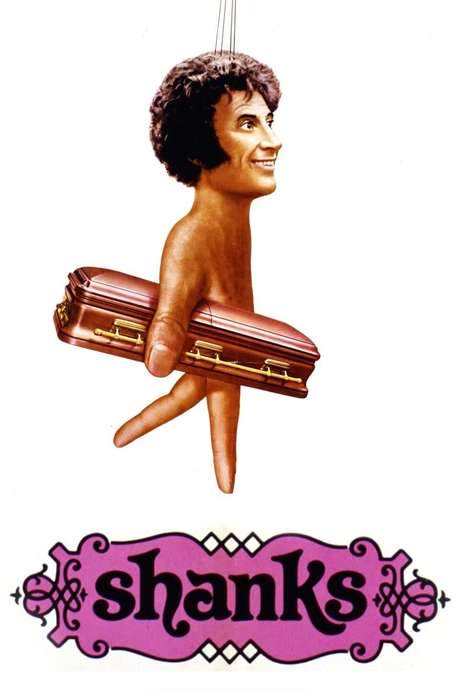
Malcolm Shanks is a deaf, mute loner abused by his sister and her husband. His only comfort is making and controlling puppets, a talent that lands him a job as lab assistant to Dr. Walker, who is researching re‑animation of corpses with electrodes and string‑like control. When the professor dies, Shanks uses the experiments on a human body for revenge.


Does Shanks have end credit scenes?
No!
Shanks does not have end credit scenes. You can leave when the credits roll.
Where to Watch Shanks
See current US streaming, rental, and purchase options for Shanks (1974) via JustWatch.






Meet the Full Cast and Actors of Shanks
Explore the complete cast of Shanks, including both lead and supporting actors. Learn who plays each character, discover their past roles and achievements, and find out what makes this ensemble cast stand out in the world of film and television.


External Links and Streaming Options
Discover where to watch Shanks online, including streaming platforms, rental options, and official sources. Compare reviews, ratings, and in-depth movie information across sites like IMDb, TMDb, Wikipedia or Rotten Tomatoes.







Take the Ultimate Shanks Movie Quiz
Challenge your knowledge of Shanks with this fun and interactive movie quiz. Test yourself on key plot points, iconic characters, hidden details, and memorable moments to see how well you really know the film.
Shanks (1974) Quiz: Test your knowledge of the 1974 film Shanks with a mix of easy, medium, and difficult questions covering characters, plot points, and thematic details.
What unique ability does Malcolm Shanks possess?
Full Plot Summary and Ending Explained for Shanks
Read the complete plot summary of Shanks, including all major events, twists, and the full ending explained in detail. Explore key characters, themes, hidden meanings, and everything you need to understand the story from beginning to end.
In a film billed as a grim fairy tale*, the story follows Malcolm Shanks [Marcel Marceau], a deaf yet razor-sharp lip reader and mute puppeteer who lives with his cruel sister Tsilla Chelton and her alcoholic husband, Mr. Barton [Philippe Clay]. His formidable talent catches the eye of the enigmatic doctor-mentor, Mr. Walker [Marcel Marceau], who hires him as a lab assistant at a sprawling Gothic mansion. Malcolm’s family press him to be the breadwinner, resenting when he hides away a portion of his pay. The experiments in Walker’s mansion revolve around reanimating the dead and bending their bodies to control them like marionettes, starting with a frog and a chicken. The premise sets a dark, fantastical mood as Malcolm’s puppets begin to reflect his inner world.
When Mr. Walker dies unexpectedly, Malcolm returns home clutching a puppet of his employer—an object of personal significance—and begins crafting a puppet show for his teenage assistant Celia Cindy Eilbacher on her birthday. His sister and brother-in-law grow more outraged by his absence from work, and Barton smashes the Walker puppet’s head, insisting Malcolm resume his duties. He complies by applying the experimental reanimation to Walker himself, restoring life in a way that blurs the line between art and horrid reality.
A chain of eerie events unfolds. Walker’s death is followed by Malcolm’s chilling act of animating Barton, who staggers through the streets in a puppet-like parade of movement that looks almost like drunkenness. Mrs. Barton, in a cruel twist of fate, is killed when a car strikes the family as they move through the town. A police officer Read Morgan arrives to sort out the chaos, but Malcolm somehow fends off suspicion by staging a scene in which he appears to be an ordinary spectator, the flashlight from the officer’s beam glancing past the family as if they were simply living figures under a show’s glow.
The next day, Malcolm takes the Bartons to the grocery store, where grocer William Castle allows them to take what they need, even paying off more than what is owed while Barton fills a wicker basket with gin. Celia’s mother consents to a picnic, and Celia becomes increasingly unsettled as she discovers the Bartons’ true fate, though Malcolm gestures that their death was caused by a car accident. He then leads Celia to Walker’s mansion to celebrate her birthday, where she admires a portrait of Walker’s late wife (unseen) and slips into one of her dresses. Malcolm, who dons 19th-century attire while keeping his bell-bottoms, shares a formal dinner with Celia, with the Bartons acting as servants. The scene turns darker when Mrs. Barton cuts off a finger while slicing the cake, a moment Malcolm discreetly hides in his lapel.
Outside, trouble intensifies as a motorcycle gang arrives. Their leader, Beethoven [Phil Adams], crashes off the road and dies, and his companions haul him into the mansion, scattering cake and shattered expectations. The gang members attack Malcolm and Celia. Goliath [Biff Manard] assaults Celia, and Mata Hari [Helena Kallianiotes] tries to intervene, only to be knocked aside and left to sober up on Barton’s gin. Einstein [Don Calfa] becomes fascinated with Walker’s experiments, pushing the Bartons to perform more humiliating tricks than Malcolm would have imagined. By night’s end, Celia is found dead in the yard, and Malcolm reanimates Walker from the grave to confront the gang after they discard Barton’s controls into a well. The gang rebels in horror and escapes.
In a sepia-lit sequence, Malcolm briefly reanimates Celia for a dance, and the film returns to the opening frame with extreme close-ups of Malcolm’s eye. Each puppet receives a curtain call as the story circles back to its origin, finishing with a final line from William Makepeace Thackeray:
Come… let us shut up the box and the puppets—for our play is played out.
As the film draws to a close, a haunting twist emerges: the entire revenge fantasy—the puppet theater and the town’s chaos—unfolds within Malcolm’s mind as he performs his puppet show, a paranoid reverie that binds art, mortality, and longing into one spectral performance. The result is a macabre, dreamlike meditation on creativity and control, where the boundary between creator and puppet blurs until the audience is left to question what is real, what is imagined, and who truly holds the strings.

Coming soon on iOS and Android
The Plot Explained Mobile App
From blockbusters to hidden gems — dive into movie stories anytime, anywhere. Save your favorites, discover plots faster, and never miss a twist again.
Sign up to be the first to know when we launch. Your email stays private — always.
Explore the mobile appWatch Trailers, Clips & Behind-the-Scenes for Shanks
Watch official trailers, exclusive clips, cast interviews, and behind-the-scenes footage from Shanks. Dive deeper into the making of the film, its standout moments, and key production insights.
Cars Featured in Shanks
Explore all cars featured in Shanks, including their makes, models, scenes they appear in, and their significance to the plot. A must-read for car enthusiasts and movie buffs alike.
Shanks Themes and Keywords
Discover the central themes, ideas, and keywords that define the movie’s story, tone, and message. Analyze the film’s deeper meanings, genre influences, and recurring concepts.

Unlock the World of Movies with Our Comprehensive Wiki
Dive into our Movie Wiki for in-depth film encyclopedia entries, including cast biographies, production trivia, plot synopses, behind-the-scenes facts, and thematic analyses. Whether you’re researching iconic directors, exploring genre histories, or discovering hidden easter eggs, our expertly curated movie database has everything you need to fuel your cinematic passion.

Similar Movies To Shanks You Should Know About
Browse a curated list of movies similar in genre, tone, characters, or story structure. Discover new titles like the one you're watching, perfect for fans of related plots, vibes, or cinematic styles.






Quick Links: Summary, Cast, Ratings, More

What's After the Movie?
Not sure whether to stay after the credits? Find out!
Check out our other apps:

SAT Sphere
Build confidence for the Digital SAT.

Mori Atlas
Discover wild places worth protecting.

Luntero
Search smarter for a home in Amsterdam.

Plot Explained
Unravel movie endings and hidden clues.

Pokechamp
Dive into Pokémon data and battle logic.

Driving Theory
Get ready for your European theory test.

Movie Dust
Plan your next cinema trip with ease.

Musemap
Find art and culture as you travel.

Selkobase
Compare credentials before committing.

Local Manual
Turn an unfamiliar country into practical next steps.

Lernavi
Compare school systems before your next move.

GymRoam
Find a workout stop wherever your plans take you.
Explore Our Movie Platform
New Movie Releases (2026)
Famous Movie Actors
Top Film Production Studios
Movie Plot Summaries & Endings
Major Movie Awards & Winners
Best Concert Films & Music Documentaries
Movie Collections and Curated Lists
© 2026 What's After the Movie. All rights reserved.
Privacy Policy