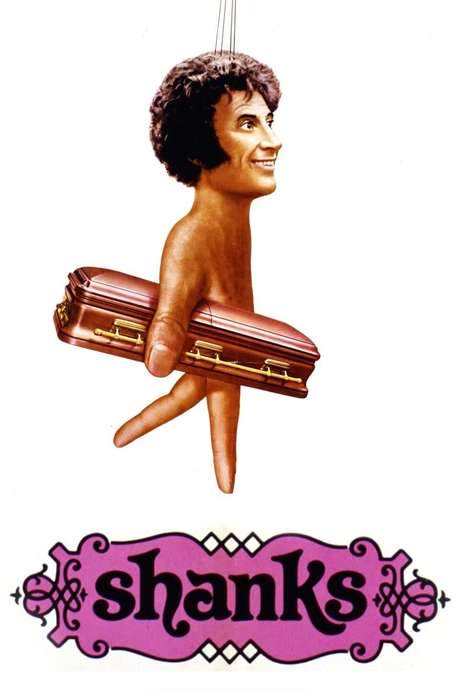
Shanks 1974

Directed by

William Castle
Made by

Paramount Pictures
Where to Watch Shanks
See current US streaming, rental, and purchase options for Shanks (1974) via JustWatch.






Shanks Plot Summary
Read the complete plot summary and ending explained for Shanks (1974). From turning points to emotional moments, uncover what really happened and why it matters.
In a film billed as a grim fairy tale*, the story follows Malcolm Shanks [Marcel Marceau], a deaf yet razor-sharp lip reader and mute puppeteer who lives with his cruel sister Tsilla Chelton and her alcoholic husband, Mr. Barton [Philippe Clay]. His formidable talent catches the eye of the enigmatic doctor-mentor, Mr. Walker [Marcel Marceau], who hires him as a lab assistant at a sprawling Gothic mansion. Malcolm’s family press him to be the breadwinner, resenting when he hides away a portion of his pay. The experiments in Walker’s mansion revolve around reanimating the dead and bending their bodies to control them like marionettes, starting with a frog and a chicken. The premise sets a dark, fantastical mood as Malcolm’s puppets begin to reflect his inner world.
When Mr. Walker dies unexpectedly, Malcolm returns home clutching a puppet of his employer—an object of personal significance—and begins crafting a puppet show for his teenage assistant Celia Cindy Eilbacher on her birthday. His sister and brother-in-law grow more outraged by his absence from work, and Barton smashes the Walker puppet’s head, insisting Malcolm resume his duties. He complies by applying the experimental reanimation to Walker himself, restoring life in a way that blurs the line between art and horrid reality.
A chain of eerie events unfolds. Walker’s death is followed by Malcolm’s chilling act of animating Barton, who staggers through the streets in a puppet-like parade of movement that looks almost like drunkenness. Mrs. Barton, in a cruel twist of fate, is killed when a car strikes the family as they move through the town. A police officer Read Morgan arrives to sort out the chaos, but Malcolm somehow fends off suspicion by staging a scene in which he appears to be an ordinary spectator, the flashlight from the officer’s beam glancing past the family as if they were simply living figures under a show’s glow.
The next day, Malcolm takes the Bartons to the grocery store, where grocer William Castle allows them to take what they need, even paying off more than what is owed while Barton fills a wicker basket with gin. Celia’s mother consents to a picnic, and Celia becomes increasingly unsettled as she discovers the Bartons’ true fate, though Malcolm gestures that their death was caused by a car accident. He then leads Celia to Walker’s mansion to celebrate her birthday, where she admires a portrait of Walker’s late wife (unseen) and slips into one of her dresses. Malcolm, who dons 19th-century attire while keeping his bell-bottoms, shares a formal dinner with Celia, with the Bartons acting as servants. The scene turns darker when Mrs. Barton cuts off a finger while slicing the cake, a moment Malcolm discreetly hides in his lapel.
Outside, trouble intensifies as a motorcycle gang arrives. Their leader, Beethoven [Phil Adams], crashes off the road and dies, and his companions haul him into the mansion, scattering cake and shattered expectations. The gang members attack Malcolm and Celia. Goliath [Biff Manard] assaults Celia, and Mata Hari [Helena Kallianiotes] tries to intervene, only to be knocked aside and left to sober up on Barton’s gin. Einstein [Don Calfa] becomes fascinated with Walker’s experiments, pushing the Bartons to perform more humiliating tricks than Malcolm would have imagined. By night’s end, Celia is found dead in the yard, and Malcolm reanimates Walker from the grave to confront the gang after they discard Barton’s controls into a well. The gang rebels in horror and escapes.
In a sepia-lit sequence, Malcolm briefly reanimates Celia for a dance, and the film returns to the opening frame with extreme close-ups of Malcolm’s eye. Each puppet receives a curtain call as the story circles back to its origin, finishing with a final line from William Makepeace Thackeray:
Come… let us shut up the box and the puppets—for our play is played out.
As the film draws to a close, a haunting twist emerges: the entire revenge fantasy—the puppet theater and the town’s chaos—unfolds within Malcolm’s mind as he performs his puppet show, a paranoid reverie that binds art, mortality, and longing into one spectral performance. The result is a macabre, dreamlike meditation on creativity and control, where the boundary between creator and puppet blurs until the audience is left to question what is real, what is imagined, and who truly holds the strings.
Shanks Timeline
Follow the complete movie timeline of Shanks (1974) with every major event in chronological order. Great for understanding complex plots and story progression.
Malcolm becomes Walker's lab assistant at the gothic mansion
Malcolm, a deaf-mute puppeteer, is noticed for his skill and hired by Mr. Walker to work in a private lab at a gothic mansion. The arrangement gives him a chance to pursue his craft under medical-like experiments, while he still lives with his cruel sister and her husband. The setup marks the entry of Malcolm into a world where performance and necromancy blur together.
Family pressure and the secret pay
His sister and her alcoholic husband demand that Malcolm be the breadwinner, pushing him to keep the family afloat. They react with outrage when he secretly keeps $50 of his own pay instead of handing it over. The conflict foreshadows the control and manipulation that follow.
First reanimation experiments begin
In Walker's lab, Malcolm starts reanimating the dead, beginning with a frog and a chicken. The work is presented as a personal puppetry project, blending stagecraft with necromancy. The puppets become vessels for controlling life after death.
Mr. Walker dies; Malcolm mourns with the puppet
Mr. Walker dies unexpectedly, and Malcolm returns home cradling Walker’s puppet like a mournful relic. The intertitles describe the act as mercy toward the dead, deepening the blend of life and performance. This moment expands the stakes of Malcolm’s experiments.
Barton smashes Walker’s puppet and demands work
Barton smashes the head of the Walker puppet and insists Malcolm resume his duties in the lab. The household pressure combines with Malcolm’s fear of losing his chance at success. The act sets up the looming conflict between art and violence.
Barton arrives; the reanimated chicken kills Barton
With Walker absent, Barton arrives in person. Malcolm uses the reanimated chicken to attack Barton, who tumbles down the stairs and dies. The act demonstrates the terrifying reach of Malcolm’s control over the dead.
Malcolm buries Walker and animates Barton to walk him home
Malcolm buries Mr. Walker 'out of mercy' and animates Barton, guiding him through the streets as if alive. The sight is misread by his family as drunken behavior, worsening the illusion. This sequence expands the puppet-show’s reach into everyday life.
The Bartons pass as living; wife killed in car accident
Barton’s puppet-like movements pass for drunkenness as Mrs. Barton steps into traffic and is killed by a car. Malcolm evades a police officer by staging the family as if they are watching TV through the window. He then animates Mrs. Barton, continuing the macabre deception.
Grocery store outing; Bartons pass for living
The next day the Bartons are taken to a grocery store to test their aliveness in public. Malcolm pays off the Barton's tab and the grocer lets them take goods, recognizing their living appearance; Malcolm even ensures they stock up with gin. This demonstrates his control extending into ordinary life.
Celia learns the truth; picnic
Malcolm takes Celia on a picnic with the Bartons acting as servants, and she gradually learns they are dead. She is disturbed by this revelation, which Malcolm gestures as an accident. The scene deepens Celia’s unease about the strange world he has built around her.
Birthday visit to Walker's mansion; dinner with servants; finger incident
Malcolm brings Celia to Walker’s mansion for her birthday, where she admires pictures of Walker’s wife. He adopts 19th-century attire, and a dinner is staged with the Bartons as servants. During the cake, Mrs. Barton cuts off her finger, which Malcolm hides in his lapel pocket.
Motorcycle gang intrusion; violence and humiliation
Outside, a motorcycle gang arrives after a crash and one dies. The gang invades Walker’s mansion and attacks Malcolm and Celia; Goliath assaults Celia while Mata Hari drinks gin, and Einstein pushes the Bartons to perform humiliating tricks. The household descends into a nightmare of control and fear.
Celia dead; Walker revived to fight gang; controls thrown into well
Celia is found dead in the yard, and Malcolm reanimates Walker from the grave to confront the intruders. The gang discards the Barton puppet controls by tossing them into a well, and Walker’s puppet leads the counterattack. The violence brings the illusion to a violent climax.
Ending reveal: the mind’s puppet show
In a sepia sequence, Malcolm reanimates Celia briefly for a dance, then the film returns to the opening frame to reveal the revenge scenario exists inside Malcolm’s puppet show. Each puppet receives a curtain call as the cycle ends. The film closes with a Thackeray quote about silencing the box and the puppets.
Shanks Characters
Explore all characters from Shanks (1974). Get detailed profiles with their roles, arcs, and key relationships explained.
Malcolm Shanks / Old Walker (Marcel Marceau)
A deaf, mute puppeteer who can read lips and manipulate the living and dead alike. His talent makes him invaluable to the doctor while also consuming him with the ethics of reanimation; he uses his skills to keep his family dependent on him and to stage his macabre puppet shows. He experiences moral conflict as his creations begin to resemble real people.
Mata Hari (Helena Kallianiotes)
A member of the motorcycle-gang who clashes with Goliath and later succumbs to the gin-fueled despair around the puppet world. She is fearless and willing to intervene to protect Celia, though she is ultimately undone by the mob's brutality. Her character embodies a mix of danger and vulnerability.
Celia (Cindy Eilbacher)
A teenage assistant and friend of Malcolm who visits Walker's mansion and is drawn into the puppet world. She becomes disturbed by the revelation that the Bartons and the puppets are dead partners, yet she remains drawn to the mysterious power of Malcolm's artistry.
Mr. Barton (Philippe Clay)
The alcoholic, controlling husband who treats Malcolm's pay and role as a tool for the family's survival. He relentlessly expects Malcolm to return to work, and his death comes as a result of the violent reanimation interplay.
Mrs. Barton (Tsilla Chelton)
The Bartons' wife, caught in a poisonous dynamic of dependency and cruelty. She embodies the household economy of fear and compliance, and she participates in the tension that surrounds the puppetry and the family's precarious finances.
Mr. Walker (Marcel Marceau)
The enigmatic doctor whose experiments with reanimating the dead drive the plot. He mentors Malcolm in the lab, but his demands reveal a cold scientific curiosity, and his fate is tied to Malcolm's evolving puppetry.
Einstein (Don Calfa)
A member of the gang who takes an interest in Walker's experiments and pushes the boundaries of humiliation and display. His curiosity sharpens the grotesque nature of the puppetry world.
Beethoven (Phil Adams)
A gang member who dies after a motorcycle accident and becomes part of the film's eerie, dreamlike sequence. He embodies the mix of brutality and absurdity in the gang's dynamics.
Goliath (Biff Manard)
A violent gang member who assaults Celia and embodies the brutality of the mob in the story. He is a force of raw aggression opposed by Mata Hari's protective impulse.
Napoleon (Larry Bishop)
Another gang member present in the violent troupe; his presence heightens the threat around the puppet world and the mansion's secrets.
Cop (Read Morgan)
A police officer who responds to the accident and becomes entangled in the pursuit of the truth behind the living puppets. He serves as a moral counterpoint to Malcolm's unsettling powers.
Shanks Settings
Learn where and when Shanks (1974) takes place. Explore the film’s settings, era, and how they shape the narrative.
Time period
Late 19th century
The visual palette and social mores hint at a late Victorian era, with antiquated laboratories and 19th‑century attire. The story also introduces modern touches like cars and motorcycles, contributing to a dreamlike, anachronistic feel. Intertitles frame the tale as a grim fairy tale, blending old-world mannerisms with macabre experiments.
Location
Mr. Walker's Gothic Mansion, Town Streets, Local Grocery Store
The film is anchored by a Gothic mansion where the experiments take place. The surrounding town and streets serve as a domestic backdrop that contrasts the mansion's eerie atmosphere, and a local grocery store becomes a social landmark where the Bartons' deception plays out. The action spills from the mansion into the yard and street, turning ordinary urban spaces into a stage for puppetry and deception.
Shanks Themes
Discover the main themes in Shanks (1974). Analyze the deeper meanings, emotional layers, and social commentary behind the film.
🎭
Puppetry
Puppetry is literal in the film, as Malcolm animates the dead as living puppets. The puppet show becomes a window into control, performance, and the blurred line between creator and creation. The theme probes how art and science manipulate life, memory, and identity. The audience is invited to question what is real as the puppets mirror the characters' inner dramas.
🔒
Control
The pursuit of control drives the plot: Malcolm's power over reanimated bodies and the doctor's experiments, the Bartons' demands at home, and the social gaze that labels behavior. The narrative investigates how power is used to weaponize life and silence dissent. The story exposes the cost of mastery when the boundary between animate and inanimate is erased.
🪄
Dream vs Reality
The story unfolds like a grim fairy tale, where fantasies of resurrected life collide with the harsh consequences of exploitation. The sepia-toned sequences and stage-like puppet performances blur the line between a show and reality. By bookending with close-ups of Malcolm's eye, the film suggests the dream is a private creation rather than an objective truth.

Coming soon on iOS and Android
The Plot Explained Mobile App
From blockbusters to hidden gems — dive into movie stories anytime, anywhere. Save your favorites, discover plots faster, and never miss a twist again.
Sign up to be the first to know when we launch. Your email stays private — always.
Explore the mobile appShanks Spoiler-Free Summary
Discover the spoiler-free summary of Shanks (1974). Get a concise overview without any spoilers.
In a bleak, fairy‑tale landscape, Malcolm Shanks lives as a silent observer of a world that rarely listens. Deaf and mute, he navigates daily cruelty from his sister and her alcoholic husband, finding solace only in the delicate art of making and manipulating puppets. The tiny, meticulously crafted figures become his voice, a private theater where he can impose order on an otherwise hostile existence. Even as his family pressures him to become the household’s breadwinner, Shanks clings to the quiet mastery that sets him apart.
His extraordinary skill catches the eye of the enigmatic Dr. Walker, who hires the young puppeteer as a laboratory assistant in a sprawling Gothic mansion. Within those shadowed corridors, science and theater intertwine: experiments seek to revive the dead and bind their movements with electrodes and filament‑like strings, echoing the very techniques Shanks employs with his marionettes. The atmosphere is steeped in macabre curiosity, a darkly lyrical blend of cracked porcelain, flickering gaslight, and the hum of machinery that hints at a world where life itself can be choreographed.
Surrounded by the oppressive expectations of his sister and the unsettling presence of her husband, Mr. Barton, Shanks teeters between obedience and rebellion. A teenage assistant named Celia offers a fragile glimpse of normalcy, yet the strained relationships pulse with unspoken tension. As Shanks balances his new role in the laboratory with the lingering ache of his past, the film builds a haunting mood—one where the line between creator and creation blurs, and every whispered movement may be part of a larger, unseen performance.
Movies with Similar Twists and Themes
Uncover films that echo the narrative beats, emotional arcs, or dramatic twists of the one you're exploring. These recommendations are handpicked based on story depth, thematic resonance, and spoiler-worthy moments — perfect for fans who crave more of the same intrigue.


Featured on this page

What's After the Movie?
Not sure whether to stay after the credits? Find out!
Check out our other apps:

SAT Sphere
Build confidence for the Digital SAT.

Mori Atlas
Discover wild places worth protecting.

Luntero
Search smarter for a home in Amsterdam.

Plot Explained
Unravel movie endings and hidden clues.

Pokechamp
Dive into Pokémon data and battle logic.

Driving Theory
Get ready for your European theory test.

Movie Dust
Plan your next cinema trip with ease.

Musemap
Find art and culture as you travel.

Selkobase
Compare credentials before committing.

Local Manual
Turn an unfamiliar country into practical next steps.

Lernavi
Compare school systems before your next move.

GymRoam
Find a workout stop wherever your plans take you.
Explore Our Movie Platform
New Movie Releases (2026)
Famous Movie Actors
Top Film Production Studios
Movie Plot Summaries & Endings
Major Movie Awards & Winners
Best Concert Films & Music Documentaries
Movie Collections and Curated Lists
© 2026 What's After the Movie. All rights reserved.
Privacy Policy