Saworoide 1999
Runtime
103 mins
Language

Yoruba
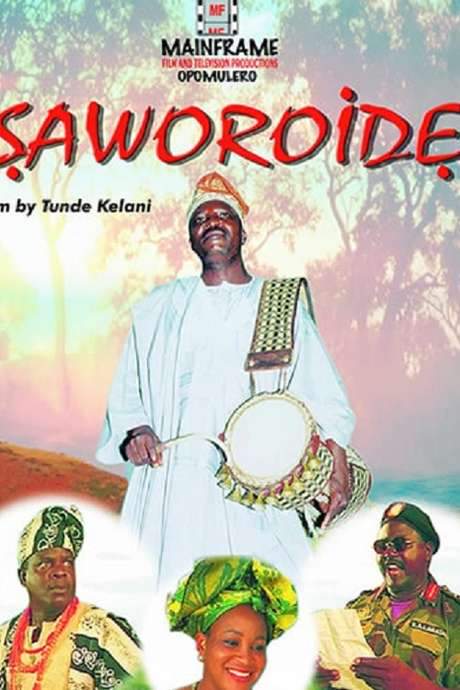
After the usurper Lapita seizes Jogbo’s throne, the film follows power struggles and corruption in a mythical African kingdom where kingship is tied to the ritual beating of the Saworoide brass drum. It becomes a political parable that reshapes African instability into a fable, using songs and a Greek‑chorus‑like commentary reflecting the drama.


Does Saworoide have end credit scenes?
No!
Saworoide does not have end credit scenes. You can leave when the credits roll.
Meet the Full Cast and Actors of Saworoide
Explore the complete cast of Saworoide, including both lead and supporting actors. Learn who plays each character, discover their past roles and achievements, and find out what makes this ensemble cast stand out in the world of film and television.

External Links and Streaming Options
Discover where to watch Saworoide online, including streaming platforms, rental options, and official sources. Compare reviews, ratings, and in-depth movie information across sites like IMDb, TMDb, Wikipedia or Rotten Tomatoes.





Take the Ultimate Saworoide Movie Quiz
Challenge your knowledge of Saworoide with this fun and interactive movie quiz. Test yourself on key plot points, iconic characters, hidden details, and memorable moments to see how well you really know the film.
Saworoide (1999) Quiz: A 10‑question quiz that tests your knowledge of the Yoruba film Saworoide, its characters, rituals, and plot twists.
What is the name of the sacred brass bell used in Jogbo's royal rituals?
Full Plot Summary and Ending Explained for Saworoide
Read the complete plot summary of Saworoide, including all major events, twists, and the full ending explained in detail. Explore key characters, themes, hidden meanings, and everything you need to understand the story from beginning to end.
In an ancient era, in the town of Jogbo, a sacred ritual is spoken of by a priest who describes a pact between the people and their kings. This pact hinges on the use of the brass bell, the revered Saworoide, during the ritual process, a ritual that is said to accompany the rise of each successive king. The tale opens with a sense of fate tethered to tradition, where the bell’s sound marks more than ceremony—it marks the balance of power in Jogbo.
A new king, Lapite, has just ascended to Jogbo’s throne, and there is a long-held belief that Jogbo’s kings never accumulate the same wealth or influence as those from other lands. Lapite learns, through his ally and Chief, Balogun, that this limitation stems from the town’s old ritual practices surrounding kingship. Driven to change the status quo, Lapite takes steps to cheat the ritual process. Yet Balogun receives a stark warning later from the very elder who previously spoke to him: anyone who cheats the process will share his kingship with someone else, and if he ever hears the Saworoide being played, a brutal headache will signal doom. This warning echoes through the court as Lapite’s ambition grows, and it drives him to drastic measures.
In pursuit of power, Lapite orders assassins to strike at the family of Adebomi, whom he sees as a threat. The target is the family, though their youngest child survives the onslaught. He also orders the capture of Ayangalu, the custodian of Saworoide, and the drum that embodies the town’s sacred ritual. Ayangalu is tipped off by a loyal chief and escapes, taking with him Adeboro’s son. In the escape, Saworoide itself is left behind, vulnerable to capture, setting the stage for a clash between power, tradition, and resistance.
To consolidate his hold on the throne, Lapite takes another wife, Tinuola, who is secretly pregnant by her lover. This pregnancy must be kept hidden to preserve the queenly opportunity that comes with Lapite’s rule. Meanwhile, Lapite allies with modern investors to begin a mass extraction of Jogbo’s resources, especially through logging, a move that scorches fields and crops in the process. The royal court descends into opulence, and the King’s administration clamps down on dissent, silencing the press as protests begin to swell among the people who see their land being stripped away. Lapite’s administration shows a brinkmanship stance, ignoring the mounting grievances of citizens who push back through organized protest.
As discontent grows, militancy emerges among the farmers, who find themselves pitted against the workers on the plantations. The workers respond with a strike, escalating tensions in the town. Lapite begins to turn against members of his own cabinet, raiding and arresting his opponents, revealing a tyrant’s temperament that unsettles both allies and subjects. In response, members of the farm owners’ association seek wisdom from Amawomaro, the town priest. He directs them toward a dangerous solution: remove the Adé idẹ, the Brass Crown, from the palace for fifteen days, in the belief that this absence might reset the ritual balance and somehow avert catastrophe.
Seeking external help, the militants receive dubious funds from one of the logging firms, who lends support under the guise of aid but with hidden, self-serving aims. The conflict escalates into attacks designed to destabilize the ceremonial order. They hijack a public ceremony in an attempt to steal the king’s crown, but the crown is recovered—secured through bribes offered to the right people within the system.
Amid the turmoil, a bond forms between Aresejabata and Araparegangan, described as the daughter of Lapite in some quarters. Aresejabata confides in her that, while intoxicated, he is the son of Adebomi—the very man killed earlier in the conflict. When Lapite learns of this, he orders Aresejabata’s assassination, a move that threatens Aresejabata’s life and deepens the web of secrets swallowing Jogbo. Araparegangan urges Aresejabata to flee with her and to escape the gathering and the village’s danger. They slip away to safety as the town’s fissures widen.
A military coup follows, and Lagata rises to power, killing Lapite and seizing control of Jogbo. Balogun and Seriki establish communication with the new government, attempting to stabilize the kingdom and navigate the aftermath of the upheaval. The former militants, however, hatch a plan to unseat Lagata by manipulating the town’s sacred instrument once more. They seek Ayangalu’s return to the stage of power, hoping he can play Saworoide to influence public sentiment and political outcomes.
Yet one of the militants betrays the group, leading to Ayangalu’s arrest. Before his capture, Ayangalu uses his drum’s magic to call forth his son, Ayanniyi. The son returns to Jogbo, and when he plays the Saworoide, Lagata’s new reign is shaken by a severe migraine, a sign of the drum’s potent, protective, and deadly force. The soldiers find themselves mysteriously swayed toward siding with the people, a shift that complicates the new government’s hold on the city. In this dizzying turn of events, Aresejabata steps forward and receives initiation to become the next ruler of Jogbo, closing a cycle that intertwines lineage, ritual power, and political upheaval.
Throughout the tale, the town remains under the watchful eye of both tradition and ambition. The sacred Saworoide, the old rituals, and the looming consequences of power’s misuse weave a complex tapestry in which every act—whether a whispered warning, a political maneuver, or a desperate flight—pushes Jogbo toward an uncertain future. The final turn of events leaves Jogbo perched between the pull of history and the fragile promise of a new king, with Aresejabata poised to pursue a destiny that echoes the town’s enduring reliance on ritual, power, and the ever-present possibility of change.

Coming soon on iOS and Android
The Plot Explained Mobile App
From blockbusters to hidden gems — dive into movie stories anytime, anywhere. Save your favorites, discover plots faster, and never miss a twist again.
Sign up to be the first to know when we launch. Your email stays private — always.
Explore the mobile appDiscover Film Music Concerts Near You – Live Orchestras Performing Iconic Movie Soundtracks
Immerse yourself in the magic of cinema with live orchestral performances of your favorite film scores. From sweeping Hollywood blockbusters and animated classics to epic fantasy soundtracks, our curated listings connect you to upcoming film music events worldwide.
Explore concert film screenings paired with full orchestra concerts, read detailed event information, and secure your tickets for unforgettable evenings celebrating legendary composers like John Williams, Hans Zimmer, and more.


Unlock the World of Movies with Our Comprehensive Wiki
Dive into our Movie Wiki for in-depth film encyclopedia entries, including cast biographies, production trivia, plot synopses, behind-the-scenes facts, and thematic analyses. Whether you’re researching iconic directors, exploring genre histories, or discovering hidden easter eggs, our expertly curated movie database has everything you need to fuel your cinematic passion.
Quick Links: Summary, Cast, Ratings, More

What's After the Movie?
Not sure whether to stay after the credits? Find out!
Check out our other apps:

SAT Sphere
Build confidence for the Digital SAT.

Mori Atlas
Discover wild places worth protecting.

Luntero
Search smarter for a home in Amsterdam.

Plot Explained
Unravel movie endings and hidden clues.

Pokechamp
Dive into Pokémon data and battle logic.

Driving Theory
Get ready for your European theory test.

Movie Dust
Plan your next cinema trip with ease.

Musemap
Find art and culture as you travel.

Selkobase
Compare credentials before committing.

Local Manual
Turn an unfamiliar country into practical next steps.

Lernavi
Compare school systems before your next move.

GymRoam
Find a workout stop wherever your plans take you.
Explore Our Movie Platform
New Movie Releases (2026)
Famous Movie Actors
Top Film Production Studios
Movie Plot Summaries & Endings
Major Movie Awards & Winners
Best Concert Films & Music Documentaries
Movie Collections and Curated Lists
© 2026 What's After the Movie. All rights reserved.
Privacy Policy