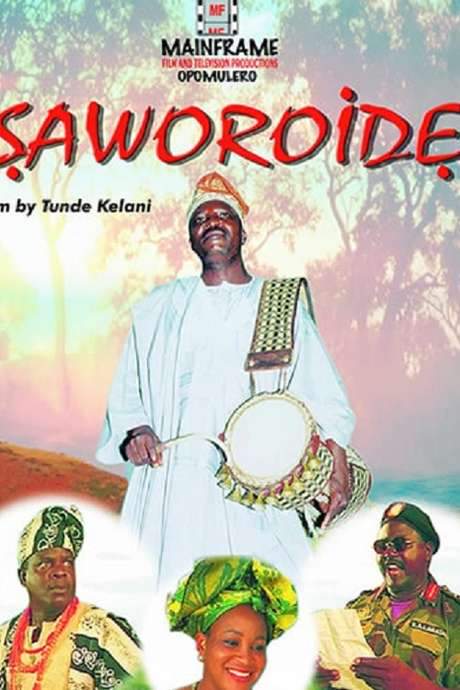



Saworoide Plot Summary
Read the complete plot summary and ending explained for Saworoide (1999). From turning points to emotional moments, uncover what really happened and why it matters.
In an ancient era, in the town of Jogbo, a sacred ritual is spoken of by a priest who describes a pact between the people and their kings. This pact hinges on the use of the brass bell, the revered Saworoide, during the ritual process, a ritual that is said to accompany the rise of each successive king. The tale opens with a sense of fate tethered to tradition, where the bell’s sound marks more than ceremony—it marks the balance of power in Jogbo.
A new king, Lapite, has just ascended to Jogbo’s throne, and there is a long-held belief that Jogbo’s kings never accumulate the same wealth or influence as those from other lands. Lapite learns, through his ally and Chief, Balogun, that this limitation stems from the town’s old ritual practices surrounding kingship. Driven to change the status quo, Lapite takes steps to cheat the ritual process. Yet Balogun receives a stark warning later from the very elder who previously spoke to him: anyone who cheats the process will share his kingship with someone else, and if he ever hears the Saworoide being played, a brutal headache will signal doom. This warning echoes through the court as Lapite’s ambition grows, and it drives him to drastic measures.
In pursuit of power, Lapite orders assassins to strike at the family of Adebomi, whom he sees as a threat. The target is the family, though their youngest child survives the onslaught. He also orders the capture of Ayangalu, the custodian of Saworoide, and the drum that embodies the town’s sacred ritual. Ayangalu is tipped off by a loyal chief and escapes, taking with him Adeboro’s son. In the escape, Saworoide itself is left behind, vulnerable to capture, setting the stage for a clash between power, tradition, and resistance.
To consolidate his hold on the throne, Lapite takes another wife, Tinuola, who is secretly pregnant by her lover. This pregnancy must be kept hidden to preserve the queenly opportunity that comes with Lapite’s rule. Meanwhile, Lapite allies with modern investors to begin a mass extraction of Jogbo’s resources, especially through logging, a move that scorches fields and crops in the process. The royal court descends into opulence, and the King’s administration clamps down on dissent, silencing the press as protests begin to swell among the people who see their land being stripped away. Lapite’s administration shows a brinkmanship stance, ignoring the mounting grievances of citizens who push back through organized protest.
As discontent grows, militancy emerges among the farmers, who find themselves pitted against the workers on the plantations. The workers respond with a strike, escalating tensions in the town. Lapite begins to turn against members of his own cabinet, raiding and arresting his opponents, revealing a tyrant’s temperament that unsettles both allies and subjects. In response, members of the farm owners’ association seek wisdom from Amawomaro, the town priest. He directs them toward a dangerous solution: remove the Adé idẹ, the Brass Crown, from the palace for fifteen days, in the belief that this absence might reset the ritual balance and somehow avert catastrophe.
Seeking external help, the militants receive dubious funds from one of the logging firms, who lends support under the guise of aid but with hidden, self-serving aims. The conflict escalates into attacks designed to destabilize the ceremonial order. They hijack a public ceremony in an attempt to steal the king’s crown, but the crown is recovered—secured through bribes offered to the right people within the system.
Amid the turmoil, a bond forms between Aresejabata and Araparegangan, described as the daughter of Lapite in some quarters. Aresejabata confides in her that, while intoxicated, he is the son of Adebomi—the very man killed earlier in the conflict. When Lapite learns of this, he orders Aresejabata’s assassination, a move that threatens Aresejabata’s life and deepens the web of secrets swallowing Jogbo. Araparegangan urges Aresejabata to flee with her and to escape the gathering and the village’s danger. They slip away to safety as the town’s fissures widen.
A military coup follows, and Lagata rises to power, killing Lapite and seizing control of Jogbo. Balogun and Seriki establish communication with the new government, attempting to stabilize the kingdom and navigate the aftermath of the upheaval. The former militants, however, hatch a plan to unseat Lagata by manipulating the town’s sacred instrument once more. They seek Ayangalu’s return to the stage of power, hoping he can play Saworoide to influence public sentiment and political outcomes.
Yet one of the militants betrays the group, leading to Ayangalu’s arrest. Before his capture, Ayangalu uses his drum’s magic to call forth his son, Ayanniyi. The son returns to Jogbo, and when he plays the Saworoide, Lagata’s new reign is shaken by a severe migraine, a sign of the drum’s potent, protective, and deadly force. The soldiers find themselves mysteriously swayed toward siding with the people, a shift that complicates the new government’s hold on the city. In this dizzying turn of events, Aresejabata steps forward and receives initiation to become the next ruler of Jogbo, closing a cycle that intertwines lineage, ritual power, and political upheaval.
Throughout the tale, the town remains under the watchful eye of both tradition and ambition. The sacred Saworoide, the old rituals, and the looming consequences of power’s misuse weave a complex tapestry in which every act—whether a whispered warning, a political maneuver, or a desperate flight—pushes Jogbo toward an uncertain future. The final turn of events leaves Jogbo perched between the pull of history and the fragile promise of a new king, with Aresejabata poised to pursue a destiny that echoes the town’s enduring reliance on ritual, power, and the ever-present possibility of change.
Saworoide Timeline
Follow the complete movie timeline of Saworoide (1999) with every major event in chronological order. Great for understanding complex plots and story progression.
Pact and brass bell foretell a binding ritual
In Jogbo, a priest prophesies that the citizens and their kings will be bound by a pact ritual involving a brass bell. The ritual is presented as an enduring tradition that will govern every succeeding king's legitimacy and power.
Lapite becomes king and learns of ritual limits
Lapite is elected as the new king of Jogbo. Balogun reveals that the old rituals constrain kings from wealth and influence, setting him on a perilous path to challenge tradition.
A warning about cheating the ritual arises
The elder who first told Balogun warns that cheating the process will cost Lapite control, possibly sharing kingship with another. He cautions that hearing the Saworoide could bring a fatal headache.
Assassination orders and the capture of Saworoide
Lapite orders the killing of Adebomi's family and the capture of Ayangalu, the custodian of Saworoide, along with his drum. The family’s child is spared, but the tragedy signals the king's ruthless grip on power.
Ayangalu escapes with Adeboro's son; Saworoide is captured
Ayangalu escapes with Adeboro's son, leaving Saworoide in enemy hands. The escape marks a crack in Lapite's hold over the ritual and foreshadows further resistance.
New marriage and mass exploitation begin
Lapite takes a new wife, Tinuola, who is secretly pregnant by her lover. He partners with modern investors to kickstart logging and exploit Jogbo's resources, while crops are damaged and the press is silenced.
Protests grow as tyranny spreads
Citizens stage protests as the king ignores them, and farm owners' militancy rises. Workers go on strike in response to the rulers' greed and neglect.
Coup nerves and crown plots intensify
Lapite becomes more tyrannical, arresting cabinet members. Chiefs and farm owners consult Amawomaro, who says the Adé idẹ must be absent from the palace for 15 days. Militants seek external support and plot to hijack a ceremony to steal the crown. The crown is recovered after a bribe from logging firms.
Aresejabata's confession and flight
Aresejabata befriends Araparegangan, Lapite's supposed daughter, and confesses that he is the son of Adebomi, killed earlier. Lapite orders Aresejabata's assassination, while Tinuola overhears and urges Arese to flee with her. They escape from the gathering and the village.
Military coup ends Lapite's rule
A military coup erupts, killing Lapite and placing Officer Lagata in power. Balogun and Seriki begin liaising with the new government to stabilize the city.
Militants' final bid to influence the throne
The remaining militants plan to force Ayangalu to play Saworoide to influence the new king. Ayangalu, though exiled, is arrested before he can enact the plan.
Ayangalu's drum call and Aresejabata's ascent
Before his arrest, Ayangalu uses his drum to call his son Ayanniyi, who returns and performs Saworoide just after Lagata is crowned, dying of migraine. The soldiers are hypnotized to side with the people, paving the way for Aresejabata to receive initiation as king.
Saworoide Characters
Explore all characters from Saworoide (1999). Get detailed profiles with their roles, arcs, and key relationships explained.
Lapite
A newly enthroned king whose quest for wealth and influence drives him to ally with modern investors and suppress dissent. He often disregards the old rituals that once kept the kingdom in balance, sealing his own downfall through tyranny and deception.
Balogun
Lapite’s trusted chief who warns him about the consequences of cheating the ritual system. He is torn between palace loyalty and the people’s welfare, ultimately guiding the resistance’s direction.
Ayangalu
The custodian of Saworoide who preserves the ritual’s power. He is captured but escapes with the drum, signaling that the old order still directs events through ritual force.
Aresejabata
A militant who befriends Araparegangan and reveals his true lineage as the son of Adebomi. His actions connect personal vengeance with broader political change, and he becomes a target for assassination.
Lagata
A military officer who leads the coup against Lapite and assumes control of Jogbo. He navigates between power grabs and maintaining stability as new government forms arise.
Tinuola
Lapite’s wife who is secretly pregnant by a lover. Her clandestine status amplifies the palace’s moral compromises as the regime refuses to reveal personal truths for political gain.
Adebomi
The father of Aresejabata’s ally who was killed by royal orders, his death becomes a catalyst for the pursuit of justice and revenge within the community.
Araparegangan
The daughter of Lapite who appears in the growing network of relationships and loyalties. She becomes entangled with Aresejabata and the struggle for the king’s throne.
Ayanniyi
Ayangalu’s son who returns to the town to play the Saworoide, becoming a tragic figure who dies shortly after the ritual signaling a shift in power.
Saworoide Settings
Learn where and when Saworoide (1999) takes place. Explore the film’s settings, era, and how they shape the narrative.
Time period
Ancient times
The story unfolds in a mythic, pre-colonial era where kingship and ritual are decisive forces in governance. The season of saworoide rituals marks political legitimacy, and the crown’s absence can trigger upheaval. Historical timelines are murky, emphasizing timeless tradition over precise dates.
Location
Jogbo
Jogbo is a traditional Yoruba town where kings rule under sacred rituals and the community's fortunes hinge on ritual legitimacy. The town sits at the crossroads of ancient custom and emerging modern exploitation, particularly through logging and resource grabs. Protests and uprisings erupt when leaders violate sacred and communal laws.
Saworoide Themes
Discover the main themes in Saworoide (1999). Analyze the deeper meanings, emotional layers, and social commentary behind the film.
👑
Power & Tradition
The film centers on how traditional rituals and the saworoide drum legitimize authority, while opportunistic rulers manipulate these rituals for wealth and control. Lapite’s ascent shows how charisma and sacred symbols can consolidate power, even as corruption grows.
🪧
Resistance
Protests by farmers and workers reveal the population’s growing discontent with exploitation and censorship. Militancy rises as communities organize to challenge the king’s regime, while external interests try to manipulate the conflict.
🔮
Ritual & Fate
The Saworoide and the crown carry a prophetic weight, warning that deceit will invite catastrophe. The drum calls forth consequences that puncture the illusion of control, culminating in a dramatic shift of power and a deathly curse of sorts.

Coming soon on iOS and Android
The Plot Explained Mobile App
From blockbusters to hidden gems — dive into movie stories anytime, anywhere. Save your favorites, discover plots faster, and never miss a twist again.
Sign up to be the first to know when we launch. Your email stays private — always.
Explore the mobile appSaworoide Spoiler-Free Summary
Discover the spoiler-free summary of Saworoide (1999). Get a concise overview without any spoilers.
In a timeless, sun‑baked realm called Jogbo, the very right to rule is bound to an ancient ceremony. Every king must be crowned by the resonant beating of the Saworoide, a brass drum whose reverberations are said to knit the kingdom’s destiny to the will of its people. The ritual is more than spectacle; it is the pulse of the land, a living pact spoken of by priests and echoed in the songs that drift through market squares and palace courtyards alike. The film drifts between myth and history, letting the drum’s toll become a subtle, Greek‑chorus‑like commentator on the unfolding drama.
When the throne is seized by a power‑hungry usurper, the delicate equilibrium that the Saworoide safeguards begins to tremble. The new ruler’s ambition collides with a culture that reveres tradition, setting off a chain of political intrigue that feels both intimate and universal. The kingdom’s opulent courts and bustling villages pulse with a blend of reverence and unease, as whispered counsel and quiet dissent swirl beneath the steady beat of the drum. The tone is richly fable‑like, simultaneously satirical and solemn, inviting viewers to see the story as a reflection of broader African struggles with authority and modernity.
At the heart of this tension stand a handful of compelling figures. Lapita, the newly installed sovereign, navigates the lure of unchecked power while wrestling with the weight of ancestral expectation. His chief advisor Balogun serves as the pragmatic voice of counsel, aware of the dangers that come with bending sacred rites. The keeper of the drum, Ayangalu, embodies the link between past and present, holding the instrument that can either uphold or unravel the kingdom’s legitimacy. Finally, the young and uncertain Aresejabata hints at a lineage poised to inherit the crown’s burdens. Their interwoven destinies create a tapestry of ambition, loyalty, and the ever‑present question of what truly makes a ruler worthy.
Featured on this page

What's After the Movie?
Not sure whether to stay after the credits? Find out!
Check out our other apps:

SAT Sphere
Build confidence for the Digital SAT.

Mori Atlas
Discover wild places worth protecting.

Luntero
Search smarter for a home in Amsterdam.

Plot Explained
Unravel movie endings and hidden clues.

Pokechamp
Dive into Pokémon data and battle logic.

Driving Theory
Get ready for your European theory test.

Movie Dust
Plan your next cinema trip with ease.

Musemap
Find art and culture as you travel.

Selkobase
Compare credentials before committing.

Local Manual
Turn an unfamiliar country into practical next steps.

Lernavi
Compare school systems before your next move.

GymRoam
Find a workout stop wherever your plans take you.
Explore Our Movie Platform
New Movie Releases (2026)
Famous Movie Actors
Top Film Production Studios
Movie Plot Summaries & Endings
Major Movie Awards & Winners
Best Concert Films & Music Documentaries
Movie Collections and Curated Lists
© 2026 What's After the Movie. All rights reserved.
Privacy Policy