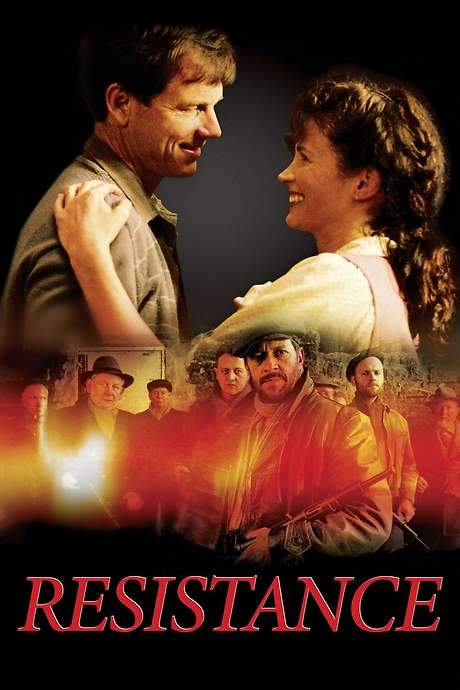
Resistance 2019


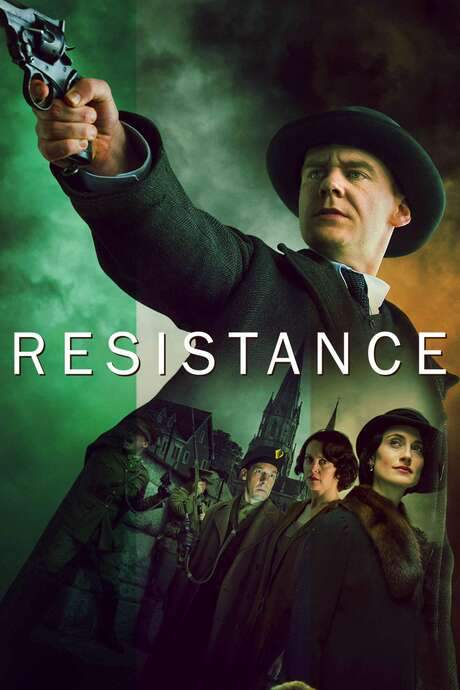
Building on the Rebellion miniseries, this sequel is set at the peak of Ireland’s War of Independence, tracing how ordinary people become entangled in the turmoil of the era. It examines the personal and communal consequences of the conflict, showing how history reshapes lives and loyalties.


Does Resistance have end credit scenes?
No!
Resistance does not have end credit scenes. You can leave when the credits roll.
Where to Watch Resistance
See current US streaming, rental, and purchase options for Resistance (2019) via JustWatch.

AMC+ Amazon Channel
HD
AMC+ Roku Premium Channel
HD
Philo
HD
Sundance Now
HD
Kanopy
HD
Apple TV Store
4K
Fandango At Home
HD
Amazon Video
HD
Google Play Movies
SD
YouTube
SD Streaming availability powered by 
Meet the Full Cast and Actors of Resistance
Explore the complete cast of Resistance, including both lead and supporting actors. Learn who plays each character, discover their past roles and achievements, and find out what makes this ensemble cast stand out in the world of film and television.

David Wilmot
Patrick Mahon

Craig Parkinson
Captain David McLeod

Catherine Walker
Constance Butler

Brian Gleeson
Jimmy Mahon

Brian Doherty
Frank Brogan

Simone Kirby
Ursula Sweeney
Hugh O'Conor
Dr Lawrence Moore

Conor MacNeill
Diarmuid McWilliams
Gavin Drea
Michael Collins
Paul Ritter
General Ormonde Winter
Jordanne Jones
Minnie Mahon
Stanley Townsend
Senator Daniel Shea

Tom Bennett
Mark Sturgis
Natasha O'Keeffe
Agnes Moore
Frankie McCafferty
Father Leonard
Aoife Duffin
Éithne Drury
Chris McHallem
Albert Saunders
Dominic Thorburn
Wilf Richardson
Richard Doubleday
Major Mills
Fergal McElherron
Maurice Jacobs
Michael Ford-FitzGerald
Harry Butler
Conall Keating
Joey Bradley
Imogen Doel
Lily Lawlor
Matthew Hopkinson
Albert Finlay
Tommy Harris
Seanie Duggan
External Links and Streaming Options
Discover where to watch Resistance online, including streaming platforms, rental options, and official sources. Compare reviews, ratings, and in-depth movie information across sites like IMDb, TMDb, Wikipedia or Rotten Tomatoes.







Full Plot Summary and Ending Explained for Resistance
Read the complete plot summary of Resistance, including all major events, twists, and the full ending explained in detail. Explore key characters, themes, hidden meanings, and everything you need to understand the story from beginning to end.
The film unfolds against the looming shadows of the late 1930s and the harsh realities of war, beginning in 1938 in Munich where the Nazi Brown Shirts break into the home of a young Jewish girl named Elsbeth, leaving tragedy in their wake as her parents are killed. This brutal moment sets a stark mood for a story that threads personal courage through a landscape of oppression and fear.
In Strasbourg, 1939, we meet Marcel Marceau as a young man who works in his father’s butcher shop and longs for something more than the drudgery of his daily life. Although the world around him grows more dangerous by the day, he remains drawn to the arts—especially mime and painting—and he pursues these passions with a quiet tenacity that irks his father. At a local cabaret, Marcel performs impression after impression of Charlie Chaplin, a likeness that becomes a recurring motif—both a homage and a quiet rebellion against the mounting brutality. It is here that he becomes smitten with a local girl named Emma, harboring a hopeful wish to marry her despite the era’s chaos.
Marcel’s cousin Georges, connected to the Jewish arm of the French Resistance, adds another dimension to the story. He and Emma bring together a Scout troop of 123 Jewish orphans to Strasbourg, providing them with a home at a castle where they begin to transform fear into a fragile sense of safety. The children, once terrified, gradually adapt to their new surroundings, encouraged by Marcel’s comic talents and the companionship that grows between him and Emma. The romance between Marcel and Emma deepens amid the daily acts of survival and the tight-knit community that the Resistance begins to build around them.
The autumn of 1939 brings a grim escalation as Germany invades Poland, intensifying the stakes for everyone involved. Marcel and Emma become more deeply entwined with the Resistance, while the dispersed Jewish children are spread into smaller groups to reduce visibility—some hidden in churches, others taken in by sympathetic families. Throughout these perilous times, Marcel and Emma maintain their connection to Elsbeth, holding onto the thread of hope that unity and ingenuity can outlast intimidation.
As 1941 passes into 1942, the story interweaves with the ascent of Klaus Barbie, a brutal figure who arrives in Lyon during the Nazi occupation of southern France. Barbie’s ruthlessness is exercised through bribery, betrayals, and grisly executions carried out in the cold, empty halls of a Gestapo headquarters’ swimming pool. His notoriety—later known as “The Butcher of Lyon”—casts a long shadow over everyone who resists.
Marcel and Emma relocate to Lyon to continue their work with the Resistance, joined by Marcel’s brother Alain and Emma’s sister Mila. The danger remains constant as a Nazi sweep grips the city’s train station, forcing Alain to fight his way through danger and Marcel to help his brother escape by burning a German soldier’s uniform and cover. Yet Mila is not so fortunate; she is captured during a later Gestapo roundup, and Barbie tortures her to extract information about the Resistance and Emma’s whereabouts. Though Mila dies in the process, Emma survives by collaborating under duress, a harrowing choice that leaves both women haunted and determined to protect others. After Mila’s death, Marceau and Emma’s bond deepens into a vow to rescue Jewish children by guiding them toward safer ground.
With the goal of safeguarding as many lives as possible, Marcel, Emma, and Alain devise a dangerous plan to ferry a dozen children, including Elsbeth, to the Swiss border. They disguise their mission as a hiking trip and mount an audacious journey along a SNCF train toward the French Alps and beyond. Barbie’s SS troops close in at the last station before the Franco-Swiss frontier, forcing Emma into hiding as they search the train and question Marcel, who pretends to be a collaborator. Barbie cannot uncover Emma or the children’s true intention, and the trio presses on toward the border with renewed resolve.
Barbie’s pursuit intensifies in the icy forests of the borderlands, and the danger grows with every step. The SS commander comes agonizingly close to catching them, and at one tense moment he nearly discharges his handgun. Yet the group’s courage carries them forward, and they finally reach Switzerland, albeit with heartbreak—Emma is mortally wounded in the chase, and Marcel bears the weight of that loss as they continue toward safety with the children.
The story closes in 1945 at Nuremberg, Germany, where Marceau has transformed into a liaison officer with the United States Army. He continues to perform and bring moments of light to wartime troops, a testament to the power of art even in the darkest hours. Introduced by General George S. Patton, the film reveals that Marceau crossed the Alps many times to save hundreds of children, many of them orphans, and thereby influenced thousands more. The ending is marked by a final, evocative mime—a quiet assertion of resilience and humanity in the face of atrocity.

Coming soon on iOS and Android
The Plot Explained Mobile App
From blockbusters to hidden gems — dive into movie stories anytime, anywhere. Save your favorites, discover plots faster, and never miss a twist again.
Sign up to be the first to know when we launch. Your email stays private — always.
Explore the mobile appDiscover Film Music Concerts Near You – Live Orchestras Performing Iconic Movie Soundtracks
Immerse yourself in the magic of cinema with live orchestral performances of your favorite film scores. From sweeping Hollywood blockbusters and animated classics to epic fantasy soundtracks, our curated listings connect you to upcoming film music events worldwide.
Explore concert film screenings paired with full orchestra concerts, read detailed event information, and secure your tickets for unforgettable evenings celebrating legendary composers like John Williams, Hans Zimmer, and more.


Resistance Themes and Keywords
Discover the central themes, ideas, and keywords that define the movie’s story, tone, and message. Analyze the film’s deeper meanings, genre influences, and recurring concepts.
Resistance Other Names and Titles
Explore the various alternative titles, translations, and other names used for Resistance across different regions and languages. Understand how the film is marketed and recognized worldwide.
Similar Movies To Resistance You Should Know About
Browse a curated list of movies similar in genre, tone, characters, or story structure. Discover new titles like the one you're watching, perfect for fans of related plots, vibes, or cinematic styles.


Quick Links: Summary, Cast, Ratings, More

What's After the Movie?
Not sure whether to stay after the credits? Find out!
Check out our other apps:

SAT Sphere
Build confidence for the Digital SAT.

Mori Atlas
Discover wild places worth protecting.

Luntero
Search smarter for a home in Amsterdam.

Plot Explained
Unravel movie endings and hidden clues.

Pokechamp
Dive into Pokémon data and battle logic.

Driving Theory
Get ready for your European theory test.

Movie Dust
Plan your next cinema trip with ease.

Musemap
Find art and culture as you travel.

Selkobase
Compare credentials before committing.

Local Manual
Turn an unfamiliar country into practical next steps.

Lernavi
Compare school systems before your next move.

GymRoam
Find a workout stop wherever your plans take you.
Explore Our Movie Platform
New Movie Releases (2026)
Famous Movie Actors
Top Film Production Studios
Movie Plot Summaries & Endings
Major Movie Awards & Winners
Best Concert Films & Music Documentaries
Movie Collections and Curated Lists
© 2026 What's After the Movie. All rights reserved.
Privacy Policy