Repentance 1984

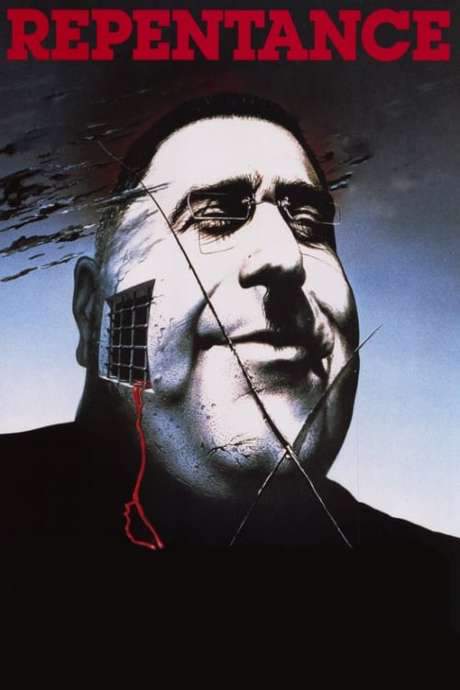
A masterful, nightmarish political vision by Georgia’s leading modern director. The day after Varlam Aravidze’s funeral, his corpse appears in his son’s garden. Though secretly reburied, the body repeatedly resurfaces until police apprehend a local woman. She says Varlam’s Stalin‑like terror, which destroyed her family, means he never be laid to rest.


Does Repentance have end credit scenes?
No!
Repentance does not have end credit scenes. You can leave when the credits roll.
Meet the Full Cast and Actors of Repentance
Explore the complete cast of Repentance, including both lead and supporting actors. Learn who plays each character, discover their past roles and achievements, and find out what makes this ensemble cast stand out in the world of film and television.

Merab Ninidze
Tornike

Kakhi Kavsadze
Mikheil Koresheli
Amiran Amiranashvili
Iya Ninidze
Guliko
Avtandil Makharadze
Varlam Aravidze / Abel Aravidze
Edisher (Davit) Giorgobiani
Sandro Barateli
Marina Kakhiani
Zeinab Botsvadze
Ketevan Barateli
Ketevan Abuladze
Nino Barateli
Nino Zaqariadze
Elene Korisheli
Nano Ochigava
Young Ketevan
External Links and Streaming Options
Discover where to watch Repentance online, including streaming platforms, rental options, and official sources. Compare reviews, ratings, and in-depth movie information across sites like IMDb, TMDb, Wikipedia or Letterboxd.




Full Plot Summary and Ending Explained for Repentance
Read the complete plot summary of Repentance, including all major events, twists, and the full ending explained in detail. Explore key characters, themes, hidden meanings, and everything you need to understand the story from beginning to end.
The film opens in a quiet Georgian town, where daily life starts with a simple, domestic scene—an unnamed woman preparing cakes—before the weight of history and memory presses in. The town’s mayor, Varlam Aravidze, has died, and the mood is a blend of mourning and unease as people reckon with what his leadership once meant. One day after the funeral, a troubling repetition disrupts the quiet: the mayor’s corpse reappears in the garden of his son’s house, forcing the community to confront a past it would rather forget. The unsettling recurrence of the dead figure becomes a tangible reminder that violence and fear can linger long after the sound of the funeral bells fades.
A dramatic turn arrives when a woman named Ketevan Barateli is accused of digging up the body. She defends herself calmly, arguing that Varlam did not deserve burial because his rule was marked by a terror resembling a Stalin-era regime that erased many lives—parents, friends, and neighbors who vanished without explanation. Her testimony unfolds in a courtroom that doubles as a gallery of memory, with her allegations about Varlam’s regime threaded through a series of flashbacks that reveal the brutality behind the public face of authority. The trial becomes not just a legal confrontation but a public reckoning with the shadows of the town’s recent history, forcing the truth to surface in fragments and memories.
As the proceedings unfold, Varlam’s family becomes entangled in the defense of his legacy. His son, Abel Aravidze, denies any wrongdoing by his father, while his lawyer pushes to have the accused woman declared insane. The courtroom becomes a stage for competing versions of truth, with the past insisting on its own version of events. Standing apart from the adults’ disputes, Tornike, Varlam’s grandson, is startled by the revelations about his grandfather’s crimes. Tornike’s shock deepens into despair, and the film follows his tormented arc as he ultimately takes his own life, a stark and devastating consequence that underscore the generational impact of tyranny.
After Tornike’s death, Abel steps outside the family tragedy by discarding his father’s corpse from a cliff on the town’s edge, a final, grim act that seals the private guilt within a public act. The narrative then circles back to the opening image, returning to the kitchen where the same ritual of cake-making continues, a quiet counterpoint to the violence that has just been exposed.
In the closing scene, an old woman at a window asks if the road she sees is the path to the church. The woman who is preparing the cake responds that the road is Varlam Street and will not lead to the church. The old woman presses the point with a pointed question that lingers in the air: > “What good is a road if it doesn’t lead to a church?” This final exchange crystallizes the film’s meditation on memory, accountability, and the elusive nature of redemption in a community haunted by its past.
- Note: Throughout the narrative, key figures appear in the storyline: the town’s mayor and his heir are anchored by the performances of Varlam Aravidze and his son, Abel Aravidze, the grandson Tornike, and the accuser Ketevan Barateli. The lingering impact of history on personal lives and communal memory is rendered through intimate scenes, formal trial debates, and the stark, symbolic imagery that defines Repentance.

Coming soon on iOS and Android
The Plot Explained Mobile App
From blockbusters to hidden gems — dive into movie stories anytime, anywhere. Save your favorites, discover plots faster, and never miss a twist again.
Sign up to be the first to know when we launch. Your email stays private — always.
Explore the mobile appDiscover Film Music Concerts Near You – Live Orchestras Performing Iconic Movie Soundtracks
Immerse yourself in the magic of cinema with live orchestral performances of your favorite film scores. From sweeping Hollywood blockbusters and animated classics to epic fantasy soundtracks, our curated listings connect you to upcoming film music events worldwide.
Explore concert film screenings paired with full orchestra concerts, read detailed event information, and secure your tickets for unforgettable evenings celebrating legendary composers like John Williams, Hans Zimmer, and more.


Repentance Themes and Keywords
Discover the central themes, ideas, and keywords that define the movie’s story, tone, and message. Analyze the film’s deeper meanings, genre influences, and recurring concepts.
Repentance Other Names and Titles
Explore the various alternative titles, translations, and other names used for Repentance across different regions and languages. Understand how the film is marketed and recognized worldwide.
Similar Movies To Repentance You Should Know About
Browse a curated list of movies similar in genre, tone, characters, or story structure. Discover new titles like the one you're watching, perfect for fans of related plots, vibes, or cinematic styles.







Quick Links: Summary, Cast, Ratings, More

What's After the Movie?
Not sure whether to stay after the credits? Find out!
Check out our other apps:

SAT Sphere
Build confidence for the Digital SAT.

Mori Atlas
Discover wild places worth protecting.

Luntero
Search smarter for a home in Amsterdam.

Plot Explained
Unravel movie endings and hidden clues.

Pokechamp
Dive into Pokémon data and battle logic.

Driving Theory
Get ready for your European theory test.

Movie Dust
Plan your next cinema trip with ease.

Musemap
Find art and culture as you travel.

Selkobase
Compare credentials before committing.

Local Manual
Turn an unfamiliar country into practical next steps.

Lernavi
Compare school systems before your next move.

GymRoam
Find a workout stop wherever your plans take you.
Explore Our Movie Platform
New Movie Releases (2026)
Famous Movie Actors
Top Film Production Studios
Movie Plot Summaries & Endings
Major Movie Awards & Winners
Best Concert Films & Music Documentaries
Movie Collections and Curated Lists
© 2026 What's After the Movie. All rights reserved.
Privacy Policy