Nuts 1987



Mad As In Angry. Or Just Plain… NUTS A high-class call girl accused of murder fights for the right to stand trial rather than be declared mentally incompetent.


Does Nuts have end credit scenes?
No!
Nuts does not have end credit scenes. You can leave when the credits roll.
Where to Watch Nuts
See current US streaming, rental, and purchase options for Nuts (1987) via JustWatch.








Meet the Full Cast and Actors of Nuts
Explore the complete cast of Nuts, including both lead and supporting actors. Learn who plays each character, discover their past roles and achievements, and find out what makes this ensemble cast stand out in the world of film and television.

Maureen Stapleton
Rose Kirk
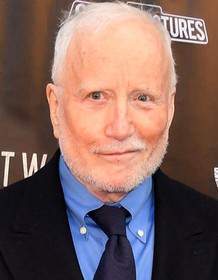
Richard Dreyfuss
Aaron Levinsky
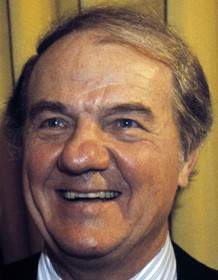
Karl Malden
Arthur Kirk

Robert Webber
Francis MacMillan

Eli Wallach
Dr. Herbert A. Morrison
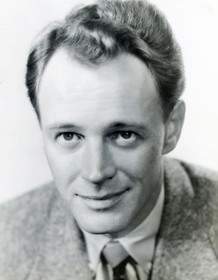
William Prince
Clarence Middleton

Barbra Streisand
Claudia Draper
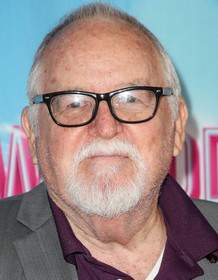
Dakin Matthews
Judge Lawrence Block

Elizabeth Hoffman
Dr. Johnson

Leslie Nielsen
Allen Green
Billy Kane
Attendant #2
Castulo Guerra
Dr. Arantes
Bruce Paul Barbour
Guard #3
Paul Benjamin
Harry Harrison
James Whitmore
Judge Stanley Murdoch
John Wesley
Holding Cell Guard
Conni Marie Brazelton
Court Officer #2
Tyra Ferrell
Cell Woman #2
Dana Dru Evenson
Guard #2
Gary Carlos Cervantes
Cell Man #1
Pamela Guest
Lawyer #1
Tina Lifford
Lawyer #2
Sarina C. Grant
Cell Woman #1
Hayley Taylor
11 year-old Claudia
Valentina Quinn
Cell Woman #4
Nicole Burdette
Cell Woman #3
Edward Blackoff
Bar Patron #2
Alphonse Walter
Attendant #1
Tony Rolon
Defendant Gonzales
Rocco Karega
Correction Officer #2
Warren Manzi
Saul Kreiglitz
Stacy Bergman
16 year-old Claudia
Matt Riivald
Court Reporter
Ron Cummins
Arraignment Court Clerk
Gerry Okuneff
Court Officer #1
Roydon Clark
Guard #1
Noel L. Walcott III
Defendant Davis
Stephannie Howard
Correction Officer #1
Armando Díaz
Interpreter
Joseph Romeo
Maitre'D
Ernest-Frank Taylor
Bar Patron #1
Darryl Ponicsan
Bar Patron #3
External Links and Streaming Options
Discover where to watch Nuts online, including streaming platforms, rental options, and official sources. Compare reviews, ratings, and in-depth movie information across sites like IMDb, TMDb, Wikipedia or JustWatch.






Take the Ultimate Nuts Movie Quiz
Challenge your knowledge of Nuts with this fun and interactive movie quiz. Test yourself on key plot points, iconic characters, hidden details, and memorable moments to see how well you really know the film.
Nuts (1987) Quiz: Test your knowledge of the 1987 courtroom drama Nuts with these ten varied‑difficulty questions.
Who portrayed public defender Aaron Levinsky?
Full Plot Summary and Ending Explained for Nuts
Read the complete plot summary of Nuts, including all major events, twists, and the full ending explained in detail. Explore key characters, themes, hidden meanings, and everything you need to understand the story from beginning to end.
In a tense courtroom drama with sharp moral questions, Claudia Draper, Barbra Streisand, kills Allen Green in self-defense, a moment that sets off a collision between personal history, public judgment, and the harsh gaze of the legal system. Her mother Rose Kirk, Maureen Stapleton, and stepfather Arthur Kirk, Karl Malden, scramble to shield the family by seeking to declare Claudia mentally incompetent, hoping to bury the incident under the veneer of illness rather than a courtroom verdict. Yet Claudia is fiercely determined not to disappear into a mental institution; she wants to be seen and heard on her own terms, and she fights to be deemed fit to stand trial.
The defense in this perilous case is initially upended when the attorney hired by her parents quits after Claudia assaults him in court for attempting to move to commit her. The judge, faced with a high-stakes situation and limited time, appoints public defender Aaron Levinsky, Richard Dreyfuss, to take the case. Levinsky is overwhelmed by the caseload, but he refuses to engage with the defense team without first speaking directly to Claudia. The young woman is openly hostile at first, resisting his presence and signaling that she will not concede to the court’s expectations. Yet Levinsky’s persistence—paired with his refusal to take the easy route—begins to reveal a patient, probing mind beneath the surface of her distrust. He makes clear that he will listen to her, and that listening could be the key to understanding the circumstances that brought her to this point.
As Levinsky digs into Claudia’s past, the film unfolds in a careful, methodical way. He begins to piece together a life that seemed outwardly poised and respectable—rooted in a seemingly stable, upper-middle-class milieu—but that hides a tangle of experiences, traumas, and emotions that help explain how she ended up in a courtroom. The investigation becomes less about defense tactics and more about reconstructing a person who has learned to survive by suppressing pain, fear, and anger. Throughout this process, the audience is invited to consider how a person can be judged harshly for choices made under duress, and how surrounding myths about femininity, sexuality, and power can shape a verdict before a single witness speaks.
In the psychiatric ward, where Claudia waits for the next steps, she experiences a nightmare that revisits the day of the killing. The memory is vivid: her assailant begins to physically attack her when she refuses to spend more time with him and to let him bathe her. The vivid recitation of fear and struggle underscores how quickly danger can escalate from coercion to self-defense, and how the line between victim and survivor can blur under pressure. When Claudia’s mother testifies, she brings a different kind of memory to the stand—a flashback in which the mother’s door is closed on Claudia, leaving her to face her distress alone. The moment is charged with a sense of abandonment and the miscommunication that can fester between a parent and child.
Cross-examination also reveals a darker layer of Claudia’s childhood. Arthur Kirk testifies, and the process reveals that Claudia endured sexual abuse by a family member beginning in her youth and continuing until she was sixteen. A flashback echoes the courtroom’s questioning as someone in the memory tries to force himself into the bathroom, while the mother’s reaction on the stand signals how these revelations shake the family’s façade. The resulting trauma adds to the audience’s understanding of why Claudia might appear to deviate from society’s expectations of how a woman should behave, and it complicates the question of whether insanity or sanity should govern her fate.
Claudia eventually takes the stand in her own defense, and her testimony is a direct challenge to the idea that sanity must fit a certain image. She asserts that being sane is not about conforming to stereotypes or appearing “proper” in public, but about being able to articulate her truth and face the consequences of her actions. The courtroom becomes a space where questions of power, gender norms, and personal history are weighed against the legal criteria of competence and responsibility. Throughout, Levinsky remains a steady, thoughtful presence, insisting that Claudia’s voice deserves to be heard in full and not filtered through assumptions about who she should be.
As the trial unfolds, the judge, Judge Stanley Murdoch, James Whitmore, must decide whether Claudia is competent to stand trial. His ruling—whether she is capable of participating in her defense and understanding the proceedings—becomes a pivotal moment for the entire case. The narrative follows her journey from a locked mental ward to the possibility of returning to the courtroom, highlighting the tension between protectiveness and accountability. In the final act, Claudia walks out of the courtroom on her own recognizance, signaling that she is awaiting trial rather than being remanded to a hospital cell.
The film closes with a concise, definitive note: Claudia faced a trial for first-degree manslaughter, with Richard Dreyfuss as her attorney, and she was acquitted. The ending leaves viewers with a sense of resolution, but also a lasting meditation on how society defines sanity, how families navigate danger and blame, and how the legal system grapples with the complexities of motive, trauma, and self-defense. The story emphasizes that truth can be messy and that courage can take many forms—from the quiet persistence of a public defender to the quiet resilience of a woman who refuses to be erased by her past.

Coming soon on iOS and Android
The Plot Explained Mobile App
From blockbusters to hidden gems — dive into movie stories anytime, anywhere. Save your favorites, discover plots faster, and never miss a twist again.
Sign up to be the first to know when we launch. Your email stays private — always.
Explore the mobile appDiscover Film Music Concerts Near You – Live Orchestras Performing Iconic Movie Soundtracks
Immerse yourself in the magic of cinema with live orchestral performances of your favorite film scores. From sweeping Hollywood blockbusters and animated classics to epic fantasy soundtracks, our curated listings connect you to upcoming film music events worldwide.
Explore concert film screenings paired with full orchestra concerts, read detailed event information, and secure your tickets for unforgettable evenings celebrating legendary composers like John Williams, Hans Zimmer, and more.


Nuts Themes and Keywords
Discover the central themes, ideas, and keywords that define the movie’s story, tone, and message. Analyze the film’s deeper meanings, genre influences, and recurring concepts.
Nuts Other Names and Titles
Explore the various alternative titles, translations, and other names used for Nuts across different regions and languages. Understand how the film is marketed and recognized worldwide.
Similar Movies To Nuts You Should Know About
Browse a curated list of movies similar in genre, tone, characters, or story structure. Discover new titles like the one you're watching, perfect for fans of related plots, vibes, or cinematic styles.








Quick Links: Summary, Cast, Ratings, More

What's After the Movie?
Not sure whether to stay after the credits? Find out!
Check out our other apps:

SAT Sphere
Build confidence for the Digital SAT.

Mori Atlas
Discover wild places worth protecting.

Luntero
Search smarter for a home in Amsterdam.

Plot Explained
Unravel movie endings and hidden clues.

Pokechamp
Dive into Pokémon data and battle logic.

Driving Theory
Get ready for your European theory test.

Movie Dust
Plan your next cinema trip with ease.

Musemap
Find art and culture as you travel.

Selkobase
Compare credentials before committing.

Local Manual
Turn an unfamiliar country into practical next steps.

Lernavi
Compare school systems before your next move.

GymRoam
Find a workout stop wherever your plans take you.
Explore Our Movie Platform
New Movie Releases (2026)
Famous Movie Actors
Top Film Production Studios
Movie Plot Summaries & Endings
Major Movie Awards & Winners
Best Concert Films & Music Documentaries
Movie Collections and Curated Lists
© 2026 What's After the Movie. All rights reserved.
Privacy Policy