Longford 2006

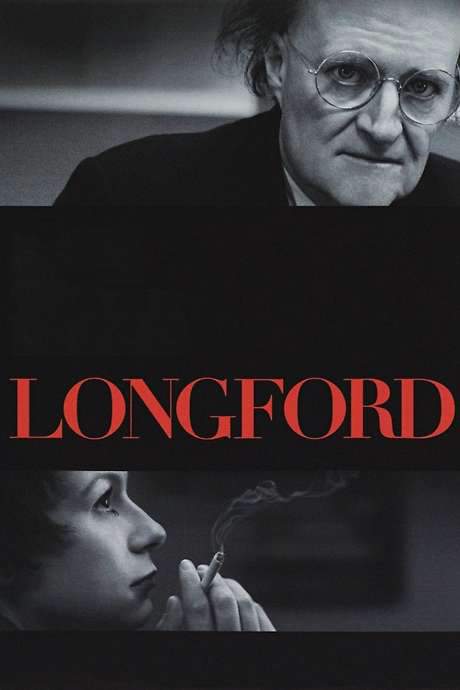
A portrait of Lord Longford, the tire‑less British Labour peer who devoted his life to prison reform and the controversial cause of securing clemency for a convicted woman. His relentless crusade to win her release sparked fierce political debate, personal attacks and conflict, highlighting his commitment to compassion over public opinion.

Does Longford have end credit scenes?
No!
Longford does not have end credit scenes. You can leave when the credits roll.
Meet the Full Cast and Actors of Longford
Explore the complete cast of Longford, including both lead and supporting actors. Learn who plays each character, discover their past roles and achievements, and find out what makes this ensemble cast stand out in the world of film and television.

Andy Serkis
Ian Brady

Lee Boardman
Talk Show Host

Jim Broadbent
Lord Longford

Samantha Morton
Myra Hindley

Kika Markham
Governor Wing

Alex Blake
Paddy Packenham

Robert Pugh
Harold Wilson

Lindsay Duncan
Lady Elizabeth Longford

Sarah Crowden
Lady Tree
Tam Dean Burn
Roy
Anton Rodgers
Willie Whitelaw
Martina McClements
Home Office Secretary
Daniel Maley
Schoolboy
Charlotte West-Oram
Downing Street Secretary
Richard Sinnott
Journalist
Gordon Langford Rowe
Judge
Ron Meadows
Defence Barrister
Kate Miles
Rachel Pakenham
Caroline Clegg
Longford's Secretary
Roy Barber
Father Kahle
Karen Spragg
Patricia Cairns
Karen Bayley
Holloway Prison Officer
Ian Connaughton
Journalist
David MacCreedy
Journalist
Tina Malone
Elsie
C.P. Hallam
Fred Harrison
Pamela Cheshire
Cookham Wood Prisoner
Ross Tomlinson
Schoolboy
External Links and Streaming Options
Discover where to watch Longford online, including streaming platforms, rental options, and official sources. Compare reviews, ratings, and in-depth movie information across sites like IMDb, TMDb, Wikipedia or Rotten Tomatoes.






Take the Ultimate Longford Movie Quiz
Challenge your knowledge of Longford with this fun and interactive movie quiz. Test yourself on key plot points, iconic characters, hidden details, and memorable moments to see how well you really know the film.
Longford (2006) Quiz: Test your knowledge of the 2006 film Longford, which dramatizes Lord Longford's controversial campaign for the parole of Myra Hindley.
Who is the central figure whose story is told in the film?
Full Plot Summary and Ending Explained for Longford
Read the complete plot summary of Longford, including all major events, twists, and the full ending explained in detail. Explore key characters, themes, hidden meanings, and everything you need to understand the story from beginning to end.
In 1987, a radio discussion about the controversial book Saints becomes a test of faith, conviction, and the limits of reform for Lord Longford [Jim Broadbent]. The broadcast opens with a calm, introspective tone as the host invites listeners to share their views, but the mood shifts when a caller rails against Longford’s long-running campaign to secure parole for Hindley. Longford, steadfast in his belief in the possibility of redemption for every person, refuses to engage with Hindley on air, insisting that the focus of the program remains on the broader questions of punishment, rehabilitation, and the meaning of Saints rather than the specifics of Hindley’s case. The exchange exposes the widening divide between Longford’s public persona and the harsh, visceral responses of a society outraged by Hindley’s crimes and the very idea that she might ever be freed.
The film’s heart lies in a flashback to the late 1960s, set against the hush of the House of Lords, where Longford presides over a small reception for ex-convicts he has visited and mentored during their imprisonment. He is drawn into a letter from Hindley, one of Britain’s most infamous criminals, who has initiated contact from behind bars. Hindley requests books and, more provocatively, asks for a chance to meet Ian Brady [Andy Serkis], her former partner who stands accused of three murders. Longford is startled by the request and warns Hindley that any contact with Brady could jeopardize her chances of parole—a calculation that rests on whether she has truly reformed and whether she can resist Brady’s influence. Hindley, for her part, appears to understand the gravity of the decision while probing Longford’s willingness to see beyond the verdicts and public fury.
From that moment, Longford’s mission evolves into a public, drawn-out campaign that questions whether moral transformation is possible after such violence. He argues that rehabilitation is not only possible but a test of the justice system’s humanity, pointing to the trial judge’s speculation that Hindley’s release might someday be contemplated if she shows genuine change away from Brady’s coercive circle. The debate becomes a crucible for Longford’s faith and his relationship with Hindley, who, in his eyes, embodies the complex ambiguity of sin, guilt, and the potential for rehabilitation. The story traces how this conviction strains Longford’s friendships, tests his family’s patience, and attracts relentless media scrutiny that portrays him as either a foolish sentimentalist or a stubborn idealist.
Throughout the 1970s and into the 1980s, Longford’s steadfast stance continues to collide with public opinion, political caution, and the painful memories of victims’ families. His wife, Lady Elizabeth Longford [Lindsay Duncan], stands at his side, offering support while confronting the personal toll of a campaign that many believe is harmful or naïve. The film also depicts the broader social and political context of the era, including the taint of the press and the moral hazard of turning a paroled figure into a national spectacle. Yet Longford remains unyielding, arguing that confronting uncomfortable truths and choosing mercy over punishment can reflect the best aspects of a humane, Christian tradition.
As the years unfold, Hindley’s own disclosures complicate the narrative. In a later parole assessment, she reveals details of additional violence that had not previously come to light, casting new light on the possibility of her release while also confirming the gravity of her past actions. Her revelations lead to renewed police cooperation as investigators search for missing evidence and bodies, illustrating how the quest for truth can clash with emotional wounds and political agendas. Longford’s public defense of Hindley persists even as the case becomes more contentious, with critics labeling his stance as dangerous or misguided.
The film builds to a quiet, moving conclusion that juxtaposes belief with aging, memory with consequence. Longford, now an elderly figure, continues to visit Hindley in the grounds of her prison, his health fragile but his resolve intact. The audience learns that, in the late 1990s, Hindley’s health and the legal climate shift the odds against parole, even as Longford’s lifelong conviction remains unshaken. The final credits inform the viewer of the real-life outcomes: Longford dies in 2001, and Hindley follows in 2002, both having lived with the repercussions of a controversial, enduring campaign that challenged conventional notions of justice, mercy, and the possibility of true reform.
This portrayal rests on a careful balance of empathy and critique, inviting viewers to weigh the moral complexities behind a public crusade. It is a meditation on how faith, memory, and the slow tides of time can transform a single, polarizing issue into a lasting national conversation. The film is anchored by its central performances, particularly the portrayal of Longford’s unwavering faith and Hindley’s elusive, guarded humanity, as well as the historically resonant figures that populate the supporting world—figures who illuminate the era’s political theater and the personal costs of a campaign that refused to bow to public sentiment alone.

Coming soon on iOS and Android
The Plot Explained Mobile App
From blockbusters to hidden gems — dive into movie stories anytime, anywhere. Save your favorites, discover plots faster, and never miss a twist again.
Sign up to be the first to know when we launch. Your email stays private — always.
Explore the mobile appWatch Trailers, Clips & Behind-the-Scenes for Longford
Watch official trailers, exclusive clips, cast interviews, and behind-the-scenes footage from Longford. Dive deeper into the making of the film, its standout moments, and key production insights.
Longford Themes and Keywords
Discover the central themes, ideas, and keywords that define the movie’s story, tone, and message. Analyze the film’s deeper meanings, genre influences, and recurring concepts.
Longford Other Names and Titles
Explore the various alternative titles, translations, and other names used for Longford across different regions and languages. Understand how the film is marketed and recognized worldwide.
Similar Movies To Longford You Should Know About
Browse a curated list of movies similar in genre, tone, characters, or story structure. Discover new titles like the one you're watching, perfect for fans of related plots, vibes, or cinematic styles.







Quick Links: Summary, Cast, Ratings, More

What's After the Movie?
Not sure whether to stay after the credits? Find out!
Check out our other apps:

SAT Sphere
Build confidence for the Digital SAT.

Mori Atlas
Discover wild places worth protecting.

Luntero
Search smarter for a home in Amsterdam.

Plot Explained
Unravel movie endings and hidden clues.

Pokechamp
Dive into Pokémon data and battle logic.

Driving Theory
Get ready for your European theory test.

Movie Dust
Plan your next cinema trip with ease.

Musemap
Find art and culture as you travel.

Selkobase
Compare credentials before committing.

Local Manual
Turn an unfamiliar country into practical next steps.

Lernavi
Compare school systems before your next move.

GymRoam
Find a workout stop wherever your plans take you.
Explore Our Movie Platform
New Movie Releases (2026)
Famous Movie Actors
Top Film Production Studios
Movie Plot Summaries & Endings
Major Movie Awards & Winners
Best Concert Films & Music Documentaries
Movie Collections and Curated Lists
© 2026 What's After the Movie. All rights reserved.
Privacy Policy