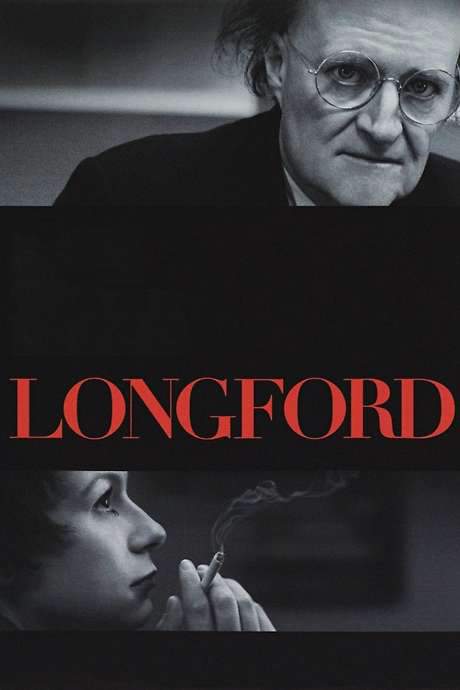
What Is Longford About?
The premise of Longford in 273 words, with nothing given away. The full story follows below.
In post‑war Britain, the corridors of power hum with a restless drive toward social change, and among its most recognizable voices is Lord Longford, a Labour peer whose reputation rests on a lifelong commitment to prison reform. The film opens against a backdrop of smoky parliamentary chambers and bustling public forums, where debates over punishment versus rehabilitation pulse through every conversation. Longford’s steadfast belief that even the most reviled individuals deserve a chance at redemption sets a reflective, almost reverent tone that steadies the audience amid the clamor of public opinion.
At the heart of the story lies Longford’s singular crusade to secure clemency for Hindley, a woman whose conviction has become a focal point for the nation’s moral anxieties. His quiet, principled advocacy unfolds in a world of relentless media scrutiny, fierce parliamentary debate, and personal attacks that test the limits of his faith and compassion. The narrative paints a picture of a man navigating the delicate balance between private conviction and public outrage, hinting at the profound emotional toll such a campaign exacts without revealing the outcomes of his efforts.
Supporting Longford is his steadfast partner, Lady Elizabeth Longford, whose presence offers both solace and a mirror to his relentless determination. Their relationship, set against the shifting cultural landscape of the 1960s through the 1980s, underscores the intimate cost of a public mission that refuses to bow to popular sentiment. The film’s tone remains contemplative and measured, inviting viewers to linger on the ethical questions it raises—about mercy, the capacity for change, and the price of standing against the tide—while never stepping beyond the fundamental premise of Longford’s audacious, compassionate campaign.
What Happens in Longford?
The complete story of Longford, from the first scene to the last, in 814 words (about 4 minutes). Spoilers throughout.
Spoilers ahead
In 1987, a radio discussion about the controversial book Saints becomes a test of faith, conviction, and the limits of reform for Lord Longford [Jim Broadbent]. The broadcast opens with a calm, introspective tone as the host invites listeners to share their views, but the mood shifts when a caller rails against Longford’s long-running campaign to secure parole for Hindley. Longford, steadfast in his belief in the possibility of redemption for every person, refuses to engage with Hindley on air, insisting that the focus of the program remains on the broader questions of punishment, rehabilitation, and the meaning of Saints rather than the specifics of Hindley’s case. The exchange exposes the widening divide between Longford’s public persona and the harsh, visceral responses of a society outraged by Hindley’s crimes and the very idea that she might ever be freed.
The film’s heart lies in a flashback to the late 1960s, set against the hush of the House of Lords, where Longford presides over a small reception for ex-convicts he has visited and mentored during their imprisonment. He is drawn into a letter from Hindley, one of Britain’s most infamous criminals, who has initiated contact from behind bars. Hindley requests books and, more provocatively, asks for a chance to meet Ian Brady [Andy Serkis], her former partner who stands accused of three murders. Longford is startled by the request and warns Hindley that any contact with Brady could jeopardize her chances of parole—a calculation that rests on whether she has truly reformed and whether she can resist Brady’s influence. Hindley, for her part, appears to understand the gravity of the decision while probing Longford’s willingness to see beyond the verdicts and public fury.
From that moment, Longford’s mission evolves into a public, drawn-out campaign that questions whether moral transformation is possible after such violence. He argues that rehabilitation is not only possible but a test of the justice system’s humanity, pointing to the trial judge’s speculation that Hindley’s release might someday be contemplated if she shows genuine change away from Brady’s coercive circle. The debate becomes a crucible for Longford’s faith and his relationship with Hindley, who, in his eyes, embodies the complex ambiguity of sin, guilt, and the potential for rehabilitation. The story traces how this conviction strains Longford’s friendships, tests his family’s patience, and attracts relentless media scrutiny that portrays him as either a foolish sentimentalist or a stubborn idealist.
Throughout the 1970s and into the 1980s, Longford’s steadfast stance continues to collide with public opinion, political caution, and the painful memories of victims’ families. His wife, Lady Elizabeth Longford [Lindsay Duncan], stands at his side, offering support while confronting the personal toll of a campaign that many believe is harmful or naïve. The film also depicts the broader social and political context of the era, including the taint of the press and the moral hazard of turning a paroled figure into a national spectacle. Yet Longford remains unyielding, arguing that confronting uncomfortable truths and choosing mercy over punishment can reflect the best aspects of a humane, Christian tradition.
As the years unfold, Hindley’s own disclosures complicate the narrative. In a later parole assessment, she reveals details of additional violence that had not previously come to light, casting new light on the possibility of her release while also confirming the gravity of her past actions. Her revelations lead to renewed police cooperation as investigators search for missing evidence and bodies, illustrating how the quest for truth can clash with emotional wounds and political agendas. Longford’s public defense of Hindley persists even as the case becomes more contentious, with critics labeling his stance as dangerous or misguided.
The film builds to a quiet, moving conclusion that juxtaposes belief with aging, memory with consequence. Longford, now an elderly figure, continues to visit Hindley in the grounds of her prison, his health fragile but his resolve intact. The audience learns that, in the late 1990s, Hindley’s health and the legal climate shift the odds against parole, even as Longford’s lifelong conviction remains unshaken. The final credits inform the viewer of the real-life outcomes: Longford dies in 2001, and Hindley follows in 2002, both having lived with the repercussions of a controversial, enduring campaign that challenged conventional notions of justice, mercy, and the possibility of true reform.
This portrayal rests on a careful balance of empathy and critique, inviting viewers to weigh the moral complexities behind a public crusade. It is a meditation on how faith, memory, and the slow tides of time can transform a single, polarizing issue into a lasting national conversation. The film is anchored by its central performances, particularly the portrayal of Longford’s unwavering faith and Hindley’s elusive, guarded humanity, as well as the historically resonant figures that populate the supporting world—figures who illuminate the era’s political theater and the personal costs of a campaign that refused to bow to public sentiment alone.
Longford Timeline: Every Key Event in Order
13 key events in the order they happen, from “Radio discussion about Saints book turns confrontational” to “Epilogue: outcomes disclosed”. 13 events name a place, across 12 locations.
- 1
Radio discussion about Saints book turns confrontational
The film opens in 1987 with Lord Longford invited to discuss his book Saints on a live radio show. Listeners call in and challenge his defense of Hindley, especially after she has confessed to two additional murders. Longford declines to discuss Hindley on air, politely steering the conversation away from the topic.
When:1987 Where:Radio studio
- 2
Hindley writes to Longford and requests a meeting with Brady
The story's main arc begins in the late 1960s at the House of Lords, where Longford receives a letter from Myra Hindley asking for books and for a meeting with Ian Brady. He warns Hindley that contact with Brady could hurt any parole chances. Hindley is surprised by the idea of parole and the potential for reform.
When:late 1960s Where:House of Lords
- 3
Longford begins a parole campaign
Motivated by his belief in universal redemption, Longford starts a personal campaign to win Hindley's parole. He reminds Hindley that the trial judge believed rehabilitation might be possible once away from Brady's influence. His stance meets heavy public, media, and political backlash.
When:late 1960s–1970s Where:Campaign activities / public sphere
- 4
Hindley's conversion and doubts about authenticity
As Hindley converts to Catholicism and appears to reform, Longford questions whether the change is genuine or a manipulation to secure parole. He debates the depth of her remorse while press scrutiny grows. This tension frames his ongoing faith-driven pursuit.
When:late 1960s–1970s Where:Prison / Hindley's surroundings
- 5
Brady warns Longford of Hindley
Ian Brady writes to Longford and demands a prison visit, claiming Hindley is manipulative and only seeks freedom. Brady's warning deepens Longford's internal conflict about Hindley and the real meaning of rehabilitation.
When:late 1960s–1970s Where:Brady's prison / correspondence
- 6
Public and familial backlash against Longford
Longford endures fierce criticism from tabloid media, politicians, and his own family for backing Hindley. He defends his core belief that people can be reformed, despite the reputational cost. His wife urges him to abandon the cause.
When:1970s–1980s Where:Media / family discussions
- 7
Brass Tacks debate on Hindley's parole
In 1977, Longford appears on the first Brass Tacks episode to debate Hindley's parole. Ann West and Patrick Kilbride publicly oppose release, threatening Hindley if she is freed. The program becomes a focal point for the moral and political conflict over parole.
When:1977 Where:Brass Tacks studio
- 8
Hindley reveals further murders; body located
By 1986 Hindley reveals to Longford that she and Brady were responsible for two more murders, shocking public opinion and complicating his campaign. She later helps police locate the body of one victim, underscoring how intimately involved she still is with the case.
When:1986 Where:Prison / investigation scene
- 9
Parole prospects and public hostility
As Hindley's parole case nears evaluation by the Parole Board, public hostility grows stronger. Longford maintains his position, arguing rehabilitation, while critics argue the victims' families' pain should bar parole.
When:1986–1987 Where:Parole Board (UK) / public sphere
- 10
Radio interview tests Longford's resolve
The late 1980s see Longford on a radio show again, facing callers who challenge his stance. He contends that his friendship with Hindley enriched his life and that he does not regret his support, despite the controversy.
When:late 1980s Where:Radio studio
Show the other 3 events of Longford Hide the last 3 events
- 11
Private doubts deepen after the Downey tape
Privately, Longford wrestles with doubts as he listens to an audio recording of Lesley Ann Downey's abuse. The haunting tape intensifies the moral weight of his involvement in Hindley's parole saga.
When:late 1980s Where:Private space
- 12
Final visits in the late 1990s
In the late 1990s, Longford, now frail and over ninety, visits Hindley on the prison grounds. Hindley, in her late 50s with deteriorating health, confronts the reality that parole may never come. Their relationship remains complex, defined by faith, guilt, and unresolved questions.
When:late 1990s Where:Prison grounds
- 13
Epilogue: outcomes disclosed
The film ends with on-screen messages noting Longford's death in August 2001 and Hindley's death in November 2002, indicating that Hindley never won parole. The narrative frames Longford's lifelong devotion and the lasting consequences of his campaign.
When:2001–2002 Where:Credits
Who Are the Main Characters in Longford?
7 characters, among them Lord Longford (Jim Broadbent), Myra Hindley (Samantha Morton) and Ian Brady (Andy Serkis): who each one is and the part they play in the story. Every profile links to the actor’s page.
-

Lord Longford (Jim Broadbent)
Played by Jim Broadbent
A devout, reform-minded peer who relentlessly campaigns for Hindley's parole, driven by a belief in redemption and the possibility of change. His faith-based conviction clashes with widespread public anger and political caution, testing his marriage and public image as the campaign becomes a national controversy. His persistence strains his relationships while he navigates the scrutiny of state, church and media.
- ⚖️ Justice
- 🧭 Moral Dilemma
- 🕊️ Redemption
-

Myra Hindley (Samantha Morton)
Played by Samantha Morton
A prisoner who seeks books and contact with Brady, appearing capable of manipulation while maintaining a restrained, enigmatic demeanor. The film questions whether she is truly reformed or merely acting to secure parole, highlighting the ambiguity of rehabilitation. Her interactions with Longford reveal a complex interplay between guilt, self-preservation, and faith.
- 🧭 Redemption
- ⚖️ Justice
- 💬 Manipulation
-

Ian Brady (Andy Serkis)
Played by Andy Serkis
The Moors murderer whose correspondence with Hindley and insistence on his own culpability frame the moral debate. He argues that Hindley remains dangerous, complicating Longford's belief in rehabilitation and exposing the coercive dynamics of criminal partnerships. His presence in the story underscores the persistence of danger and the limits of forgiveness.
- 🧠 Violence
- 💬 Manipulation
- ⚖️ Justice
-
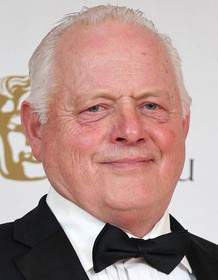
Harold Wilson (Robert Pugh)
Played by Robert Pugh
Prime Minister during the late 1960s who represents the political backdrop against which Longford's campaign unfolds. His era marks the evolving balance between social reform and public protection in Britain.
- 🏛️ Politics
- 🗣️ Policy
-

Lady Elizabeth Longford (Lindsay Duncan)
Played by Lindsay Duncan
Longford's wife, whose support wavers under media scrutiny and family concern. She embodies the personal cost of public conviction and the clash between private faith and public duty.
- 👫 Family
- 🧭 Moral Dilemma
- RW
Roy Whitelaw (Anton Rodgers)
Played by Anton Rodgers
Home Secretary during the campaign era, representing political resistance and the state’s caution in parole decisions. His responses mirror the tension between justice, public safety, and reform.
- 🏛️ Politics
- 🗣️ Debate
-

Talk Show Host (Lee Boardman)
Played by Lee Boardman
The radio host who hosts the 1987 call-in program, signaling the era’s media dynamism and how public voices shape policy and perception of the Hindley-Brady case. He guides the audience into a charged dialogue that tests Longford's resolve.
- 🎙️ Media
- 🗣️ Debate
Where and When Is Longford Set?
Longford is set in London, House of Lords, Holloway Prison and Downing Street (1960s–1990s). Here is why the time and place matter to the story.
When
1960s–1990s
Although the campaign begins in the late 1960s during Harold Wilson's era, the events unfold across the 1970s, 1980s and into the late 1990s. The Moors murders and Hindley's imprisonment frame the 1960s and beyond, with significant moments in the 1977 Brass Tacks debate, the 1986 parole process, and the late-1990s final visits.
Where
London, House of Lords, Holloway Prison, Downing Street
The narrative shifts across iconic British settings: the parliamentary corridors of the House of Lords in London, Downing Street where the Prime Minister's office features in policy debates, and the grim exterior of Holloway Prison where Hindley is held. The story also moves through television and radio studios as public debates unfold, reflecting a country captivated by the Hindley-Brady case. The film's London backdrop anchors Longford's campaign within the machinery of state and media.
- 🏛️ UK political setting
- ⛓️ Prison system
- 🎥 Media spotlight
What Are the Themes of Longford?
3 ideas the story keeps returning to, among them Justice vs Mercy, Moral Dilemma and Media & Public Opinion.
-
01
Justice vs Mercy
The film probes whether Hindley deserves parole or rehabilitation, testing the boundary between punishment and redemption. Longford's faith-based conviction clashes with widespread public anger and political caution. The tension questions if mercy can coexist with irreversible harm.
-
02
Moral Dilemma
Longford's belief in the possibility of reform challenges the perceived inevitability of guilt. The narrative pits duty to victims against the possibility of personal growth in a reformed prisoner. Media scrutiny further complicates private moral choices.
-
03
Media & Public Opinion
Tabloid sensationalism and public outcry shape the campaign and political response. The radio/TV discussions showcase how media framing can influence justice debates. The film lays bare how truth and sensationalism mingle in high-profile cases.
What Kind of Film Is Longford?
Dark in tone, with slow pacing and a moderate story, going by the plot summary.
- Tone
- Dark
- Pacing
- Slow
- Story
- Moderate
- Intensity
- High
- Ending
- Sad
A morally complex and somber drama that chronicles a man's unwavering, controversial faith in redemption against a backdrop of public fury and personal toll, unfolding with slow, heavy deliberation.
- somber
- contemplative
- moral struggle
- unflinching
- serious
- steadfast
- prison reform
- redemption debate
- public outrage
- political controversy
Content notes: child murder, violent crime, psychological manipulation.
Quiz
How well do you remember Longford? Test yourself on the story.
Where to Watch Longford
. US availability and prices from JustWatch.
Streaming availability in the US, powered by