
Lisístrata (2002): Cast, Box Office & Plot
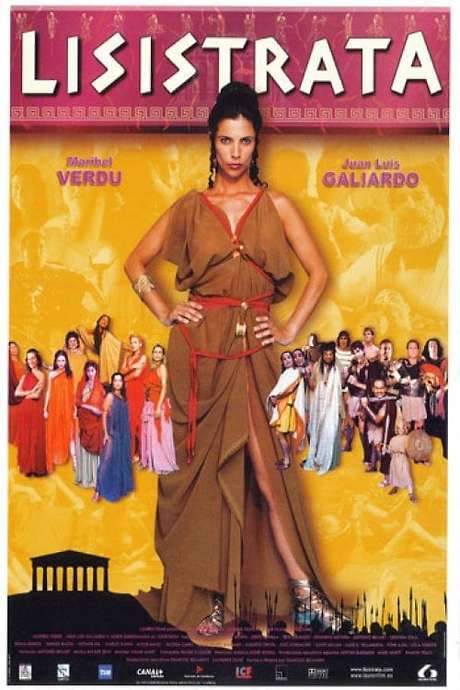
Lisístrata is a 2002 comedy directed by Francesc Bellmunt, starring Maribel Verdú as Lisístrata, Juan Luis Galiardo and Óscar Jaenada. It runs 1 hour 29 minutes and earned $581,667 worldwide.
- Released
- Runtime
- 1h 29m (89 min)
- Director
- Francesc Bellmunt
- Genre
- Comedy
- Original language
-
 Spanish
 - After the credits
- No No extra scene
What Is Lisístrata About?
The premise of Lisístrata without spoilers. The whole story is in the plot summary further down.
In 411 BC, the warring city‑states of Sparta and Athens are locked in an endless conflict. Lisistrata, a strikingly beautiful woman, devises a bold plan: she rallies the women of both sides to withhold sexual relations until the men negotiate peace. Her daring sex strike forces the warriors to confront the cost of war and seek an end to the fighting.
Lisístrata Cast & Characters
Maribel Verdú leads the cast as Lisístrata, with Juan Luis Galiardo as Hepatitos and Óscar Jaenada as Domestos. Directed by Francesc Bellmunt; 49 actors are credited in all.
- Director Francesc Bellmunt
-
 Maribel Verdú as Lisístrata
 - Juan Luis Galiardo as Hepatitos
-
 Óscar Jaenada as Domestos
 - Vicente Gil as Oficial Pilio
Also Starring in Lisístrata
· 45 more- Jesús Bonilla Cinesias
- Javier Gurruchaga Ajax
- José Corbacho Soldado Lico
- Santi Millán Soldado Zeto
- Aitor Mazo Gral. Termos
- Marina Gatell Clementina
- Eduardo Antuña Harpix
- Mercè Llorens Vesta
- Octavi Pujades Olimpos
- Pep Guinyol Clinex
- Lola Forner Empuria
- Elisenda Ribas Terrina
- Lluís Xavier Villanueva Camarero
- María Lanau Himena
- Constantino Romero Zeus (voice) (uncredit)
- Teté Delgado Mirrina (as Tete Delgado)
Show all 49 cast members Show fewer cast members
- Eli Iranzo Ifito
- Adriana Vega
- Juli Fàbregas Tellus
- Julio Tejela Padre Edipos
- Sergio Pazos Oficial Bitón
- David Gil Edipos
- Albert Trifol i Verdú Gral. Bonus
- Cristina García Nike
- Lluís Ferrer Fisgón
- Daniel Casadellà Tipex
- Toni Albà Mirón
- Cristina Solà Lampito
- Carles Flavià General Inkognitos
- Nadala Batiste Hiparquia
- Xavier Ruano Soldado Catapulta
- Glòria Cano Sabrina
- Antonio Belart Potax
- Anna Maria Barbany Papila
- Sonia Ferrer Cleonice
- Anna Bellmunt Calo
- Patxi Uribarren General Espartano
- Luna Roca Espartana 1
- Alicia Pérez Beltrán Espartana 2
- Lluís Batet General Akanto
- Valentí Juan Soldado Trompa
- Estéfano Espartano Herido
- Joan Oliva Anciano 2
- Paloma Arimón
- Susana Goulart
Lisístrata Plot Summary
What happens in Lisístrata from start to finish, spoilers included, with a timeline of 12 key events. The opening is below; the full summary is a 2-minute read.
Spoilers ahead
It is the year 411 BC, and the Peloponnesian War between Sparta, Athens, and their allies has dragged on for nearly two decades. In a bold bid to end the bloodshed, the women take a radical stand on the Acropolis, where the Athenian treasure is kept, led by Lisístrata, Maribel Verdú. They vow to withhold sex from their husbands until peace is reached, turning the war into a domestic crisis that affects every layer of Greek society.
Full summary
The whole story of Lisístrata, scene by scene
Lisístrata Box Office
Lisístrata grossed $581,667 worldwide.
Worldwide gross
$581.7K
- International
- $581.7K
Lisístrata Trailers & Videos
The trailer of Lisístrata.
How Well Do You Know Lisístrata?
10 questions about the story, each with a hint if you get stuck. Pick an answer to see whether you were right.
Question 1 of 10
- Question 1: not answered
- Question 2: not answered
- Question 3: not answered
- Question 4: not answered
- Question 5: not answered
- Question 6: not answered
- Question 7: not answered
- Question 8: not answered
- Question 9: not answered
- Question 10: not answered
Who leads the women's strike in the film?
Lisístrata Also Known As
2 alternative titles: “Lysistrata” and “吕西斯特拉忒”.
- Also known as
-
- Lysistrata
- 吕西斯特拉忒
Seen Lisístrata?
Lisístrata FAQ: Cast, Box Office & Runtime
Runtime, release date, director, cast, box office, post-credit scenes and language of Lisístrata, each answered in a sentence.
How long is Lisístrata?
Lisístrata runs 1 hour 29 minutes (89 minutes).
When was Lisístrata released?
Lisístrata was released on September 13, 2002.
Who directed Lisístrata?
Lisístrata was directed by Francesc Bellmunt.
More films by Francesc Bellmunt Who is in the cast of Lisístrata?
Lisístrata stars Maribel Verdú as Lisístrata, Juan Luis Galiardo as Hepatitos and Óscar Jaenada as Domestos, among 49 credited actors.
How much did Lisístrata make at the box office?
Lisístrata grossed $581,667 worldwide.
Does Lisístrata have a post-credit scene?
No. Lisístrata has no extra scene during or after the credits.
What language is Lisístrata in?
The original language of Lisístrata is Spanish.
Coming soon to your phone
The Plot Explained Movie Summary App
From blockbusters to hidden gems: plot summaries, endings explained and timelines on your phone. Save your favorites and never miss a twist again.
Be the first to know when it launches. Your email stays private, always. Learn more about the app
