
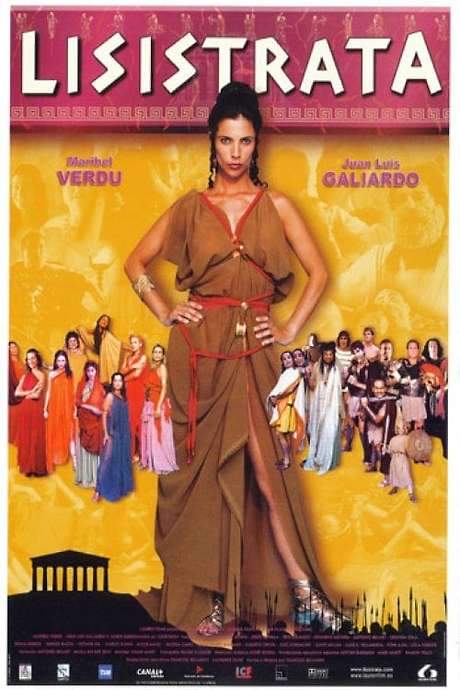
What Is Lisístrata About?
The premise of Lisístrata in 337 words, with nothing given away. The full story follows below.
In the year 411 BC, the Greek world is a tinderbox of rivalry, with the proud city‑states of Sparta and Athens locked in a seemingly endless Peloponnesian War. Ancient marble streets and bustling marketplaces pulse under a sky heavy with the sounds of marching troops and heated debates, while the grand Acropolis watches over a society teetering between heroic myth and the grim realities of protracted conflict. The film paints this volatile era with a vivid brush, blending authentic period details—such as a faithful replica of the Phidian Athena—to ground its story in a recognizable past, even as it leans into the chaotic energy of classical comedy.
At the heart of the upheaval stands Lisístrata, a strikingly beautiful and fiercely intelligent woman who refuses to accept the status quo. With a mixture of wit, charisma, and a daring sense of solidarity, she convinces women from both warring sides to withhold intimacy from their lovers until the men agree to negotiate peace. Her bold plan transforms the battlefield into a domestic echo chamber, where the personal becomes profoundly political, and the very notion of power is questioned through the simple, yet subversive, act of collective restraint.
The tone of the film is unapologetically bawdy and exuberantly satirical, channeling the spirit of Aristophanes with modern flair. Visual gags, slap‑stick moments, and heightened theatricality flare against the backdrop of ancient war, while an eclectic cast of characters adds layers of comic absurdity. Among them, the flamboyant and unconventional Hepatitos appears as a memorable figure, his eccentric presence promising to stir the already tumultuous mix of humor and rebellion without revealing the specifics of his involvement.
Together, these elements create a lively, mischievous atmosphere that invites viewers to laugh at the folly of endless warfare while subtly probing the deeper connections between intimacy, gender dynamics, and the pursuit of peace. The film balances farce with fleeting touches of historical texture, offering a playful yet thought‑provoking snapshot of a world where a single, collective decision can ripple through the halls of power.
What Happens in Lisístrata?
The complete story of Lisístrata, from the first scene to the last, in 453 words (about 2 minutes). Spoilers throughout. Names in the text link to 2 cast member pages.
Spoilers ahead
It is the year 411 BC, and the Peloponnesian War between Sparta, Athens, and their allies has dragged on for nearly two decades. In a bold bid to end the bloodshed, the women take a radical stand on the Acropolis, where the Athenian treasure is kept, led by Lisístrata, Maribel Verdú. They vow to withhold sex from their husbands until peace is reached, turning the war into a domestic crisis that affects every layer of Greek society.
As the strike unfolds, the military machine stalls in an unexpected way. The men begin to suffer from exaggerated erections, a visual and comic motif carried with stage-craft that mirrors Aristophanes’ tradition, and this unforeseen hindrance adds a surreal twist to the battlefield. The Spartans confront the same fate, creating a shared, ridiculous paradox that underscores how intimate stakes can influence grand strategy.
To navigate the crisis, the eccentric figure of Hepatitos, Juan Luis Galiardo, emerges as a comic savior. Posing as a medical doctor, Hepatitos convinces the generals to pursue a bold, unorthodox remedy: temporary, circumstantial homosexuality among soldiers as a means to relieve sexual pressure. The plan is met with initial resistance, but curiosity and relief quickly take hold, and the troops start to explore these new bonds.
What follows is a shift in the mood of the camp. Relationships among men begin to flourish, and some soldiers even form attachments to enemies rather than continuing the fight. This turn of events unsettles the women, who had hoped their strike would force a political settlement, yet it also sows the seeds for a broader rethinking of intimacy and loyalty. By the end, the strike dissolves and peace is established, though the story leaves a provocative note: in this world, homosexual and heterosexual connections are portrayed as more fluid and interchangeable than in traditional wartime codes.
Beyond the farce, the film is grounded by occasional moments of historical color. It includes a surprisingly accurate life-size replica of the Phidian statue of Pallas Athene in the Parthenon, a nod to the era’s artistry amid the sprawling melee of sexual and political reform. And there are echoes of myth—one scene where a warrior is spared from killing a radiant foe by beauty itself nods to the legend of Achilles and Troilus, blending legend with the film’s cheeky sensibility.
Overall, the movie sits at a curious intersection of bawdy comedy and historical satire. It delights in parody, thrives on outrageous visual gags, and uses its infectiously mischievous premise to question ideas about power, gender, and the nature of peace. Through its playful anachronisms and bold mischief, the film invites the audience to laugh at human folly while still considering how intimate choices can ripple through the political world.
Lisístrata Timeline: Every Key Event in Order
12 key events in the order they happen, from “Women seize the Acropolis and start the sex strike” to “Tonal blend: parody and historical flavor sustain the narrative”. 12 events name a place, across 10 locations.
- 1
Women seize the Acropolis and start the sex strike
In 411 BC, Lisístrata leads the women in occupying the Acropolis, withholding sex from their husbands, and guarding the Athenian treasure to force a peace. The drastic tactic transforms a political showdown into a domestic emergency that touches every level of society. The act marks the film’s premise: intimacy can influence grand strategy.
When:411 BC Where:Acropolis, Athens
- 2
War stalls as the sex strike bites
With the sex strike in effect, the military machine falters and battle plans stall. The sudden impotence on both sides becomes a running visual gag that echoes ancient comedic traditions, while also delaying decisive action. The stalemate links the fate of the realm to private desires.
When:411 BC Where:Athenian and Spartan camps
- 3
Hepatitos the doctor arrives and proposes a radical remedy
The eccentric Hepatitos appears as a comic medical savior and presents an unorthodox cure: temporary, circumstantial homosexuality among soldiers. He persuades the generals that loosening sexual norms can defuse tension and restore focus to negotiations. His plan triggers a shift in military discipline and social codes.
When:411 BC Where:Military camp
- 4
Initial resistance gives way to curiosity
The generals balk at first, fearing moral and political backlash, but curiosity and relief gradually win the day. Soldiers begin to experiment with new bonds under controlled conditions, introducing an unusual social experiment into the war effort. The idea challenges traditional norms and opens new possibilities for alliance.
When:411 BC Where:Camp, near Athens
- 5
Bonds form across enemies and allies
As the experiment continues, relationships among men deepen and some soldiers even form attachments to members of the opposing side. The line between friend and foe blurs, and the camp atmosphere shifts from martial tension to fragile camaraderie. These intimate ties start to reshape loyalties and plans for the battlefield.
When:411 BC Where:Military camp (frontline)
- 6
Women fear the political consequences
The women who sparked the strike grow anxious as intimate bonds weaken the clarity of political demands. They worry that personal pleasures may derail the hoped-for settlement and plunge the city into more ambiguity. The domestic crisis now echoes across the strategic landscape.
When:411 BC Where:Acropolis, Athens
- 7
The Parthenon keeps watch: Phidian Athena replica
A life-size replica of the Phidian statue of Pallas Athene in the Parthenon appears as a striking visual cue, grounding the film in its era’s artistry. The statue’s presence frames both mythic memory and artistic ambition amid farce and reform. It serves as a quiet anchor to Greek identity within the chaos.
When:411 BC Where:Parthenon, Athens
- 8
Mythic moment: beauty refrains a warrior
In a scene echoing Achilles and Troilus, a radiant beauty halts a warrior from killing, blending legend with the film’s cheeky, satirical tone. The moment shows how aesthetics can override violence and honor in the heat of conflict. It underlines the film’s playful reweaving of myth into political farce.
When:411 BC Where:Battlefield
- 9
The mood shifts again as intimacy reshapes strategy
The evolving bonds provoke uneasy debates about loyalty, with some soldiers choosing affection over continued fighting. The war’s logic becomes unstable as personal ties threaten to derail military plans. This turn complicates any straightforward path to peace.
When:411 BC Where:Military camp
- 10
The strike dissolves and peace is declared
After a period of negotiation and shifting loyalties, the sex strike dissolves and a peace is reached, ending the immediate conflict. The women’s intervention has achieved its goal in policy terms, but the human costs and ambiguities linger. The ending suggests that true harmony may depend on more than political victories.
When:End of crisis, 411 BC Where:Athens / Acropolis negotiations
- 11
Final reflections on desire and power
In its closing moments, the story reflects on how intimate choices ripple through power structures and govern the terms of peace. The boundary between heterosexual and homosexual bonds is presented as porous, inviting spectators to question rigid codes. The satire leaves a provocative, thought-provoking note about human folly and political reform.
When:411 BC Where:Athens
- 12
Tonal blend: parody and historical flavor sustain the narrative
Throughout the film, parody and stagecraft carry the narrative, blending bawdy humor with historical satire. Visual gags and anachronisms keep the mood buoyant even as the story questions gender, authority, and peace. This tonal balance defines the movie’s unique take on ancient warfare.
When:411 BC Where:Various locations in Greece
Who Are the Main Characters in Lisístrata?
3 characters, among them Lisístrata (Maribel Verdú), Hepatitos (Juan Luis Galiardo) and Zeus (voice): who each one is and the part they play in the story. Every profile links to the actor’s page.
-

Lisístrata (Maribel Verdú)
Played by Maribel Verdú
Leader of the women’s sex strike on the Acropolis who uses strategic thinking to push for peace. Her resolve and ability to mobilize others reveal a nuanced take on female power in a male-dominated world. She drives the film’s satirical examination of how social action can steer political outcomes.
- 🎯 Strategist
- ♀️ Female Empowerment
- ⚖️ Political Catalyst
- H(
Hepatitos (Juan Luis Galiardo)
Played by Juan Luis Galiardo
A comic figure posing as a medical doctor who proposes an unorthodox remedy to relieve sexual pressure: temporary, circumstantial homosexuality among soldiers. He guides the generals through this controversial plan, altering the camp’s mood and challenging rigid codes of honor.
- 🎭 Comedy
- 🧭 Strategic Deception
- ⚕️ Medicine
- Z(
Zeus (voice)
Played by Constantino Romero
The mythic deity provides a divine, tongue-in-cheek commentary on the war’s events, underscoring the film’s blend of legend and political satire. His presence punctuates the absurdity of human conflict as the characters maneuver for peace.
- 🎭 Mythic Presence
- 🗣️ Divine Commentary
Where and When Is Lisístrata Set?
Lisístrata is set in Acropolis and Athens (411 BC). Here is why the time and place matter to the story.
When
411 BC
Set during the late stages of the Peloponnesian War, the narrative situates itself in a protracted struggle between Athens and Sparta and their alliances. Society is shaped by rigid gender roles and military duty, which the women challenge through a provocative sex strike. The period is marked by political maneuvering and military campaigns that influence daily life.
Where
Acropolis, Athens
The story unfolds on the Acropolis in Athens, the political and ceremonial heart of ancient Greece. This setting anchors the plot in a city-state world where public life and private desire collide. The surrounding Greek milieu and wartime backdrop frame the satirical revolt.
- 🏛️ Acropolis
- 🗺️ Ancient Greece
What Are the Themes of Lisístrata?
4 ideas the story keeps returning to, among them Gender & Power, Love & Loyalty and Myth & History.
-
01
Gender & Power
The film explores how gender dynamics intersect with political authority. Lisístrata mobilizes women to press for peace by withholding sex, turning private acts into a public lever. The farce exposes the fragility of masculine codes of power and invites reflection on alternative, nonviolent paths to diplomacy.
-
02
Love & Loyalty
Sexual relationships become political instruments and social experiments during wartime. Soldiers form bonds that blur lines between enemies and allies, challenging loyalties and strategies. The comedy treats love and intimacy as flexible tools that can influence politics and alliance.
-
03
Myth & History
Myth and history braid together in a satirical manner. The film includes a life-size replica of the Phidian statue of Pallas Athene and echoes of Achilles and Troilus, using myth to critique warfare and power. Divine commentary punctuates the farce, highlighting the gulf between legend and political reality.
-
04
Peace & Diplomacy
The sex strike leads toward peace, suggesting that social experiments can influence diplomacy. The ending implies that intimate choices might ripple through political agreements, offering a provocative take on unconventional routes to peace.
What Kind of Film Is Lisístrata?
Whimsical in tone, with steady pacing and a straightforward story, going by the plot summary.
- Tone
- Whimsical
- Pacing
- Steady
- Story
- Straightforward
- Intensity
- Medium
- Ending
- Happy
A bawdy and mischievous farce that uses outrageous sexual humor and a playful historical setting to explore themes of gender, power, and the absurdity of war with a consistently lighthearted and provocative energy.
- comic
- mischievous
- bawdy
- satirical
- playful
- surreal
- political satire
- gender roles
- anti-war
- sexual politics
Quiz
How well do you remember Lisístrata? Test yourself on the story.
Where to Watch Lisístrata
. US availability and prices from JustWatch.
Streaming availability in the US, powered by 
