Kazablan 1973

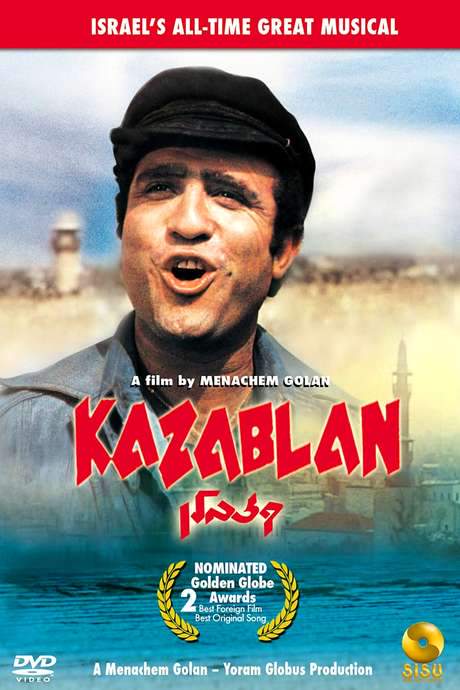
Kazablan, an army veteran turned gang leader in Jaffa, hides his resentment with bravado. He falls for Rachel, a woman living with her father and stepmother, sparking scandal and Yanush's wrath, an Ashkenazi shoe‑store owner. As community fights a city plan to raze their homes, raised funds are stolen, Kazablan is jailed and must clear his name.


Does Kazablan have end credit scenes?
No!
Kazablan does not have end credit scenes. You can leave when the credits roll.
Meet the Full Cast and Actors of Kazablan
Explore the complete cast of Kazablan, including both lead and supporting actors. Learn who plays each character, discover their past roles and achievements, and find out what makes this ensemble cast stand out in the world of film and television.

External Links and Streaming Options
Discover where to watch Kazablan online, including streaming platforms, rental options, and official sources. Compare reviews, ratings, and in-depth movie information across sites like IMDb, TMDb, Wikipedia or Letterboxd.




Take the Ultimate Kazablan Movie Quiz
Challenge your knowledge of Kazablan with this fun and interactive movie quiz. Test yourself on key plot points, iconic characters, hidden details, and memorable moments to see how well you really know the film.
Kazablan (1973) Quiz: Test your knowledge of the 1973 Israeli film Kazablan, its characters, plot points, and cultural references.
Who is the youth leader known as Kazablan in the film?
Full Plot Summary and Ending Explained for Kazablan
Read the complete plot summary of Kazablan, including all major events, twists, and the full ending explained in detail. Explore key characters, themes, hidden meanings, and everything you need to understand the story from beginning to end.
In a dilapidated housing complex in Jaffa, a tapestry of newcomers and old-timers from Europe and the Middle East weaves together daily life, where quiet routines are often interrupted by the loud energy of youth and pride. At the heart of the story is the elderly fisherman Moshiko Bebeuf, Moshiko, whose steady presence anchors the neighborhood as all the strands of the community begin to pull in different directions. Dominating the street’s mood is Yosef Siman-Tov, known to everyone as Kazablan. A child refugee from Morocco, he has built a rough, tight-knit crew—the Jama’a—whose midnight strolls and early morning noises rattle the nerves of residents and set the clock for a clash of cultures, honor, and survival.
From the start, the tension centers on Mr. Feldman, a Polish immigrant who sits at the crossroads of power in the complex. His daughter Rachel, a beacon of youth and grace, becomes the target of Kazablan’s insistence that she greet him with a morning blessing, a ritual that sparks inevitable friction with her father and stirs lingering questions about belonging, pride, and the meaning of respect. The moment is underscored by the stirring, familiar chorus of Kol HaKavod, a sound that marks both triumph and intimidation as the neighborhood negotiates who gets to define honor.
As the city council declares plans to demolish the aging immigrant housing, the residents refuse to yield. They convene to raise funds to reinforce and renovate their homes, a collective act that becomes a mini-revolution of communal agency; the air hums with a hopeful, defiant tune in Democracy. Kazablan’s gang, sensing the shifting balance of power, warns Mr. Feldman to mind where the money goes, hinting at the fragility of trust in a neighborhood on the edge of change.
One evening, Rachel encounters Janus, a local cobbler who loves her though the age gap between them is stark. Janus’s advances are rebuffed, but the moment ignites trouble when Kazablan intervenes to protect Rachel, forcing Janus to retreat and sending the Jama’a into a chorus that betrays their presence with the song Ma Kara. The incident leaves Kazablan battered, a wound that will echo through the next days and shape the town’s judgments. He seeks solace at Madame Rosa’s nightclub, where the community breathes life into the night with the song Jaffa, a reminder of the ties that bind and the forces that pull apart.
Mr. Feldman’s perception of Kazablan begins to shift after the Saturday lunch at his home. The tension eases as Rachel and her stepmother persuade the elder Feldman to join the meal, where Kazablan’s genuine humanity emerges—his war hero backstory, and the medal he earned saving a wounded commander on the battlefield, headlining a quiet truth that challenges the older man’s preconceptions. The shared meal becomes a turning point, and the two families glimpse a possibility of reconciliation. The day continues with a road trip to Jerusalem, a symbolic journey that tests loyalties: when Janus reappears to offer a different path for Rachel, Feldman refuses, and the pair return with the sense that the neighborhood’s future is still up for grabs. In the aftermath, Janus steals a money box that had been central to the residents’ fundraising, tipping the balance toward suspicion and fear.
Back in Jaffa, Kazablan finds himself in custody as the investigation unfolds. The police bring in an old comrade from the army, Josh, the very officer he saved on the battlefield, turning the investigative moment into a clash between past loyalties and present prejudices. The Jama’a respond by redoubling their efforts to renovate the neighborhood, bringing in engineers and workers, and challenging the demolition orders with practical proof of structural stability. The community’s renewed spirit—their hands-on work, their resolve—begins to shed light on the true thief as the investigation lurches forward.
Even as Kazablan denies the theft and his fingerprints surface on the hidden box, the truth remains tangled until a confrontation with Janus reveals the deceit. In a tense confrontation at Janus’s shop, Kazablan confronts the man and, with a final act of force, retrieves the stolen money, exposing Janus’s guilt before the neighborhood. The arrest of Janus, confirmed by the arriving officers, restores a fragile balance and leads to a crucial realization: the people were quick to judge and slow to see the value that Kazablan had brought to their community.
The denouement brings the community full circle. Josh’s invitation to Kazablan becomes a symbol of earned trust rather than mere compliance, and the Jama’a’s renovation of the neighborhood stands as a testament to collective resilience. The film closes with a circumcision ceremony for a baby in the neighborhood, a poignant ritual naming the child after Kazablan and honoring him as the godfather and hero of Jaffa—a living emblem of what it means to belong, to fight for one’s place, and to be welcomed home. The final hymns echo the triumph of community over prejudice, and the screen lingers on the idea that honor, once rightly understood, can lift up an entire neighborhood.

Coming soon on iOS and Android
The Plot Explained Mobile App
From blockbusters to hidden gems — dive into movie stories anytime, anywhere. Save your favorites, discover plots faster, and never miss a twist again.
Sign up to be the first to know when we launch. Your email stays private — always.
Explore the mobile appDiscover Film Music Concerts Near You – Live Orchestras Performing Iconic Movie Soundtracks
Immerse yourself in the magic of cinema with live orchestral performances of your favorite film scores. From sweeping Hollywood blockbusters and animated classics to epic fantasy soundtracks, our curated listings connect you to upcoming film music events worldwide.
Explore concert film screenings paired with full orchestra concerts, read detailed event information, and secure your tickets for unforgettable evenings celebrating legendary composers like John Williams, Hans Zimmer, and more.


Kazablan Themes and Keywords
Discover the central themes, ideas, and keywords that define the movie’s story, tone, and message. Analyze the film’s deeper meanings, genre influences, and recurring concepts.
Kazablan Other Names and Titles
Explore the various alternative titles, translations, and other names used for Kazablan across different regions and languages. Understand how the film is marketed and recognized worldwide.
Similar Movies To Kazablan You Should Know About
Browse a curated list of movies similar in genre, tone, characters, or story structure. Discover new titles like the one you're watching, perfect for fans of related plots, vibes, or cinematic styles.












Quick Links: Summary, Cast, Ratings, More

What's After the Movie?
Not sure whether to stay after the credits? Find out!
Check out our other apps:

SAT Sphere
Build confidence for the Digital SAT.

Mori Atlas
Discover wild places worth protecting.

Luntero
Search smarter for a home in Amsterdam.

Plot Explained
Unravel movie endings and hidden clues.

Pokechamp
Dive into Pokémon data and battle logic.

Driving Theory
Get ready for your European theory test.

Movie Dust
Plan your next cinema trip with ease.

Musemap
Find art and culture as you travel.

Selkobase
Compare credentials before committing.

Local Manual
Turn an unfamiliar country into practical next steps.

Lernavi
Compare school systems before your next move.

GymRoam
Find a workout stop wherever your plans take you.
Explore Our Movie Platform
New Movie Releases (2026)
Famous Movie Actors
Top Film Production Studios
Movie Plot Summaries & Endings
Major Movie Awards & Winners
Best Concert Films & Music Documentaries
Movie Collections and Curated Lists
© 2026 What's After the Movie. All rights reserved.
Privacy Policy