
Jigarthanda 2014

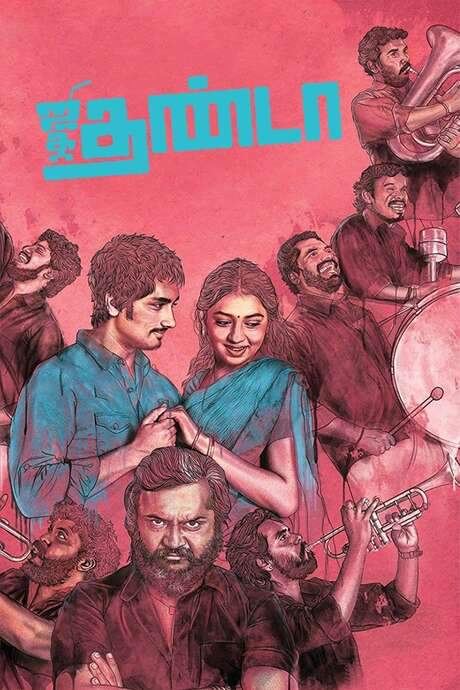
A young filmmaker seeks to document the life of a notorious gangster, hoping to create a film about the world of organized crime. His covert research efforts are jeopardized when he's discovered snooping, leading to unexpected complications and a dangerous encounter with the very subject he's studying. The story blends elements of crime and music, exploring themes of ambition and the blurred lines between reality and filmmaking.


Does Jigarthanda have end credit scenes?
No!
Jigarthanda does not have end credit scenes. You can leave when the credits roll.
Meet the Full Cast and Actors of Jigarthanda
Explore the complete cast of Jigarthanda, including both lead and supporting actors. Learn who plays each character, discover their past roles and achievements, and find out what makes this ensemble cast stand out in the world of film and television.

Ramachandran Durairaj
Rasu
Soundara Raja
Ponram
Bagavathi Perumal
Magesh
Vijay Sethupathi
Himself
Gajaraj
Santhanam
Siddharth
Karthik

Nassar
Mukil
Delhi Ganesh
Subramani
Ambika
Saraswathi
Bala Singh
Shanmugam
Thennavan
Sekar
Aadukalam Naren
Sundar
Aadukalam Murugadoss
Self
Munnar Ramesh
Sellur Murugan
Guru Somasundaram
Muthu
Vinodhini Vaidyanathan
Ganga
Bobby Simha
"Assault" Sethu
Lakshmi Menon
Kayal
Karunakaran
Oorni
Nalan Kumarasamy
Short Film Director 1
Rajkumar
Prasath
Bava Lakshmanan
Secretary
Leo Sivadass
Henchman
Ajay Rathnam
SI Raman
Anthony Daasan
Vettu Kumar
Kaalaiyan
Senthil
Sangili Murugan
'Petti Kadai' Pazhani
Senthil Kumaran
Sounder
Vijay Muthu
Kasi
Bombay Gnanam
Karthik's Grandmother
Baba Baskar
Dance Master
Billa Jagan
Stunt Master
Tiger Thangadurai
Show Director
Abhishek Raaja
Madurai Reporter
Karthikeyan
Short Film Director 2
Sathya Prema
Short Film Director 3
External Links and Streaming Options
Discover where to watch Jigarthanda online, including streaming platforms, rental options, and official sources. Compare reviews, ratings, and in-depth movie information across sites like IMDb, TMDb, Wikipedia or Rotten Tomatoes.







Take the Ultimate Jigarthanda Movie Quiz
Challenge your knowledge of Jigarthanda with this fun and interactive movie quiz. Test yourself on key plot points, iconic characters, hidden details, and memorable moments to see how well you really know the film.
Jigarthanda Quiz: Test your knowledge of the 2014 Tamil film Jigarthanda with these 10 mixed‑difficulty questions.
Who is the short‑film director who participates in the talent show?
Full Plot Summary and Ending Explained for Jigarthanda
Read the complete plot summary of Jigarthanda, including all major events, twists, and the full ending explained in detail. Explore key characters, themes, hidden meanings, and everything you need to understand the story from beginning to end.
Short film director Karthik Subramani enters a televised talent show hoping to launch his first feature. He makes it to the semifinals, where a stern, highbrow director and a profit-minded producer, Sundar, judge his pitch. Although Karthik doesn’t win, Sundar sees potential and offers to back a project with him at the helm, laying the groundwork for a collision between artistic ambitions and commercial expectations.
The next day, Sundar does not warm to Karthik’s ideas for a traditional film and instead pitches a gangster story. That spark pushes Karthik to pivot and to document the life of Sethu — the Madurai-based gangster whose notoriety begins to fascinate him as a cinematic subject. This decision marks the turning point of the movie, as the line between reporter and prisoner, between observer and participant, starts to blur in Karthik’s mind.
With Madurai as his backdrop, Karthik travels south and enlists the help of a college friend, but his real strategic move is to win the trust of Kayalvizhi, a woman whose mother cooks for [Sethu]. The dramatic tension thickens as Kayalvizhi unwittingly becomes a catalyst for Karthik’s deeper involvement in the gangster’s world. The risk escalates when Sethu’s right-hand man, [Rasu], notices the growing proximity and assigns Sounder to keep an eye on them. The web of surveillance tightens around Karthik, Kayalvizhi, and their fragile alliance.
To gather usable material, Karthik engineers a plan that involves a wireless microphone hidden in a music player, then lends the device to Sounder. That move backfires when Sounder is exposed as a mole for an opposing gang and is killed. Sethu discovers the hidden microphone and tracks down Karthik and Oorani, forcing a dangerous confrontation that tests everyone’s nerve. Despite the danger, Sethu is unexpectedly drawn to the idea of being the center of a film, and he invites Karthik and Oorani deeper into his gang so they can capture authentic moments of his life on camera.
As the line between documentary and fiction dissolves, Karthik’s camera begins to document every criminal detail, every boast, and every negotiated risk. Yet when Karthik plans to leave Madurai to finalize the screenplay, Kayal reveals she was used as a pawn to uncover Sethu’s operations. At a send-off party, Kayal’s words land with a hard truth: perhaps Sethu himself should play the lead in the film. The gangster agrees, and the project pivots toward having Sethu star in his own story under Karthik’s direction.
Despair and fear push Karthik toward flight, but he is soon captured by Sethu’s gang. They kidnap Sundar as well and force both men to finish production. The film’s production turns chaotic, and Karthik even brings in acting coach Muthu to shape the performances, though the experimental approach keeps failing to yield the right on-screen presence.
After the wrap, the film is readied for release with a grand show and much fanfare. Yet when the first screening begins, Sethu is stunned by what he sees. Karthik has covertly transformed the material into a comedy, with the initial “A” in the title standing for Azhuguni — Crybaby — turning the feared gangster into a figure who makes audiences laugh. The result is startling: rather than inspiring fear, the film earns the gangster a strange, enduring respect through comedy. The crowd roars, but the impact also reveals a deeper truth: true admiration can grow from even the most unlikely places, including the moment a mother, who had not spoken to her son in years, finally speaks to him again.
The two men cross paths again after the premiere, when Karthik is on his way to deliver the raw recordings to the police. Sethu, having tasted a new kind of influence and audience affection, forgives Karthik and agrees to leave the past behind, seeking a new life away from the old crimes. What follows is a quiet time-jump: years later, Karthik has matured into a seasoned director who sometimes uses Sethu’s gang to tease Vijay Sethupathi for acting in his films, while Kayal — now his wife — remains a devoted admirer of the gangster-turned-artist.
Meanwhile, Sethu becomes a full-time actor in his own right, having married Ganga Vinodhini Vaidyanathan and cherishing the daughter they share. The arc closes with an uneasy, hopeful balance: art has captured a life of crime, but life continues to evolve, with both men finding new paths that reflect the film’s ultimate mood — transformation through storytelling and the uneasy, enduring appeal of a man who can make people laugh even when his past was built on fear. For those who watch closely, the lines between documentary, fiction, and redemption blur, leaving a resonant impression about the power of cinema to reshape reputations and futures alike.

Discover Film Music Concerts Near You – Live Orchestras Performing Iconic Movie Soundtracks
Immerse yourself in the magic of cinema with live orchestral performances of your favorite film scores. From sweeping Hollywood blockbusters and animated classics to epic fantasy soundtracks, our curated listings connect you to upcoming film music events worldwide.
Explore concert film screenings paired with full orchestra concerts, read detailed event information, and secure your tickets for unforgettable evenings celebrating legendary composers like John Williams, Hans Zimmer, and more.


Jigarthanda Other Names and Titles
Explore the various alternative titles, translations, and other names used for Jigarthanda across different regions and languages. Understand how the film is marketed and recognized worldwide.
Quick Links: Summary, Cast, Ratings, More

What's After the Movie?
Not sure whether to stay after the credits? Find out!




Explore Our Movie Platform
New Movie Releases (2025)
Famous Movie Actors
Top Film Production Studios
Movie Plot Summaries & Endings
Major Movie Awards & Winners
Best Concert Films & Music Documentaries
Movie Collections and Curated Lists
© 2025 What's After the Movie. All rights reserved.