Indochine 1992


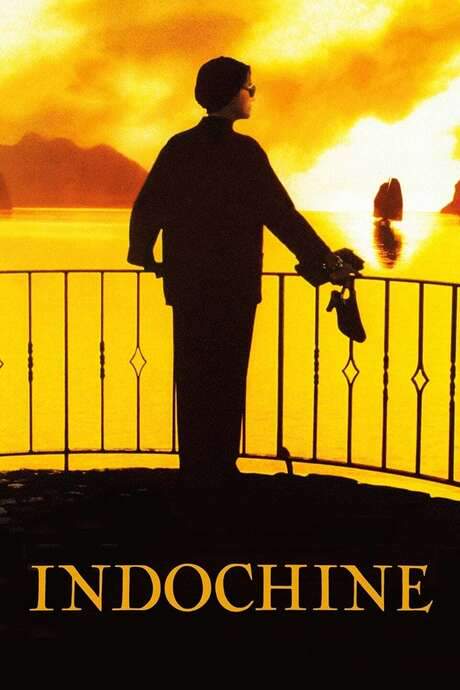
Set in colonial French Indochina from the 1930s through the 1950s, the film follows French plantation owner Éliane Devries and her adopted Vietnamese daughter Camille as their lives become entangled with the growing Vietnamese nationalist movement, highlighting personal and political upheaval during the era.


Does Indochine have end credit scenes?
No!
Indochine does not have end credit scenes. You can leave when the credits roll.
Where to Watch Indochine
See current US streaming, rental, and purchase options for Indochine (1992) via JustWatch.







Meet the Full Cast and Actors of Indochine
Explore the complete cast of Indochine, including both lead and supporting actors. Learn who plays each character, discover their past roles and achievements, and find out what makes this ensemble cast stand out in the world of film and television.

Catherine Deneuve
Eliane Devries

Thibault de Montalembert
Charles-Henri

Vincent Perez
Jean-Baptiste Le Guen

Andrzej Seweryn
Hebrard

Eric Nguyen
Tanh
Linh Dan Pham
Camille
Dominique Blanc
Yvette
Chu Hung
Mari de Sao
Carlo Brandt
Castellani
Jean Yanne
Guy Asselin
Alain Fromager
Dominique
Hubert Saint-Macary
Raymond
Mai Chau
Shen
Michel Voïta
Edmont de Beaufort
Gérard Lartigau
L'Admiral
Henri Marteau
Emile Devries
Thinh Trinh
Minh
Jean-Baptiste Huynh
Etienne (Adult)
Thi Hoe Tranh Huu Trieu
Mme. Minh Tam
External Links and Streaming Options
Discover where to watch Indochine online, including streaming platforms, rental options, and official sources. Compare reviews, ratings, and in-depth movie information across sites like IMDb, TMDb, Wikipedia or Rotten Tomatoes.







Take the Ultimate Indochine Movie Quiz
Challenge your knowledge of Indochine with this fun and interactive movie quiz. Test yourself on key plot points, iconic characters, hidden details, and memorable moments to see how well you really know the film.
Indochine Quiz: Test your knowledge of the 1992 film Indochine with these ten questions ranging from easy to difficult.
Who is the French woman who runs a rubber plantation in Indochina?
Full Plot Summary and Ending Explained for Indochine
Read the complete plot summary of Indochine, including all major events, twists, and the full ending explained in detail. Explore key characters, themes, hidden meanings, and everything you need to understand the story from beginning to end.
Éliane Devries is a woman born to French parents in colonial Indochina who quietly governs her and her widowed father’s rubber plantation, relying on a workforce of indentured laborers. As the adoptive mother of Camille, a teenager whose birth parents were close friends of Éliane and members of the Nguyễn dynasty, she holds a careful, sometimes protective, influence over the family’s tangled loyalties. The plantation and its people form the backdrop to a world where power, affection, and duty clash beneath the tropical sun.
Jean-Baptiste Le Guen, a young French Navy lieutenant, appears at an auction where he and Éliane compete over the same painting. Their rivalry quickly deepens into a charged affair as their paths cross again days later when he shows up at her plantation, chasing a boy he suspects of opium smuggling after torching a sampan. The two embark on a forbidden relationship that unsettles the delicate balance Éliane maintains between her social status, her status as Camille’s guardian, and the political tensions rippling through Indochina.
The affair strains Éliane’s grip on power and reputation, while Camille, radiant and impressionable, meets Jean-Baptiste again when he rescues her from a prisoner escape attempt. Camille falls for him, and the revelation forces Éliane to use her influence to have him transferred north to Haiphong. A public humiliation follows at a Christmas party when Jean-Baptiste confronts Éliane, and the moment ends with a slap that earns him a punishment—deployment to the remote Dragon Islet (Hòn Rồng), a harsh outpost in northern Indochina.
Camille accepts an engagement to Thanh, a Vietnamese student with pro-Communist leanings who was expelled from France for his political stance surrounding the 1930 Yên Bái mutiny. Thanh’s convictions place Camille in danger, and he helps her seek Jean-Baptiste high up in the north. This perilous search leads Camille to Dragon Islet, where she and other laborers are held until a confrontation with French officers erupts into violence. Jean-Baptiste, defying orders to protect Camille, helps her escape as gunfire erupts.
Their escape takes them to the Gulf of Tonkin, where they endure days adrift before landing among a Communist theater troupe that offers them sanctuary in a secluded valley. Months pass, and Camille discovers she is pregnant with Jean-Baptiste’s child. The lovers must keep moving to stay safe, and Thanh arranges for the troupe to smuggle them into China, fleeing the oppressive shadows of their past.
The couple’s story enters the realm of legend as tuồng performances—a Vietnamese theatre tradition—preserved by actors who tell their tale on stage. Near the Chinese border, Jean-Baptiste baptizes their newborn son, Étienne, in a river as Camille rests. Yet safety remains elusive: French soldiers ambush them, Camille evades capture, and Jean-Baptiste is arrested and confined to a Saigon jail while Étienne is handed to Éliane.
A fragile, 24-hour visitation window is arranged so that Jean-Baptiste can see Étienne before being sent to Brest for a potential court-martial. He spends the night with Éliane and the child at her Saigon residence, a moment that cements the impossibility of their reunion in any straightforward way. The morning after, Jean-Baptiste is found dead—gun in hand, a bullet to his temple, and Étienne unharmed—an apparent suicide that frustrates the suspicions of both families and authorities. Camille, meanwhile, is captured and sent to Poulo-Condor, a high-security prison where visitors are forbidden. After five years, the political landscape shifts again as the Popular Front rises to power, leading to her release.
Éliane and Camille’s fates diverge and then converge once more: Camille chooses to remain with the Vietnamese Communist cause, leaving her mother behind to fight for a free Vietnam with the aid of the very movement that once endangered them. Éliane, with Étienne in tow, sells her plantation and departs Indochina, carrying the weight of a mother’s decisions across continents. By 1954, a grown Étienne accompanies Éliane to Switzerland, where Camille serves as a Vietnamese Communist Party delegate at the Geneva Conference. In a tense, crowded lobby of the negotiators’ hotel, he searches for his mother’s elusive friend and discovers a new generation bound by history and the complexities of love, duty, and exile. In the wake of those negotiations, French Indochina’s grip loosens, and Vietnam is partitioned into North and South, marking a new chapter in the region’s long struggle for autonomy.
The story is a sweeping meditation on love and loyalty across decades of upheaval, where the personal costs of political conflict ripple through families and communities alike. It is told with a measured, restrained voice, inviting reflection on how choices—stoked by desire, ambition, and ideology—shape destinies far beyond the hearts that beat within them.

Coming soon on iOS and Android
The Plot Explained Mobile App
From blockbusters to hidden gems — dive into movie stories anytime, anywhere. Save your favorites, discover plots faster, and never miss a twist again.
Sign up to be the first to know when we launch. Your email stays private — always.
Explore the mobile appDiscover Film Music Concerts Near You – Live Orchestras Performing Iconic Movie Soundtracks
Immerse yourself in the magic of cinema with live orchestral performances of your favorite film scores. From sweeping Hollywood blockbusters and animated classics to epic fantasy soundtracks, our curated listings connect you to upcoming film music events worldwide.
Explore concert film screenings paired with full orchestra concerts, read detailed event information, and secure your tickets for unforgettable evenings celebrating legendary composers like John Williams, Hans Zimmer, and more.


Cars Featured in Indochine
Explore all cars featured in Indochine, including their makes, models, scenes they appear in, and their significance to the plot. A must-read for car enthusiasts and movie buffs alike.
Indochine Themes and Keywords
Discover the central themes, ideas, and keywords that define the movie’s story, tone, and message. Analyze the film’s deeper meanings, genre influences, and recurring concepts.
Indochine Other Names and Titles
Explore the various alternative titles, translations, and other names used for Indochine across different regions and languages. Understand how the film is marketed and recognized worldwide.
Similar Movies To Indochine You Should Know About
Browse a curated list of movies similar in genre, tone, characters, or story structure. Discover new titles like the one you're watching, perfect for fans of related plots, vibes, or cinematic styles.







Quick Links: Summary, Cast, Ratings, More

What's After the Movie?
Not sure whether to stay after the credits? Find out!
Check out our other apps:

SAT Sphere
Build confidence for the Digital SAT.

Mori Atlas
Discover wild places worth protecting.

Luntero
Search smarter for a home in Amsterdam.

Plot Explained
Unravel movie endings and hidden clues.

Pokechamp
Dive into Pokémon data and battle logic.

Driving Theory
Get ready for your European theory test.

Movie Dust
Plan your next cinema trip with ease.

Musemap
Find art and culture as you travel.

Selkobase
Compare credentials before committing.

Local Manual
Turn an unfamiliar country into practical next steps.

Lernavi
Compare school systems before your next move.

GymRoam
Find a workout stop wherever your plans take you.
Explore Our Movie Platform
New Movie Releases (2026)
Famous Movie Actors
Top Film Production Studios
Movie Plot Summaries & Endings
Major Movie Awards & Winners
Best Concert Films & Music Documentaries
Movie Collections and Curated Lists
© 2026 What's After the Movie. All rights reserved.
Privacy Policy