
Dear Comrades! (2020): Cast, Ratings, Box Office & Plot
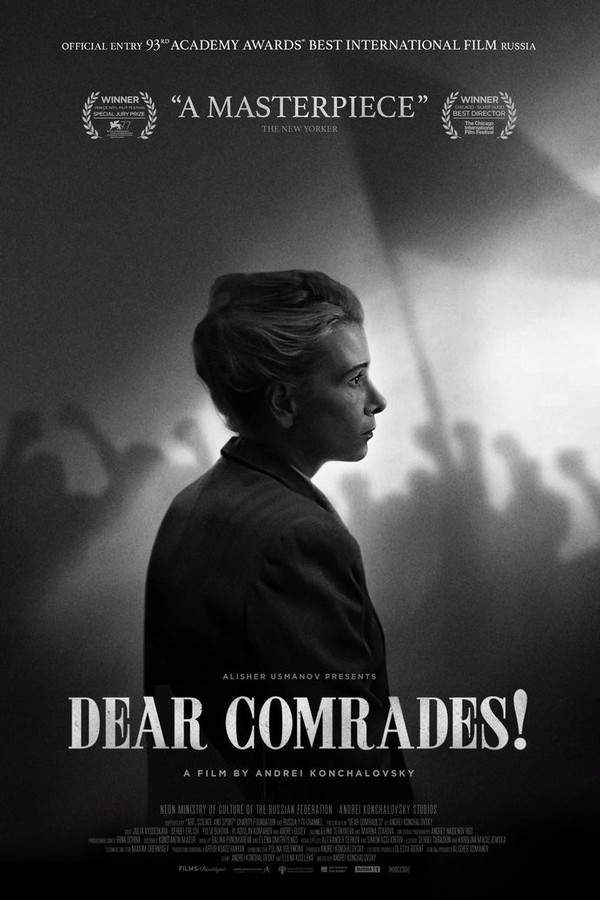
Dear Comrades! is a 2020 historical drama directed by Andrei Konchalovsky, starring Yuliya Vysotskaya as Lyudmila 'Lyuda' Danilovna Semina, Yuliya Burova and Vladislav Komarov. It runs 2 hours 1 minute and earned $294,535 worldwide on a $2 million budget. It earned 1 award nomination, including Best Film Not in the English Language at the BAFTA 2021. Critics gave it 93% on Rotten Tomatoes, and IMDb users rate it 7.4/10.
- Released
- Runtime
- 2h 1m (121 min)
- Director
- Andrei Konchalovsky
- Original language
-
 Russian
 - Studio
- Neon
- Budget
- $2M
- After the credits
- No No extra scene
What Is Dear Comrades! About?
The premise of Dear Comrades! without spoilers. The whole story is in the plot summary further down.
In post-war Novocherkassk, a devoted Communist official’s unwavering beliefs are challenged when a factory strike leads to widespread turmoil. Her daughter becomes involved in the escalating unrest, forcing Lyudmila to confront the harsh realities of the situation. As curfews are imposed and mass arrests occur, she witnesses the brutal state repression firsthand. This experience forces her to question her ideals and acknowledge the devastating impact of the events unfolding around her.
Dear Comrades! Themes & Keywords
· 50 tags- social discontent
- brutality
- demonstration
- year 1962
- strike
- army vs civilians
- communist party official
- civil unrest
- political protest
- soviet internal troops
- communist party member
- russian history
+38 more Show fewer
- 1960s
- activist
- arrest
- blood
- telephone call
- reference to joseph stalin
- tank
- curfew
- mother searches for missing daughter
- rooftop
- inspired by a true story
- cover up
- censorship
- totalitarianism
- communist party
- reference to nikita khrushchev
- bureaucracy
- privilege
- duty as a citizen
- family duty
- grocery store
- body search
- family relationships
- prayer
- price increase
- reference to john f. kennedy
- siren
- kgb officer
- kgb
- salary cut
- soviet army
- large map on wall
- ransacked office
- shot in the neck
- sniper
- random shooting
- fear
- street protest
Dear Comrades! Cast & Characters
Yuliya Vysotskaya leads the cast as Lyudmila 'Lyuda' Danilovna Semina, with Yuliya Burova as Svetka and Vladislav Komarov as Oleg Nikolaevich Loginov. Directed by Andrei Konchalovsky; 6 actors are credited in all.
-
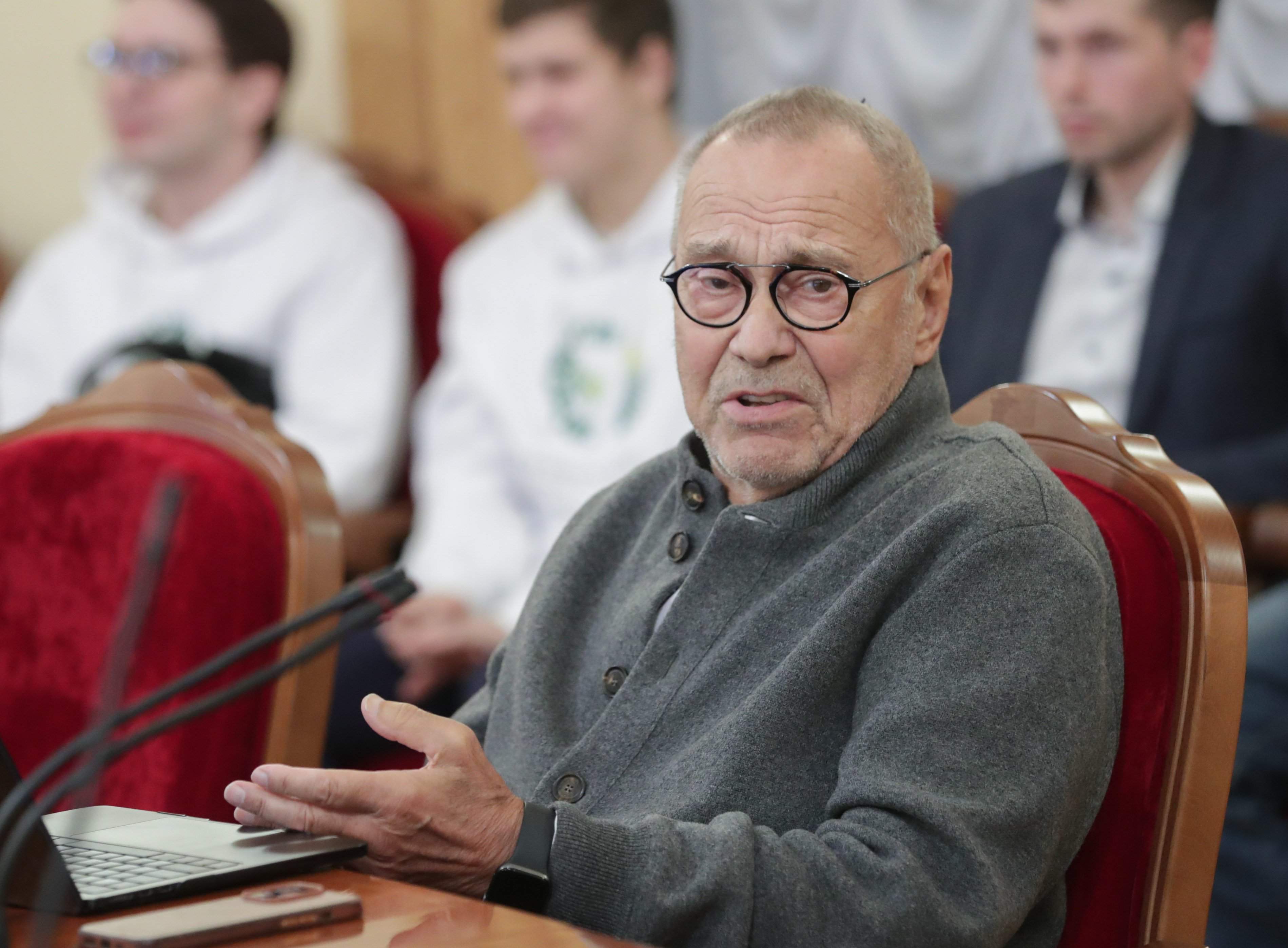 Director Andrei Konchalovsky
- Yuliya Vysotskaya as Lyudmila 'Lyuda' Danilovna Semina
- Yuliya Burova as Svetka
- Vladislav Komarov as Oleg Nikolaevich Loginov
- Alexander Maskelyne as Professor Ovodov
Also Starring in Dear Comrades!
· 2 more- Andrey Gusev Viktor
- Sergei Erlish Lyuda's father
Dear Comrades! Reviews & Ratings
Critics gave Dear Comrades! 93% on Rotten Tomatoes, and IMDb users rate it 7.4/10. Our Echo Score gives it 80/100, strongest in art & craft (85) and weakest in rewatch factor (65).
Dear Comrades! Echo Score Breakdown
Dear Comrades! delivers a compelling historical drama through its measured pacing and evocative style. Reviews highlight the film’s documentary-like black-and-white visuals and nuanced exploration of familial and political tensions, though some critics note its restrained approach can feel emotionally distant. The narrative’s careful framing and steady momentum consistently engage viewers, even when its sobering tone underscores tragic events. Overall, the film achieves a thoughtful and impactful portrayal of a grim chapter in history.
Our own 0–100 rating, built from five aspects: art, character, story, the sensory experience and how well a film rewatches.
- Art & Craft 85
In terms of cinematography and direction, Dear Comrades! excels with its black-and-white imagery and precise frame composition. Reviewers consistently note the period recreation through classical blocking and restrained camera movement that evoke a documentary sensibility. The production design and editing reinforce this aesthetic with authentic details. Overall, the film’s art direction establishes a powerful sense of place and historic atmosphere.
- Character & Emotion 80
When it comes to character depth and emotional resonance, the film offers nuanced portrayals of grief and complicity under political duress. The lead performance conveys complex inner conflict, supported by ensemble interactions that highlight familial bonds strained by ideology. Some viewers find the emotional distance reflective of the subject matter, yet the measured performances sustain engagement throughout. Overall, the characters ground the narrative in lived experience.
- Story & Flow 75
In terms of plot coherence and pacing, Dear Comrades! balances steady build-up with moments of sudden upheaval. Critics praise the narrative’s momentum through repeated political rituals and escalating tension, though a few find the tone occasionally austere and repetitive. The film’s measured tempo underscores its thematic focus on bureaucracy and individual agency. Overall, the story remains engaging despite its somber subject matter.
- Sensory Experience 80
When it comes to sensory experience, the film’s sound design and musical cues contribute to an immersive atmosphere. The recurring party songs take on a dissonant edge that underscores the characters’ emotional strain, while ambient sounds and a period-accurate score reinforce the documentary feel. The stark visual palette complements these auditory elements, creating cohesive sensory storytelling. Overall, the film delivers a polished and deliberate sensory experience.
- Rewatch Factor 65
Regarding rewatch factor, Dear Comrades! offers layered thematic content that may reward repeat viewings, though its grim subject matter and austere style can limit broader enjoyment. The exploration of ideological conflict and nuanced historical detail might reveal subtle insights on subsequent viewings, but the restrained emotional tone could deter some viewers seeking more immediate connection. Overall, the film’s lasting appeal is present but chiefly suited to focused reexamination.
-
 IMDb
IMDb 7.4 /10
See on IMDb -
 Rotten Tomatoes
 93% Tomatometer
Popcornmeter 81%
See on Rotten Tomatoes -
 TMDB
TMDB 72% User score
See on TMDB -
 Letterboxd
 3.7 /5
14 ratings
See on Letterboxd
Dear Comrades! Plot Summary
What happens in Dear Comrades! from start to finish, spoilers included, with a timeline of 14 key events. The opening is below; the full summary is a 2-minute read.
Spoilers ahead
The film recounts the troubling events surrounding the demonstration of workers in Novocherkassk during 1962. It focuses on Lyudmila ‘Lyuda’ Danilovna Semina, played by Yuliya Vysotskaya, who serves as a dedicated member of the local city committee and a committed communist. As tensions rise at the Novocherkassk Electric Locomotive Plant due to escalating food prices and wage cuts, a significant workers’ strike erupts. In a tragic turn of events, Lyudmila is a witness to the horrific mass shooting ordered by the Government Commission, which is determined to suppress news of the strike and its violent repercussions from the rest of the USSR.
Full summary
The whole story of Dear Comrades!, scene by scene
Dear Comrades! Box Office & Budget
Dear Comrades! grossed $294,535 worldwide on a $2 million budget, 15% of what it cost.
Worldwide gross
$294.5K
15% of its budget back
- International
- $294.5K
- Budget
- $2M
Dear Comrades! Awards & Nominations
Dear Comrades! earned 1 award nomination, including Best Film Not in the English Language at the BAFTA 2021.
1 nomination1 ceremony
-
 BAFTA 2021 1 nomination
- Nominated Best Film Not in the English Language – Andrei Konchalovsky
Dear Comrades! Trailers & Videos
2 videos: 2 trailers.
- Trailer Official Trailer
How Well Do You Know Dear Comrades!?
10 questions about the story, each with a hint if you get stuck. Pick an answer to see whether you were right.
Question 1 of 10
- Question 1: not answered
- Question 2: not answered
- Question 3: not answered
- Question 4: not answered
- Question 5: not answered
- Question 6: not answered
- Question 7: not answered
- Question 8: not answered
- Question 9: not answered
- Question 10: not answered
In which year does the film 'Dear Comrades!' take place?
Dear Comrades! Also Known As
19 alternative titles, including “Dorogie Tovarishchi!” and “Drodzy towarzysze!”.
- Also known as
-
- Dorogie Tovarishchi!
- Drodzy towarzysze!
- Cari compagni
- Rakkaat toverit
- חברים יקרים!
- 친애하는 동지들!
- Cari compagni!
- Queridos camaradas
- 亲爱的同志
- Caros Camaradas! Trabalhadores em Luta
- Αγαπητοί Σύντροφοι!
- Chers camarades !
+7 more Show fewer
- Sevgili Yoldaşlar
- Kedves elvtársak!
- Drazí soudruzi!
- 親愛的同志
- Benvolguts camarades
- Dragi tovariši
- Kamrater!
Seen Dear Comrades!?
Movies Like Dear Comrades!
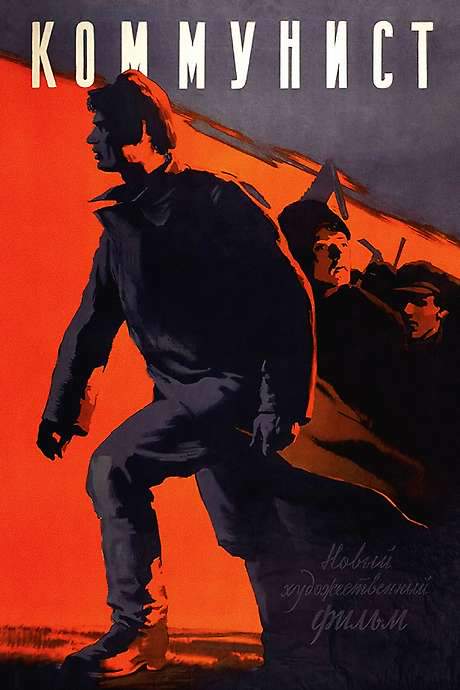
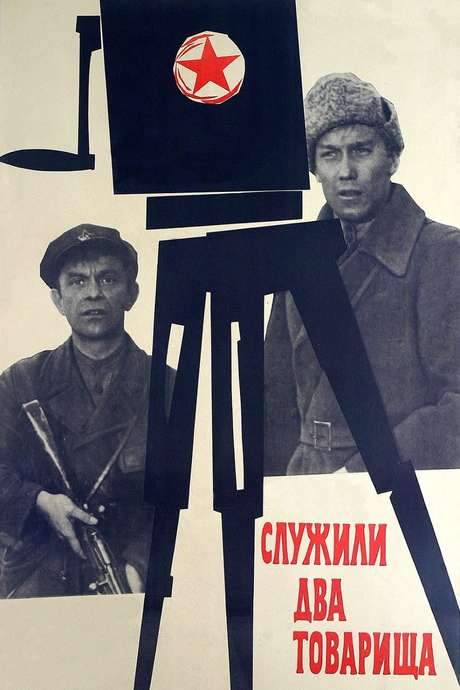
Films with a similar story, tone or audience, including The Commissar, The Communist and Strike.




Dear Comrades! FAQ: Cast, Box Office & Awards
Runtime, release date, director, cast, box office, ratings, awards and post-credit scenes of Dear Comrades!, each answered in a sentence.
How long is Dear Comrades!?
Dear Comrades! runs 2 hours 1 minute (121 minutes).
When was Dear Comrades! released?
Dear Comrades! was released on December 25, 2020.
Who directed Dear Comrades!?
Dear Comrades! was directed by Andrei Konchalovsky.
More films by Andrei Konchalovsky Who is in the cast of Dear Comrades!?
Dear Comrades! stars Yuliya Vysotskaya as Lyudmila 'Lyuda' Danilovna Semina, Yuliya Burova as Svetka and Vladislav Komarov as Oleg Nikolaevich Loginov, among 6 credited actors.
How much did Dear Comrades! make at the box office?
Dear Comrades! grossed $294,535 worldwide on a budget of $2 million.
How is Dear Comrades! rated?
Dear Comrades! has 7.4/10 on IMDb, 93% on Rotten Tomatoes, 72% on TMDB and 3.7/5 on Letterboxd.
Was Dear Comrades! nominated for any awards?
Dear Comrades! received 1 nomination across 1 ceremony.
Does Dear Comrades! have a post-credit scene?
No. Dear Comrades! has no extra scene during or after the credits.
Coming soon to your phone
The Plot Explained Movie Summary App
From blockbusters to hidden gems: plot summaries, endings explained and timelines on your phone. Save your favorites and never miss a twist again.
Be the first to know when it launches. Your email stays private, always. Learn more about the app
