What's After the Blog?
news • interview
Ryan Gosling Channels Chaplin for Project Hail Mary Performance
Ryan Gosling revealed that he modeled his physical performance in "Project Hail Mary" on Charlie Chaplin's iconic role in the 1936 film "Modern Times." The actor sought to bring a clumsy, mechanical quality to his portrayal of an unprepared astronaut, diverging from traditional graceful space movements to reflect the reality of space travel.
March 19, 2026
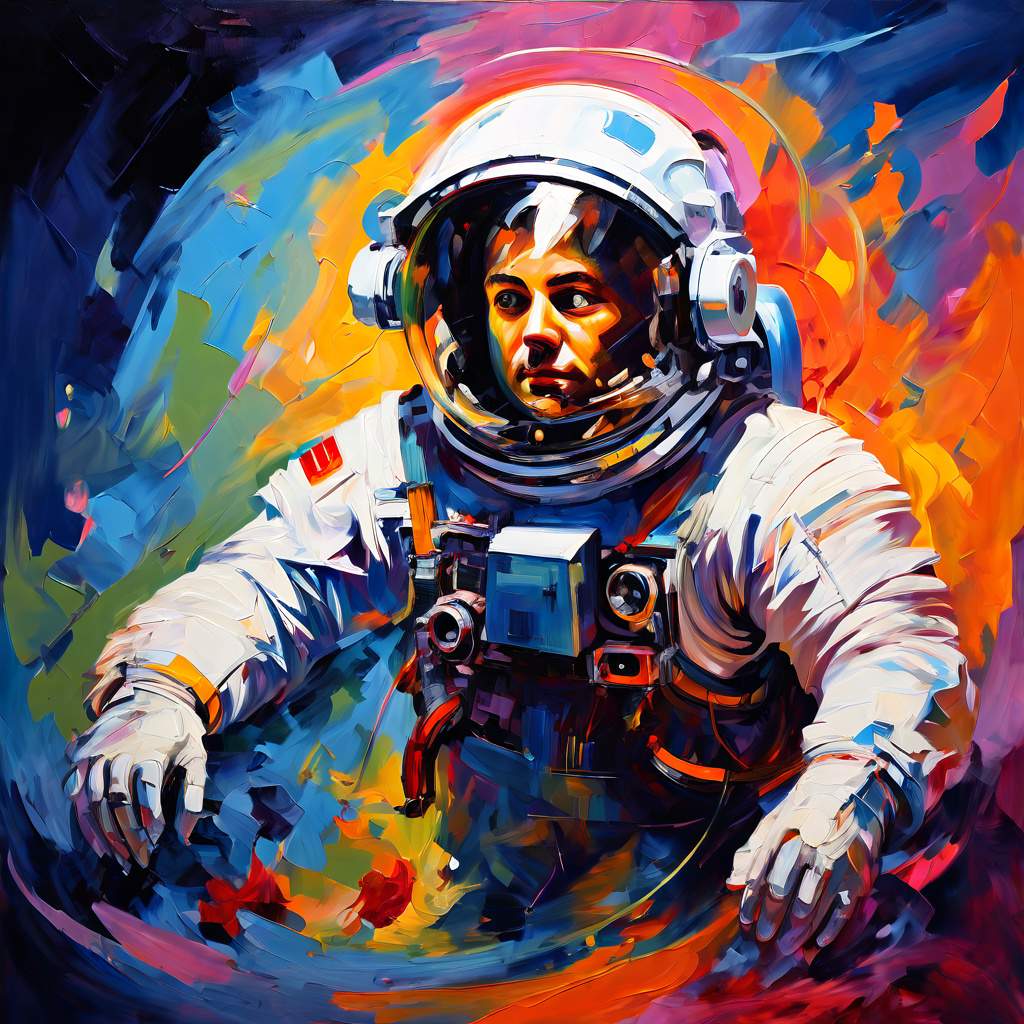
Ryan Gosling Channels Chaplin for Project Hail Mary Performance
Ryan Gosling has unveiled a surprising cinematic influence behind his approach to Project Hail Mary, the upcoming science fiction adaptation from directors Phil Lord and Christopher Miller. Rather than embracing the fluid, graceful movements typically associated with astronaut portrayals in classic space cinema, Gosling instead looked to Charlie Chaplin’s 1936 industrial satire Modern Times to develop a physically awkward, mechanically precise performance style that better reflects the disorienting reality of space travel.
The revelation comes from an exclusive interview where Gosling discussed his preparation for playing Dr. Ryland Grace, a brilliant but disgraced scientist thrust into an interstellar crisis. By channeling Chaplin’s iconic “Tramp” character—particularly the legendary sequence where the comedian becomes entangled within massive factory gears—Gosling sought to capture a sense of human vulnerability and mechanical confusion that diverges sharply from traditional heroic space archetypes. The result promises a performance that emphasizes physical comedy and authentic clumsiness over choreographed elegance.
A Fallen Scientist’s Return
Dr. Ryland Grace enters the narrative occupying a position far removed from the cutting-edge research world he once inhabited. Previously a promising figure within the scientific community, Grace saw his professional reputation crumble after advancing controversial theories regarding the unimportance of water in the development of life. These unorthodox views cost him his standing among peers and relegated him to the relative obscurity of middle school science education—a role that keeps him engaged with scientific inquiry but offers little financial security or professional prestige.
This humbled existence changes abruptly when government officials come calling with an emergency of astronomic proportions. A mysterious channel of energy has begun blotting out the sun, threatening Earth with an extinction-level catastrophe. Despite his lack of recent involvement in high-level research—or perhaps because of his specific expertise—Grace finds himself suddenly swept back into the scientific community. The recruitment represents not a restoration of his former status, but rather a desperate measure born from necessity, as authorities recognize that his particular intellectual capabilities may hold the key to understanding the cosmic threat.
The Interstellar Hail Mary
The mission facing Grace involves travel to a distant star system that previously demonstrated the ability to repel energy channels similar to the one currently threatening Earth. Though Grace possesses the scientific knowledge necessary to analyze these phenomena, he faces one critical limitation: he is not an astronaut. This ill-preparedness becomes central to his character’s journey, as he must navigate the complexities of deep space exploration without the physical training or psychological conditioning typically required for such endeavors.
Traveling aboard a spacecraft he did not design, Grace finds himself metaphorically and literally lost within machinery larger than his comprehension. The mission represents a genuine last-ditch effort—a “Hail Mary” play, as the narrative suggests—to gather crucial data and transmit findings back to Earth before time runs out. Complicating the isolation of interstellar travel, Grace eventually encounters an unexpected companion: a rock-like alien entity also seeking to save its own planet from similar destruction. This extraterrestrial friendship, glimpsed in the film’s trailer, provides Grace with an unlikely partner as both navigate the technical challenges and profound loneliness of their shared mission.
Channeling Chaplin’s Mechanical World
Gosling’s physical preparation for the role centered specifically on Chaplin’s masterwork Modern Times, a film famous for depicting the struggles of the Great Depression through the lens of industrial automation and mechanized labor. The actor focused particular attention on the opening sequences featuring Chaplin’s “Tramp” character working within a massive automated facility filled with levers, gears, and ineffable machinery. In the film’s most iconic scene, the Tramp falls into the works, pulled powerlessly through massive gears that dwarf the human form—a visual metaphor for humanity’s fraught relationship with overwhelming mechanical systems.
This imagery resonated deeply with Grace’s situation aboard the spacecraft. Like Chaplin’s character caught in the factory machinery, Grace finds himself entangled within a technological environment he neither constructed nor fully controls. Gosling sought to embody this same sense of mechanical confusion and physical awkwardness, creating what he described as sequences that audiences have never previously witnessed in space cinema. The parallel between the industrial machinery of 1936 and the space technology of the future provided Gosling with a physical vocabulary emphasizing vulnerability over heroism.
Physical Comedy in Zero Gravity
The actor’s approach deliberately rejected the polished physicality often associated with cinematic astronauts. “I prepared in a different way in the sense that I watched a lot of Chaplin movies, specifically Modern Times,” Gosling explained during the interview. “I was very inspired by the sequence where he’s caught in the wheels of the machine.” This inspiration translated into a performance emphasizing what Gosling termed “clumsiness”—a quality notably absent from his character’s surname, as the actor wryly noted: “My name might be Grace, but it was anything but graceful.”
Working with Lord and Miller, Gosling developed space sequences that deliberately avoid the choreographed elegance typical of the genre. Instead of fluid movements through spacecraft corridors, Grace bumps into walls, stumbles in zero gravity, and struggles with the physical mechanics of space travel. This approach required careful choreography to ensure safety while maintaining the appearance of authentic awkwardness, blending physical comedy with the technical demands of science fiction production.
Debunking the Space Ballet
This grounded approach stands in direct contrast to decades of cinematic tradition regarding space movement. Industry observers note that the term “space ballet” likely references Stanley Kubrick’s seminal 2001: A Space Odyssey, where starships drift gracefully through the cosmos accompanied by Johann Strauss’ “The Blue Danube” waltz. That film established a visual language of weightless elegance and balletic precision that has influenced countless subsequent science fiction productions, creating an expectation of graceful, dance-like movement in zero-gravity environments.
Project Hail Mary consciously rejects this aesthetic in favor of realism. During production, technical consultants including active astronauts visited the set to advise on the actual physical experience of space travel. According to Gosling, these experts confirmed that the clumsy approach was “actually a little more accurate” than traditional cinematic depictions. Real space travelers, they noted, accumulate numerous bumps and bruises during missions as they navigate cramped spacecraft interiors and contend with the disorienting effects of microgravity. Spaceflight, the consultants emphasized, represents physically demanding work rather than a choreographed dance, with even experienced astronauts suffering from the practical difficulties of moving in environments where traditional gravitational constants do not apply.
Production Overview and Release Details
Project Hail Mary adapts Andy Weir’s bestselling novel of the same name, bringing the author’s characteristic blend of hard science fiction and accessible storytelling to the big screen. The film represents a significant departure from Gosling’s recent dramatic roles, offering the actor opportunity to showcase physical comedy chops rarely displayed in his previous work while maintaining the scientific grounding that defined Weir’s source material.
Key details confirmed for the adaptation include:
- Theatrical Release: March 20, 2026
- Directors: Phil Lord and Christopher Miller (The Lego Movie, Spider-Man: Into the Spider-Verse)
- Source Material: Andy Weir’s novel Project Hail Mary
- Lead Performance: Ryan Gosling as Dr. Ryland Grace, inspired by Charlie Chaplin’s Modern Times (1936)
- Visual Approach: Rejection of “space ballet” in favor of realistic, clumsy zero-gravity movement
- Technical Consultation: Active astronauts provided authenticity guidance on space travel physics
Lord and Miller bring their distinctive kinetic visual style and comedic sensibilities to the material, suggesting a tone that balances high-stakes cosmic threats with character-driven humor. With its theatrical release scheduled for March 20, 2026, the project promises to deliver both the large-scale spectacle expected from modern science fiction and the intimate, character-focused awkwardness that Gosling’s Chaplin-inspired performance suggests.
What’s After the Movie
What’s After the Movie serves as your comprehensive destination for industry news, exclusive interviews, and detailed coverage of upcoming releases. Whether you’re seeking spoiler-free summaries of Andy Weir’s novels, box office projections for March 2026 releases, or the latest casting announcements, our platform provides everything film enthusiasts need. Explore our complete movie database to track Project Hail Mary and other anticipated sci-fi adaptations heading to theaters.
Continue reading




What's After the Movie?
Not sure whether to stay after the credits? Find out!
Check out our other apps:

SAT Sphere
Build confidence for the Digital SAT.

Mori Atlas
Discover wild places worth protecting.

Luntero
Search smarter for a home in Amsterdam.

Plot Explained
Unravel movie endings and hidden clues.

Pokechamp
Dive into Pokémon data and battle logic.

Driving Theory
Get ready for your European theory test.

Movie Dust
Plan your next cinema trip with ease.

Musemap
Find art and culture as you travel.

Selkobase
Compare credentials before committing.

Local Manual
Turn an unfamiliar country into practical next steps.

Lernavi
Compare school systems before your next move.

GymRoam
Find a workout stop wherever your plans take you.
Explore Our Movie Platform
New Movie Releases (2026)
Famous Movie Actors
Top Film Production Studios
Movie Plot Summaries & Endings
Major Movie Awards & Winners
Best Concert Films & Music Documentaries
Movie Collections and Curated Lists
© 2026 What's After the Movie. All rights reserved.
Privacy Policy