What's After the Blog?
news • interview
Clint Eastwood Reveals Dirty Harry Scene Was Inspired by James Cagney
Clint Eastwood has revealed that one of the most iconic moments in 1971's "Dirty Harry" was directly inspired by a scene in James Cagney's 1949 film noir "White Heat." In an interview with Entertainment Weekly, the actor admitted he "stole" the concept of eating during a violent confrontation from his cinematic idol.
June 10, 2026
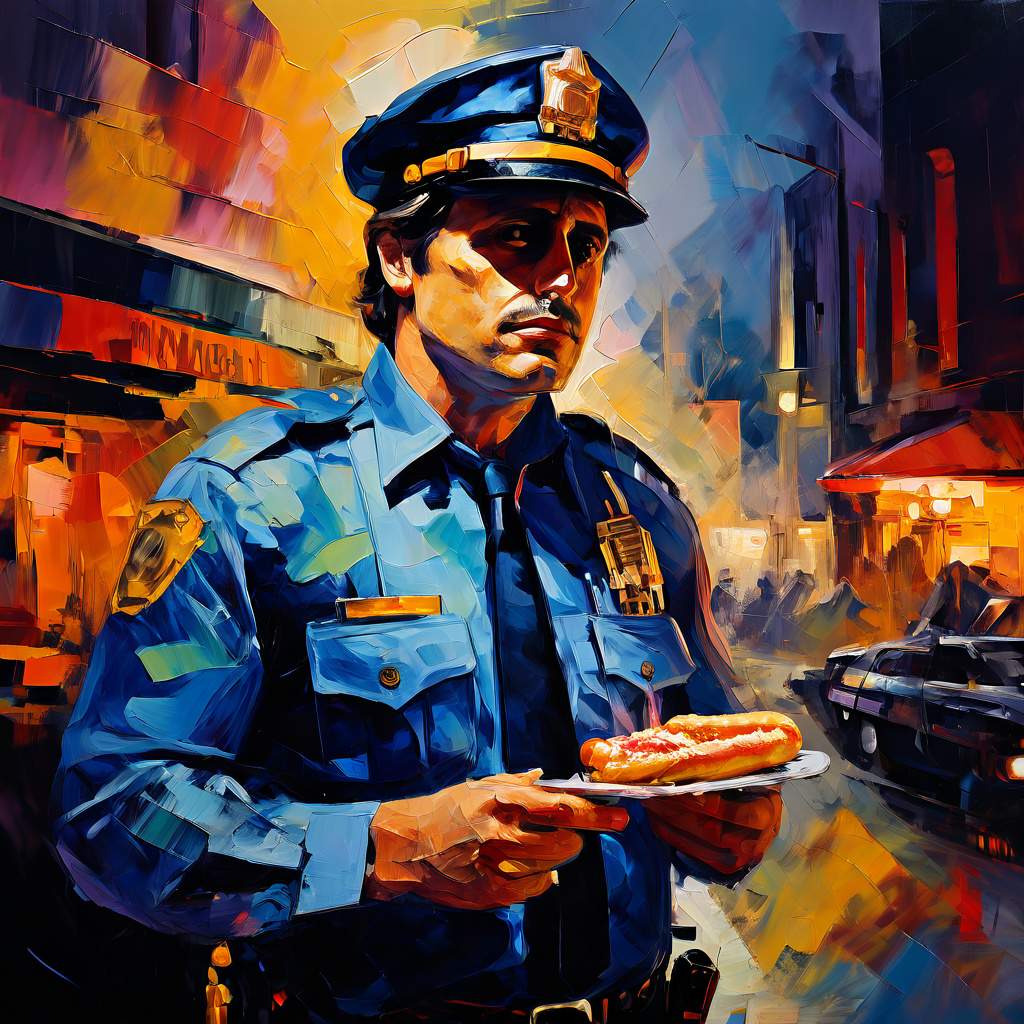
Clint Eastwood Reveals Dirty Harry Scene Was Inspired by James Cagney
Clint Eastwood has acknowledged that one of cinema’s most memorable police confrontations owes its DNA to a classic Hollywood gangster picture. In a revealing interview with Entertainment Weekly, the screen legend admitted that the iconic hot dog sequence in 1971’s “Dirty Harry” was directly “stolen” from James Cagney’s performance in the 1949 film noir “White Heat,” specifically the way Cagney’s character casually consumes food while committing acts of violence.
The revelation offers a fascinating glimpse into Eastwood’s creative process and his complicated relationship with cinematic imitation. While the actor built his reputation on rugged individualism and original performances, this admission demonstrates how even Hollywood’s most distinctive voices pay homage to their heroes—sometimes in ways that fundamentally shape their most famous characters.
The Cagney Connection: Eastwood’s Singular Cinematic Idol
For decades, Clint Eastwood has maintained that James Cagney stands alone as his specific acting idol. In conversations with journalists over the years, Eastwood has singled out the legendary star of “White Heat” as providing formative inspiration for his own approach to screen presence. This admiration runs deep enough that Eastwood specifically cited Cagney’s work when explaining the genesis of Harry Callahan’s most idiosyncratic moment.
“White Heat,” widely regarded as one of the greatest film noir productions ever released, features Cagney as Arthur “Cody” Jarrett, a psychopathic crime boss with a hair-trigger temper and unpredictable savagery. The film follows Jarrett through a complex criminal enterprise that sees him deliberately taking a fall for a minor crime to avoid prosecution for a more serious offense, leading to his incarceration alongside other inmates. The narrative builds to a prison escape that provided Eastwood with the specific visual reference he would later adapt for his own purposes two decades later.
From Chicken Leg to Hot Dog: Breaking Down the Parallel Scenes
The specific moment that captured Eastwood’s imagination occurs during Jarrett’s escape sequence. Having fled incarceration with several other prisoners, including Paul Guilfoyle’s character Roy Parker, Cagney’s Jarrett takes Parker hostage and confines him to the trunk of an automobile. When Parker complains that the enclosed space is becoming “stuffy,” Jarrett offers to “give him a little air”—then produces a pistol and fires multiple shots through the car’s chassis, murdering Parker in cold blood. Throughout this execution, Jarrett casually munches on a chicken leg, displaying complete nonchalance about the life he is ending.
Eastwood recognized something essential in this juxtaposition of mundane activity and lethal violence. “When he comes out in ‘White Heat’ eating a chicken leg and blasting a guy in the trunk of a car,” Eastwood explained to Entertainment Weekly, “You go, ‘Yeah, that’s offsetting, but in a nice way.’” The actor identified this specific quality of detachment as worth importing into his own work, despite his usual reservations about direct imitation.
The result appears in “Dirty Harry” during the sequence where Inspector Harry Callahan visits a local diner for his lunch break. When a bank robbery unfolds nearby, interrupting his meal, Callahan marches outside and engages the getaway vehicle. While opening fire on the criminals, Eastwood’s character continues chewing his hot dog, displaying the same irritated nonchalance that Cagney brought to the chicken leg scene. The confrontation culminates in the legendary “Do I feel lucky?” monologue, though unlike Cagney’s unrepentant killer, Harry ultimately spares his target.
Key elements connecting the two moments include:
- Casual dining during violence: Both characters eat while dealing death or its immediate threat
- Emotional detachment: Neither character displays adrenaline or panic, instead showing annoyance at interruption
- Public setting: Both confrontations occur in semi-public spaces (a car trunk on the road, a city street during lunch hour)
- Moral complexity: While Jarrett is a psychopath, Harry represents “higher morality” through his selective application of lethal force
A Philosophy of Originality—With Notable Exceptions
Eastwood’s admission carries extra weight considering his historical stance on performance originality. Early in his career, the actor expressed strong feelings against direct imitation. Speaking with journalist Paul Nelson for the collection “Conversations with Clint,” Eastwood stated plainly: “To me, one performance doesn’t deserve imitating like that. It’s degrading to imitate somebody.”
Yet Eastwood’s filmography contains several notable exceptions to this rule, suggesting his philosophy was more flexible than initially stated. His breakthrough Western “A Fistful of Dollars” (1964) was famously a remake of Akira Kurosawa’s “Yojimbo,” establishing his stardom through direct adaptation of existing material. Similarly, his 1971 directorial debut “Play Misty for Me” incorporated elements borrowed from Alfred Hitchcock’s “Psycho,” arriving in theaters the same year as his debut as “Dirty” Harry Callahan.
The “Dirty Harry” hot dog scene represents perhaps the most personal of these homages, given Eastwood’s specific admiration for Cagney above all other actors. For someone who claimed to otherwise disdain imitation, the opportunity to channel his single cinematic hero apparently proved irresistible. The choice also served the narrative: importing Cagney’s ruthless, unhinged energy into Harry Callahan gave the maverick cop an edge that distinguished him from standard law enforcement portrayals.
Context and Controversy: The Legacy of Dirty Harry
The year 1971 marked a pivotal moment in Eastwood’s career, seeing both his directorial debut with “Play Misty for Me” and his first appearance as Inspector Callahan. “Dirty Harry” arrived in a charged socio-political climate, immediately sparking controversy upon release. Critics and commentators accused the film of serving as an apologia for police violence and extrajudicial action, concerns that have persisted in cultural discussions of the franchise for over five decades.
Eastwood and director Don Siegel appear to have been influenced by the socio-political climate at the time, yet Eastwood has consistently defended the film against allegations of political agenda. In a 1989 interview with Ric Gentry, the actor characterized the work as apolitical, focusing instead on individual morality. He highlighted a specific exchange where Harry confronts bureaucratic limitations: “Harry asks the authorities, ‘How come you let the guy go?’ And they say, ‘Because that’s the law.’ And Harry answers, ‘Then the law is wrong.’”
This conception of a lawman serving a “higher morality”—to use Eastwood’s phrase from Patrick McGilligan’s biography “Clint: The Life and Legend”—creates an interesting tension with the Cagney homage. While Cody Jarrett represents pure psychopathy without moral compass, Harry Callahan applies similar ruthless efficiency in service of justice, albeit defined by his own standards. Eastwood’s decision to borrow from Cagney’s crime boss for his portrayal of a cop adhering to personal ethics rather than rigid legal codes created a character that helped redefine the cinematic anti-hero.
What’s After the Movie?
If you enjoyed exploring this piece of cinema history and want to discover more behind-the-scenes details about your favorite films, What’s After the Movie offers comprehensive coverage of everything happening in entertainment. From classic film analysis and box office reporting to spoiler-free summaries and industry news, our platform provides the context that makes movie-watching more rewarding. Check out our movie database for detailed information on “Dirty Harry,” “White Heat,” and thousands of other titles, or visit our blog for the latest updates on casting announcements, release dates, and film history deep dives.
Continue reading




What's After the Movie?
Not sure whether to stay after the credits? Find out!
Check out our other apps:

SAT Sphere
Build confidence for the Digital SAT.

Mori Atlas
Discover wild places worth protecting.

Luntero
Search smarter for a home in Amsterdam.

Plot Explained
Unravel movie endings and hidden clues.

Pokechamp
Dive into Pokémon data and battle logic.

Driving Theory
Get ready for your European theory test.

Movie Dust
Plan your next cinema trip with ease.

Musemap
Find art and culture as you travel.

Selkobase
Compare credentials before committing.

Local Manual
Turn an unfamiliar country into practical next steps.

Lernavi
Compare school systems before your next move.

GymRoam
Find a workout stop wherever your plans take you.
Explore Our Movie Platform
New Movie Releases (2026)
Famous Movie Actors
Top Film Production Studios
Movie Plot Summaries & Endings
Major Movie Awards & Winners
Best Concert Films & Music Documentaries
Movie Collections and Curated Lists
© 2026 What's After the Movie. All rights reserved.
Privacy Policy