What Is Zenda About?
The premise of Zenda in 243 words, with nothing given away. The full story follows below.
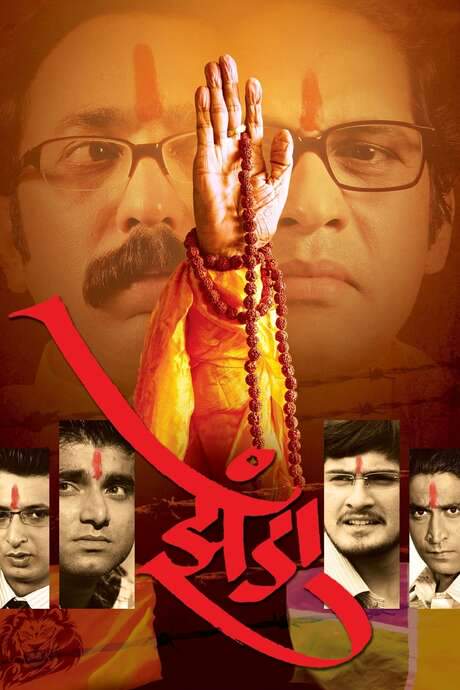
In the lively streets of Maharashtra, a generation of idealistic scholars finds its ambitions tangled with the pulse of a storied political movement. The film opens on a bustling party headquarters where fervent chants echo past victories, and the legacy of a charismatic founder still colors everyday conversations. Against this backdrop, the youthful protagonists, each driven by personal dreams, grapple with the weight of history while trying to carve out their own place in a world where loyalty is both a badge and a burden.
The narrative centers on the symbolic rivalry that mirrors real‑life cousins Raj and Uddhav, whose divergent paths hint at a deeper fracture within the organization. Their contrasting approaches to leadership become a quiet undercurrent, shaping the hopes and doubts of the young scholars who look up to them. The film’s tone balances earnest optimism with a reflective unease, capturing the rhythm of marathon rallies, late‑night strategy sessions, and the hurried whispers of media rooms where image often outweighs ideology.
As the party approaches a decisive moment, the story highlights the tension between tradition and modernity. The aspiring youths sense the pull of emerging opportunities while feeling the pressures of media‑crafted narratives and the expectations of a shifting electorate. Their collective journey is framed by a vibrant cultural canvas—street art, regional music, and the spirited debates that fill coffee‑shopped corners—suggesting that the future of the movement may depend as much on personal conviction as on the ever‑evolving political landscape.
What Happens in Zenda?
The complete story of Zenda, from the first scene to the last, in 500 words (about 2 minutes). Spoilers throughout. Names in the text link to 11 cast member pages.
Spoilers ahead
The film grounds itself in the drama of real-life party workers who pledge their loyalty to a single political party, a premise that is loosely inspired by the Balasaheb Thackeray political family and their enduring influence over Maharashtra. The ensemble brings this world to life, with Chinmay Mandlekar and Santosh Juvekar portraying veterans who carry decades of party history in their bones, while Williemgc threads a sharp strategic touch through the corridors of power. Together, they paint a portrait of a movement that remains deeply rooted in the experience of the Marathi community across Maharashtra, a sentiment that the film treats with both reverence and critical distance.
The movie celebrates the party’s glorious past and its formidable organization, which has long stood as a bulwark for the Marathi voice in the region. The narrative moves through a landscape where loyalty is tested not just by ideology, but by time, memory, and the changing currents of politics. As the leadership baton passes to the next generation, a bold new leader breaks away, stirring a rift between friends who were once united by a shared cause. This fracture is dramatized through the arcs of Siddharth Chandekar, Tejashri Pradhan, and Shubhangi Gokhale, whose characters embody the tension between heritage and renewal, duty and ambition, tradition and reform.
The film also probes how political images are built and sustained in the public sphere, revealing the power of media and PR to shape perception. Campaign managers push carefully crafted narratives to win over minority vote banks, sometimes at the expense of core ideologies, a process that leaves purists and young recruits feeling displaced. In this examination, Neha Joshi and Pushkar Shotri contribute to the portrayal of the pressure-filled ecosystem where appearances can override substance, and where strategic messaging can outpace on-the-ground truth.
Amid these forces, the narrative follows the younger cohort who seek to carve out their own identities within the party framework. They step out from the long shadow cast by elder leadership, only to discover that their honest work can be eclipsed when election tickets are allotted. The struggle to be heard, to earn legitimacy, and to balance allegiance with new ideas forms a through-line that gives the film its emotional gravity. Actors such as Ujwala Jog, Sachit Patil, and Rajesh Shrungarpure populate this tremulous space with characters who embody the hope, pressure, and disillusionment that accompany political change, while remaining anchored to a collective purpose larger than any single person.
In the end, the story presents a nuanced look at loyalty, leadership, and the cost of embracing transformative change within a storied political movement. It acknowledges the powerful sense of identity tied to regional politics, while inviting viewers to question how much of that identity is preserved by enduring institutions and how much is shaped by the media narratives that surround them. The film remains a thoughtful meditation on how political communities sustain themselves, what they sacrifice for advancement, and what it means for the next generation to carry the flame forward.
Zenda Timeline: Every Key Event in Order
12 key events in the order they happen, from “Founding days of the party's grassroots network” to “The legacy under scrutiny”. 12 events name a place, across 2 locations.
- 1
Founding days of the party's grassroots network
The film opens with party workers rallying for Marathi community causes, building a tight grassroots base across towns in Maharashtra. Leaders emphasize loyalty to the apex leadership and the cause over personal ambitions. The air is charged with camaraderie, discipline, and a shared sense of purpose.
When:Early days Where:Maharashtra
- 2
Rise of the apex leader and a unified mission
The party's top figure consolidates power, uniting workers under a common banner. The narrative highlights their charisma and organizational strength as they steer campaigns and community programs. Loyalty runs deep as members see the leader as the embodiment of the party's ideals.
When:Growth years Where:Maharashtra
- 3
Transition of leadership to the next generation
After years of service, the baton is passed to the next generation. The film shows excitement mixed with anxiety as younger activists envision fresh energy and broader appeal. Some worry about losing the old guard's discipline, while others hope for modernization.
When:After the leadership transition Where:Maharashtra
- 4
A new generation leader breaks away from the core
The newly empowered leader begins pursuing independent paths and questions the old guard's limits. This marks the first public signs of divergence within the party. The split creates tension as supporters choose sides.
When:Post-transition Where:Maharashtra
- 5
A rift between lifelong friends
Once inseparable comrades find their loyalties pulling in opposite directions. They confront each other over strategy and ideology, deepening the fracture in the party's ranks. The friendship strains mirror the organization's growing fractures.
When:During the early rift Where:Maharashtra
- 6
Media and PR reshape the party's image
The film shows media campaigns detailing the party's achievements and promise a brighter future. Posters, soundbites, and orchestrated events dominate the public sphere. The leaders realize that perception can outpace ground realities.
When:Media campaign era Where:Mumbai
- 7
Pressure to appease minority voters
Campaign managers push to widen appeal to minority groups, challenging core ideological tenets. The emphasis shifts from pure ideology to electoral calculus. Purists feel betrayed as compromises erode the party's promised path.
When:Election-focused phase Where:Maharashtra
- 8
Ideologies sacrificed for elections
The narrative depicts the trade-offs made to secure votes, with core beliefs trimmed to fit campaign narratives. Old-school workers watch their principles wane as campaigns favor poll-friendly messaging. The weight of compromised ideals leaves a mark on the movement.
When:During campaigns Where:Maharashtra
- 9
Youth break away to form new groups
Disillusioned young activists strike out on their own, choosing to build an alternative platform outside the old leadership's shadow. They try to harness new energy and connect with voters who feel left behind. Yet they discover that established networks still hold sway.
When:Post-ideological shifts Where:Maharashtra
- 10
Ticket allotment becomes the battleground
With elections looming, the hardest decisions involve who earns a ticket to contest. Old loyalties collide with fresh faces, and negotiations become a test of party unity. Internal maneuvering exposes the fragility of the coalition.
When:Election season Where:Maharashtra
- 11
The party's moral toll and reflection
The characters grapple with the cost of loyalty and the price of power. The film probes whether doing good for the community can survive the corrupting influence of politics. The melange of pride, betrayal, and resilience leaves an enduring question.
When:Ongoing aftermath Where:Maharashtra
- 12
The legacy under scrutiny
In the denouement, the audience sees the long-term impact on the Marathi community and the political landscape. Former comrades gather to assess what remains of their initial ideals. The narrative closes on a note of caution and hope for renewal.
When:Aftermath Where:Maharashtra
Who Are the Main Characters in Zenda?
4 characters, among them Old Guard Leader, Young Activist and Media Strategist: who each one is and the part they play in the story.
- OG
Old Guard Leader
A seasoned politician who embodies the party's tradition and discipline. He commands loyalty and reserves room for pragmatism, but resists rapid change to preserve the party's core identity. His decisions steer ticket allotment and the party's public face during elections.
- 🧭 Leadership
- 🗳️ Politics
- 🔗 Loyalty
- YA
Young Activist
An ambitious member of the younger faction, torn between unwavering loyalty and the urge for reform. He or she embodies idealism tempered by street-level realism, challenging the status quo while seeking a future for the party.
- 🌱 Ambition
- 🧭 Ideology
- 🗳️ Reform
- MS
Media Strategist
A savvy operator who builds the party's image and coordinates campaigns, often prioritizing perception over policy. They navigate the pressure of mass media and election cycles to keep the party relevant.
- 💼 Strategy
- 📰 Media
- 🎯 Perception
- RW
Rival Within the Party
A strategic challenger who fuels internal conflict, questioning leadership and courting power for personal advancement. Their moves expose fractures in loyalty and threaten to derail the party's unity.
- ⚔️ Conflict
- 🧭 Ambition
- 🗳️ Power
Where and When Is Zenda Set?
Zenda is set in Maharashtra and India. Here is why the place matters to the story.
Where
Maharashtra, India
The story unfolds within Maharashtra, a state with a deep tradition of regional politics in western India. It highlights the Marathi community and the organized party machinery that drives local political life. The setting includes party offices, rallies, and media rooms where public perception is shaped.
- 🗺️ Maharashtra
- India
- 🗳️ Regional politics
- 🏛️ Marathi identity
What Are the Themes of Zenda?
3 ideas the story keeps returning to, among them Loyalty vs Ideology, Media Manipulation and Generational Rift.
-
01
Loyalty vs Ideology
Long-standing loyalty to a party and its apex leader binds rank-and-file workers beyond personal belief. When leadership passes to the next generation, this bond is tested as new leaders push for change. Factions form, friendships fracture, and the cause becomes a stage for political theater. The rift reveals how power can override principle.
-
02
Media Manipulation
Political images are crafted through organized media campaigns and PR managers who seek to control the narrative. Parties adjust ideologies to appeal to minority vote banks, often sacrificing core beliefs. Purists feel betrayed as messaging eclipses substantive work. Public perception becomes a battleground that decides electoral outcomes.
-
03
Generational Rift
A new generation questions the tactics of the old guard and pushes for reform. They attempt to establish themselves apart from the shadow of established leadership, testing their loyalty to the party. Their rise is met with resistance, revealing the inertia of political institutions. The film tracks both the cost and possibility of renewal within a long-standing movement.
What Kind of Film Is Zenda?
Tense in tone, with steady pacing and a moderate story, going by the plot summary.
- Tone
- Tense
- Pacing
- Steady
- Story
- Moderate
- Intensity
- High
- Ending
- Bittersweet
A steadily paced and tense political drama that follows the disillusionment and betrayal of young party workers as ideological conflicts and media manipulation fracture their friendships and ambitions.
- tense
- political
- betrayal
- ideological
- divided
- ambitious
- political rivalry
- party politics
- youth aspirations
- media influence
Content notes: political betrayal, psychological manipulation.
Quiz
How well do you remember Zenda? Test yourself on the story.
Where to Watch Zenda
Rent or buy it from Amazon Video. US availability and prices from JustWatch.
Rent or buy 1

Streaming availability in the US, powered by