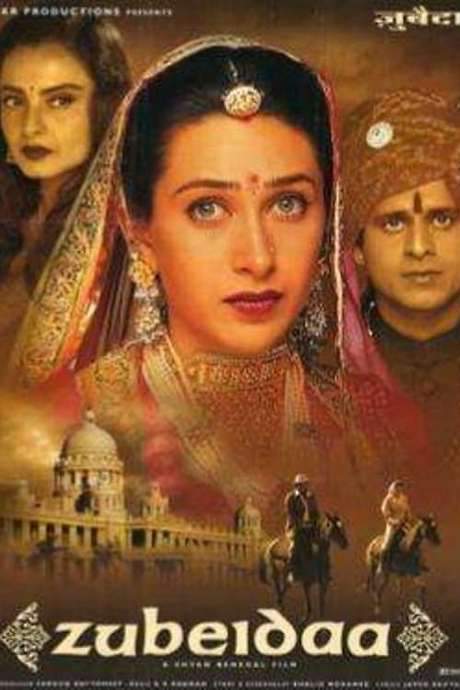
What Is Zubeidaa About?
The premise of Zubeidaa in 297 words, with nothing given away. The full story follows below.
In a vibrant yet divided era of Indian cinema and royalty, Zubeidaa stands out as a fierce Muslim actress whose talent shines brighter than the expectations placed upon her. When she consents to become the second wife of a Hindu prince, the decision promises security while plunging her into a world of opulent tradition, courtly protocol, and cultural friction. The palace walls, adorned with history and ceremony, become both a stage for her aspirations and a cage that tests the limits of her freedom.
The film paints a richly textured portrait of a society where art and aristocracy collide. Zubeidaa carries the weight of her family’s legacy—her father’s control, her mother’s hidden cinematic dreams—and the pressures of a marriage that demands sacrifice. The tone balances lyrical nostalgia with a probing melancholy, inviting viewers to feel the quiet intensity of a woman striving to preserve her identity amid relentless external demands.
Against this backdrop, the prince, a figure of regal responsibility, represents an alluring yet austere counterpart to Zubeidaa’s vivacity. Their relationship is marked by lingering affection, unspoken yearning, and the stark contrast between personal desire and public duty. The royal court, with its intricate rituals and unyielding hierarchy, amplifies the cultural tensions that ripple through every shared glance and whispered conversation.
Through lush visuals and a hauntingly melodic score, the story immerses the audience in a world where love, ambition, and duty are in constant dialogue. Zubeidaa navigates the delicate dance between her artistic spirit and the expectations of a princely household, hinting at the profound inner conflict that fuels her journey. The film’s mood is one of wistful contemplation, drawing viewers into a timeless exploration of what it means to chase a dream while bound by the traditions that shape, and sometimes constrain, a woman’s destiny.
What Happens in Zubeidaa?
The complete story of Zubeidaa, from the first scene to the last, in 681 words (about 3 minutes). Spoilers throughout. Names in the text link to 6 cast member pages.
Spoilers ahead
Riyaz Masud grows up under the care of his maternal grandmother, and as he reaches adulthood he sets out on a patient, sometimes painful quest to understand the mother he never truly knew. The search becomes a journey through memory, family secrets, and the tangled web of love, duty, and ambition that shaped his mother’s life.
Riyaz’s mother, Zubeidaa, was the daughter of a filmmaker, Suleiman Seth. She kept her film work a secret for years, weaving art into a life that his father attempted to control. When Suleiman Seth learns of her hidden talents, he forbids her to continue and swiftly arranges her marriage to his friend’s son, Mehboob Alam, who becomes a gharjamai in a household bound by tradition and propriety. The marriage bears fruit in the form of a son, Riyaz, but the union is fragile from the start, strained by opposing desires, social expectations, and the weight of a family history that refuses to stay quiet.
A rupture soon emerges between Suleiman and Mehboob’s father, and the pressure intensifies until Mehboob divorces [Zubeidaa] at a moment when she most needs support. Heartbroken, she wanders through doubts about her choices, longing for a life where she might reconcile her passion for acting with the duties of marriage and motherhood. In the midst of this ache, she encounters the young Maharaja of Fatehpur, Vijendra Singh, a ruler entangled in the politics of his court and his own complicated marriage to Mandira Devi. Their encounter deepens into a romance that challenges the palace’s rigid codes and the expectations placed on a royal wife.
What unfolds next is a meditation on love and constraint. Riyaz discovers in Zubeidaa’s journal that she loved [Vijendra Singh] deeply, yet could not endure the palace’s stifling conventions. The pages also reveal the shadowing presence of Uday Singh, the brother-in-law who pushes for his own desires and tests the limits of what Zubeidaa could tolerate. The tension between private longing and public duty becomes a central thread, casting light on the sacrifices she made and the loneliness she endured behind closed doors.
Driven by a need to uncover the truth, Riyaz travels to Fatehpur, speaking with many who were connected to his mother. The responses vary wildly: some deny that she ever existed, others condemn her as a seducer who led a king astray or caused misfortune. Yet one voice remains steadfast and protective—Mandira Devi, who, in her own way, holds the line of memory against the erasures of time. The more Riyaz learns, the more the mystery tightens around the fate of a woman who refused to surrender her spirit.
As the story slowly unfolds, it becomes clear that the tragedy was not merely personal but emblematic of a clash between love and power. The royal plane crash that claims both [Vijendra Singh] and Zubeidaa echoes their longing for a life that could be lived without fear of public judgment. In a poignant, introspective moment, Zubeidaa seems to fear losing Vijayendra and, despite the consequences, imagines a shared eternity that defies the boundaries of this world.
The ending circles back to the present when Riyaz finally obtains the missing tape of his mother’s solitary film—from Mandira Devi. Watching this forgotten work with his grandmother, who weeps with tears of happiness, Riyaz witnesses Zubeidaa dancing with the unbridled joy that defined her true essence. The film’s quiet celebration of a woman’s artistic voice and stubborn dignity leaves a lasting impression: Zubeidaa’s spirit endures beyond the curtain of history, a luminous reminder of a life lived on her own terms.
In the final moments, the audience is invited to reflect on the resilience of memory and the power of cinema to preserve a person’s truth. Riyaz’s long, sometimes painful, but ultimately hopeful pursuit to know his mother culminates in a cinematic revelation that honors Zubeidaa’s courage, her struggles, and the enduring bond between mother and son. The film closes not with a grand verdict, but with a tender recognition of a life that mattered deeply, and a grandmother’s tearful smile that says more than words ever could.
Zubeidaa Timeline: Every Key Event in Order
15 key events in the order they happen, from “Childhood with grandmother” to “A grandmother's tearful blessing”. 15 events name a place, across 12 locations.
- 1
Childhood with grandmother
Riyaz grows up under the care of his maternal grandmother, sheltered from the full truth of his mother's life. He absorbs stories, memories, and hints of a powerful, artistic woman who would shape his understanding of love and duty. This early bond becomes the compass for his later, patient quest to know Zubeidaa.
When:Childhood Where:Maternal grandmother's home
- 2
Zubeidaa's secret film work
Zubeidaa, daughter of a filmmaker, hides her talents and pursues acting under the cover of family propriety. She navigates a world where art clashes with tradition, keeping her cinema dreams alive despite the risks. The secrecy plants the seeds for a life lived between public duty and private passion.
When:Before marriage Where:Within her family/filmmaker circle
- 3
Forbidden artistry leads to arranged marriage
When Suleiman Seth learns of her hidden talents, he forbids her continued work and quickly arranges her marriage to Mehboob Alam. The ceremony turns Zubeidaa into a gharjamai in a tightly bound household, tethered to expectations she never chose. The union marks the first great fracture in her life.
When:Before marriage Where:Family home/palace
- 4
Birth of Riyaz
The marriage to Mehboob bears a son, Riyaz, but the family’s contentment is short-lived. The new life sits within a fragile arrangement, never fully embraced by the social order around them. The quiet birth seeds a future where love and duty will collide.
When:Early married life Where:Home
- 5
Divorce and heartache
Mehboob divorces Zubeidaa at a moment of personal vulnerability, leaving her to wrestle with loneliness and the longing for a life where art and motherhood could harmonize. She wanders through doubts about her choices and the limits imposed by tradition. This rupture becomes the emotional hinge of her later choices.
When:Soon after Riyaz's birth Where:Home/Palace
- 6
Meeting the Maharaja of Fatehpur
In the ache that follows the divorce, Zubeidaa encounters Vijendra Singh, the young Maharaja of Fatehpur, whose court politics complicate their budding romance. Their connection challenges the palace's rigid codes and the expectations placed on a royal wife. The encounter promises a life where passion might defy convention.
When:After divorce Where:Palace, Fatehpur
- 7
Vijendra Singh's marriage to Mandira Devi
Vijendra Singh’s existing marriage to Mandira Devi further complicates Zubeidaa’s feelings and the romance she dared to entertain. The royal environment cages affection under public scrutiny and political duty. The impossible love becomes a symbol of conflict between private longing and public power.
When:During romance Where:Palace/Court of Fatehpur
- 8
Zubeidaa's journal reveals her truth
Riyaz uncovers his mother’s journal, discovering that she loved Vijendra Singh deeply and could not endure the palace’s stifling conventions. The journal also hints at Uday Singh’s probing for his own desires, casting a shadow over Zubeidaa’s choices. The revelation deepens the mystery of what was sacrificed for love.
When:Investigation stage Where:Fatehpur
- 9
Riyaz journeys to Fatehpur
Driven to uncover the truth, Riyaz travels to Fatehpur and speaks with many who were connected to his mother. The responses range from denial of her existence to accusations that she seduced a king, but one voice remains protective. The search tightens the mystery around Zubeidaa’s fate.
When:Investigation stage Where:Fatehpur
- 10
Mandira Devi preserves memory
Mandira Devi, in her own way, stands firm against erasures of memory and holds the line of Zubeidaa’s life within the records of the palace. Her stance offers a counterpoint to rumor and neglect. The memory of Zubeidaa begins to regain dignity through her protection.
When:Investigation/present Where:Mandira Devi’s space
Show the other 5 events of Zubeidaa Hide the last 5 events
- 11
Zubeidaa's fear and imagined eternity
Before the tragedy, Zubeidaa fears losing Vijendra and imagines a shared eternity that could defy the boundaries of this world. This longing reveals the depth of her love and the cost of choosing personal happiness over duty. The moment lingers as a haunting memory.
When:Pre-crash memory Where:Palace/In her mind
- 12
Tragic plane crash
The royal plane crash claims both Vijendra Singh and Zubeidaa, ending their forbidden romance and sealing their fates within public tragedy. The loss becomes a symbol of the clash between love and power, a history that shapes Riyaz’s quest. The event casts a long shadow over the family’s story.
When:Historical moment Where:Sky/Plane crash location
- 13
The missing film tape arrives
Riyaz finally obtains the missing tape of his mother’s solitary film from Mandira Devi, a crucial key to her artistic voice. The discovery brings him closer to the woman who shaped his life, even if the truth remains partially hidden. The tape stands as a last beacon of her self-determined artistry.
When:Present Where:Mandira Devi’s space
- 14
Revisiting Zubeidaa on screen
Riyaz watches the forgotten film alongside his grandmother, and she weeps with happiness as Zubeidaa's dance and spirit are finally witnessed. The cinematic memory vindicates her dignity and grants a sense of closure. The moment underscores cinema’s power to preserve truth beyond history.
When:Present Where:Grandmother's home
- 15
A grandmother's tearful blessing
The film closes with a tender recognition of a life lived on her own terms, and a grandmother’s tearful smile that says more than words ever could. Riyaz leaves with a hopeful sense that memory and cinema can safeguard truth. The journey, though painful, ends in a quiet, luminous acceptance.
When:Present/Ending Where:Home
Who Are the Main Characters in Zubeidaa?
7 characters, among them Fayyazi (Surekha Sikri), Zubeidaa (Karisma Kapoor) and Raja Vijendra Singh (Manoj Bajpayee): who each one is and the part they play in the story. Every profile links to the actor’s page.
-
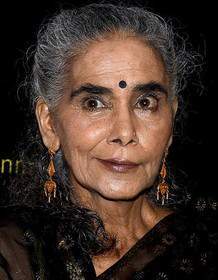
Fayyazi (Surekha Sikri)
Played by Surekha Sikri
Riyaz’s maternal grandmother, a steadfast keeper of family memory. She blends warmth with a firm sense of tradition, guiding her grandson on a careful path to understanding his mother. Her quiet resilience keeps the family history intact, even as it becomes emotionally complicated. Through her, the film foregrounds memory, loyalty, and the endurance of love across generations.
- 👵 Family
- 🧠 Memory
- 🎭 Art
- 🏛️ Royalty
- Z(
Zubeidaa (Karisma Kapoor)
Played by Karisma Kapoor
Daughter of Suleiman Seth who hides her film work and navigates an imposed marriage for family propriety. Her life unfolds between duty and a personal passion for acting, culminating in a dangerous romance with Vijendra Singh. She embodies the struggle for artistic expression within a rigid social system. Her choices reveal the costs and courage of choosing her own path.
- 🎬 Film
- 🎭 Actress
- ❤️ Love
- 🧭 Identity
- RV
Raja Vijendra Singh (Manoj Bajpayee)
Played by Manoj Bajpayee
Maharaja of Fatehpur whose courtly life is entangled in politics and propriety. His romance with Zubeidaa challenges palace conventions and highlights the fragility of personal happiness within monarchical duties. He embodies the conflict between desire and governance, where love can threaten political alliances. His choices illuminate the human cost of ruling a ceremonial realm.
- 👑 Royalty
- 💘 Forbidden love
- 🏛️ Court politics
- MD
Mandira Devi (Rekha)
Played by Rekha
The queen and Vijendra Singh’s wife, a figure who wields memory and influence in the palace. She embodies both strength and constraint, safeguarding her own status while confronting cultural expectations. Her perspective on Zubeidaa’s life provides a protective, sometimes ambiguous counterpoint to the public narrative. Her presence frames the balance of loyalty, duty, and legacy in the royal circle.
- 👑 Royalty
- 🧭 Duty
- 💔 Heartbreak
- SS
Suleiman Seth (Amrish Puri)
Played by Amrish Puri
Zubeidaa’s father, a filmmaker who secretly champions art but publicly upholds patriarchal control. His influence over his daughter’s life and career catalyzes the central conflict between creative freedom and social expectation. The tension between artistic passion and familial authority drives much of the drama. His actions set in motion the events that reshape the family’s destiny.
- 🎬 Filmmaker
- 🧭 Patriarchy
- 📜 Legacy
- RM
Riyaz Masud (Rajit Kapoor)
Played by Rajit Kapoor
Zubeidaa’s son, who grows up under his grandmother’s care and embarks on a patient, painful quest to know his mother. His journey to Fatehpur to uncover truth leads to conflicting testimonies and memories. He becomes the narrative’s moral center, balancing memory, love, and the burden of truth. His persistence ultimately reveals the resilience of maternal memory.
- 🌟 Narrator
- 🧭 Discovery
- 📚 Memory
- US
Uday Singh (Rahul Singh)
Played by Rahul Singh
The brother-in-law who pushes for his own desires and tests the limits of palace propriety. His scheming highlights the undercurrents of ambition within the royal circle. He represents the disruptive force that challenges the established order and complicates relationships. His actions contribute to the tension between personal ambition and duty.
- 🧭 Duty
- 💡 Ambition
- ⚖️ Power
Where and When Is Zubeidaa Set?
Zubeidaa is set in Fatehpur Palace, Fatehpur and India (1930s-1940s). Here is why the time and place matter to the story.
When
1930s-1940s
The narrative unfolds in the late colonial era, a time when traditional royal privilege coexisted with growing calls for modernity. Arranged marriages and dynastic duties dominate social life, while art and personal ambition begin to test the boundaries of convention. Public life and private desire collide as the era’s politics and social change press in on the palace. The period setting frames the characters' choices and the costs of pursuing passion.
Where
Fatehpur Palace, Fatehpur, India
The story centers on Fatehpur Palace, a grand seat of power where court life, ceremonial duty, and dynastic politics shape every choice. The palace atmosphere embodies tradition, strict codes, and public scrutiny that constrain personal longing. Outside the walls, the surrounding city and court politics ripple through the lives of Zubeidaa, Vijendra Singh, and their families.
- 👑 Royalty
- 🏛️ Palace
- 🗺️ History
What Are the Themes of Zubeidaa?
5 ideas the story keeps returning to, among them Love vs Duty, Memory & Secrets and Art & Autonomy.
-
01
Love vs Duty
Love and duty sit at the heart of the drama, forcing characters to choose between personal happiness and social obligation. Zubeidaa’s romance with Vijendra Singh challenges the palace’s strict codes and questions the price of自由. The narrative tracks how power structures shape intimate decisions, often leaving love to contend with public judgment. This theme probes whether true fulfillment can exist within rigid traditions.
-
02
Memory & Secrets
Riyaz’s quest to know his mother uncovers contested histories and hidden chapters of the past. The grandmother’s memories coexist with silences and selective retellings that complicate the truth. Journals and recovered traces threaten to rewrite family mythology and reveal what the public never saw. The tension between remembrance and erasure drives the film’s emotional core.
-
03
Art & Autonomy
Zubeidaa’s artistic talent becomes a beacon of autonomy in a restrictive world. Her secret pursuit of acting challenges patriarchal controls and public stereotypes. The cinema becomes both a personal outlet and a political act, shaping identity and social perception. The narrative reveals how art can resist confinement and redefine a woman’s life on her own terms.
-
04
Power & Gender in Court
Palace politics reveal how gender and status govern every decision, from marriages to loyalties. Suleiman Seth’s authority and Mandira Devi’s position demonstrate the complex web of influence that keeps the royal system intact. The story critiques traditional power dynamics while acknowledging the social fabric that sustains them. Personal desires collide with dynastic duty in a world where reputation rules.
-
05
Cinema as Truth
The film within the film becomes a testament to unshackled truth, preserving Zubeidaa’s voice beyond history’s margins. The missing tape symbolizes memory’s fragile yet enduring power to validate a life lived for art. As Riyaz uncovers the past, cinema emerges as a witness to what was silenced. The ending suggests that storytelling can redeem a life that society chose to overlook.
What Kind of Film Is Zubeidaa?
Melancholic in tone, with slow pacing and a moderate story, going by the plot summary.
- Tone
- Melancholic
- Pacing
- Slow
- Story
- Moderate
- Intensity
- Medium
- Ending
- Bittersweet
A reflective and melancholic journey through memory and loss, exploring a woman's constrained life with a slow, dignified pace that builds towards a tragic yet ultimately affirming conclusion.
- melancholic
- nostalgic
- introspective
- lonely
- reflective
- oppressive
- mother son relationship
- memory and truth
- search for identity
- artistic expression
Content notes: death, plane crash, emotional abuse, forced marriage.
Quiz
How well do you remember Zubeidaa? Test yourself on the story.
Where to Watch Zubeidaa
Stream it on Brew and Plex. US availability and prices from JustWatch.
 Brew
Brew  Plex
Plex  Plex Channel
  Tubi TV
  Xumo Play
 Streaming availability in the US, powered by