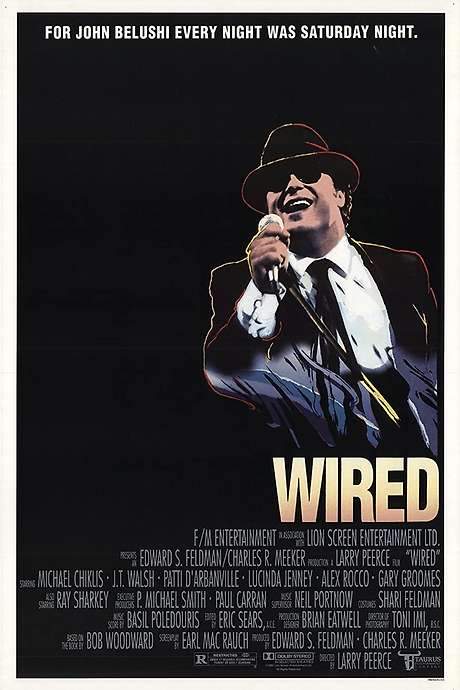
Wired 1989

Directed by

Larry Peerce
Made by

Lion Screen Entertainment
Wired Plot Summary
Read the complete plot summary and ending explained for Wired (1989). From turning points to emotional moments, uncover what really happened and why it matters.
In a sweeping look at a dazzling yet troubled career, this biographical portrait begins with John Belushi lighting up the stage on Saturday Night Live in 1976, delivering the blues number “I’m the King Bee” with the Killer Bees. The film then shifts to a stark turn of fate: in March 1982, Belushi is found dead from an overdose and is taken to the coroner’s office. As night folds into the early hours, a mysterious force rouses him from the quiet of death, and he bolts from the hospital in a frantic escape. A taxi ride leads him to reveal a surprising truth: the driver, Angel Velasquez, recognizes the man he is and reveals that he is John’s guardian angel, a guiding presence who will accompany him on a strange, revealing journey. They arrive at the Chateau Marmont, where Belushi confronts the reality that he had died the previous night, and the afterlife path begins as he revisits the life that drugs had shaped.
Together, Belushi and Angel begin a long, reflective tour through the actor’s accomplishments and missteps, tracing the choices that fueled his rise and the temptations that nearly consumed him. The journey back in time introduces a pivotal early chapter: Belushi meets Judy Jacklin before forming the band The Ravens in the 1960s. The tale then moves into his training years at The Second City in 1972, where a demanding teacher pushes him to “make them laugh until it hurts,” a line of pressure that will echo through his career. In the months leading up to the first episode of Saturday Night Live, Belushi signs with manager Arnie Fromson, a decision that helps propel him into the spotlight. The ascent continues as he becomes one of the era’s defining performers, a path that brings him into contact with Cathy Smith, with whom he experiments on drugs to sharpen his comedic edge. The ascent then intersects with cinematic success, notably a starring turn in Animal House, a film that cements his fame but also deepens the grip of substance use.
As the fame deepens, Belushi’s personal life intertwines with Judy Jacklin’s, an engagement that grows through the years; a beach moment where he asks her to marry is followed by the sobering reality of drug use. Judy, along with his friend and collaborator Dan Aykroyd, watches Belushi’s reliance on cocaine intensify, a pattern that strains friendships and work alike. The duo’s collaboration evolves into the high-octane Blues Brothers act, a partnership that fuels their film ambitions and ultimately leads to a major movie adaptation. The production years bring formidable pressure—Belushi’s reliance on cocaine helps him push through demanding shoots, including the filming of Continental Divide—even as Judy tries to help him moderate his usage. The vice resurges, driving a rift between Belushi, Dan Aykroyd, Arnie Fromson, and Judy, and he searches for a route back to health even as old habits threaten to derail everything.
In the midst of this turmoil, a separate thread unfolds: Bob Woodward begins shaping a book about Belushi’s life. Judy, Arnie, and Cathy share their experiences with him, and the journalist’s perspective shifts toward understanding why Belushi turned to drugs. Belushi himself, observed by Angel, attempts to connect with Woodward, hoping to make sense of the pressures from the film and television industries that haunted him. After a pivotal conversation with Dan, Woodward travels to Belushi’s room at the Chateau Marmont to piece together the events of his final night. A dramatic wager then arises between Belushi and his guardian angel: if Belushi can win a pinball game on a Blues Brothers–themed table, he will live. The bet ends in Belushi’s defeat, yet the encounter continues as he speaks with Woodward, revealing the torment and the relentless craving that defined his last days. The conversation also foregrounds Judy’s pain, with Belushi explaining the heavy burdens of fame that contributed to his choices, while Woodward pushes back against the idea that success justified the cost.
As the story moves toward its poignant close, the film captures a candid moment: an audio interview with Cathy in which she is asked whether she and Belushi shared a romantic relationship. Her answer is clear and steady: “No, he loved his wife.” The emotional arc culminates in a final, haunting image: Belushi’s likeness appears on screen as Joe Cocker, singing the tender line “You Are So Beautiful” on SNL, as the title “Wired” gradually forms over the fading scene. The film invites viewers to consider the corrosive nature of fame, the lure of escape through substances, and the human costs borne by those who live in the public eye, all while offering a measured, reflective tribute to a beloved comic performer and the era that defined him.
breathe for him
Wired Timeline
Follow the complete movie timeline of Wired (1989) with every major event in chronological order. Great for understanding complex plots and story progression.
Meeting Judy Jacklin and forming The Ravens
In flashbacks, John meets Judy Jacklin and together they form the band The Ravens in the 1960s. The partnership lays the groundwork for his personal and professional future, intertwining romance with his evolving music career. This early chapter sets the tone for both his artistry and his vulnerabilities.
Training at The Second City
In 1972, John is trained at The Second City, learning the craft and discipline of comedy. He’s coached to push his performance until it hurts, a mindset that fuels his later work. The experience marks a critical turning point toward national fame.
Arnie Fromson signs him before SNL premiere
On the night before SNL's debut, Arnie Fromson takes him on as manager and helps secure a contract. This prelude foreshadows his ascent to television stardom. The looming premiere sets the stage for a chaotic, high-pressure climb.
Rising on SNL and drug experimentation
Belushi becomes one of SNL's biggest stars and meets Cathy Smith, with whom he experiments with drugs to boost his performance. The camaraderie and pressure of live comedy push him toward heavier use. This period solidifies his professional peak and personal struggles.
Animal House and growing fame
His success on SNL leads to a feature role in National Lampoon's Animal House, catapulting him into major movie stardom. The new fame magnifies the stress and scrutiny surrounding his drug use. The line between professional triumph and personal turmoil begins to blur.
Marriage proposal on the beach
During a beach moment, John asks Judy to marry him and she accepts, sealing their partnership in life and art. The romance anchors him even as the cocaine-driven chaos of his career swirls around them. This scene blends tenderness with the looming consequences of his addiction.
Wake-up call: deep sleep and cocaine money talk
John falls into a deep sleep after taking a shot, prompting Judy and Dan Aykroyd to wake him and confront how much he spends on cocaine. The confrontation exposes the personal toll of addiction on his family and friends. It marks a turning point where his support network attempts intervention.
Blues Brothers formation and conflicts with Landis
The friendship with Dan Aykroyd sparks the Blues Brothers singing duo, which eventually leads to a feature film. The production is marred by drug use and clashes with director John Landis. This collaboration is a high point in his career but underscored by increasing strain.
Continental Divide filming and attempt to quit
During filming of Continental Divide, John tries to lay off drugs and get healthier, but the cravings and stress resurge. The effort to repair his image collides with ongoing addiction and professional tensions. The cycle of recovery and relapse continues to jeopardize projects.
March 1982 speedball injection
In March 1982, with Cathy Smith, John decides to try a speedball by injection. This dangerous turn intensifies the hold of the addiction and quickens the trajectory toward his final night. It marks a fatal escalation in his drug use.
Bob Woodward begins his book and interviews
Intercut into John's life, journalist Bob Woodward debates whether to write a book about him and begins interviewing Judy, Arnie, and Cathy. The testimonies probe the pressures that shaped his drug use and public image. The investigative thread adds a meta-narrative to the story.
Final night, pinball bet, and decline
John and Angel make a bet: if he wins a Blues Brothers pinball game, he will live. He loses the game, confronts Bob, and faces a final moment of reflection about his life and choices. The exchange underscores the inescapable pull of addiction even in moments of potential redemption.
Cathy's interview: no affair, he loved his wife
An audio interview with Cathy reveals she never had a sexual relationship with John, insisting that he loved his wife. The statement adds a humanizing counterpoint to the rumors and media narratives that surrounded him. It emphasizes the complexities of memory and publicity after his death.
Closing scene: Joe Cocker on SNL and the Wired finale
The film closes with John Belushi performing as Joe Cocker on SNL, singing You Are So Beautiful while the title Wired appears overhead. The ending frames the biographical meditation on genius, excess, and mortality. It leaves viewers pondering the cost of fame in a volatile industry.
Wired Characters
Explore all characters from Wired (1989). Get detailed profiles with their roles, arcs, and key relationships explained.
John Belushi
A charismatic comedian whose rise on SNL, Animal House, and The Blues Brothers is shadowed by increasingly heavy cocaine use and mounting industry pressure. The story follows his personal and artistic peak, then traces how addiction strains his relationships and career. His life and death anchor the film's exploration of fame's double-edged sword.
Angel Velasquez
A guardian angel who awakens Belushi after death and guides him through a retrospective journey of his choices. He serves as a reflective foil, illustrating the consequences of Belushi's lifestyle and offering a moral lens on fame. Through his eyes, the audience revisits pivotal moments from Belushi's life.
Judy Belushi
Belushi's wife from the early days through his rise to stardom, who tries to support him and temper his drug use. She is a confidant and witness to the pressures that strained their relationship. Her perspective highlights the personal cost of his career on family life.
Cathy Smith
A key figure who becomes involved in Belushi's drug use and life on the road. She collaborates with him and others during the height of his fame, and her actions reflect how relationships can enable risky behavior. Her presence underscores the social dynamics that contributed to the downfall.
Dan Aykroyd
Belushi's close collaborator and friend, whose partnership helped shape The Blues Brothers and their film careers. Their friendship becomes a focal point of the film's tension around drug use and career pressures. Aykroyd's role illustrates the complexities of creative partnerships under strain.
Arnie Fromson
Belushi's manager who helps steer his career, including pivotal contract signings. He represents the business side of fame and the pressures actors face from agents and producers. His presence demonstrates how industry mechanics interact with an artist's personal life.
Bob Woodward
The investigative journalist who interviews those close to Belushi to understand his final years. He embodies the meta-narrative of the film, piecing together events to explain what led to the tragic night. His interactions frame the commentary on fame, media, and truth.
Wired Settings
Learn where and when Wired (1989) takes place. Explore the film’s settings, era, and how they shape the narrative.
Time period
1960s–1982
The timeline stretches from the 1960s, when Belushi begins in improv and forms his early bands, through the 1970s rise on SNL and in films like Animal House, to the tragic overdose and death in March 1982. It shows the changing entertainment landscape of those decades, including collaborations with Dan Aykroyd and Cathy Smith. The period highlights how fame, film pressures, and personal demons intersected in a relatively short span.
Location
Los Angeles, New York, Chicago
The events unfold from Chicago's The Second City to New York's Saturday Night Live, tracing Belushi's rise in comedy. The film then shifts to Hollywood nightlife around the Chateau Marmont and the pressures of film and television studios. It ends with hospital and coroner scenes in Los Angeles, underscoring the consequences of the lifestyle.
Wired Themes
Discover the main themes in Wired (1989). Analyze the deeper meanings, emotional layers, and social commentary behind the film.
🔥
Addiction and Fame
The movie uses Belushi's ascent and rapid success to show how art and celebrity can amplify self-destructive behavior. Addiction is presented as a force intensified by fame, industry demands, and relentless schedules. Belushi's relationships and career suffer as cocaine use escalates, culminating in a fatal overdose.
🎭
Creative Pressure
Belushi's drive to perform is shown within a web of collaborative forces, notably with Dan Aykroyd, Arnie Fromson, and others. The film interrogates how the entertainment machine pushes performers toward risky choices to sustain fame and output. It contrasts on-screen genius with off-screen turmoil, revealing the costs of pursuing comedy at any cost.
⚰️
Mortality and Memory
Death is treated as a consequence of a high-pressure industry rather than a mere personal tragedy. The narrative uses interviews and recollections to examine how memory preserves or distorts the life of a star. The film juxtaposes Belushi's iconic performances with the toll that fame took on his body and relationships.

Coming soon on iOS and Android
The Plot Explained Mobile App
From blockbusters to hidden gems — dive into movie stories anytime, anywhere. Save your favorites, discover plots faster, and never miss a twist again.
Sign up to be the first to know when we launch. Your email stays private — always.
Explore the mobile appWired Spoiler-Free Summary
Discover the spoiler-free summary of Wired (1989). Get a concise overview without any spoilers.
In a world that still reverberates with the echo of late‑1970s comedy clubs and the neon glow of early‑night television studios, the film follows the restless spirit of John Belushi as he looks back on a career that blazed brighter than most could endure. The story opens with his iconic breakthrough on a groundbreaking sketch‑show, a moment that sealed his place in pop‑culture myth. From there, the narrative slides into a liminal space where memories flicker like stage lights, inviting viewers to feel the pulse of an era defined by wild humor, electrifying music, and relentless ambition.
Guiding this spectral journey is a mysterious, compassionate presence—a guardian angel who appears out of the night‑time haze and offers Angel as a steady, if otherworldly, companion. Their conversations become a conduit for reflection, allowing the legendary comic to sift through triumphs, friendships, and the intoxicating allure of fame. The tone remains intimate yet expansive: a blend of wistful nostalgia, sharp wit, and a hint of melancholy that never lets the audience forget the cost behind the laughs. The film’s style mirrors the era’s kinetic energy, weaving in fragments of live performance, backstage banter, and the raw chemistry that sparked legendary collaborations.
Through these contemplative scenes, the story paints a portrait of a man caught between the magnetic pull of the spotlight and the quiet yearning for personal peace. Interactions with fellow performers, a devoted partner, and industry insiders hint at the complex web of relationships that both lifted and tethered him. As the ghost of John Belushi navigates his own legend, the audience is invited to share in a meditation on creativity, excess, and the fragile humanity that lies behind every larger‑than‑life persona.
Movies with Similar Twists and Themes
Uncover films that echo the narrative beats, emotional arcs, or dramatic twists of the one you're exploring. These recommendations are handpicked based on story depth, thematic resonance, and spoiler-worthy moments — perfect for fans who crave more of the same intrigue.






Featured on this page

What's After the Movie?
Not sure whether to stay after the credits? Find out!
Check out our other apps:

SAT Sphere
Build confidence for the Digital SAT.

Mori Atlas
Discover wild places worth protecting.

Luntero
Search smarter for a home in Amsterdam.

Plot Explained
Unravel movie endings and hidden clues.

Pokechamp
Dive into Pokémon data and battle logic.

Driving Theory
Get ready for your European theory test.

Movie Dust
Plan your next cinema trip with ease.

Musemap
Find art and culture as you travel.

Selkobase
Compare credentials before committing.

Local Manual
Turn an unfamiliar country into practical next steps.

Lernavi
Compare school systems before your next move.

GymRoam
Find a workout stop wherever your plans take you.
Explore Our Movie Platform
New Movie Releases (2026)
Famous Movie Actors
Top Film Production Studios
Movie Plot Summaries & Endings
Major Movie Awards & Winners
Best Concert Films & Music Documentaries
Movie Collections and Curated Lists
© 2026 What's After the Movie. All rights reserved.
Privacy Policy