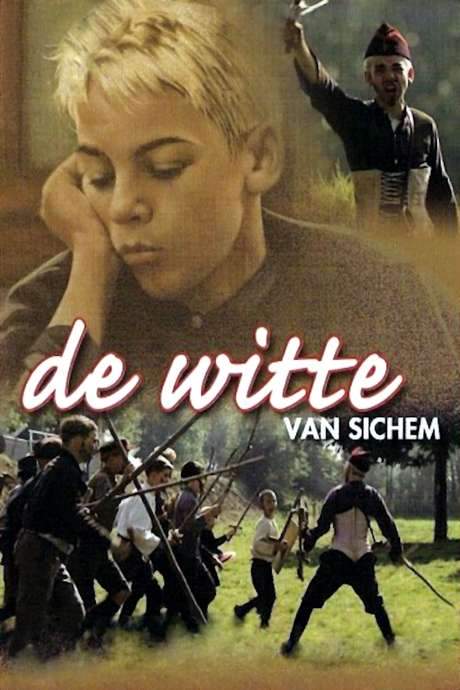



Whitey Plot Summary
Read the complete plot summary and ending explained for Whitey (1980). From turning points to emotional moments, uncover what really happened and why it matters.
The film is set in and around Sichem in 1901, focusing on Louis Verheyden, an 11-year-old boy who lives with his parents and two brothers on a farm. His mother is irritable and grouchy, and his father works for the landowner Coene, rarely being home except for dinner. The family dynamic is tense: Louis endures his father’s occasional blows, and he is bullied by his brothers Nis and Heinke. School is a miserable place for him, largely because of a severe teacher who believes in harsh discipline. Corporal punishment is common in this era, and pupils are cuffed, scolded, or even locked away for misbehavior.
Louis is a mischievous child who stirs up trouble in small, cheeky ways: giving wrong directions, trying to haggle for money from his brothers, tying people to chairs during church, stealing smoking materials from Coene, instructing family members to salt the potatoes excessively, and chasing Coene’s horses. Almost every scheme ends with punishment, and one of the most humiliating moments comes after he goes skinny-dipping in the river Demer; when his mother discovers him, Louis is forced to return home naked after his clothes are taken away. The tension at home and at school pushes him toward bigger fantasies and braver but reckless actions.
A turning point comes when Coene sends Louis to the nearby Averbode Abbey to deliver a package. There, he is struck by the beauty inside—the serene Gregorian singing, the lush garden, and the bustling printing establishment. This glimpse of a more ordered world plants a seed of curiosity and possibility in him. Later, during another punishment in the cellar, Louis discovers books by Hendrik Conscience and becomes obsessed with The Lion of Flanders and the Battle of the Golden Spurs. His imagination turns him into a tiny warrior, as he coerces his friends into reenacting a battle, with some of the children ending up injured and their mothers and the local priest rushing to intervene. The scene pulls Louis further into a world of heroism and danger, even as his own body and voice betray him.
Desperation drives his mother to send Louis and Heinke on a pilgrimage, hoping to curb his unruly streak. The journey leads them into a street brawl between the police and socialist supporters, forcing them to flee into a pub. The pub, it turns out, is run by socialists. Heinke Verheyden, a Catholic, tries to impress the female bartender by boasting about his political leanings, which Louis sees as blasphemy and uses as leverage against his friend. He threatens Heinke by threatening to expose his relationship with his girlfriend Liza Coene.
The year culminates in the annual fair. Louis tricks his brother by claiming their mother has promised to give him 15 Belgian Cents. At the fair, he reunites with his mother and, once again, ends up with more money, prompting their furious father to demand that Louis work for Coene to repay the extra sum or be sent to a community home. In the midst of this tension, Louis experiences two troubling incidents: a suicide attempt in the river and the end of Liza’s relationship with Heinke. The events escalate into a chaotic fight in a spiegeltent during the fair’s ball, leaving a lasting impression on Louis and his world.
The story then shifts forward to 1980, when a blond student who bears a striking resemblance to Louis appears in the printing establishment at Averbode Abbey. This look-alike is played by Eric Clerckx, who, with a different haircut, embodies the same restless spirit. He works in the same printing house, and when he drops a box, his boss scolds him. Inside the box lies the 117th reprint of the novel, “Whitey,” hinting at how Louis’s youthful curiosities echo through the ages and linger in the memory of the place.
Whitey Timeline
Follow the complete movie timeline of Whitey (1980) with every major event in chronological order. Great for understanding complex plots and story progression.
Louis's troubled home life
Louis Verheyden, an 11-year-old boy, endures a harsh family dynamic on a Sichem farm. His father is abusive and rarely home, while his mother is irritable and prone to complaints. He is bullied by his older brothers Nis and Heinke, shaping a pattern of fear and resentment that follows him.
A brutal school life
Louis hates school, largely due to a cruel teacher who delights in punishing pupils. Corporal punishment is common, with kids cuffed or locked in the coal chamber. The harsh classroom environment foreshadows the violence that permeates Louis's world.
Goading mischief and petty defiance
Louis is a mischievous schemer who frequently causes trouble around the farm and town. He gives others wrong directions, tries to haggle money from his brothers, and even ties people to chairs during church services. He steals smoking materials from Coene, advises his family to salt potatoes three times, and chases Coene's horses, inviting punishment each time.
Naked punishment after the river incident
Louis's latest misdeed ends with a humiliating punishment when he goes skinny dipping in the river Demer, despite his parents' prohibition. His mother arrives at the river, the hiding boy is uncovered, and his clothes are found by his mother. As a consequence, Louis must return home naked, a moment that deepens his shame and defiance.
Delivered package to Averbode Abbey
Coene sends Louis to Averbode Abbey to deliver a package, exposing him to a different world beyond the farm. He is impressed by the abbey's beauty, Gregorian singing, and the garden full of flowers. The printing establishment within the abbey also captures his imagination.
Discovery of Conscience and The Lion of Flanders
During another punishment, Louis is locked in the cellar where he discovers books by Hendrik Conscience. He becomes fascinated by The Lion of Flanders and the Battle of the Golden Spurs. The tale inspires him to stage a pretend battle with his friends, not fully realizing the consequences.
A pretend battle spirals into real conflict
Louis enthusiastically embodies Jan Breydel, leading his friends in a mock sword fight. The game attracts other children, and injured pupils rush home as the local priest and mothers arrive. Louis remains unaware that his play has escalated into a genuine confrontation.
Pilgrimage and a street clash of ideals
Desperate for change, Louis's mother sends him and Heinke on a pilgrimage. They end up amid a street fight between police and socialist supporters and flee into a nearby pub. The pub appears owned by the socialists, provoking tensions and a clash of beliefs between Louis and Heinke.
The pub confrontation and blasphemy fears
Inside the pub, Heinke tries to impress the bartender by claiming he supports socialism, which Louis regards as blasphemy. Louis threatens to inform on Heinke's girlfriend Liza, escalating personal tensions. The episode highlights the clash between religious conviction and political awakening.
The fair and a double payment
At the annual fair, Louis deceives his brother by claiming their mother promised 15 Belgian cents. He obtains extra pocket money, but his father discovers the deception and becomes furious. The consequence is that Louis must work for Coene to repay the money, or be sent to a community home.
Desperation and a fractured relationship
Two dark events shake Louis: he attempts to drown himself in the river Demer, driven by despair over his life. Meanwhile, Liza ends her relationship with Heinke, complicating the social circle around the boy. The combination of despair and lost love leads to further trouble at the fair ground.
Clash at the spiegeltent during the fair
The last major event of the 1901 sequence sees a brawl erupt in the spiegeltent where the fair ball takes place. Louis's impulsive nature keeps dragging him into trouble, leaving his family to confront the consequences. The confrontation caps the 1901 chapter of his youth.
A glimpse of Louis's legacy in 1980
The film shifts to 1980, showing a blond student who resembles Louis working in the printing establishment at Averbode Abbey. The moment hints at the enduring influence of Louis's story as the student humbly toils. A minor mishap occurs when he drops a box, drawing a scolding from the boss.
The reprint of Whitey ends the box
Inside the dropped box lies the 117th reprint of the novel Whitey, suggesting a meta-commentary on the source material's endurance. The scene underlines how the past remains present through literature. It closes the cycle of Louis's story in a modern echo.
Whitey Characters
Explore all characters from Whitey (1980). Get detailed profiles with their roles, arcs, and key relationships explained.
Louis Verheyden (Eric Clerckx)
Louis is a mischievous, curious boy whose pranks and experiments push the boundaries of a strict, often punitive world. His imagination drives him to reenact battles and test rules, even as he faces bullying and harsh discipline at home and at school. He is both fearless and vulnerable, learning about consequences while seeking belonging. His colorful attempts at control reveal a hunger for meaning beyond a rigid social order.
Moeder van de Witte (Blanka Heirman)
Louis’s mother is irritable and controlling, constantly worrying about discipline and order at home. Her complaints reflect the pressures of managing a large family under a stern husband. She often acts as the moral compass and the first line of punishment for Louis’s misdeeds. Her relationship with Louis is strained but central to his experience of home life.
Vader van de Witte (Willy Vandermeulen)
Louis’s father is aggressive and largely absent, only home at dinner and acting as the household enforcer. His violence and harsh demeanor shape Louis’s fear and desire to resist. He embodies the brutal authority of the family and the rural order that constrains Louis. His presence underscores the danger Louis faces at home.
Boer Coene (Paul S'Jongers)
Coene is the formidable landowner whose farm and authority dominate the local economy. He assigns Louis tasks and uses money and labor to exert control, intensifying the power dynamic between the boy and the landed class. His interactions with Louis reveal the social hierarchies of the time. Coene’s presence anchors the rural realism of the film.
Liza Coene (Magda De Winter)
Liza is a key figure in Louis’s social circle, offering a glimpse of affection and conflict. Her relationship with Heinke breaks under social and religious tensions, impacting Louis’s circle and choices. She represents a young perspective on love, trust, and loyalty amid a charged village life.
Heinke Verheyden (Jos Verbist)
Heinke is a Catholic friend who also exposes Louis to socialist ideas, signaling the clash of faith and politics in the village. He tries to impress with his stance and relationships, even as the two friends navigate religious and social divides. His evolving attitudes contribute to the story’s tension around belief and belonging.
Leraar / Fabriekschef (Paul-Emile Van Royen)
The teacher is a stern, punitive figure who enforces discipline and punishes pupils in the cellar. He embodies the era’s educational harshness and authority, shaping Louis’s perception of school as a site of power. His presence anchors the threat of punishment that drives many of Louis’s schemes.
Nils Verheyden (Ralf Troch)
Nils, Louis’s brother, participates in the family’s rough dynamics and contributes to the siblings’ rivalry. He embodies the typical older brother role within a tightly knit, often hostile, family environment. His interactions with Louis highlight the everyday friction within a crowded household.
Whitey Settings
Learn where and when Whitey (1980) takes place. Explore the film’s settings, era, and how they shape the narrative.
Time period
1901, 1980
The main action unfolds in 1901, a time when corporal punishment in schools and strict family authority prevail. The story shifts to 1980, presenting a modern frame where a blond student resembling Louis works in the Abbey’s printing establishment. The 1980 segment culminates with the 117th reprint of the novel Whitey appearing, linking past and present memory.
Location
Sichem, river Demer, Averbode Abbey
Set in and around Sichem, a small rural town centered on a family farm and the landowner Coene’s estate. The river Demer features in scenes of punishment and play, while Averbode Abbey offers a counterpoint with its beauty, Gregorian singing, and a printing establishment. Public spaces like the fair and a spiegeltent illustrate the social life, religion, and labor that shape the period.
Whitey Themes
Discover the main themes in Whitey (1980). Analyze the deeper meanings, emotional layers, and social commentary behind the film.
🌱
Coming of Age
Louis’s mischief and curiosity push him toward adulthood as he negotiates punishment, family expectations, and social norms. His actions are a mix of exploration and consequence, shaping his sense of self. The narrative traces how a turbulent childhood environment seeds personal growth and resilience.
🗜️
Authority
The story is framed by strong authorities—parents, a stern teacher, and religious influence—that discipline and regulate daily life. Louis’s acts reveal the cruelty and rigidity of power, while also exposing moments where authority provides structure and belonging. The presence of socialist movements and communal spaces introduces challenges to this order.
🎭
Imagination
Louis turns history into theater, reenacting battles and role-playing as a way to cope with his world. These fantasies offer agency and escape, even as they blur with reality and sometimes invite trouble. The imagination acts as a counterforce to constraint, guiding his reactions to conflict and punishment.
🏛️
Heritage
The Abbey, the printing press, and local rituals fuse personal memory with historical myth. The discovery of old books links Louis to a broader cultural past, including national tales like The Lion of Flanders. The dual timeline emphasizes how memory preserves a troubled heritage across generations.

Coming soon on iOS and Android
The Plot Explained Mobile App
From blockbusters to hidden gems — dive into movie stories anytime, anywhere. Save your favorites, discover plots faster, and never miss a twist again.
Sign up to be the first to know when we launch. Your email stays private — always.
Explore the mobile appWhitey Spoiler-Free Summary
Discover the spoiler-free summary of Whitey (1980). Get a concise overview without any spoilers.
In the early‑1900s Flemish countryside, a world of cracked farmhouses and soot‑stained fields sits beneath a rigid social order that still echoes the old‑world hierarchies of landowners, clergy and schoolmasters. The landscape is painted in muted earth tones, yet the rhythm of daily life hums with the restless energy of children who dream of something brighter beyond the furrowed rows. A quiet melancholy mingles with bursts of cheeky humor, hinting at the tension between tradition and the yearning for change.
At the heart of this world is the bright‑eyed, blond‑haired boy known as “White,” Louis Verheyden. He lives in a cramped farmhouse with a grouchy mother, a father who spends long hours serving the estate of the landowner Coene, and two older brothers, Nis and Heinke, who both bully and inspire him. School is a place of stern discipline where corporal punishment is routine, and the local curate enforces a strict moral code. Despite the oppressive atmosphere, Louis possesses a sharp wit and a daring imagination that propel him into constant mischief—tiny rebellions that keep the adults on edge and make his peers both admire and resent him.
The boy’s pranks—whether they involve confusing directions, snatching small treasures, or turning ordinary moments into miniature spectacles—are less about malice and more about testing the boundaries of a world that offers him few freedoms. Each escapade hints at a deeper curiosity, as Louis catches fleeting glimpses of a more ordered, cultured realm in places like the nearby abbey, where the sound of chanting and the scent of ink stir a yearning for a life beyond the farmyard.
White’s story unfolds as a portrait of youthful defiance set against a richly textured Flemish backdrop, exploring the clash between rigid authority and the irrepressible spirit of a boy who refuses to be tamed. The film balances tender humor with a sober look at class, education and family, inviting the audience to linger on the quiet moments that reveal how even the smallest rebellion can echo through generations.
Movies with Similar Twists and Themes
Uncover films that echo the narrative beats, emotional arcs, or dramatic twists of the one you're exploring. These recommendations are handpicked based on story depth, thematic resonance, and spoiler-worthy moments — perfect for fans who crave more of the same intrigue.






Featured on this page

What's After the Movie?
Not sure whether to stay after the credits? Find out!
Check out our other apps:

SAT Sphere
Build confidence for the Digital SAT.

Mori Atlas
Discover wild places worth protecting.

Luntero
Search smarter for a home in Amsterdam.

Plot Explained
Unravel movie endings and hidden clues.

Pokechamp
Dive into Pokémon data and battle logic.

Driving Theory
Get ready for your European theory test.

Movie Dust
Plan your next cinema trip with ease.

Musemap
Find art and culture as you travel.

Selkobase
Compare credentials before committing.

Local Manual
Turn an unfamiliar country into practical next steps.

Lernavi
Compare school systems before your next move.

GymRoam
Find a workout stop wherever your plans take you.
Explore Our Movie Platform
New Movie Releases (2026)
Famous Movie Actors
Top Film Production Studios
Movie Plot Summaries & Endings
Major Movie Awards & Winners
Best Concert Films & Music Documentaries
Movie Collections and Curated Lists
© 2026 What's After the Movie. All rights reserved.
Privacy Policy