What Is The White Ribbon About?
The premise of The White Ribbon in 285 words, with nothing given away. The full story follows below.
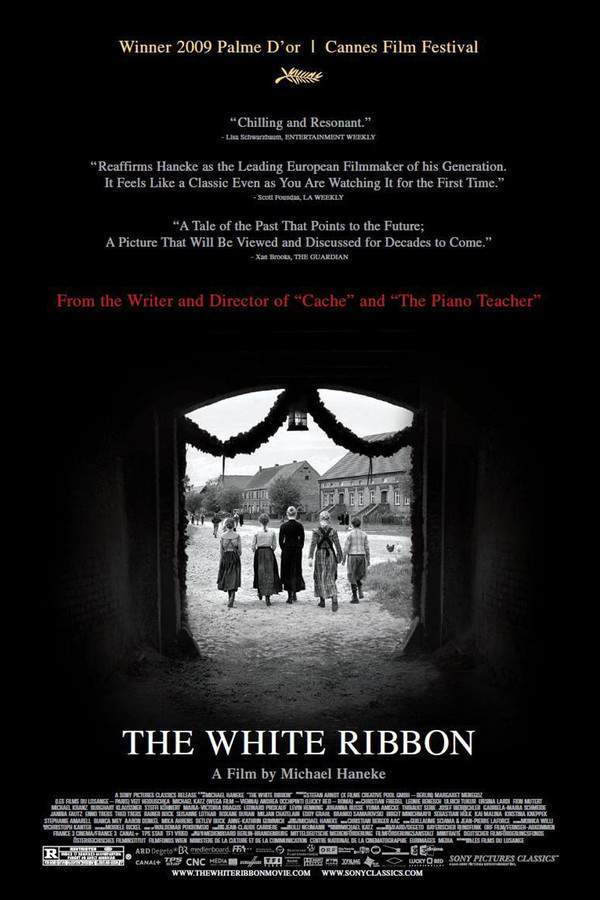
In the spring of 1913 a remote Protestant village in northern Germany rests under a sky that seems as orderly as its traditions. Life in Eichwald unfolds to the rhythm of harvests, church bells, and the quiet authority of a few long‑standing families. The cinematography captures a world of muted colors and crisp landscapes, where the simple cadence of daily chores is underscored by an ever‑present sense of restraint, as if the very air holds its breath waiting for something to shift.
At the heart of this community is the schoolteacher, an elderly man whose recollections frame the film’s narrative. He moves through the village’s narrow lanes, observing the rituals that bind its inhabitants—most strikingly the white ribbons the children wear, a symbol of purity imposed by the pastor during his solemn confirmation lessons. Around him, the doctor tends to the sick with a practiced compassion that masks his own secrets, while the baron presides over the fields and festivities that keep the laborers tied to the estate. It is through his quiet bond with Eva, a young woman of steady determination, that the teacher begins to sense the undercurrents that his orderly lessons cannot address.
A series of unsettling occurrences begins to ripple through the tranquil façade, leaving the villagers murmuring in hushed tones. Compelled by curiosity and a growing responsibility, the schoolteacher starts to piece together the subtle signs of tension that lie beneath the village’s rigid customs. The film glides between the stark beauty of the pre‑war countryside and the lingering unease of a community on the brink, inviting the viewer to wonder how the weight of discipline, secrecy, and collective memory might shape the fate of those who call Eichwald home.
What Happens in The White Ribbon?
The complete story of The White Ribbon, from the first scene to the last, in 644 words (about 3 minutes). Spoilers throughout. Names in the text link to 1 cast member page.
Spoilers ahead
The tale unfolds through the hazy memories of an elderly tailor, who reflects back on his past when he served as a village schoolteacher in the fictional Protestant village of Eichwald, Northern Germany. This story takes place between July 1913 and August 9, 1914, a time when the local powers—the pastor, doctor, and baron—exert their dominance over the village’s inhabitants, including women, children, and farmers.
In this tightly-knit community, the fervent pastor punishes the youth during confirmation classes, instilling a deep sense of guilt for even the slightest misdeeds. He orders his pupils to wear white ribbons as symbols of their lost innocence and purity. A particularly harsh incident arises when his son admits to ‘impure’ actions; rather than understanding, the pastor reacts by binding the boy’s hands to his bed each night—a cruel reminder of the strict moral code he enforces. Meanwhile, the village doctor, a widower, shows compassion towards the children he treats but subjects his housekeeper, also the local midwife with whom he is having an affair, to humiliation. Tragically, he also violates his teenage daughter, shrouding the household in shadows of abuse.
The baron, lord of the manor, sponsors harvest celebrations for the villagers, who largely work on his estate. Yet, when his young son suffers a grave injury at the hands of unknown attackers, he mindlessly separates from the devoted Eva, portrayed by Leonie Benesch, despite her unwavering support.
The schoolteacher’s bond with Eva deepens, leading to a fateful visit to her family home during Christmas. He seeks her father’s blessing for marriage, only to face hesitation masked as a testing period—a year-long delay before their union can be formalized.
As time passes, waves of unexplained tragedies ripple through the village. A wire strung between trees causes the doctor a devastating fall, and a farmer’s wife meets a fatal accident at the sawmill due to compromised floorboards—her own son being the one responsible for vandalizing the baron’s field. In an act of despair, the grieving husband eventually takes his own life. The baron’s son, Sigi, disappears during the harvest festival, only to be found the next morning, bound and brutally beaten. Amidst these calamities, a barn at the baron’s estate catches fire, and the baroness confides her love for another man to her husband.
In the classroom, the pastor’s authority over his children and students leads to a humiliating instance where he punishes his daughter. She, in a rebellious act, frees the pastor’s treasured parakeet—only for it to be later discovered on his desk, cruelly treated in the shape of a cross. A neighbor’s daughter has foreseen dire premonitions regarding the midwife’s disabled son, who subsequently suffers a violent attack—his injuries further shrouded in mystery by a cryptic note quoting Exodus 20:5 found near the scene. Meanwhile, the steward of the baron reacts violently towards his own son for the theft of Sigi’s flute.
In a desperate bid, the midwife commandeers a bicycle from the schoolteacher to reach the police, claiming her son knows the identity of his attacker. Strangely, they vanish from the narrative along with the doctor and his family, who leave behind a note announcing the closure of his practice—further deepening the shadows of suspicion and fear lingering over Eichwald.
Amidst growing doubts, the schoolteacher confronts the pastor, accusing him of shielding the truth and suggesting that his children might be behind the recent tragedies. Enraged, the pastor threatens to expose the schoolteacher’s allegations to the authorities.
As the world braces for war, the film closes dramatically, capturing the somber atmosphere during Sunday church just as the narrator is about to meet Eva’s father. A lingering tension pervades the peaceful village, leaving unsettling questions around the violent occurrences. The narrator is eventually drafted into the looming conflict of World War I, departing Eichwald forever, symbolizing the loss of innocence and the onset of darker times ahead.
The White Ribbon Timeline: Every Key Event in Order
14 key events in the order they happen, from “Schoolteacher's Reflection” to “Departure to Conflict”. 14 events name a place, across 8 locations.
- 1
Schoolteacher's Reflection
The tale begins with an elderly tailor reflecting on his past as a village schoolteacher in the fictional Protestant village of Eichwald, Northern Germany. His memories span from July 1913 to August 9, 1914, a period marked by strict moral codes and local power struggles.
When:July 1913 Where:Eichwald
- 2
Pastor's Control
In the village, the fervent pastor enforces a harsh moral regime during confirmation classes. His punishment method includes making the youth wear white ribbons to symbolize their lost innocence, creating a climate of fear and guilt among the children.
Where:Eichwald Church
- 3
Pastor's Cruelty
A devastating incident occurs when the pastor's son confesses to 'impure' actions. Instead of offering compassion, the pastor binds the boy’s hands to his bed each night, exemplifying the severe repercussions of moral transgressions in his household.
Where:Pastor's House
- 4
Doctor's Duality
The village doctor, a caring figure towards his patients, harbors a dark side. He mistreats his housekeeper, the midwife, and becomes embroiled in abuse, casting shadows over his relationship with his family while creating a façade of compassion.
Where:Doctor's House
- 5
Baron's Celebration
The baron, the lord of the manor, organizes harvest celebrations for the villagers, hoping to foster goodwill. However, when his son suffers a severe injury, the baron reacts by distancing himself from those offering support, including Eva.
Where:Baron's Estate
- 6
The Proposal
The schoolteacher's relationship with Eva deepens, prompting him to ask her father for permission to marry her. However, her father's hesitance introduces a year-long waiting period, leaving both lovers in a state of uncertainty.
When:Christmas Where:Eva's Family Home
- 7
Tragedy Strikes
A series of unexplained tragedies befalls the village, beginning with the doctor’s devastating fall caused by a wire strung between trees. The calamities escalate as constructions around the baron’s estate deteriorate, leading to the accidental death of a farmer's wife.
Where:Village
- 8
Disappearance of Sigi
During a festive occasion, the baron's young son, Sigi, mysteriously disappears. The subsequent search leads to his shocking discovery, bound and brutally beaten, which amplifies the already pervasive atmosphere of fear within the community.
Where:Baron's Estate
- 9
Pastor's Daughter's Defiance
In a moment of rebellion, the pastor's daughter frees his treasured parakeet, which later reappears cruelly treated. This act of defiance highlights the oppressive nature of the pastor's authority and the children's growing unrest.
Where:Pastor's House
- 10
Midwife's Desperation
The midwife attempts a desperate measure by borrowing a bicycle from the schoolteacher to report her son’s attacker to the police. This act reflects her desperation as her family also grapples with the shadows cast by the ongoing violence.
Where:Village
Show the other 4 events of The White Ribbon Hide the last 4 events
- 11
A Dark Exodus
The doctor and his family mysteriously vanish from the village, leaving behind a note about closing his practice. Their abrupt exit further deepens the mistrust and fear as residents speculate about the dark events plaguing Eichwald.
Where:Doctor's House
- 12
Confrontation with the Pastor
Growing suspicions compel the schoolteacher to confront the pastor, accusing him of hiding the truth behind the village's tragedies. Enraged, the pastor threatens to expose the accusations, intensifying the already charged atmosphere.
Where:Pastor's Office
- 13
The Prelude to War
As the village grapples with increasing turmoil, the atmosphere thickens with dread as the world edges toward war. The film closes dramatically, capturing the somber, tense atmosphere in the church during a service, emphasizing the community's fragility.
Where:Eichwald Church
- 14
Departure to Conflict
The narrative concludes with the schoolteacher being drafted into World War I, symbolizing a definitive loss of innocence for him and the village. His departure marks both a physical and emotional severance from Eichwald, foreshadowing the darkness ahead.
When:August 9, 1914 Where:Eichwald
Who Are the Main Characters in The White Ribbon?
3 characters, among them The Schoolteacher, Eva and The Pastor: who each one is and the part they play in the story. Every profile links to the actor’s page.
-

The Schoolteacher
Played by Christian Friedel
The schoolteacher serves as the narrator, reflecting on his past with a blend of nostalgia and sorrow. His deepening bond with Eva offers a glimpse of hope amidst the unfolding tragedies, yet his challenges against authority showcase his inner conflict. He becomes a conduit for revealing the horrors lurking beneath the village’s surface.
- 👨🏫 Teacher
- 🕰️ Reflective
-

Eva
Played by Leonie Benesch
Eva is characterized as a strong and supportive figure caught in the societal constraints of her time. Her love for the schoolteacher highlights her desire for personal happiness amidst the oppressive atmosphere of the village. Despite the challenges, her resilience reflects the struggles faced by women in a harsh environment.
- ❤️ Love
- 💪 Resilience
-

The Pastor
Played by Ernst Jacobi
The pastor represents the harsh moral authority of the village, enforcing strict rules that instill guilt in the youth. His failure to show compassion to his own son reveals a deep-seated hypocrisy. His domineering presence looms over the village, instilling fear instead of faith.
- ⛪ Authority
- 😠 Hypocrisy
Where and When Is The White Ribbon Set?
The White Ribbon is set in Eichwald and Northern Germany (July 1913 - August 1914). Here is why the time and place matter to the story.
When
July 1913 - August 1914
The film unfolds during a pivotal time just before World War I. This period is marked by an increasing sense of tension and impending conflict in Europe, which looms over the village's ordinary life. The societal norms of this era significantly influence the characters’ actions and the moral dilemmas they face.
Where
Eichwald, Northern Germany
Eichwald is a fictional Protestant village that serves as the backdrop for this tale. Known for its tightly-knit community, this village reflects a society under the rigor of strict moral codes imposed by local authorities. The pastoral setting is marred by underlying tensions and secrets that illustrate the dark side of a seemingly peaceful environment.
- 🏡 Village
- 📜 Fictional
What Are the Themes of The White Ribbon?
3 ideas the story keeps returning to, among them Innocence and Guilt, Authority and Rebellion and Tragedy and Trauma.
-
01
Innocence and Guilt
The theme of innocence lost permeates the narrative as characters grapple with guilt instilled by their strict upbringing. The white ribbons symbolize this loss, prompting reflections on morality and societal pressures. The tragic events in Eichwald serve as a chilling reminder of how the innocent are often the victims of harsh realities.
-
02
Authority and Rebellion
The struggle against authoritarian figures, such as the pastor, illustrates a clash between oppressive control and the desire for autonomy. Children and villagers alike respond rebelliously to intimidation, which adds layers to their character development. This tension reveals the precarious dynamics of power wielded by those in authority.
-
03
Tragedy and Trauma
The film explores the heavy impact of tragedy on community dynamics, with numerous unfortunate events showcasing the fragility of human relationships. The psychological scars left on characters evoke deep empathy, revealing that trauma does not merely affect individuals but can alter the very fabric of a community.
What Kind of Film Is The White Ribbon?
Dark in tone, with slow pacing and a complex story, going by the plot summary.
- Tone
- Dark
- Pacing
- Slow
- Story
- Complex
- Intensity
- High
- Ending
- Bleak
A deeply unsettling and slow-burning examination of a repressive society festering with hidden cruelty, creating a heavy, claustrophobic atmosphere that suggests a grim origin point for larger historical horrors.
- oppressive
- sinister
- claustrophobic
- somber
- melancholic
- unsettling
- authoritarianism
- repression
- small town secrets
- class conflict
Content notes: sexual abuse, child abuse, suicide, psychological abuse, cruel punishment.
Quiz
How well do you remember The White Ribbon? Test yourself on the story.
Where to Watch The White Ribbon
Rent or buy it from Amazon Video and Apple TV Store. US availability and prices from JustWatch.





Streaming availability in the US, powered by