The White Ribbon 2009

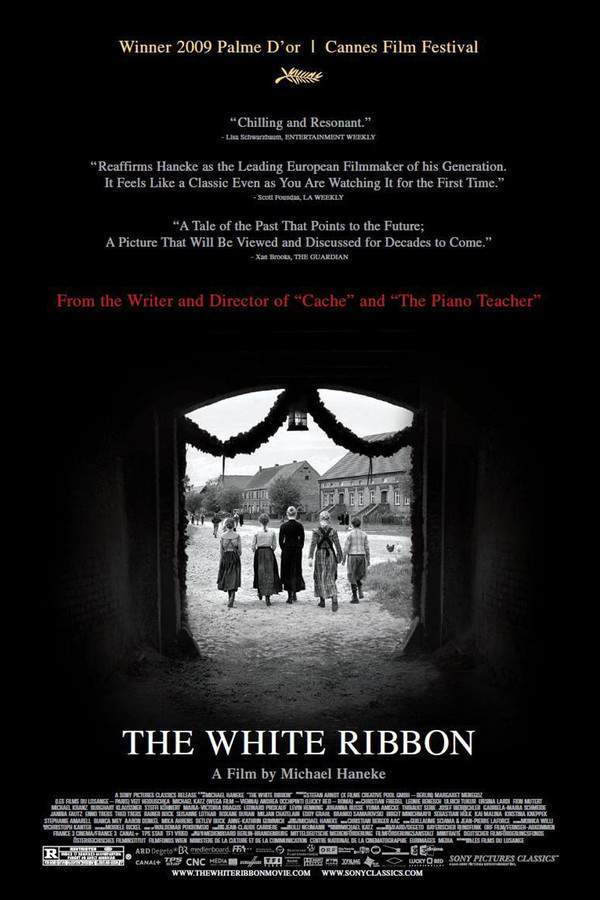
In a quiet German village just before World War I, a succession of unsettling incidents occur, seemingly linked to archaic forms of discipline. A local schoolteacher investigates these events, gradually revealing a disturbing connection between the community’s past and a growing sense of unease. His inquiries uncover a complex web of secrets and repressed tensions, prompting reflection on the societal forces that may have contributed to the impending conflict and the rise of extremism in Germany.


Does The White Ribbon have end credit scenes?
No!
The White Ribbon does not have end credit scenes. You can leave when the credits roll.
Where to Watch The White Ribbon
See current US streaming, rental, and purchase options for The White Ribbon (2009) via JustWatch.






Meet the Full Cast and Actors of The White Ribbon
Explore the complete cast of The White Ribbon, including both lead and supporting actors. Learn who plays each character, discover their past roles and achievements, and find out what makes this ensemble cast stand out in the world of film and television.



External Links and Streaming Options
Discover where to watch The White Ribbon online, including streaming platforms, rental options, and official sources. Compare reviews, ratings, and in-depth movie information across sites like IMDb, TMDb, Wikipedia or Rotten Tomatoes.









Ratings and Reviews for The White Ribbon
See how The White Ribbon is rated across major platforms like IMDb, Metacritic, and TMDb. Compare audience scores and critic reviews to understand where The White Ribbon stands among top-rated movies in its genre.

84
Metascore
7.9
User Score


85%
TOMATOMETER

79%
User Score

75
%
User Score
Take the Ultimate The White Ribbon Movie Quiz
Challenge your knowledge of The White Ribbon with this fun and interactive movie quiz. Test yourself on key plot points, iconic characters, hidden details, and memorable moments to see how well you really know the film.
The White Ribbon Quiz: Test your knowledge about the complex narrative and characters of 'The White Ribbon'.
In what year does the story of 'The White Ribbon' take place?
Awards & Nominations for The White Ribbon
Discover all the awards and nominations received by The White Ribbon, from Oscars to film festival honors. Learn how The White Ribbon and its cast and crew have been recognized by critics and the industry alike.
Full Plot Summary and Ending Explained for The White Ribbon
Read the complete plot summary of The White Ribbon, including all major events, twists, and the full ending explained in detail. Explore key characters, themes, hidden meanings, and everything you need to understand the story from beginning to end.
The tale unfolds through the hazy memories of an elderly tailor, who reflects back on his past when he served as a village schoolteacher in the fictional Protestant village of Eichwald, Northern Germany. This story takes place between July 1913 and August 9, 1914, a time when the local powers—the pastor, doctor, and baron—exert their dominance over the village’s inhabitants, including women, children, and farmers.
In this tightly-knit community, the fervent pastor punishes the youth during confirmation classes, instilling a deep sense of guilt for even the slightest misdeeds. He orders his pupils to wear white ribbons as symbols of their lost innocence and purity. A particularly harsh incident arises when his son admits to ‘impure’ actions; rather than understanding, the pastor reacts by binding the boy’s hands to his bed each night—a cruel reminder of the strict moral code he enforces. Meanwhile, the village doctor, a widower, shows compassion towards the children he treats but subjects his housekeeper, also the local midwife with whom he is having an affair, to humiliation. Tragically, he also violates his teenage daughter, shrouding the household in shadows of abuse.
The baron, lord of the manor, sponsors harvest celebrations for the villagers, who largely work on his estate. Yet, when his young son suffers a grave injury at the hands of unknown attackers, he mindlessly separates from the devoted Eva, portrayed by Leonie Benesch, despite her unwavering support.
The schoolteacher’s bond with Eva deepens, leading to a fateful visit to her family home during Christmas. He seeks her father’s blessing for marriage, only to face hesitation masked as a testing period—a year-long delay before their union can be formalized.
As time passes, waves of unexplained tragedies ripple through the village. A wire strung between trees causes the doctor a devastating fall, and a farmer’s wife meets a fatal accident at the sawmill due to compromised floorboards—her own son being the one responsible for vandalizing the baron’s field. In an act of despair, the grieving husband eventually takes his own life. The baron’s son, Sigi, disappears during the harvest festival, only to be found the next morning, bound and brutally beaten. Amidst these calamities, a barn at the baron’s estate catches fire, and the baroness confides her love for another man to her husband.
In the classroom, the pastor’s authority over his children and students leads to a humiliating instance where he punishes his daughter. She, in a rebellious act, frees the pastor’s treasured parakeet—only for it to be later discovered on his desk, cruelly treated in the shape of a cross. A neighbor’s daughter has foreseen dire premonitions regarding the midwife’s disabled son, who subsequently suffers a violent attack—his injuries further shrouded in mystery by a cryptic note quoting Exodus 20:5 found near the scene. Meanwhile, the steward of the baron reacts violently towards his own son for the theft of Sigi’s flute.
In a desperate bid, the midwife commandeers a bicycle from the schoolteacher to reach the police, claiming her son knows the identity of his attacker. Strangely, they vanish from the narrative along with the doctor and his family, who leave behind a note announcing the closure of his practice—further deepening the shadows of suspicion and fear lingering over Eichwald.
Amidst growing doubts, the schoolteacher confronts the pastor, accusing him of shielding the truth and suggesting that his children might be behind the recent tragedies. Enraged, the pastor threatens to expose the schoolteacher’s allegations to the authorities.
As the world braces for war, the film closes dramatically, capturing the somber atmosphere during Sunday church just as the narrator is about to meet Eva’s father. A lingering tension pervades the peaceful village, leaving unsettling questions around the violent occurrences. The narrator is eventually drafted into the looming conflict of World War I, departing Eichwald forever, symbolizing the loss of innocence and the onset of darker times ahead.

Coming soon on iOS and Android
The Plot Explained Mobile App
From blockbusters to hidden gems — dive into movie stories anytime, anywhere. Save your favorites, discover plots faster, and never miss a twist again.
Sign up to be the first to know when we launch. Your email stays private — always.
Explore the mobile appWatch Trailers, Clips & Behind-the-Scenes for The White Ribbon
Watch official trailers, exclusive clips, cast interviews, and behind-the-scenes footage from The White Ribbon. Dive deeper into the making of the film, its standout moments, and key production insights.
The White Ribbon Themes and Keywords
Discover the central themes, ideas, and keywords that define the movie’s story, tone, and message. Analyze the film’s deeper meanings, genre influences, and recurring concepts.
The White Ribbon Other Names and Titles
Explore the various alternative titles, translations, and other names used for The White Ribbon across different regions and languages. Understand how the film is marketed and recognized worldwide.
Similar Movies To The White Ribbon You Should Know About
Browse a curated list of movies similar in genre, tone, characters, or story structure. Discover new titles like the one you're watching, perfect for fans of related plots, vibes, or cinematic styles.



Quick Links: Summary, Cast, Ratings, More

What's After the Movie?
Not sure whether to stay after the credits? Find out!
Check out our other apps:

SAT Sphere
Build confidence for the Digital SAT.

Mori Atlas
Discover wild places worth protecting.

Luntero
Search smarter for a home in Amsterdam.

Plot Explained
Unravel movie endings and hidden clues.

Pokechamp
Dive into Pokémon data and battle logic.

Driving Theory
Get ready for your European theory test.

Movie Dust
Plan your next cinema trip with ease.

Musemap
Find art and culture as you travel.

Selkobase
Compare credentials before committing.

Local Manual
Turn an unfamiliar country into practical next steps.

Lernavi
Compare school systems before your next move.

GymRoam
Find a workout stop wherever your plans take you.
Explore Our Movie Platform
New Movie Releases (2026)
Famous Movie Actors
Top Film Production Studios
Movie Plot Summaries & Endings
Major Movie Awards & Winners
Best Concert Films & Music Documentaries
Movie Collections and Curated Lists
© 2026 What's After the Movie. All rights reserved.
Privacy Policy