What Is The Platform About?
The premise of The Platform in 342 words, with nothing given away. The full story and the ending follow below.
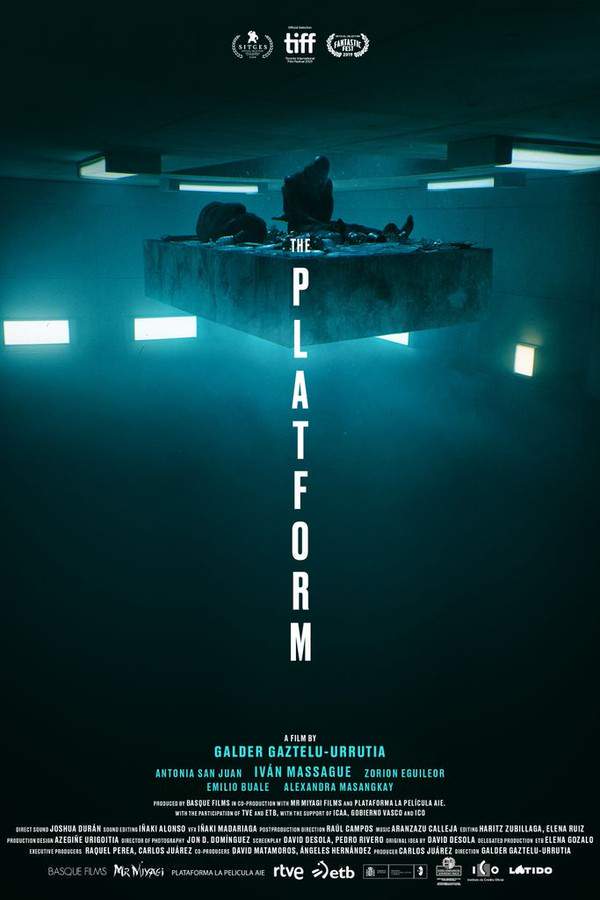
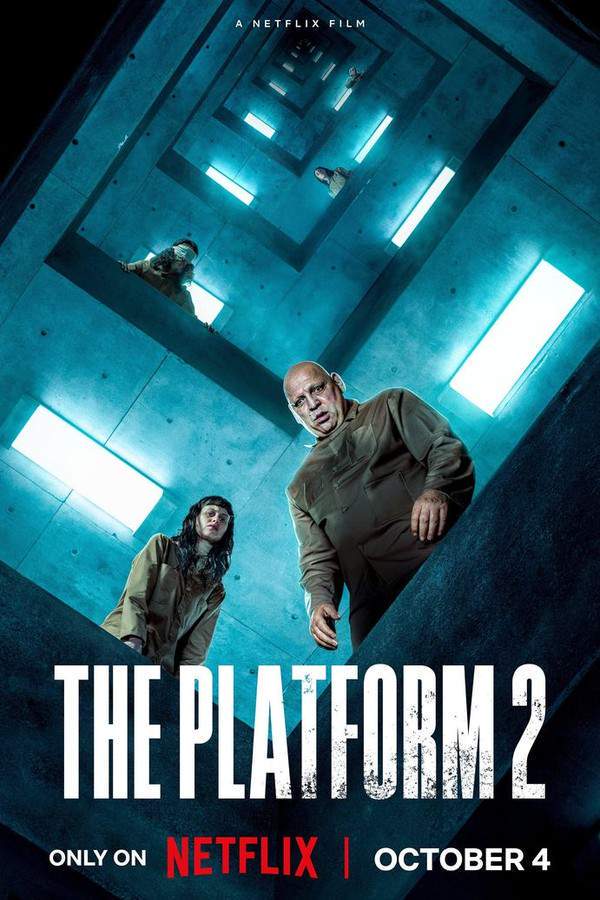
In a towering vertical prison where each of the 333 floors houses only two occupants, survival hinges on a single, relentless rhythm: a platform laden with food descends through a central shaft, stopping briefly on each level before continuing its journey downward. The higher you are, the richer the share; the lower you are, the more you must endure scarcity. This stark, mechanical distribution creates a bleak hierarchy that permeates every cell, turning the structure itself into a living metaphor for privilege and desperation. The atmosphere is cold and claustrophobic, the concrete walls echoing with the muted cries of those who watch the platform glide past, knowing that each pause could mean a meal—or a reminder of hunger.
When the story begins, we meet Perempuán, a woman who has entered the prison burdened by personal grief, and Zamiatin, a formidable man whose background in mathematics hints at a mind accustomed to order and logic. Their assignment to the same cell on level 24 thrusts them into an environment where every decision about food, trade, and cooperation is fraught with moral weight. Around them, an informal code has emerged: some prisoners cling to a self‑imposed set of rules that emphasize fairness and restraint, while others seize whatever they can in a more primal scramble. This tension between “Loyalist” ideals and “Barbarian” instincts creates an undercurrent of unease that colors every interaction.
The tone of the film is unflinching and oppressive, blending stark visual design with a simmering sense of psychological dread. The relentless descent of the platform becomes a visual pulse, marking time and reinforcing the ever‑present disparity between those who look down and those who look up. As Perempuán and Zamiatin navigate the daily rituals of the prison—choosing their meals, sharing limited personal items, and confronting the unspoken rules of survival—their growing connection hints at a deeper question: can humanity persist, or even thrive, within a system built on such stark inequality? The stage is set for a tense exploration of ethics, solidarity, and the instinct to endure against an unforgiving architecture.
What Happens in The Platform?
The complete story of The Platform, from the first scene to the last, in 609 words (about 3 minutes). Spoilers throughout. Names in the text link to 2 cast member pages.
Spoilers ahead
Perempuán awakens inside a brutal, vertical prison that stretches to 333 floors, with one cell per level and two inmates sharing each space, all centered around a hollow shaft. A platform laden with food descends this shaft daily, pausing at every floor for only two minutes. Those on higher levels get first access to the meals, while inmates on lower floors risk starvation as the platform passes. Before entering, every prisoner is interviewed and selects a daily dish that will be provided each day on their level, and each inmate is allowed to bring one personal item. At the end of each month, prisoners are randomly reassigned to new floors, keeping everyone guessing about who will be their neighbor next.
On level 24, Perempuán shares a cell with a large man named Zamiatin, named after Yevgeny Zamyatin. A Loyalist from the level above, Robespierre, explains the informal system that currently governs the prison. Two factions exist: Loyalists, who follow strict, self-imposed rules about eating only their chosen food (or trading only by consent), and Barbarians, who eat whatever they can grab. Robespierre argues that the Loyalist law ensures a fairer distribution of the food.
Tensions flare quickly when inmates from higher levels eat food meant for others, triggering violence, deaths, and injuries. Perempuán and Robespierre work to defend their level and keep order, while they learn about The Messiah, a mythical figure who is said to have survived a month without food through meditation and who sacrificed his own leg to feed others on the lowest levels. His followers, the Anointed Ones, spread his message of the Loyalist laws.
As days pass, Zamiatin and Perempuán grow closer, sharing food and personal stories. It is revealed that Perempuán entered the prison grieving after accidentally causing the death of her then-boyfriend’s son, while Zamiatin is a disillusioned mathematician. Zamiatin, in violation of the law, sometimes eats a portion of food from prisoners who have already died. Word of this spreads, and to protect Perempuán from punishment, the already ill Zamiatin sets himself on fire and leaps into the pit.
The following month, Perempuán is paired with Sahabat on level 51. They ride the platform down to punish two Barbarians who have eaten others’ food. In conversation with Sahabat that night, Perempuán learns of a particularly brutal Anointed One, Dagin Babi, who methodically kills both Barbarians and Loyalists who commit minor infractions. Sahabat plots to fake their deaths by consuming portions of an oil painting at a lower level, which contains a substance that will render them immune to the knockout gas used at the end of each month, with the aim of being disposed of outside the facility. When Dagin and his followers arrive to punish disobedience, they kill Sahabat and cut off one of Perempuán’s arms.
The next month, Perempuán awakens on level 72 with Trimagasi, Zorion Eguileor. Disillusioned with Loyalist ideals, she recruits a group of Barbarians, ostensibly to challenge the Loyalists but truly to find the painting. A bloody battle ensues, and Perempuán and Trimagasi emerge as the sole survivors.
Perempuán eventually locates the painting and consumes a portion of it. She passes out and later awakens on level 333, bundled among corpses being disposed of. Gravity seems suspended as workers in gas masks reset the prison. She spots a young boy and, choosing to save him, forgoes escape. She encounters other prisoners living on the lower level, implied to be a purgatory for dead souls, who urge her to return the boy to the upper levels while she remains below with them. In a poignant twist, Perempuán reunites with Goreng, Ivan Massagué, who is presumably her ex-boyfriend.
The Platform Timeline: Every Key Event in Order
12 key events in the order they happen, from “Arrival on Level 24 and the platform system” to “Perempuán’s mercy: sending the boy up and reuniting with Goreng”. 12 events name a place, across 10 locations.
- 1
Arrival on Level 24 and the platform system
Perempuán and Zamiatin are placed on Level 24, sharing a single cell in the vertical prison where two people sit per floor. A central shaft carries a platform loaded with food down through every level, pausing for two minutes at each floor. Robespierre explains the informal Loyalist vs Barbarian system and the rules meant to govern fair eating.
When:Day 1 Where:Level 24
- 2
Tensions rise as higher floors hoard food
As days pass, prisoners on higher levels take food meant for others, sparking conflicts across the shaft. Perempuán and Robespierre struggle to defend their level and maintain some order amid the chaos. The supposedly fair Loyalist laws are tested by hunger and desperation.
When:Month 1 Where:Central shaft and various levels
- 3
The Messiah and the Anointed Ones
Whispers speak of 'The Messiah', a figure who survived a month without food and sacrificed his leg to feed others on the lowest levels. His followers, the Anointed Ones, spread this message to legitimize Loyalist laws. The myth fuels hope but also deepens divisions between factions.
When:Month 1 Where:Prison-wide
- 4
Zamiatin’s sacrifice to protect Perempuán
Zamiatin secretly shares some of the dead prisoners' food, violating the rules to help Perempuán. To shield her from punishment and challenge the system, he sets himself on fire and jumps into the pit. The dramatic act shocks the inmates and hardens Perempuán’s resolve.
When:Month 1 end Where:Central pit
- 5
New pairing on Level 51: Perempuán and Sahabat
In the next cycle, Perempuán is paired with Sahabat on Level 51. They ride the platform down to punish two Barbarians who have stolen or eaten others’ meals. The mission underscores the brutal enforcement of the food rules and foreshadows further violence.
When:Month 2 start Where:Level 51
- 6
Learning about Dagin Babi and a dangerous plan
Sahabat describes Dagin Babi, a brutal Anointed One who kills not only Barbarians but also Loyalists who break minor rules. They devise a risky plan to fake their deaths by consuming from an oil painting at a lower level, hoping the substance will make them immune to the knockout gas and enable an escape outside the facility.
When:Month 2 Where:Lower levels
- 7
Confrontation with Dagin Babi; Sahabat dies
When Dagin and his followers arrive to punish disobedience, they kill Sahabat and sever one of Perempuán’s arms. The brutal encounter reveals the depth of the prison’s violence and the cost of rebellion. Perempuán’s determination intensifies despite the personal loss.
When:Month 2 end Where:Level 51
- 8
Level 72: Perempuán joins Trimagasi and grows disillusioned
The next month, Perempuán awakens on Level 72 with Trimagasi. She becomes disillusioned with Loyalist ideals and starts recruiting a group of Barbarians, not just to challenge the Loyalists but to search for a way to obtain the painting that could unlock a larger plan.
When:Month 3 start Where:Level 72
- 9
A brutal clash between factions
A bloody battle erupts between Loyalists and Barbarians, leaving heavy casualties on both sides. Perempuán and Trimagasi survive the clash, signaling a shift in power dynamics within the prison. The fighting tests loyalties and the willingness to defy the system.
When:Month 3 Where:Level 72 and surrounding levels
- 10
Perempuán discovers the painting
After the battle, Perempuán locates the infamous painting and consumes a portion, hoping to secure an edge. She loses consciousness and awakens on Level 333, indicating that the balance of the prison has shifted dramatically. The painting becomes a potent symbol of both hope and peril.
When:Month 3–4 Where:From Level 72 to Level 333
- 11
Gravity suspended and Level 333’s purgatory
On Level 333, gravity is suspended and workers in gas masks reset the prison's balance. Perempuán awakens to a grim, purgatory-like lower world where the living and the dead share space. She encounters a young boy and faces a moral choice about salvation vs. escape.
When:Post-awakening Where:Level 333
- 12
Perempuán’s mercy: sending the boy up and reuniting with Goreng
Deciding to protect the vulnerable, Perempuán sends the boy back up to the higher levels while she stays with the other prisoners below. She meets Goreng again, who is presumably her ex-boyfriend, suggesting a final, fragile reunion. The ending hints that humanity may endure in small acts of mercy even as the prison collapses.
When:Finale Where:Level 333
Who Are the Main Characters in The Platform?
6 characters, among them Perempuán, Goreng (Ivan Massagué) and Trimagasi (Zorion Eguileor): who each one is and the part they play in the story. 2 of them link to the actor’s page.
- P
Perempuán
A grieving woman who enters the prison after causing an accidental death. She forms bonds, negotiates access to food, and becomes a catalyst for change, even as she grows disillusioned with the Loyalist system. Her arc moves from cautious pragmatism to a determined effort to protect others and challenge the prison’s moral code.
- 🎭 Protagonist
- 🧭 Leader
- 🔥 Rebel
-

Goreng (Ivan Massagué)
Played by Ivan Massagué
A prisoner who becomes an ally and counterpoint to Perempuán's plans. He offers a practical, often morally ambiguous perspective on survival and power within the platform. Their evolving dynamic adds a personal dimension to the broader struggle over resources and rules.
- 🎭 Protagonist
- 🧭 Strategist
- 🧪 Survivor
- T(
Trimagasi (Zorion Eguileor)
Played by Zorion Eguileor
An older inmate who aligns with Perempuán and provides wary wisdom and grit. He embodies disillusionment with Loyalist rules and becomes a key survivor through the platform’s brutal cycles. His pragmatic approach contrasts with idealistic loyalty.
- 🧭 Elder
- 🎯 Ally
- Z
Zamiatin
A mathematician inmate who occasionally defies the law by consuming small amounts from food meant for others. He ultimately sacrifices himself by setting himself on fire to protect Perempuán, illustrating the extreme stakes of loyalty and moral compromise in the platform.
- 🧠 Intellectual
- 🔥 Rebel
- R
Robespierre
A Loyalist from the level above who introduces the informally enforced rules of the prison. He helps define the social order and participates in the conflict between Loyalists and Barbarians.
- 🎭 Authority
- 🧭 Mentor
- S
Sahabat
A companion of Perempuán who joins level 51 and participates in plans to subvert the system. Their efforts highlight the costs and dangers of resisting the platform’s strict codes.
- 🎭 Ally
- 🔥 Rebel
Where and When Is The Platform Set?
The Platform is set in Vertical Prison and The Platform. Here is why the place matters to the story.
Where
Vertical Prison, The Platform
Inside a dystopian, vertical prison with 333 floors and a central shaft where a platform descends with a daily meal. Two inmates share each level’s cell, and the platform stops briefly at every floor, so those on higher levels eat first while lower levels face starvation. Prisoners form Loyalist and Barbarian factions around the feeding rules, and monthly reassignments keep the population unstable. The environment is harsh and ritualized, emphasizing power, hunger, and control.
- 🏢 Vertical Prison
- 🧭 Social Hierarchy
- 🍽 Food Distribution
What Are the Themes of The Platform?
3 ideas the story keeps returning to, among them Food Scarcity, Loyalist Order and Messiah Myth.
-
01
Food Scarcity
The descending platform creates brutal inequality: higher levels access food first, while lower levels struggle to survive. Inmates adapt by forming loyalist rules, trading within a fragile code, or resorting to theft and force. Conflicts erupt when meals are confiscated or misallocated, causing deaths and injuries. Hunger serves as the engine for power dynamics, solidarity, and moral compromise within the prison.
-
02
Loyalist Order
Loyalists insist that strict adherence to food rules ensures fair distribution, but enforcement relies on dominance and fear. Barbarians challenge the system, exposing the fragility of the claimed fairness. The monthly resets blur lines between order and chaos, revealing how law can be used to sustain control. The platform demonstrates how power is maintained when those in charge define what counts as justice.
-
03
Messiah Myth
A legend of The Messiah—surviving a month without food through meditation and sacrificing his own leg to feed others—circulates among prisoners. His followers, the Anointed Ones, interpret Loyalist ideals as both justification and justification for rebellion. The myth fuels hope and manipulation, shaping choices, loyalties, and strategies in the fight over resources. The legend becomes a lens through which inmates grapple with hunger, sacrifice, and survival.
How Does The Platform End?
The last act of The Platform and what it means, in 300 words. The ending lands as ambiguous. Big spoilers: read the plot summary first if you have not seen it.
The final act, in full
The conclusion of The Platform centers on a desperate mission that transforms into a moment of profound revelation. After navigating the brutal hierarchy of the Vertical Self-Management Center, Goreng and his ally Baharat reach the bottom of the facility, Level 333. Their original goal was to enforce rationing among the inmates and preserve a single dish of food as a symbolic message to the administration above—a sign that the prisoners are capable of cooperation and self-restraint. However, the discovery of a young girl on this lowest level shatters their plan. Realizing that the administration has lied about children being in the facility, Goreng understands that this child is the true message. She represents innocence and the future, starkly contrasting with the savage gluttony and survivalism that defines the prison.
In the film’s final moments, Goreng makes the critical decision to stay in the depths of the Pit while sending the girl back up on the platform. This choice is driven by heavy symbolic weight; having resorted to violence and cannibalism to survive, Goreng feels he has been irrevocably corrupted by the system. He is haunted by the apparition of his former cellmate, Trimigasi, representing the guilt and “demons” he has accumulated. By remaining below, Goreng accepts his fate as a permanent resident of this allegorical Hell, acknowledging that he cannot return to the “heaven” of Level 0. The ending underscores a powerful shift in the film’s thematic arc: the “message” sent upward is not one of mere compliance or revolution, but a testament to the system’s failure to protect the innocent. As the girl ascends toward the light, Goreng walks into the darkness with the ghosts of the Pit, signifying that for the corrupted old world to end, a sacrifice must be made so that the innocent future can rise.
What Kind of Film Is The Platform?
Dark in tone, with steady pacing and a moderate story, going by the plot summary.
- Tone
- Dark
- Pacing
- Steady
- Story
- Moderate
- Intensity
- High
- Ending
- Ambiguous
An intensely grim and claustrophobic thriller set in a brutal vertical prison, creating a constant sense of desperation and oppressive dread as it explores the darkest extremes of human survival under a cruel system.
- oppressive
- claustrophobic
- nihilistic
- desperate
- anxious
- brutal
- social inequality
- survival
- class struggle
- human nature
Content notes: cannibalism, suicide, self-immolation, starvation, mutilation, murder.
Quiz
How well do you remember The Platform? Test yourself on the story.