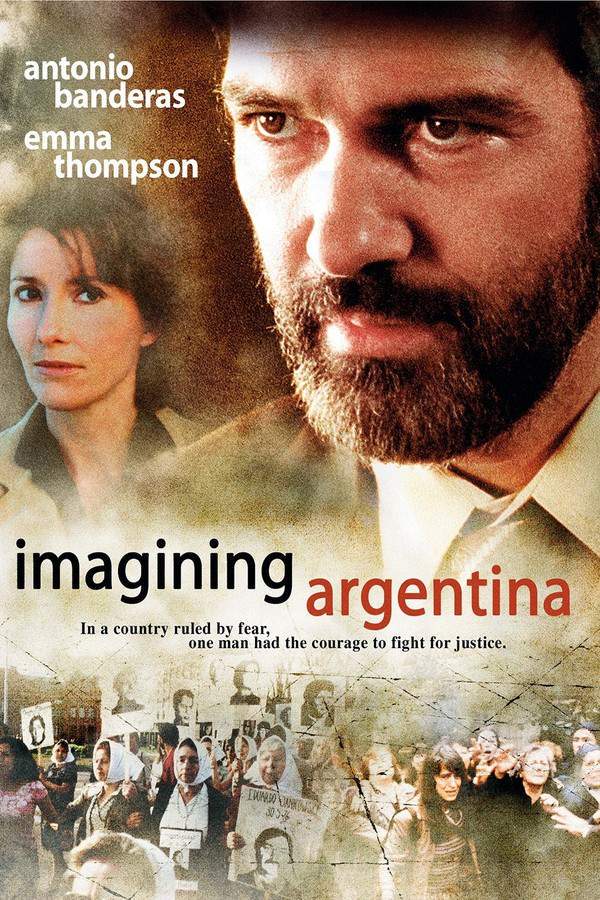
What Is The Girlfriend About?
The premise of The Girlfriend in 281 words, with nothing given away. The full story follows below.
In the quiet, working‑class suburbs just south of Buenos Aires, the late‑1970s feel both ordinary and fraught. A military coup has tightened its grip on the city, casting a permanent hush over public life while shadows linger in every conversation. The atmosphere is dense with whispered fear, the hum of daily chores, and the ever‑present question of who might be watching. It is a world where personal ambitions clash with a regime that scrutinizes even the most private gestures.
Maria lives the rhythm of a household that revolves around her husband’s handyman work, three lively children, and the lingering ache of a son who vanished in the early days of the dictatorship. Her lifelong confidante, Raquel, has chased a dream of the stage, carving a name for herself in theatre while navigating the added weight of her Jewish heritage in an increasingly suspicious society. Their friendship, forged in childhood games and reinforced by adult hardships, is a steady current beneath the turbulence of the times, each woman offering the other a refuge from the pervasive uncertainty.
When the disappearance of Maria’s eldest son surfaces as an impossible question, the two women find themselves pulled into a quiet, determined search that reverberates through the neighborhood’s narrow streets and clandestine gatherings. The repression tightens around Raquel, whose artistic life and personal ties begin to attract unwanted attention, while Maria steps into a circle of mothers seeking truth and solidarity. The looming prospect of exile and the distant promise of democratic change hover on the horizon, giving the story a mood that is simultaneously intimate, tense, and hopeful, as two friends cling to one another while the country teeters on the edge of transformation.
What Happens in The Girlfriend?
The complete story of The Girlfriend, from the first scene to the last, in 609 words (about 3 minutes). Spoilers throughout. Names in the text link to 4 cast member pages.
Spoilers ahead
In a quiet, working-class suburb just south of Buenos Aires in 1978, María Liv Ullmann and Pancho Federico Luppi are a devoted married couple who carry a heavy, shared grief: the disappearance of their eldest son, Carlos. They lean on Raquel Kessler Cipe Lincovsky, María’s lifelong friend and a feisty Jewish woman whose cultural identity has drawn suspicion in these troubled days, yet who remains a deeply endearing presence in María’s life.
Raquel’s world revolves around the theatre, where she has earned notice and influence, even as anti-Semitic pressures shadow her career. Her lover, Diego Víctor Laplace, a powerful public television executive, must skillfully balance his affection for Raquel with the demands of a culture intent on stifling dissent during the dictatorship that grips Argentina. The couple’s private romance sits uneasily beside a public climate of repression, adding tension to Raquel’s already precarious position and shaping the choices she makes as the era’s repressive machinery tightens around them.
María’s relentless search for their missing son strains her relationship with Pancho and with Raquel, each wrestling with the slim odds of finding him alive. Raquel’s own experiences—her Jewish identity, her role in roles that the dictatorship might discourage, and the compromises demanded by the times—create additional pressure, pushing her toward exile in Berlin as conditions grow harsher. Yet even as the losses compound, María’s quiet strength and the bonds of friendship hold firm, drawing others into a circle of solidarity as mothers and friends confront an era of fear and invisibility.
This mission gradually becomes María’s life’s work. Her determination leads her to Berlin, where a German-Argentine exile claims to have seen Carlos near death in one of the numerous secret detention centers. The report is painful to hear, and María initially rejects the possibility that her son could be gone for good, clinging to the hope that he might still be alive. Her conviction propels her back to Buenos Aires, where the search resumes with renewed urgency, even as the country itself teeters on the edge of profound political change.
Back in Argentina, the quiet network of mothers—many of them part of the Mothers of the Plaza de Mayo—becomes a source of courage and community for María. Their joint grieving and persistent pursuit of truth mirror the broader struggle for accountability under an oppressive regime. The toll of years of fear, separation, and uncertainty is felt deeply, but María’s resolve never wavers, and the friendship she shares with Raquel remains a cornerstone of her strength.
With democratic elections finally arriving in 1983, Raquel returns to the country, only to discover that Diego is unhappily married and that María has not yet come to terms with the certainty of her son’s death. The revelation that life has moved on around them tests the enduring bond between María and Raquel. Yet the film emphasizes that a lifelong friendship can survive even the most harrowing periods, and their connection endures through the pain, the yearnings, and the slow, stubborn search for truth.
As the story unfolds, the quiet suburbs of Buenos Aires and the corridors of power in Buenos Aires give way to a broader meditation on memory, loss, and the resilience of human ties. The narrative moves between intimate, personal grief and the larger, historical moment in which it unfolds, inviting audiences to reflect on what families endure when faced with disappearance, political violence, and the hard work of healing. In the end, the film offers a textured portrait of love and endurance—how couples and friends navigate heartbreak, confront systemic cruelty, and find a path forward when the truth they seek remains elusive, yet their commitment to one another remains unbroken.
The Girlfriend Timeline: Every Key Event in Order
12 key events in the order they happen, from “Carlos disappears in the Buenos Aires suburb” to “The bonds endure; friendship remains resilient”. 11 events name a place, across 7 locations.
- 1
Carlos disappears in the Buenos Aires suburb
María and Pancho grapple with the sudden vanishing of their eldest son, Carlos, while the family home in the quiet Buenos Aires suburb becomes a place of unanswered questions. The couple's grief is shared with María's longtime friend Raquel, whose support anchors their fragile hope. The absence colors every day as they search in silence, afraid of what the truth might reveal.
When:circa 1978 Where:Buenos Aires suburb (south)
- 2
Raquel becomes a steadfast ally in grief
Raquel steps into the center of María's world as a sounding board and ally. The two women navigate a landscape of loss, while Raquel's own life—her career in theatre and the attention from her lover—adds complexity to their bond. Their friendship becomes a lifeline as the search for Carlos continues.
When:circa 1978 Where:María's circle, Buenos Aires
- 3
Raquel's career under pressure from the dictatorship
Raquel's celebrated theatre work and high-profile connections help shield her from anti-Semitic attacks, but the repressive climate of the dictatorship nonetheless bleeds into her life. Diego, her lover and a public television executive, walks a tightrope between supporting Raquel and appeasing powerful forces. The era's censorship and fear complicate Raquel's art and relationships.
When:late 1970s–1983 Where:Theatre world and public television
- 4
Raquel goes into exile in Berlin
As political pressure intensifies and the dictatorship discourages controversial roles, Raquel leaves Argentina for exile in Berlin. There, her Jewish identity and fearless spirit keep her connected to the culture she loves while underscoring the costs of dissent. The move isolates her from a country she still believes in.
When:early 1980s Where:Berlin
- 5
María joins Mothers of the Plaza de Mayo
María's search for her son expands beyond a private ordeal as she joins the Mothers of the Plaza de Mayo, a growing collective of women seeking the detained. She earns the respect of fellow mothers from diverse backgrounds and finds a sense of purpose in a public, collective struggle. The movement reinforces her resolve to keep looking for Carlos.
When:late 1970s–1980s Where:Buenos Aires, Plaza de Mayo
- 6
The quest deepens; the mission becomes life itself
What began as a personal grief evolves into a lifelong mission. María's relentless search consumes her days and reshapes her identity as a mother and activist. Her determination strains personal relationships but also galvanizes a wider circle of kin and friends around the cause.
When:late 1970s–1980s Where:Buenos Aires
- 7
The search takes María to Berlin
Driven by hope and desperation, María travels to Berlin seeking any lead about Carlos's fate. The journey embodies the international reach of the dictatorship's reach and the personal costs of a missing child. In a foreign city, she confronts memories that echo home and questions she may never fully answer.
When:early 1980s Where:Berlin
- 8
A German-Argentine exile claims Carlos is near death
In Berlin, a German-Argentine exile recounts having seen Carlos near death at one of the detention centers. María initially rejects the anecdote as too painful to believe, clinging to hope that her son is alive. The claim, however, forces her to confront the brutal reality of the regime and fuels her resolve to keep searching.
When:early 1980s Where:Berlin
- 9
María returns to Buenos Aires to continue the search
Grasping at any thread of truth, María leaves Berlin and returns to Buenos Aires with renewed determination to uncover Carlos's fate. She refuses to accept silence or death as final and keeps pressing to understand what happened to her son. The city remains a backdrop to a personal crusade that will define her life.
When:early 1980s Where:Buenos Aires
- 10
Raquel returns after democracy; Diego's marriage revealed
Following Argentina's return to democracy in 1983, Raquel returns from exile to her homeland. She discovers that Diego is unhappily married, and that María has not accepted the possibility that Carlos might be dead. The reunion with a changed nation mirrors the changes in their own lives.
When:1983 Where:Argentina
- 11
Diego's personal life contrasts with María's hope
Diego's marriage is shown to be unhappy, revealing the personal costs of his balancing act between Raquel and public life. María's insistence on the possibility of Carlos's survival challenges their understanding of loss. The emotional landscape remains tense, yet their complex ties endure.
When:1983 Where:Argentina
- 12
The bonds endure; friendship remains resilient
Despite separations, exile, and political upheaval, the lifelong friendship between María and Raquel persists. They find strength in shared memories and continued faith that their sons may still be alive or that truth will emerge. The film closes on a note of cautious hope and enduring connection.
When:post-1983
Who Are the Main Characters in The Girlfriend?
7 characters, among them María (Liv Ullmann), Pancho (Federico Luppi) and Raquel (Cipe Lincovsky): who each one is and the part they play in the story. Every profile links to the actor’s page.
-
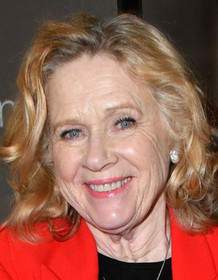
María (Liv Ullmann)
Played by Liv Ullmann
A devoted mother and wife whose quiet life is upended by her son Carlos's disappearance. Her relentless search reveals a growing inner strength, as she navigates grief, truth, and the demands of a brutal political era. María's arc centers on resilience, moral courage, and the transformation from domestic routine to public advocacy.
- 🧭 Tenacious
- 💪 Resilient
- 👩👧👦 Maternal
- P(
Pancho (Federico Luppi)
Played by Federico Luppi
María’s husband, who embodies steadiness and traditional partnership. He struggles with the strain of his wife’s quest and the family’s changing dynamics, offering quiet support while wrestling with his own limits. Pancho represents the ordinary man trying to keep family life intact under extraordinary pressure.
- 🏠 Loyal
- 🕊️ Supportive
- 👨👩👧👦 Husband
- R(
Raquel (Cipe Lincovsky)
Played by Cipe Lincovsky
María’s lifelong, feisty Jewish friend whose cultural identity shapes both her art and her fate. Her relationship with María spans decades, and her career in theatre becomes entangled with the dictatorship’s censorship. Raquel’s journey includes exile and the burden of memory, reflecting how friendship endures through upheaval.
- 🎭 Artist
- 🧭 Identity
- 🛡️ Loyal
- D(
Diego (Victor Laplace)
Played by Víctor Laplace
A public television executive who must balance his love for Raquel with the regime’s demands. His position places him at the confluence of культура, politics, and personal risk. Diego’s calculus illustrates how individuals navigate power structures while attempting to protect those they care about.
- 🎙️ Public figure
- 🧭 Moral conflict
- 🖥️ Media
- CT
Comisario Tito (Lito Cruz)
Played by Lito Cruz
A police commander who personifies state authority during the dictatorship. His actions represent the coercive mechanisms that shape the environment in which the protagonists live. Tito’s presence underscores the constant threat of surveillance, arrest, and intimidation faced by ordinary citizens.
- 🛡️ Authority
- 🧭 Coercion
- ⚖️ Law enforcement
- P(
Parapolicial (Claudio Rissi)
Played by Claudio Rissi
An operative associated with the repressive apparatus that operates beyond civilian oversight. His involvement signals the reach of state power into personal lives and the violence used to suppress dissent. The character embodies the looming danger that shadows the search for truth.
- 🔒 Repression
- 💼 Security apparatus
- 🕶️ Shadow operations
- AD
Amigo de Raquel en Berlín (Harry Baer)
Played by Harry Baer
A German-Argentine exile who provides a distant connection to Carlos’s fate and the broader diaspora. His perspective reflects the international dimension of Argentina’s dictatorship, as well as the personal costs of exile and memory. He helps anchor Raquel’s Berlin chapter in the story.
- ✈️ Exile
- 🌍 Diaspora
- 🗣️ Memory
Where and When Is The Girlfriend Set?
The Girlfriend is set in Suburb of Buenos Aires and Argentina (Late 1970s (circa 1978)). Here is why the time and place matter to the story.
When
Late 1970s (circa 1978)
The events unfold during Argentina's last civil-military dictatorship (1976–1983), a period of heavy censorship, surveillance, and political repression. Disappearances and fear shape daily life, even for ordinary, aspiring artists and families. The film depicts how the regime’s climate forces people to balance personal safety with moral duty. The search for Carlos occurs against this backdrop of state power and social resistance.
Where
Suburb of Buenos Aires, Argentina
Set in a quiet, working-class suburb south of Buenos Aires, the film grounds its story in ordinary life under a turbulent era. The neighborhood is depicted as close-knit, with families navigating fear and grief amid disappearing relatives. This intimate setting highlights community bonds, including mothers who band together in the face of repression. The suburb acts as a microcosm of Argentina during the dictatorship, where private lives are haunted by public silences.
- 🏘️ Suburban setting
- 🗺️ Argentina
- 🕰️ 1970s
What Are the Themes of The Girlfriend?
4 ideas the story keeps returning to, among them Grief and Loss, Friendship & Solidarity and Oppression & Dictatorship.
-
01
Grief and Loss
The disappearance of Carlos becomes a defining wound for María and her family. Grief is not only personal but social, drawing in friends and neighbors who share the ache. The narrative follows María’s unwavering drive to uncover the truth, even as hope wanes. In parallel, other characters grapple with the limits of what can be learned or proven under a repressive regime.
-
02
Friendship & Solidarity
María’s lifelong friendship with Raquel provides a counterbalance to loss, offering support and shared memory. Their bond navigates cultural and identity tensions, revealing resilience through art, conversation, and mutual aid. The Mothers of the Plaza de Mayo emerge as a broader symbol of collective courage and persistent advocacy. The duo’s collaboration shows how solidarity can sustain individuals when political forces threaten their families.
-
03
Oppression & Dictatorship
The dictatorship’s repressive climate frames every character’s choices, from Raquel’s artistic career to Diego’s careful public role. Anti-Semitic undercurrents and censorship complicate personal and professional lives. The film portrays how institutions mold behavior, suppress dissent, and weaponize fear to control society. Yet it also showcases quieter acts of defiance and moral choice amid surveillance and coercion.
-
04
Exile & Identity
Raquel’s exile to Berlin underscores how identity and political danger intersect, forcing her to navigate belonging and exile. The Berlin encounter offers a distant glimpse of Carlos’s fate and the trauma of displacement. Upon return, the complexities of identity and memory resurface, shaping how each character relates to Argentina and to one another. The interplay of home and abroad highlights the cost of political turmoil on personal lives.
What Kind of Film Is The Girlfriend?
Dark in tone, with slow pacing and a moderate story, going by the plot summary.
- Tone
- Dark
- Pacing
- Slow
- Story
- Moderate
- Intensity
- High
- Ending
- Bittersweet
A heavy and intimate drama set against the backdrop of Argentina's dictatorship, following the slow-burning grief and resilient friendship of two women searching for a disappeared son amidst pervasive fear and uncertainty.
- somber
- grieving
- anxious
- resilient
- oppressive
- meditative
- political disappearance
- lifelong friendship
- motherhood
- dictatorship
Content notes: political abduction, state violence, forced disappearance, grief.
Quiz
How well do you remember The Girlfriend? Test yourself on the story.