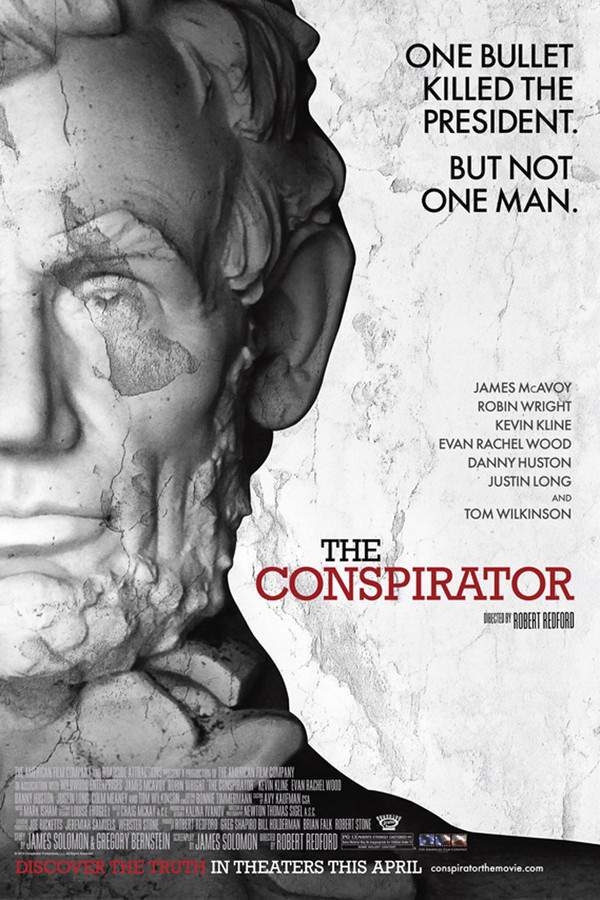
What Is The Conspirator About?
The premise of The Conspirator in 283 words, with nothing given away. The full story follows below.
In the immediate aftermath of a war that has torn the nation apart, Washington, D.C. hums with a fragile mix of celebration and unease. The capital’s grand halls and bustling streets are still echoing with the recent echoes of conflict, and a lingering sense that the country’s future hangs on the delicate balance between justice and vengeance. Beneath the surface, whispered conversations hint at a web of intrigue that could reshape the fragile peace.
Frederick Aiken, a former Union soldier who has traded his battlefield sword for a lawyer’s pen, finds himself drawn into the heart of this uncertainty. He is a man marked by duty, yet haunted by the moral complexities of a nation trying to heal. As he navigates the corridors of power, his sense of honor clashes with the pressure to align with the prevailing currents of public opinion and political ambition, setting the stage for an inner conflict as compelling as any external threat.
Mary Surratt, a respected boarding‑house owner, becomes an unexpected focal point for Aiken’s newfound dilemma. Her involvement in the unfolding controversy forces him to confront questions of loyalty, truth, and the cost of defending the accused in a climate charged with emotion. Meanwhile, seasoned figures such as Reverdy Johnson loom in the background, embodying the entrenched legal traditions and the personal stakes that make every courtroom exchange feel like a battleground.
The film unfolds with a restrained, period‑rich atmosphere, blending meticulous historical detail with the tension of a courtroom drama. Its tone is sober yet compelling, inviting viewers to linger over the moral gray zones of post‑war America, where every decision ripples through the fragile fabric of a nation striving to define its own redemption.
What Happens in The Conspirator?
The complete story of The Conspirator, from the first scene to the last, in 787 words (about 3 minutes). Spoilers throughout. Names in the text link to 2 cast member pages.
Spoilers ahead
On April 14, 1865, just five days after the Civil War concluded with Robert E. Lee surrendering to Ulysses S. Grant at Appomattox Court House in Virginia, a series of dramatic and tragic events unfolded that would change the course of American history forever. The day began with celebrations among Union supporters, including Frederick Aiken, a dedicated lawyer and Union veteran. Fellow friends William Thomas Hamilton and Nicholas Baker, along with Aiken’s wife, Sarah Weston, joined in the festivities. Little did they know, the night would bring shock and horror through a carefully orchestrated conspiracy.
Later that evening, the infamous actor John Wilkes Booth, played by shji-sano, infiltrated Ford’s Theater, where President Abraham Lincoln was watching the play Our American Cousin. Booth managed to silently enter the President’s box and, without hesitation, shot Lincoln in the back of the head. During this act of assassination, Booth also stabbed Henry Rathbone, a guest in the box, and then leapt onto the stage, shouting the infamous “Sic Semper Tyrannis!”, meaning “Thus always to tyrants,” a Southern slogan expressing vengeance. The assassin escaped into Maryland, but his actions set off a chain of events that shocked the nation.
Meanwhile, other members of the conspiracy attempted to carry out their own assassinations. Lewis Powell (referred to as Lewis Payne in the film), a Southern sympathizer, attacked William Seward, the Secretary of State, leaving him fatally wounded but alive. George Atzerodt, a German immigrant and carriage repair business owner, was assigned to kill Vice President Andrew Johnson but, overwhelmed by fear, became intoxicated and fled, failing his mission. The chaos culminated in Booth’s dramatic escape into the night, while President Lincoln, gravely wounded, was taken to a nearby boarding house. Despite efforts to save him, Lincoln succumbed to his injuries early the next morning, leaving Andrew Johnson to assume the presidency in a nation grieved and divided.
In the aftermath, Secretary of War Edwin Stanton swiftly ordered the arrest of all individuals connected to the conspiracy. Among those targeted was Mary Surratt, a boarding house owner, who was accused of conspiring with Booth and others. Booth and David Herold, another conspirator, evaded capture for several days. That period saw intense searches, including a fiery confrontation near a Maryland barn, where Union soldiers suspected Booth and Herold were hiding. Herold surrendered, but Booth was shot and killed by Sergeant Boston Corbett when he tried to raise a rifle.
Mary Surratt’s trial drew intense public attention. Reverdy Johnson, Maryland’s senator and her defense attorney, found himself defending her against mounting evidence. Her son, John Surratt, escaped into hiding, prompting a nationwide manhunt. The accused also included Herold, Powell, Atzerodt, Michael O’Laughlen, Edman Spangler, Samuel Mudd, and Samuel Arnold.
Frederick Aiken, initially hesitant, was appointed as Mary Surratt’s defense lawyer. During the trial, Aiken sought truth and justice by questioning witnesses such as Louis J. Weichmann, who was connected to Mary’s son and associated with Booth. Weichmann’s testimony linked Mary to the conspirators’ meetings. Although Aiken believed Mary might be guilty, she insisted she only conspired to kidnap Lincoln, not assassinate him, and that her son John was not involved in the plot at the time of Lincoln’s death. She claimed John left town weeks before the murder, and she was unaware of his whereabouts.
Throughout the trial, Aiken’s efforts were met with opposition. His association with Mary cost him his membership at the Century Club, leading to personal and professional conflicts. Despite these challenges, he continued to investigate, seeking evidence and attempting to prove her innocence. His interactions with Mary, her family, and witnesses underscored the complex emotions and political tensions of the case.
Ultimately, Mary Surratt was found guilty on all charges on July 6. Her initial sentence of life imprisonment was later commuted to execution, and despite Aiken’s attempt to secure her release via a writ of habeas corpus, President Andrew Johnson suspended the court’s decision. Mary and her fellow conspirators Powell, Herold, and Atzerodt were executed by hanging, symbolizing the tragic end of a controversial chapter in American history.
Following the executions, Aiken visited John Surratt, still in captivity abroad. The young man declined to accept Mary’s rosary but expressed gratitude for Aiken’s kindness. The story closes with a note on justice: a year later, the Supreme Court ruled that even in wartime, citizens were entitled to trial by civilian jury — an important legal principle established by Ex parte Milligan. John Surratt’s case remained unresolved for years, and he was eventually released when the jury could not reach a verdict. Disillusioned with the law, Aiken left behind his legal career to become the first City Editor for The Washington Post, leaving a lasting legacy in both journalism and legal history.
The Conspirator Timeline: Every Key Event in Order
11 key events in the order they happen, from “End of the Civil War” to “Aiken's Career Shift”. 11 events name a place, across 5 locations.
- 1
End of the Civil War
On April 14, 1865, five days after Robert E. Lee's surrender to Ulysses S. Grant at Appomattox, celebrations take place among Union supporters, including Frederick Aiken. The nation is still recovering from the war's end as the events of Lincoln's assassination unfold. The night is marked by a somber mood as the country grapples with the aftermath of victory.
When:April 14, 1865 Where:Virginia
- 2
Lincoln Assassinated at Ford’s Theater
John Wilkes Booth sneaks into President Lincoln's box during a performance of Our American Cousin and shoots him in the back of the head. Booth then stabs diplomat Henry Rathbone and escapes into Maryland shouting, 'Sic Semper Tyrannis!' The crowd and witnesses, including Aiken, watch horror-stricken as Lincoln is carried away unconscious.
Where:Ford’s Theater, Washington D.C.
- 3
Lincoln Dies and Andrew Johnson Becomes President
Early the next morning, President Lincoln is declared dead after being taken to a nearby boarding house. Vice President Andrew Johnson is sworn in as the new President, marking a pivotal transition in leadership during a turbulent time.
Where:Washington D.C.
- 4
Suspicions and Arrests of Conspirators
Secretary of War Edwin Stanton orders the arrest of suspected conspirators, including Mary Surratt. Booth and David Herold evade capture for several days before being located, leading to a siege in a barn where Booth is ultimately shot and killed while trying to threaten soldiers.
Where:Various locations, including Maryland
- 5
Mary Surratt's Trial Begins
Mary Surratt, accused of conspiracy, is defended by her attorney Reverdy Johnson while being investigated alongside other suspects. The trial gains attention as witnesses like Louis J. Weichmann testify about her connections and possible involvement in the conspiracy.
Where:Washington D.C.
- 6
Evidence and Testimonies at Court
At trial, testimonies reveal Mary Surratt’s links to Booth and other conspirators, including alleged possession of binoculars and firearms. These accusations build a case against her, leading to her indictment and the anticipation of a verdict.
Where:Washington D.C.
- 7
Mary Surratt's Defense and Public Opinion
Aiken attempts to gather evidence to defend Mary, but faces challenges as testimonies accuse her of involvement. The controversial defense causes Aiken to question her guilt, but public opinion and court decisions seem to favor her conviction.
Where:Washington D.C.
- 8
Sentencing and Execution of Conspirators
On July 6, 1865, Mary Surratt, along with Powell, Herold, and Atzerodt, is found guilty and sentenced to death, while others like Mudd and Spangler receive prison sentences. Despite Aiken's efforts, Mary is executed by hanging, ending the trial proceedings.
When:July 6, 1865 Where:Washington D.C.
- 9
Aiken Visits John Surratt in Jail
Sixteen months after the executions, Aiken visits John Surratt, who was captured abroad and is incarcerated. John expresses gratitude for Aiken’s kindness toward his mother, and declines her rosary, hinting at ongoing estrangement or guilt.
When:Approximately late 1866 Where:Jail, location unspecified
- 10
Court Rulings and John Surratt’s Fate
A year later, the Supreme Court rules that citizens are entitled to civilian trials, not military tribunals. John Surratt’s case remains unresolved as the jury cannot reach a verdict, leading to his release and the end of the conspiracy trial outcomes.
When:Approximately October 1867 Where:Washington D.C.
- 11
Aiken's Career Shift
After the trial, Aiken leaves the law and becomes the first City Editor of The Washington Post. His career shifts from legal defense to journalism, reflecting a new chapter following the turbulent aftermath of Lincoln’s assassination.
Where:Washington D.C.
Who Are the Main Characters in The Conspirator?
3 characters, among them Frederick Aiken, Mary Surratt and John Surratt: who each one is and the part they play in the story.
- FA
Frederick Aiken
A former Union soldier and lawyer, Aiken is dedicated, morally upright, and conflicted as he defends Mary Surratt. His character embodies the pursuit of justice and the personal struggles faced during a morally complex trial.
- ⚖️ Lawyer
- 💼 Moral
- 🕊️ Determined
- MS
Mary Surratt
A boarding house owner accused of conspiracy, Mary is portrayed as a sincere woman caught in a turbulent political web. Her character evokes themes of guilt, innocence, and the tragic consequences of wartime hysteria.
- 👵 Accused
- ⚖️ Conspirator
- 💔 Tragic
- JS
John Surratt
Mary’s son, who is himself involved in conspiracy, remains in hiding throughout the story. His character reflects loyalty, secrecy, and the complexities of family amidst national crisis.
- 🚶♂️ Fugitive
- 🤫 Secretive
- 🤝 Loyal
Where and When Is The Conspirator Set?
The Conspirator is set in Washington D.C., Ford’s Theater and Maryland (April 1865, Summer 1866). Here is why the time and place matter to the story.
When
April 1865, Summer 1866
The events are set immediately after the end of the Civil War in April 1865, a period marked by nationwide upheaval and the trial of Lincoln’s assassins. The story continues into the summer of 1866, capturing the tense atmosphere of post-war justice and reconciliation efforts, reflecting the turbulent transition from wartime to peacetime America.
Where
Washington D.C., Ford’s Theater, Maryland
The movie takes place primarily in Washington D.C., the political capital of the United States, where key events like Lincoln’s assassination occurred at Ford’s Theater. Maryland is also significant, as it is where Booth fled and was ultimately killed, highlighting its proximity to the nation’s capital. These locations are historically known for their central role in U.S. government and Civil War history.
- 🏛️ Capital
- 🎭 Theater
- 🌳 Suburban Area
What Are the Themes of The Conspirator?
2 ideas the story keeps returning to, among them Justice and Reconciliation.
-
01
Justice
The movie explores themes of justice and legality, illustrating the intense legal proceedings and moral questions surrounding the assassination conspiracy. It delves into how justice is pursued amidst political pressures, personal convictions, and the quest for the truth.
-
02
Reconciliation
A central theme is reconciliation—both personal and national—as characters grapple with guilt, forgiveness, and the desire for peace after the violence of the Civil War. The story highlights how the nation seeks unity despite deep divisions.
What Kind of Film Is The Conspirator?
Tense in tone, with steady pacing and a moderate story, going by the plot summary.
- Tone
- Tense
- Pacing
- Steady
- Story
- Moderate
- Intensity
- High
- Ending
- Bittersweet
A tense and somber historical drama that follows a lawyer's morally fraught defense of a conspirator, creating a gripping and ultimately tragic atmosphere of national grief and injustice.
- tense
- somber
- gripping
- tragic
- solemn
- political
- political assassination
- conspiracy trial
- historical injustice
- civil war aftermath
Content notes: political assassination, execution, war aftermath.
Quiz
How well do you remember The Conspirator? Test yourself on the story.
Where to Watch The Conspirator
. US availability and prices from JustWatch.
Streaming availability in the US, powered by