What Is The Red Baron About?
The premise of The Red Baron in 296 words, with nothing given away. The full story follows below.
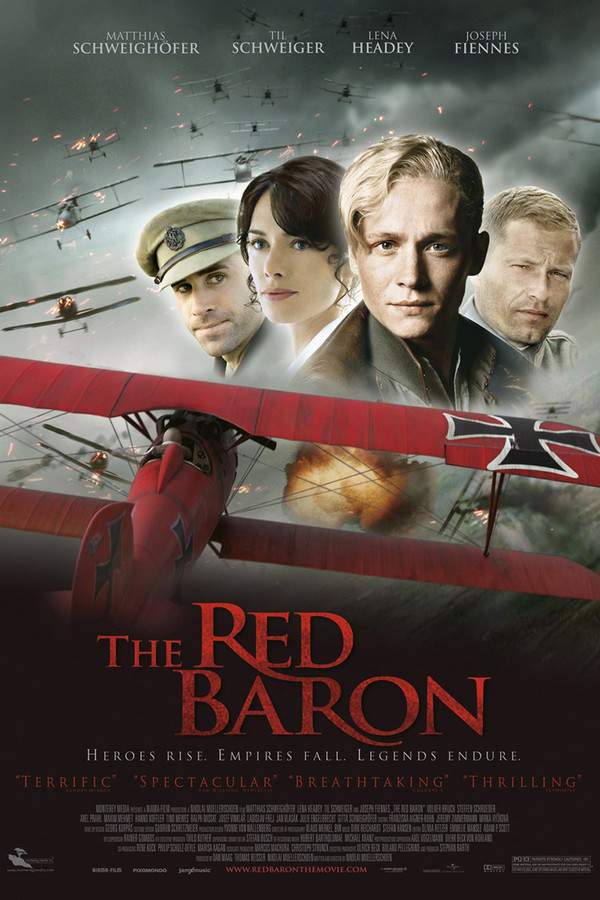
In the bitter winter of 1916, the Western Front is a jagged line of mud and steel, but above it the sky erupts into a fierce, open‑air arena. Young aviators weave through clouds of gun‑smoke, bound by an unspoken code of sportsmanship and honor that feels almost medieval amidst the mechanized slaughter below. Within this crucible of danger and glory, Manfred von Richthofen arrives as a talented newcomer, quickly standing out for his precision, composure, and an almost poetic reverence for the craft of flying. His reputation blossoms into legend, turning him into a symbol of hope for the troops trembling in the trenches and a living embodiment of the chivalric ideals that many cling to in a world gone mad.
Against the backdrop of relentless aerial duels, the film introduces Käthe Otersdorf, a dedicated field nurse whose steady hands and quiet courage ground the soaring fantasies of the men she cares for. Their paths cross in the thin line between battlefield and sanctuary, where compassion and duty intersect. As their connection deepens, the story hints at a tender, uneasy balance: the soaring freedom of the cockpit versus the earthy, humane responsibilities waiting on the ground. Their relationship becomes a subtle counterpoint to the relentless drive of war, suggesting that even legends need anchors.
The tone of The Red Baron is a blend of stark realism and lyrical romance, painting the war‑torn sky in shades of both awe‑inspiring beauty and foreboding dread. The cinematography captures the claustrophobic metal cages of the fighters juxtaposed with the boundless horizon, while an understated score underscores the fragile humanity threading through each daring sortie. Within this world, the film asks whether honor can survive amid chaos, and whether love can hold its own when every flight could be the last.
What Happens in The Red Baron?
The complete story of The Red Baron, from the first scene to the last, in 968 words (about 4 minutes). Spoilers throughout. Names in the text link to 5 cast member pages.
Spoilers ahead
In 1916, Manfred von Richthofen soars with the Imperial German Air Service on the Western Front, a skilled pilot honing his craft amid the dangers of the skies. After lowering a wreath over the funeral of an Allied pilot, he and his fellow fliers, Werner Voss and [Friedrich Sternberg] notched in the memory of comrades, cross paths with a Royal Flying Corps squadron led by the formidable [Captain Lanoe Hawker]. A brutal duel unfolds as Richthofen downs the Canadian pilot Arthur Roy Brown, and, in the aftermath, rushes to pull Brown from the wreckage and lends a steady hand to nurse Käthe Otersdorf, helping apply a life-saving tourniquet to Brown’s leg. The moment unfolds with a quiet pragmatism that hints at the heavy costs behind battlefield heroics.
As the fighting resumes, Richthofen secures a decisive victory over Hawker and is recognized with the Pour le Mérite, then promoted to command a squadron. He is joined by his brother, Lothar von Richthofen, whose bold spirit proves a source of both strength and tension within the unit. Richthofen issues a tempered order: his pilots should avoid unnecessary killings, a line he hopes will preserve their prowess and their humanity. Yet the reality of war tests that restraint when Lothar ruthlessly strafes and kills a British pilot who has already begun to land, underscoring the rift between strategic leadership and the visceral pull of combat.
In a later aerial engagement, Richthofen confronts Captain Roy Brown once more, discovering that Brown has escaped captivity after receiving care from Käthe. The two men are forced to crash land in no man’s land, where a rare moment of civility arises as they share a drink and talk about the war’s toll. Brown speaks of a hope for peace and a belief that their paths might cross again only after hostilities end, while also revealing Käthe’s feelings for Richthofen. The moment humanizes the pilot who is otherwise seen as a symbol of ruthless efficiency and unyielding resolve.
Back at base, Richthofen endures the crushing blow of bad news: his close friend, the Jewish pilot Friedrich Sternberg, has been shot down. Grief hardens him, and he retreats to a room where the world seems to blur into a relentless ache. The weight of loss is compounded by Lothar’s stern reminder that “A leader cannot afford to mourn,” a line that echoes through the following days as the war presses forward with unrelenting force.
A skull wound, suffered in another skirmish, lands Richthofen in Käthe’s care once again. As he recovers, a romance blossoms—dinners, dances, and quiet exchanges that reveal a different gravity beneath the war’s roar. Yet Käthe’s devotion does not erase the grim truths of battle; she pushes him to see the war not as a grand game but as a human, costly affair that drains life from both sides.
When a field hospital comes into view during a raid, Richthofen is unsettled by the sight of wounded and the sense that his own safety has become subordinate to the squadron’s mission. He confesses gratitude for the wound that has kept him from the front lines, even as he witnesses the bloodied reality of war around him. The death of his protégé Kurt Wolff intensifies the storm within him, hardening the resolve that drives him back toward combat rather than away from danger.
A visit to Fokker Industries deepens Richthofen’s unease as he discovers that Werner Voss—his most formidable rival within the squadron—has fallen in a dogfight, leaving the unit with fewer seasoned pilots. The loss reverberates through the ranks, sharpening the sense that the airspace is thinning and the tide of war remains stubbornly unfavorable.
As spring offensive plans loom, Richthofen is pulled between the call of duty and a growing sense of futility. He approaches Field Marshal Hindenburg and candidly argues that the war appears unwinnable, a sentiment that is met with the stern impulse to return to the sky. The Kaiser’s grip on the war effort—an influence that weighs heavily on every decision—persists as a shadow over the air service, reminding Richthofen of the political strings that tug at his life and his squadron’s fate.
With the offensive underway, Richthofen’s squadron roars into action, sweeping Allied aircraft and observation balloons from the front lines while Käthe remains on the ground, tending the wounded and watching with a mix of fear and pride as the planes cut through the air. Käthe’s growing fear for Richthofen’s safety tightens the emotional coil he’s carried since the war began, and she confronts him with a demand to consider the cost of constant risk. He responds with a grave resolve, insisting that he will not betray the soldiers by retreating into safety, even as he acknowledges Käthe’s fear and asserts that she is, in her own right, his greatest victory.
The eve of a new offensive finds Richthofen awake to the approaching British formations. He shares silent, affecting moments with his pilots and, with his cousin Wolfram, offers cautious counsel to avoid needless danger. As he climbs into his cockpit, a painful, knowing smile passes between him and Käthe, a quiet nod to a love that must endure amid chaos.
Later, Käthe crosses the lines with the help of Captain Brown and visits Richthofen’s grave, a poignant return to the man behind the myth. She offers a sincere apology for not arriving sooner and admits the depth of her feelings, revealing the cost of loving a man whose life is bound to the blood and noise of war. A funeral wreath, left by Captain Brown, bears a simple dedication: “To Manfred von Richthofen, Friend and Enemy.” The image lingers as a somber reminder that even victories carried a heavy price and that the line between admiration and loss runs thin in the skies where legends are made.
The Red Baron Timeline: Every Key Event in Order
11 key events in the order they happen, from “Wreath ceremony and first aerial clash” to “Käte’s visit to the grave”. 11 events name a place, across 9 locations.
- 1
Wreath ceremony and first aerial clash
On the Western Front in 1916, Richthofen drops a wreath over the funeral of an Allied pilot and is soon drawn into action with Voss and Sternberg when a Royal Flying Corps squadron led by Captain Lanoe Hawker appears. He shoots down Canadian pilot Arthur Roy Brown and, after pulling Brown from the wreckage, assists Nurse Käte Otersdorf by applying a tourniquet to Brown's leg.
When:1916 Where:Western Front
- 2
Killer Hawker, Pour le Mérite, and a new squadron
After killing Hawker, Richthofen is awarded the Pour le Mérite and promoted to command a squadron. He is joined by his brother Lothar von Richthofen, and he orders his pilots to avoid unnecessary killings; he is dismayed when Lothar deliberately strafes and kills a British pilot who has already landed.
When:1916-1917 Where:Western Front
- 3
Resurfaced bond with Brown and no man's land
During an aerial dogfight, Richthofen again encounters Captain Brown, who has escaped from a German prisoner of war camp after Käte's nursing. The two are forced to ditch in no man's land, where they share a friendly drink, and Brown mentions that Käte has feelings for Richthofen.
When:1917 Where:No man's land
- 4
Sternberg’s death and grieving leadership
Shortly after these events, Richthofen learns that his close friend Friedrich Sternberg, a Jewish pilot, has been shot down and killed. Over the following days, Richthofen withdraws from activity and refuses to leave his room, while Lothar reminds him that a leader cannot afford to mourn.
When:Late 1917 Where:German base
- 5
Wound and budding romance with Käte
Richthofen suffers a skull wound during an aerial battle and is sent to be nursed by Käte. While recovering, they share a romantic dinner and a dance, and Käte admonishes him for treating the war as a game.
When:Early 1918 Where:Field hospital
- 6
Love interrupted by raid and fatal protest
As they begin to make love, an Allied bombing raid interrupts. Richthofen orders Käte to hide and returns to the air with his men to defend the squadron. The wound reopens and he is shaken by the combat death of his protégé Kurt Wolff, fueling a fierce rage in combat.
When:Early 1918 Where:Front lines during bombing raid
- 7
Rear echelon offer and Voss’s death
During a visit, Richthofen is told he has been offered a rear echelon position in command of the entire Air Service. Käte is overjoyed, but Richthofen senses manipulation by the Kaiser and generals. He learns at Fokker Industries that Werner Voss has died, leaving the squadron short of experienced pilots.
When:Spring 1918 Where:Fokker Industries
- 8
Hindenburg thwarted and return to the skies
On the eve of the Spring Offensive, Richthofen tells Field Marshal Paul von Hindenburg that the war is unwinnable, but Hindenburg orders him back to his squadron and he returns to flying.
When:Spring 1918 Where:German High Command
- 9
Spring Offensive and his steadfast vow
As the offensive begins, Richthofen's squadron goes after every Allied aeroplane and balloon. Käte tends the wounded on the ground and confronts him about risking everything; he refuses to betray his soldiers by remaining a symbolic immortal, telling Käte that she is his greatest victory.
When:Spring 1918 Where:Front lines
- 10
April 21, 1918—final flight
On April 21, 1918, Richthofen wakes to news of a British formation approaching after making love to Käte. He briefs his pilots, cautions his inexperienced cousin Wolfram, and climbs into his cockpit with a sad smile for Käte, marking his last flight.
When:April 21, 1918 Where:Front lines
- 11
Käte’s visit to the grave
Käte travels to Richthofen's grave with Brown's help, apologizing for not visiting sooner and expressing her lasting love. A wreath left by Captain Brown reads a farewell to Manfred von Richthofen, both friend and enemy.
When:Postwar Where:Richthofen's grave
Who Are the Main Characters in The Red Baron?
8 characters, among them Manfred von Richthofen (Matthias Schweighöfer), Käthe Otersdorf (Lena Headey) and Captain Roy Brown (Joseph Fiennes): who each one is and the part they play in the story. Every profile links to the actor’s page.
-

Manfred von Richthofen (Matthias Schweighöfer)
Played by Matthias Schweighöfer
Famed German fighter ace who blends tactical genius with a heavy heart. He climbs the ranks through discipline, but is haunted by comrade deaths and the burden of command. His relationship with Käte offers a fragile escape from front-line brutality, even as higher powers attempt to steer him. The story traces his evolution from celebrated hero to a commander who doubts the price of glory.
- ⚔️ Protagonist
- 🧭 Strategic Thinker
- ❤️ Romantic
- 🕊️ Tragic Hero
-

Käthe Otersdorf (Lena Headey)
Played by Lena Headey
Nurse who tends to the wounded and grows close to Richthofen. She challenges the notion of the war as a game and pushes Richthofen to confront its brutality. Their relationship acts as a lifeline amid chaos, yet remains imperfect under the stress of conflict. She ultimately honors Richthofen’s memory at his grave.
- 💖 Romantic Interest
- 🧭 Moral Compass
- 🏥 Nurse
- 🕊️ Complex Relationship
-

Captain Roy Brown (Joseph Fiennes)
Played by Joseph Fiennes
Canadian air ace and rival-ally figure who shares a bond with Richthofen across danger and mutual respect. He is wounded and cared for at times and ultimately helps deliver a poignant farewell symbolized by the wreath left on Richthofen’s grave. Their uneasy friendship reflects the ironic duality of war as both brotherhood and opposition.
- 🛫 Allied Pilot
- 🤝 Rivalry
- 🏥 Caregiver
- 💬 Philosophical Dialogue
- LV
Lothar von Richthofen (Volker Bruch)
Played by Volker Bruch
Manfred’s brother and fellow squadron member who embodies aggressive spirit and pragmatic realism. His actions emphasize the friction between loyalty and the brutal demands of combat, challenging Manfred’s more cautious leadership. He underscores the tension between personal camaraderie and the ruthlessness of war.
- ⚔️ Sibling Rivalry
- 🧭 Tactical Command
- 🩸 Brutal Realism
- 🕊️ Family Loyalty
-

Werner Voss (Til Schweiger)
Played by Til Schweiger
The squadron’s most competitive pilot after Richthofen, whose death marks the brutal cost of pursuit and skill. His presence heightens the sense of competition and danger within the unit, contributing to the era’s lethal atmosphere. His loss underscores the fragile line between prowess and peril in aerial combat.
- 🛫 Elite Pilot
- ⚔️ Competitiveness
- 💔 Tragic Death
- 🕊️ Comradeship
- CL
Captain Lanoe Hawker (Richard Krajčo)
Played by Richard Krajčo
Leading RFC captain who embodies the Allied opposition Richthofen faces in the air war. He is an exemplar of courage and skill whom Richthofen confronts in the skies, marking a key early milestone in the rivalry that defines the era. His death also signals the human cost of warfare on both sides.
- 🛩️ Allied Adversary
- ⚔️ Aerial Rivalry
- 🪖 Frontline Leader
- 💀 Combat Casualty
- GP
General Paul von Hindenburg (Josef Vinkl)
Played by Josef Vinklář
A high-ranking German commander who exerts pressure on Richthofen and the rest of the Luftstreitkräfte. He embodies the political influence of the war machine and the strain between strategic aims and individual heroism. His interactions reveal how leadership outside the cockpit shapes battlefield choices.
- 🏢 High Command
- 🧭 Strategic Influence
- 🗡️ Military Authority
- 🕊️ Distant Figure
- EW
Emperor Wilhelm II (Ladislav Frej)
Played by Ladislav Frej
The monarch whose strategic vision and demands impact the war’s course and the fates of pilots. He represents the higher-level pressures and ideological undercurrents driving the conflict. His role illustrates how grand goals filter down into the daily peril of combat.
- 👑 Authority
- 🧭 Political Pressure
- 🗡️ War Mobilization
- 🕊️ Detachment
Where and When Is The Red Baron Set?
The Red Baron is set in Western Front, No Man's Land, German airfields and Field Hospitals (1916–1918). Here is why the time and place matter to the story.
When
1916–1918
Set in the latter years of World War I, the narrative follows Richthofen’s rise as a fighter ace from 1916 through the Spring Offensive and his death in 1918. It portrays rapid aircraft development, escalating air combat, and the political pressure from Kaiser Wilhelm’s circle. The period is marked by tactical innovations in the air and the emotional toll of prolonged conflict on pilots and those who care for them.
Where
Western Front, No Man's Land, German airfields, Field Hospitals
The story unfolds across the Western Front during World War I, weaving between frontline airfields, perilous dogfights over no-man’s land, and the care facilities behind the lines. Scenes shift from busy German bases to tense aerial battles above devastated landscapes, highlighting both grand strategy and intimate human moments. The setting emphasizes the brutal, weaponized nature of early air warfare and the fragility of life amid constant bombardment. In this war-torn tableau, aerial glory collides with personal longing and loss.
- 🎖 Frontline
- 🛫 Aerial Combat
- 🏥 Field Hospital
What Are the Themes of The Red Baron?
3 ideas the story keeps returning to, among them Duty vs Humanity, Love and War and Leadership and Loss.
-
01
Duty vs Humanity
Manfred von Richthofen struggles to balance duty to his squadron and the war effort with a growing sense of moral doubt. The film shows how leadership demands can collide with personal conscience. His choices tested by the Kaiser, generals, and the costs of victory illuminate the human cost behind martial glory. The tension between professional obligation and humane impulses threads through major turning points in the story.
-
02
Love and War
Käthe’s relationship with Richthofen provides a rare emotional center amid relentless combat. Their bond navigates secrecy, longing, and the fear of losing one another to the front lines. The romance becomes both a solace and a vulnerability within the brutal machinery of war. It shows how affection can tempers rage while intensifying risks in deadly times.
-
03
Leadership and Loss
The film tracks the cost of leadership as comrades fall and competing loyalties press on Richthofen. Rivalry with peers, such as Werner Voss and the shadow of the Kaiser’s directives, complicate his role as a commander. The sense of casualties— Hawker, Sternberg, and others—casts a somber tone on the nobility of flight. The end cradles the idea that true leadership carries the weight of those who did not return.
What Kind of Film Is The Red Baron?
Melancholic in tone, with steady pacing and a moderate story, going by the plot summary.
- Tone
- Melancholic
- Pacing
- Steady
- Story
- Moderate
- Intensity
- High
- Ending
- Bittersweet
A somber and intense war drama that follows a celebrated ace pilot's struggle with the brutal reality of conflict, balancing a tragic romantic subplot with the grim, relentless pace of aerial combat and personal loss.
- melancholic
- grim
- somber
- reflective
- tense
- honorable
- world war one
- fighter pilot
- chivalry and honor
- love in wartime
Content notes: war violence, death of comrades, combat injuries, psychological trauma.
Quiz
How well do you remember The Red Baron? Test yourself on the story.
Where to Watch The Red Baron
Stream it on Cineverse and Fandor, or rent or buy it from Amazon Video and Apple TV Store. US availability and prices from JustWatch.
Stream 9
 Cineverse
  Fandor Amazon Channel
  FlixFling
  fuboTV
  Hoopla
  Kanopy
  Plex
Plex  Plex Channel
  Tubi TV


Streaming availability in the US, powered by