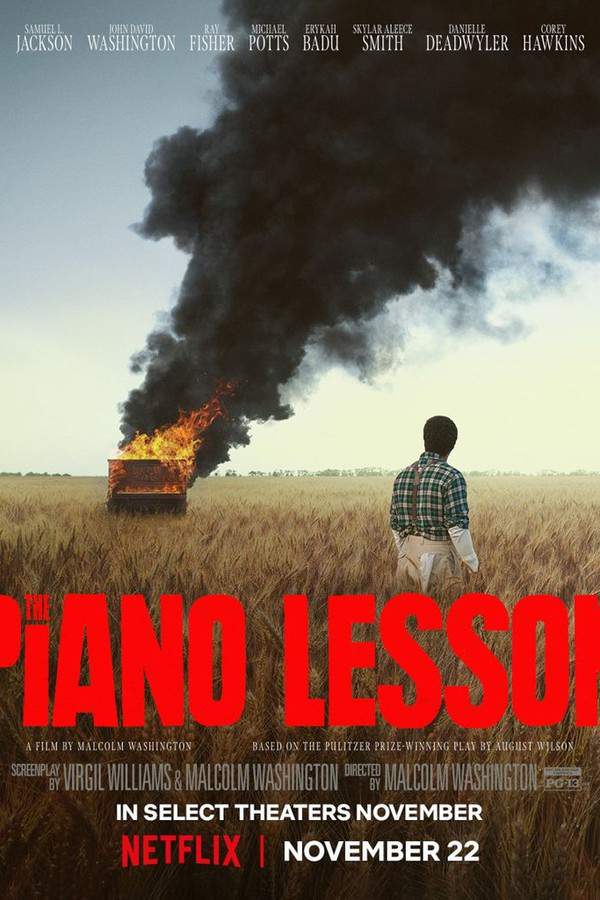
The Piano Lesson 2024


Made by

Mundy Lane Entertainment
Where to Watch The Piano Lesson
See current US streaming, rental, and purchase options for The Piano Lesson (2024) via JustWatch.

fuboTV
HD
Hallmark TV Amazon Channel
HD
Hallmark+ Amazon Channel
HD
Hallmark+ Apple TV channel
HD
Philo
HD
Hoopla
SD
Plex
HD
Plex Channel
HD
The Roku Channel
HD
Tubi TV
SD
YouTube Free
HD
Amazon Video
HD
Apple TV Store
HD
Fandango At Home
SD
Google Play Movies
SD
YouTube
SD Streaming availability powered by 
The Piano Lesson Plot Summary
Read the complete plot summary and ending explained for The Piano Lesson (2024). From turning points to emotional moments, uncover what really happened and why it matters.
In 1911, the story begins with Boy Charles, portrayed by John David Washington, who is desperate to reclaim his family’s legacy. He steals a beautifully crafted piano from the Sutter family, a significant symbol of his family’s heritage and strength. This piano, with intricate carvings representing African ancestors, holds deep meaning for the Charles family. After giving his family a chance to escape, Boy Charles attempts to flee in a train boxcar, but tragedy strikes when the Sutters catch up with him, ultimately burning the boxcar with Boy Charles trapped inside.
Fast forward to 1936, Boy Willie’s arrival in Pittsburgh with his friend Lymon, played by Ray Fisher, marks a pivotal moment as they bring with them a truckload of watermelons. The plot thickens with the backstory of James Sutter’s murder, in which Boy Willie seeks reparations offered by the Sutter family. They propose to grant him a portion of Mississippi farmland, spurred by a desire to settle old scores related to his father’s tragic fate. Boy Willie is determined to sell the family piano to purchase the land, believing it essential to reclaiming their autonomy.
However, his sister Berniece, portrayed by Danielle Deadwyler, is vehemently opposed to this plan. Living with her young daughter Maretha and their uncle Doaker, played by Samuel L. Jackson, in Pittsburgh, Berniece sees the piano as a sacred artifact and a vital reminder of their shared struggles. Now in a relationship with local preacher Avery, Berniece’s bond with Boy Willie is strained, especially after previous conflicts involving the theft that led to her husband Crawley’s death.
The ongoing disputes between the siblings highlight the piano’s profound significance in both of their lives. While Berniece wishes to preserve it as a family memorial, Boy Willie views its sale as a crucial step towards freedom and self-sufficiency. Yet, the shadow of their father’s legacy looms large, reminding Boy Willie of the importance of land ownership.
As supernatural elements come into play, Sutter’s ghost begins to haunt the Charles household, raising tensions further, particularly for Berniece and Maretha. Berniece attributes the ghostly disturbances to Boy Willie’s arrival and his disruptive ambitions regarding the piano. In contrast, Boy Willie dismisses her concerns. Meanwhile, Lymon finds himself drawn to Berniece, hoping for a fresh start.
The presence of Sutter’s ghost escalates, leading to a climactic confrontation with Boy Willie. In a bid to rid their home of the haunting, Avery attempts an exorcism, but it proves futile. Finally, Berniece courageously decides to play the piano for the first time in years. In doing so, she invokes her ancestors, seeking their aid to banish Sutter’s spirit and protect her brother. A turning point occurs as Boy Willie begins to understand Berniece’s perspective, encouraging her to continue playing.
Ultimately, Boy Willie reconsiders his intentions regarding the piano and opts not to sell it. Instead, Berniece takes on the role of mentor, teaching Maretha how to play, thus passing down their family’s musical legacy. In one last attempt to connect with the land, Boy Willie returns to the now-publicly available Sutter farmland, connecting with his heritage before moving forward. Grasping the dirt as his father once taught him, he departs, leaving behind a mix of hope and resolution.
The Piano Lesson Timeline
Follow the complete movie timeline of The Piano Lesson (2024) with every major event in chronological order. Great for understanding complex plots and story progression.
Boy Charles Steals the Piano
In 1911, Boy Charles steals a beautifully carved piano from the Sutter family, the former enslavers of his family. This act symbolizes the beginning of his fight for heritage and freedom.
Boy Charles's Escape
After stealing the piano, Boy Charles gives his family a head start as he attempts to escape via a train boxcar. Tragically, the Sutter family tracks him down and burns the boxcar while Boy Charles is trapped inside.
Boy Willie Moves to Pittsburgh
In 1936, Boy Willie arrives in Pittsburgh with his friend Lymon, bringing along a truckload of watermelons. This marks the beginning of Boy Willie's quest to reclaim his family’s land.
Murder of James Sutter
The Sutter family is rocked by the murder of James Sutter, who is pushed down a well. As a form of reparations for his father's death, the Sutter family offers Boy Willie part of their Mississippi farmland.
Conflict Over the Piano
Boy Willie is determined to sell the family piano to buy the last piece of land, but his sister Berniece vehemently opposes the sale. For her, the piano is a sacred family artifact, representing their struggles and heritage.
Berniece's Forbidden Memories
The arguments between the siblings reveal their deep emotional connections to the piano. Berniece expresses her resentment over her mother forcing her to play the piano against her will, complicating her feelings towards it.
Wining Boy's Visit
Another uncle, Wining Boy, visits the Charles family, reminiscing about his past glory days as a musician. His presence underscores the lost potential and legacy tied to their family's history.
Supernatural Hauntings Begin
Supernatural elements take center stage when Sutter's ghost starts haunting the Charles household. This haunting primarily affects Berniece and her daughter Maretha, increasing the tension related to Boy Willie's arrival.
Ghostly Confrontations
As Sutter's ghost becomes more aggressive, he attacks Boy Willie directly. Avery, Berniece's new boyfriend, attempts to exorcise the house, but his efforts prove fruitless.
Berniece Plays the Piano
In a moment of desperation, Berniece decides to play the piano for the first time in years to summon her ancestors and exorcise Sutter's ghost. This act signifies her reclaiming her family’s legacy.
Sibling Reconciliation
After witnessing his sister's bravery with the piano, Boy Willie comes to a deeper understanding of her perspective. He advises her to continue playing, marking a moment of reconciliation between the siblings.
Boy Willie's Decision
Realizing the piano's importance, Boy Willie ultimately decides against selling it. This decision highlights his growth and understanding of what it means to honor their family's past.
Teaching Maretha
Berniece begins to teach her daughter Maretha how to play the piano, passing down their family's legacy. This act reinforces the connection to their heritage and the importance of preserving it.
Return to the Sutter Farmland
Boy Willie returns to the Sutter farmland, which is now publicly for sale after his failed attempts to purchase it. He reflects on the dirt, recalling lessons from his father about land ownership as a symbol of autonomy.
The Piano Lesson Characters
Explore all characters from The Piano Lesson (2024). Get detailed profiles with their roles, arcs, and key relationships explained.
Boy Willie
Boy Willie is driven and determined, seeking to assert his family's legacy by reclaiming land and identity. His eagerness to sell the family piano showcases his conflicted priorities and desire for autonomy in a racially oppressive world. Throughout the story, he grapples with the ghost of his family's past, both literally and metaphorically.
Berniece
Berniece is fiercely protective of her family's history and the sacred piano, embodying resilience and the struggle against her painful past. Her character wrestles with memories of her mother's pressures and the haunting presence of the ghost, serving as a vessel for generational trauma and strength. She ultimately finds empowerment through music and remembrance.
Doaker
Doaker serves as a stabilizing presence in the Charles family, offering wisdom and a connection to their shared past. He provides a grounding influence amidst the conflicts between Boy Willie and Berniece, illustrating the importance of family ties and the weight of legacy. His character adds depth to the family's dynamic and the piano's significance.
The Piano Lesson Settings
Learn where and when The Piano Lesson (2024) takes place. Explore the film’s settings, era, and how they shape the narrative.
Time period
1911, 1936
The events span from 1911 to 1936, highlighting the significant struggles of African Americans in the early 20th century. This period saw the ongoing impact of slavery and the fight for autonomy and identity, as evidenced by Boy Wille and Berniece's conflicts over their family's piano, a powerful symbol of heritage.
Location
Pittsburgh, Mississippi
The movie predominantly takes place in Pittsburgh, where the Charles family resides, and Mississippi, which is intertwined with their family history. Pittsburgh serves as a backdrop for the family’s struggles and dynamic, while Mississippi is the site of ancestral trauma and a contested piece of land representing generational legacy.
The Piano Lesson Themes
Discover the main themes in The Piano Lesson (2024). Analyze the deeper meanings, emotional layers, and social commentary behind the film.
🎹
Heritage
The piano in the movie symbolizes the Charles family's heritage and resilience. It serves as an artifact of their struggles and a reminder of their ancestry, illustrating the deep connection between culture, memory, and identity. Both siblings grapple with the meaning of this heritage, revealing the complexities of ownership and legacy.
👻
Supernatural
Supernatural elements play a vital role in the narrative, with the ghost of James Sutter haunting the Charles household. This spectral presence intensifies the family's drama and highlights themes of guilt, unresolved conflicts, and the ancestral ties that linger beyond death. The ghost represents the past's inescapable grip on the present.
⚖️
Reparations
The theme of reparations is central to the story, encapsulated in Boy Willie’s desire to acquire land as compensation for his father's death. This underscores the historical injustices faced by African Americans and raises questions about ownership, land, and the pursuit of dignity in the face of systemic oppression.

Coming soon on iOS and Android
The Plot Explained Mobile App
From blockbusters to hidden gems — dive into movie stories anytime, anywhere. Save your favorites, discover plots faster, and never miss a twist again.
Sign up to be the first to know when we launch. Your email stays private — always.
Explore the mobile appThe Piano Lesson Ending Explained
Unravel the ending of The Piano Lesson (2024) with our detailed explanation. Understand the final scenes, character fates, and unresolved questions.
The ending of The Piano Lesson reveals a profound moment of reconciliation and cultural affirmation. Throughout the film, Berniece has been haunted by her memories of her family’s suffering and her personal grief, which she has buried beneath her fear of her past. When her brother Boy Willie arrives determined to sell the family piano to buy Sutter’s land and forge a new future, Berniece resists, viewing the piano as a symbol of their ancestral pain and history. As tensions rise, Sutter’s ghost manifests, illustrating the unresolved trauma tied to the piano and their history of slavery and exploitation. Berniece, overwhelmed by the ghostly presence and her fears, considers surrendering her grief, but she is ultimately reminded that the piano also embodies the strength, resilience, and memories of her ancestors.
In a pivotal moment, Berniece begins to play the piano, channeling the spirits of her ancestors and acknowledging both the pain and the pride embedded within that family heirloom. This act signifies her acceptance of her history and her heritage, allowing the spirits to be at peace and expelling Sutter’s ghost from the house. The act of playing becomes a act of spiritual cleansing, integrating the pain of the past with a newfound sense of pride and hope for the future. Berniece’s spiritual awakening also shifts her perspective on the piano from being solely a reminder of suffering to a vessel of empowerment and family unity. When Berniece finally plays the piano with her daughter Maretha, there is a sense of liberation and joy, symbolizing that she has reclaimed her identity and cultural roots.
Boy Willie’s desire to sell the piano ultimately clashes with Berniece’s need to preserve their history, but his willingness to step back and let her keep it reflects a recognition of the importance of honoring their ancestors. The film ends with a scene that emphasizes the power of family, heritage, and collective memory—showing that through understanding and respect, they can find healing and move forward together. The ending highlights that the true value of the piano lies not in its material worth, but in what it represents: the enduring spirit and resilience of the family, transcending generations and hardships. Through Berniece’s spiritual liberation, the film concludes with a message of reconciliation—showing that embracing one’s history and roots is essential to forging a hopeful future.**
The Piano Lesson Spoiler-Free Summary
Discover the spoiler-free summary of The Piano Lesson (2024). Get a concise overview without any spoilers.
Set against the backdrop of 1930s Pittsburgh, The Piano Lesson is a deeply atmospheric family drama that centers on a single, prized possession — an heirloom piano carved with intricate ancestral figures. The instrument is far more than furniture; it is a living testament to the Charles family’s history, resilience, and the weight of generations who came before. Within the household shared by uncle Doaker and his niece Berniece and her young daughter Maretha, the piano stands as a quiet but powerful presence, shaping the rhythms of daily life and memory.
Into this fragile equilibrium arrives Boy Willie, Berniece’s brother, fresh from a journey south with his friend Lymon and a truckload of watermelons. His arrival carries with it a proposal that threatens to upend the home: he wants to sell the piano, believing the money can finally give the family something tangible — a stake in land, a future of their own making. To him, the piano’s value lies in what it could become, a stepping stone toward independence. To Berniece, however, the instrument is sacred. She sees it as the last tangible thread connecting them to those who came before, and she refuses to let it go, no matter the cost.
What unfolds is a quiet but intensifying clash between two siblings bound by blood but divided by vision. One sees the path forward in letting go; the other sees survival in holding on. Their arguments stir old wounds, draw in voices like the wandering uncle Wining Boy and the local preacher Avery, and fill the home with an undercurrent of tension that seems to hum beneath the floorboards. The household, once a sanctuary of routine and reflection, becomes a stage for unresolved grief, unspoken debts, and the enduring pull of the past.
Rich in period detail and steeped in a mood that blends domestic warmth with quiet unease, the story is less about the piano itself than about what it represents — the struggle between memory and progress, heritage and ambition. The Piano Lesson is a character-driven portrait of a family standing at a crossroads, where the simple act of deciding a piano’s fate becomes a question of identity itself.
Movies with Similar Twists and Themes
Uncover films that echo the narrative beats, emotional arcs, or dramatic twists of the one you're exploring. These recommendations are handpicked based on story depth, thematic resonance, and spoiler-worthy moments — perfect for fans who crave more of the same intrigue.






Featured on this page

What's After the Movie?
Not sure whether to stay after the credits? Find out!
Check out our other apps:

SAT Sphere
Build confidence for the Digital SAT.

Mori Atlas
Discover wild places worth protecting.

Luntero
Search smarter for a home in Amsterdam.

Plot Explained
Unravel movie endings and hidden clues.

Pokechamp
Dive into Pokémon data and battle logic.

Driving Theory
Get ready for your European theory test.

Movie Dust
Plan your next cinema trip with ease.

Musemap
Find art and culture as you travel.

Selkobase
Compare credentials before committing.

Local Manual
Turn an unfamiliar country into practical next steps.

Lernavi
Compare school systems before your next move.

GymRoam
Find a workout stop wherever your plans take you.
Explore Our Movie Platform
New Movie Releases (2026)
Famous Movie Actors
Top Film Production Studios
Movie Plot Summaries & Endings
Major Movie Awards & Winners
Best Concert Films & Music Documentaries
Movie Collections and Curated Lists
© 2026 What's After the Movie. All rights reserved.
Privacy Policy